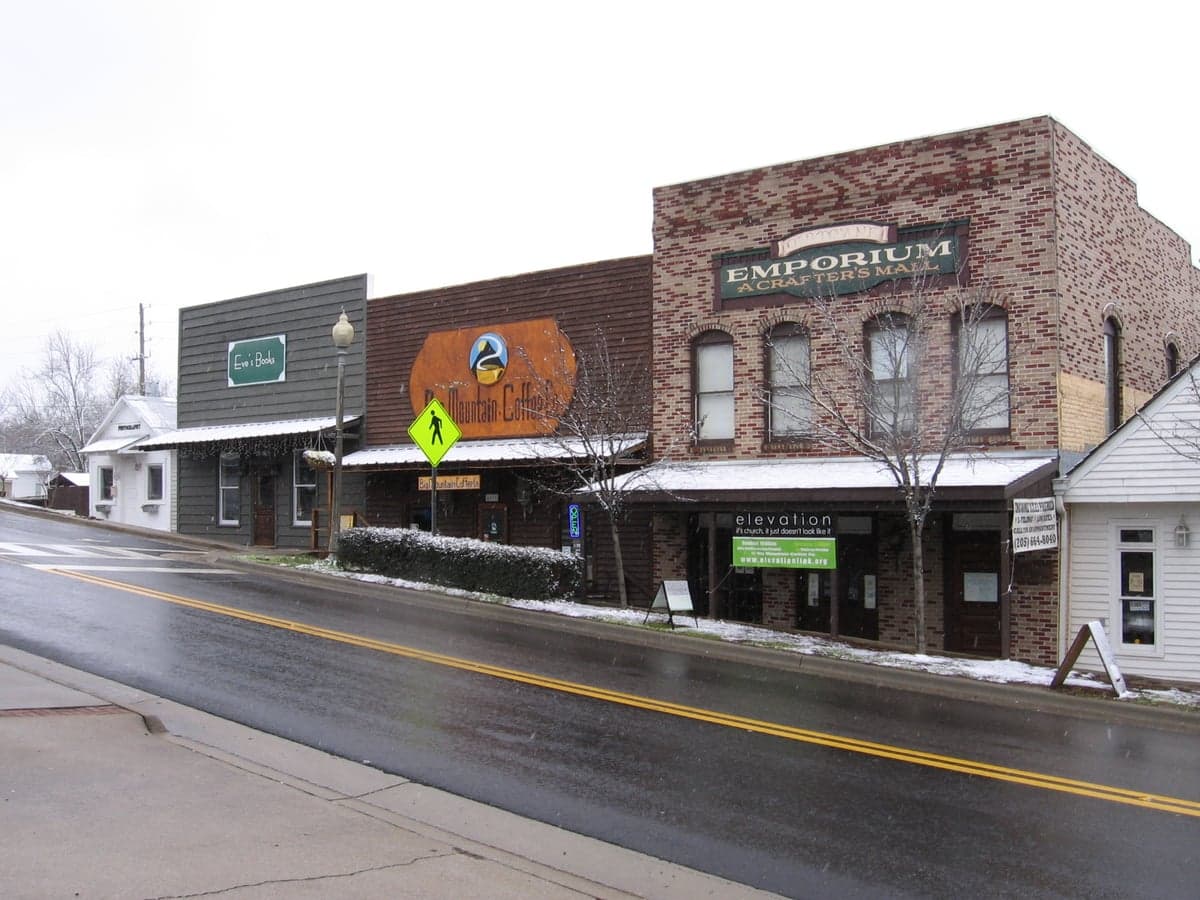
Photo: Wikipedia
Political ClimatePolitical Climate in Helena, AL
District shown is the primary district for this city’s centroid. Cities may span multiple districts.
Local Political AnalysisPolitical Analysis of Helena, AL
Helena, Alabama, sits squarely in one of the most reliably conservative corners of the state, with a Cook PVI of R+20 that tells you everything you need to know about the local voting patterns. This isn't a purple suburb hedging its bets; it's a place where Republican candidates routinely win by double digits, and the local culture reflects that deep-rooted preference for limited government and personal responsibility. Over the past decade, the political lean has held steady, even as neighboring Birmingham has drifted leftward, making Helena a bit of a conservative anchor in the greater metro area. If you're looking for a place where your vote actually counts toward keeping taxes low and government out of your business, this is it.
How it compares
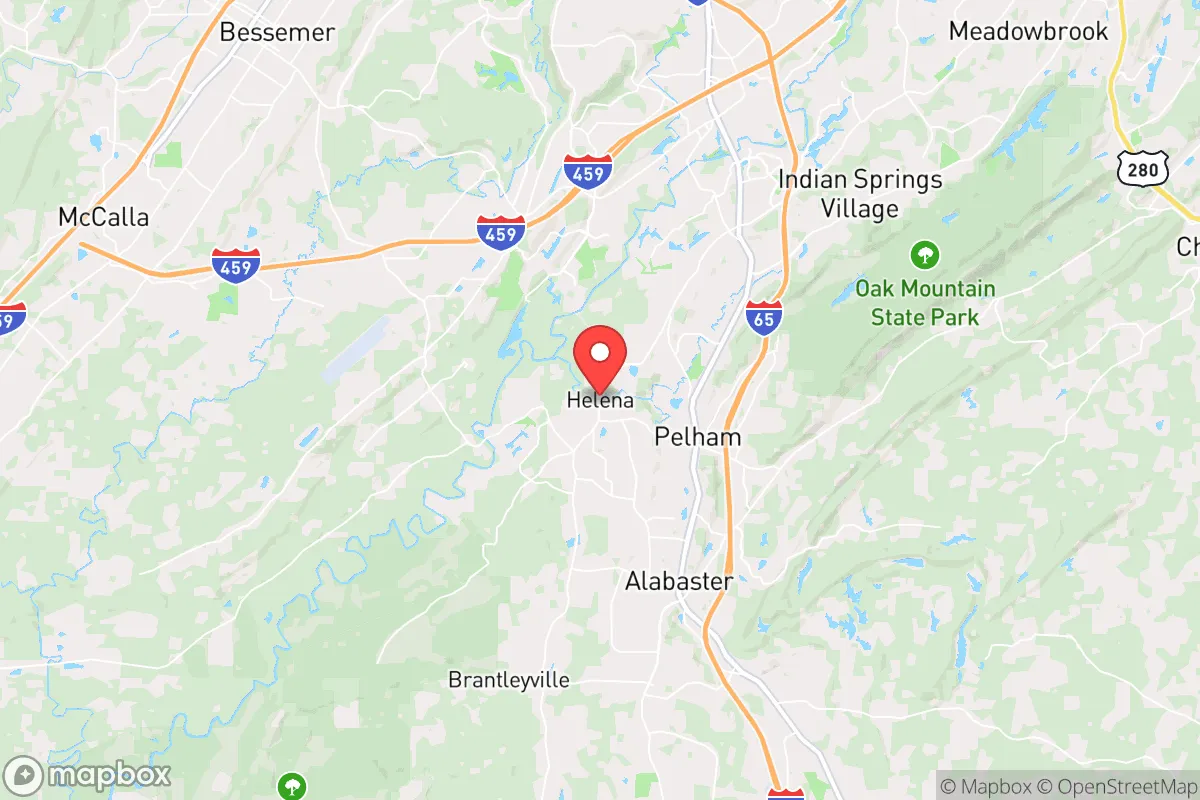
Drive 15 minutes north into Birmingham proper, and you'll hit a completely different political universe—a city that votes reliably Democratic and has embraced progressive policies on everything from zoning to public spending. Head east toward Pelham or Alabaster, and you'll find similar conservative leanings, but Helena stands out for its consistency. The surrounding Shelby County is one of the most Republican-friendly counties in Alabama, but Helena's R+20 rating puts it on the more conservative end even within that county. Compare that to Homewood or Mountain Brook, which are more moderate and have seen some shift toward the center in recent years. Helena hasn't budged. The local school board, city council, and mayor's office have all stayed firmly in conservative hands, and there's no sign of that changing anytime soon. The contrast with Birmingham is especially stark—while the city has pushed for higher minimum wages and more public housing initiatives, Helena has focused on keeping property taxes low and maintaining a business-friendly environment.
What this means for residents
For the people who live here, the political climate translates directly into daily life. You won't see the kind of government overreach that's become common in larger cities—no heavy-handed mask mandates that lasted years, no aggressive zoning that tells you what you can and can't do with your own property, and no push for policies that prioritize government solutions over personal choice. The local leadership tends to take a hands-off approach, trusting residents to make their own decisions. That's a big reason why families and small business owners have been moving here steadily. The downside? If you're hoping for rapid infrastructure improvements or big public projects, you might find the pace slow—conservative governance here means every dollar is scrutinized before it's spent. But for most folks, that's a trade-off they're happy to make. The schools are solid, the crime rate is low, and you're not constantly fighting city hall over permits or regulations.
One cultural distinction worth noting: Helena has managed to avoid the kind of divisive local politics that have torn apart some other suburbs. There's no heated debate over library books or drag shows because those issues simply don't gain traction here. The community tends to handle disagreements quietly, through personal conversations rather than public protests. That said, there's a growing concern among long-time residents about the influx of people from more progressive areas, particularly from Birmingham and even out-of-state transplants. Some worry that as the population grows, so will the pressure to adopt policies that erode the very freedoms that make Helena attractive. For now, though, the conservative foundation is solid, and the local government shows no interest in following the trends that have turned other cities into bureaucratic nightmares. If you value your privacy, your property rights, and the freedom to live without constant government interference, Helena is still one of the safest bets in the region.

State Political ClimatePolitical Climate in Alabama
State Political AnalysisPolitical Environment in the State
Alabama is a deeply conservative state, with Republicans holding every statewide elected office and supermajorities in both legislative chambers, a position they’ve solidified over the past 20 years. The state has not voted for a Democratic presidential candidate since 1976, and in 2024, Donald Trump carried it by roughly 30 points. The dominant coalition is a mix of rural traditionalists, evangelical Christians, and suburban conservatives, with the Democratic Party largely confined to the Black Belt and a few urban pockets. Over the last decade, the state has shifted further right on cultural issues while maintaining a low-tax, low-regulation economic posture, though internal tensions over education and local control are growing.
Urban vs. rural divide
The political map of Alabama is starkly divided. The major metro areas—Birmingham, Montgomery, and Mobile—are Democratic-leaning, driven by large African American populations and younger, college-educated voters. Jefferson County (Birmingham) went for Joe Biden in 2020 by about 20 points, and Montgomery County by a similar margin. However, the suburbs of these cities, like Hoover and Vestavia Hills outside Birmingham, are reliably Republican. The real engine of conservative power is the rural and exurban expanse: counties like DeKalb (northeast), Marshall (north), and Baldwin (south) routinely vote 75-80% Republican. The fastest-growing area, Auburn-Opelika in Lee County, is a conservative stronghold anchored by Auburn University, though the student population adds a slight libertarian streak. The Black Belt, stretching from Selma to Greene County, remains heavily Democratic and economically distressed, creating a persistent cultural and political chasm within the state.
Policy environment
Alabama’s policy environment is among the most conservative in the nation. There is no state income tax on Social Security benefits, and the state’s top marginal income tax rate is 5%, with a standard deduction that keeps most families’ effective rate low. Property taxes are famously low—among the lowest in the country—which is a major draw for relocating families. The regulatory posture is business-friendly, with a right-to-work law and minimal zoning restrictions outside major cities. Education policy is a flashpoint: the state passed the Alabama School Choice and Student Opportunity Act in 2024, expanding charter schools and creating a tax-credit scholarship program for private school tuition. However, the state’s public schools rank near the bottom nationally, and the debate over Critical Race Theory and library book content has been intense, with the legislature passing a law in 2022 that restricts teaching of “divisive concepts” and allows parents to challenge school materials. On healthcare, Alabama did not expand Medicaid under the Affordable Care Act, leaving a coverage gap for about 300,000 low-income adults. Election laws are strict: voter ID is required, and the state closed many rural polling places after the 2020 census, a move that drew lawsuits but was upheld by courts. Abortion is effectively banned after the Human Life Protection Act (2019) took effect post-Dobbs, with no exceptions for rape or incest.
Trajectory & freedom
On the freedom scale, Alabama has been moving in a decidedly pro-liberty direction on most fronts, though with notable exceptions. Gun rights are robust: in 2022, the state passed constitutional carry (permitless carry of a concealed handgun), and there are no state-level red flag laws. Property rights were strengthened by the Alabama Landowner Protection Act (2023), which limits eminent domain for private economic development. Parental rights were expanded via the Parental Rights in Education Act (2022), which requires schools to notify parents of any changes in a child’s mental or physical health services and prohibits classroom discussion of sexual orientation or gender identity in K-5. Medical autonomy took a hit with the abortion ban, but the state also passed a medical freedom law in 2021 that prohibits employers and government entities from requiring COVID-19 vaccines. Taxation has been trending downward: the legislature cut the state’s grocery tax from 4% to 2% in 2023, with a phase-out to zero by 2025. However, the state’s heavy reliance on sales taxes (including on groceries) remains a regressive burden on the poor. The biggest concern for liberty-minded residents is the state’s broad civil forfeiture laws, which allow law enforcement to seize property without a criminal conviction, though reform efforts have stalled.
Civil unrest & political movements
Alabama has seen relatively little large-scale civil unrest compared to other states, but there are active political movements on both sides. The Alabama Parents for Education group, a conservative grassroots organization, has been highly effective in school board elections, particularly in Madison County (Huntsville) and Shelby County (Birmingham suburbs), pushing for curriculum transparency and book bans. On the left, the Alabama Poor People’s Campaign and the NAACP have organized around Medicaid expansion and voting rights, with protests at the state capitol in Montgomery. Immigration politics are relatively quiet, as Alabama’s foreign-born population is small (about 4%), but the state passed a strict anti-sanctuary city law in 2019, requiring local law enforcement to cooperate with ICE. There is a persistent undercurrent of nullification rhetoric among some conservative activists, particularly regarding federal gun laws and environmental regulations. The 2020 election integrity controversy was muted in Alabama, as the state’s Republican Secretary of State, John Merrill, certified the results without major incident, though a 2021 audit found no evidence of widespread fraud. The most visible flashpoint for a new resident would be the Confederate monument debates, which flared up in Birmingham and Mobile in 2020-2021, leading to the removal of several statues by local governments, which then faced legal challenges from the state’s Memorial Preservation Act (2017).
Projection
Over the next 5-10 years, Alabama is likely to become more conservative on cultural issues, but with growing internal friction from in-migration. The Huntsville metro area, driven by the booming aerospace and defense sector (NASA, Redstone Arsenal), is attracting a younger, more educated, and slightly more moderate population. This could shift the political center of gravity in the Tennessee Valley toward a more libertarian-leaning conservatism, similar to what’s happened in Colorado Springs. Meanwhile, the Black Belt will continue to depopulate, reducing Democratic electoral strength. The state’s school choice expansion will likely accelerate, with more charter schools and private school vouchers, which could further fragment the public education system. On taxation, expect continued pressure to eliminate the income tax entirely, as neighboring Tennessee has done, though the state’s low revenue base makes this a long shot. The biggest wildcard is healthcare: if the federal government ever forces a Medicaid expansion or a public option, Alabama’s rural hospitals (many of which are on life support) could either be saved or crushed, depending on the terms. A new resident moving in now should expect a state that is culturally safe for traditional values, with low taxes and minimal government interference in daily life, but with a fraying public infrastructure—especially roads, schools, and healthcare—that will require either private solutions or a shift in priorities.
For a family or individual relocating to Alabama, the bottom line is this: you’ll find a state that respects your right to live as you see fit, with a government that mostly stays out of your business on guns, schooling, and parenting. The trade-off is that you’ll need to be self-reliant on healthcare and education, and you’ll have to accept that the state’s political culture is deeply rooted in tradition, which can feel insular. If you’re looking for a place where your vote actually counts in a conservative direction, where your kids won’t be exposed to progressive ideology in the classroom, and where your property taxes won’t eat your paycheck, Alabama delivers. Just don’t expect the government to solve your problems—that’s your job.
* Values derived from national, state, county, city and local statistics and may differ in a specific area. Last updated: 2026-04-19T18:52:50.000Z
Narrative content on this page is AI-generated and may contain mistakes. Verify any details that matter before acting on them.
ReloMaps may earn a commission from affiliate links at no extra cost to you.

