Photo: Wikipedia
Demographics of Helena, AL
Affluence Level in Helena, AL
An upper-middle-class area. Household wealth, education levels, and homeownership run ahead of national benchmarks.
People of Helena, AL
Helena, Alabama, today is a fast-growing suburb of 21,452 residents that blends small-town Southern roots with modern commuter convenience. The city is predominantly white (71.1%) with a significant Black minority (17.7%) and small Hispanic (4.5%) and East/Southeast Asian (1.2%) communities, while the foreign-born share is a low 1.8%. Nearly half of adults hold a college degree (48.2%), reflecting a population that is increasingly professional and family-oriented, drawn by good schools and a safe, tight-knit atmosphere along the Cahaba River.
How the city was settled and grew
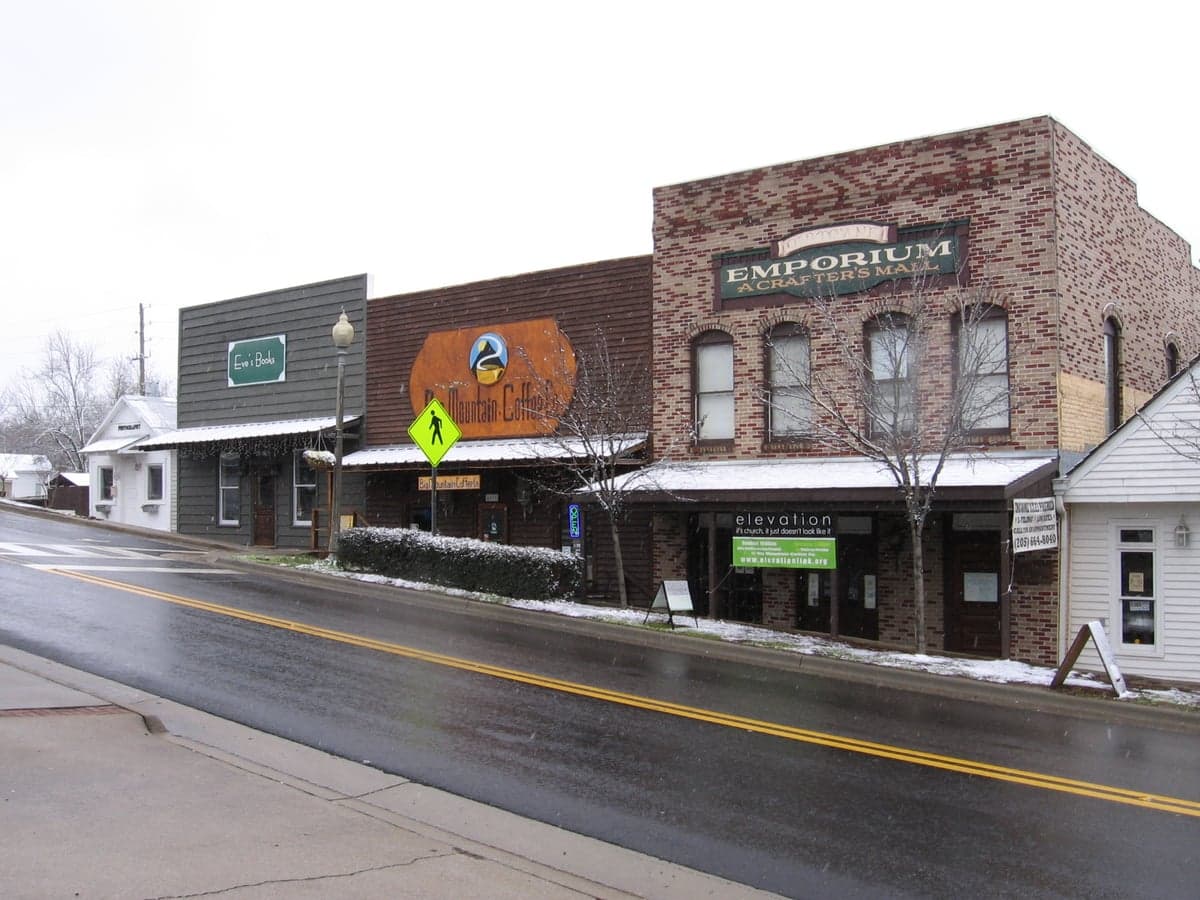
Helena’s human history begins with the land itself—the Cahaba River valley was originally inhabited by the Creek and Choctaw peoples before European settlement. The city was formally founded in the 1850s as a railroad stop on the Alabama & Tennessee River Railroad, with the first wave of settlers being white yeoman farmers and merchants from the surrounding Shelby County area. The historic Old Town Helena district, centered around the railroad depot, became the commercial and social hub for these early families. A second wave arrived after the Civil War, when freed Black families established homesteads and small farms in what is now the Hillsboro and Buck Creek neighborhoods, forming the foundation of Helena’s Black community. The city remained a quiet agricultural crossroads through the early 20th century, with population growth tied to cotton and timber. By 1950, Helena had fewer than 1,000 residents, and its character was defined by the white and Black families who had lived there for generations, with distinct social boundaries between Old Town and the rural Black enclaves.
Modern era (post-1965)
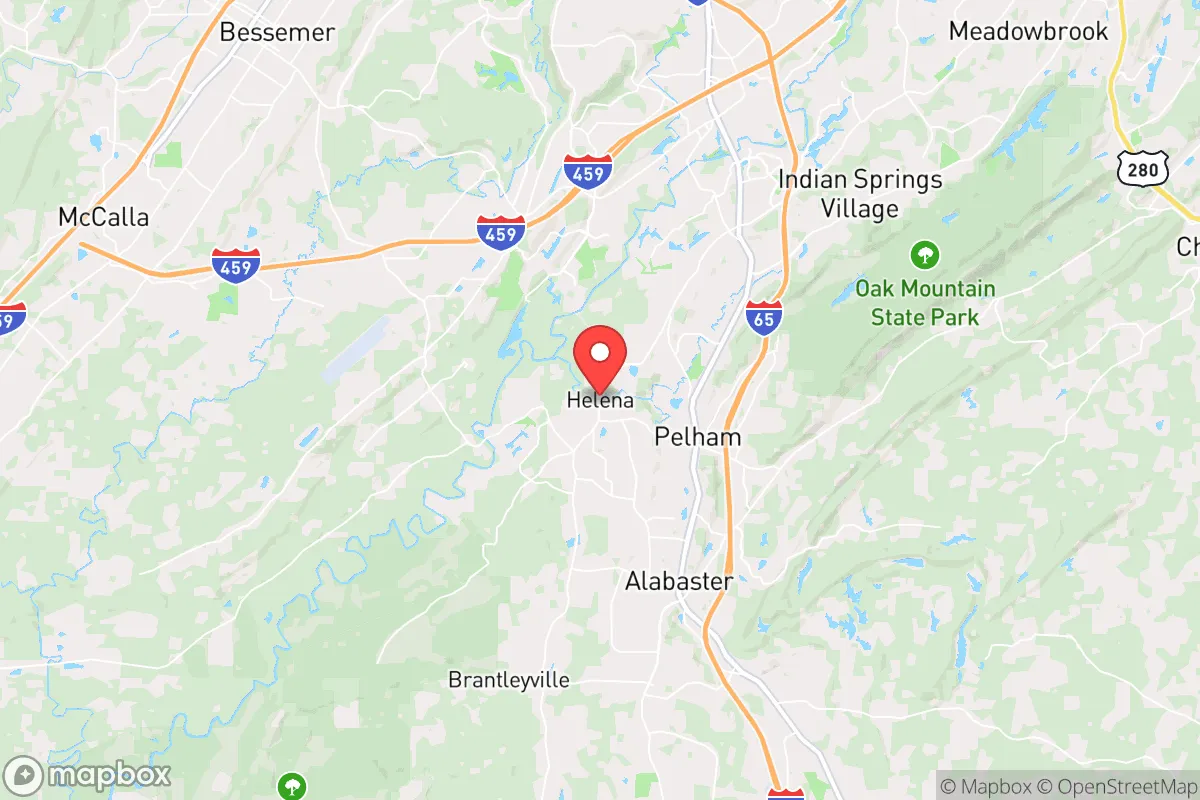
The post-1965 era transformed Helena from a sleepy village into a Birmingham exurb. The Immigration and Nationality Act of 1965 had minimal direct impact here—Helena’s foreign-born population remains just 1.8%—but the domestic migration wave that followed was enormous. Beginning in the 1970s and accelerating through the 1990s, white families from Birmingham and Jefferson County moved south to Shelby County for newer housing, lower taxes, and better schools. This wave settled primarily in planned subdivisions like River Woods and Forest Hills, which offered large lots and a suburban lifestyle. The Black population, which had been concentrated in Hillsboro and Buck Creek, began to diversify as middle-class Black families moved into newer developments like Lakeview Estates and Deer Run, though the city’s overall Black share (17.7%) remains lower than the national average. The Hispanic community (4.5%) grew modestly from the 2000s onward, largely through service-sector and construction jobs, with families settling in the Southgate area and along Highway 261. East/Southeast Asian residents (1.2%) arrived primarily as professionals in healthcare and engineering, often buying homes in the newer Village at Buck Creek development. The Indian-subcontinent population is negligible at 0.1%. Today, Helena’s neighborhoods are largely integrated by income rather than race, though Old Town retains a historic white identity and Hillsboro remains a cultural anchor for Black residents.
The future
Helena’s population is projected to continue growing steadily, driven by ongoing suburban expansion from Birmingham and the completion of the I-65 interchange improvements. The city is not homogenizing into a single melting pot; rather, it is developing distinct enclaves. The newer subdivisions on the city’s western edge—such as River Trace and Preserve at Cahaba—are attracting predominantly white, college-educated families from out of state, while the older neighborhoods like Hillsboro and Buck Creek are seeing modest in-migration of Black families from Jefferson County. The Hispanic and East/Southeast Asian communities are small and stable, with no signs of rapid growth or decline; they are likely to remain niche populations. The foreign-born share (1.8%) is far below the national average and is not expected to rise significantly, as Helena lacks the industrial or agricultural jobs that draw immigrants. Over the next 10-20 years, the city will likely become more white and more affluent at its edges, while its historic core neighborhoods maintain their existing demographic character. This means a subtle tribalization by geography: newer, wealthier subdivisions on the periphery versus older, more diverse areas near the river.
For someone moving to Helena now, the city offers a stable, family-oriented environment with strong schools and low crime, but the demographic story is one of gradual stratification. New arrivals will find a community where where you live often signals your background and timeline of arrival. The city’s future is not one of dramatic change, but of careful, predictable growth that preserves its Southern suburban identity while accommodating modest diversity.

* Values derived from national, state, county, city and local statistics and may differ in a specific area. Last updated: 2026-04-19T18:52:50.000Z
Narrative content on this page is AI-generated and may contain mistakes. Verify any details that matter before acting on them.
ReloMaps may earn a commission from affiliate links at no extra cost to you.

