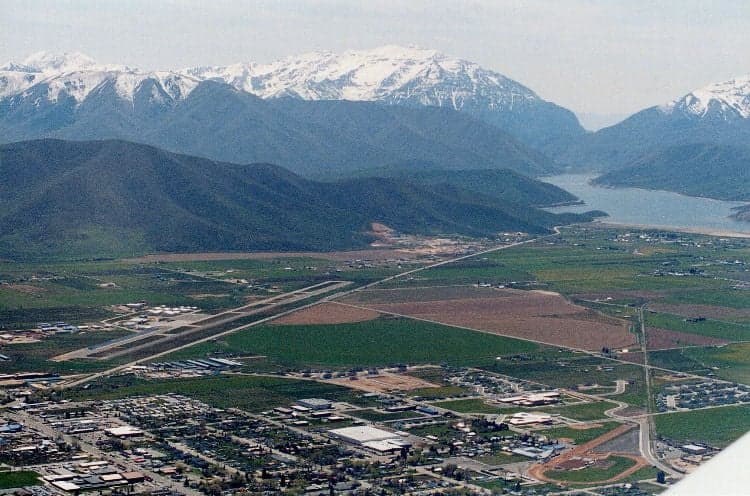
Photo: Wikipedia
Political ClimatePolitical Climate in Heber City, UT
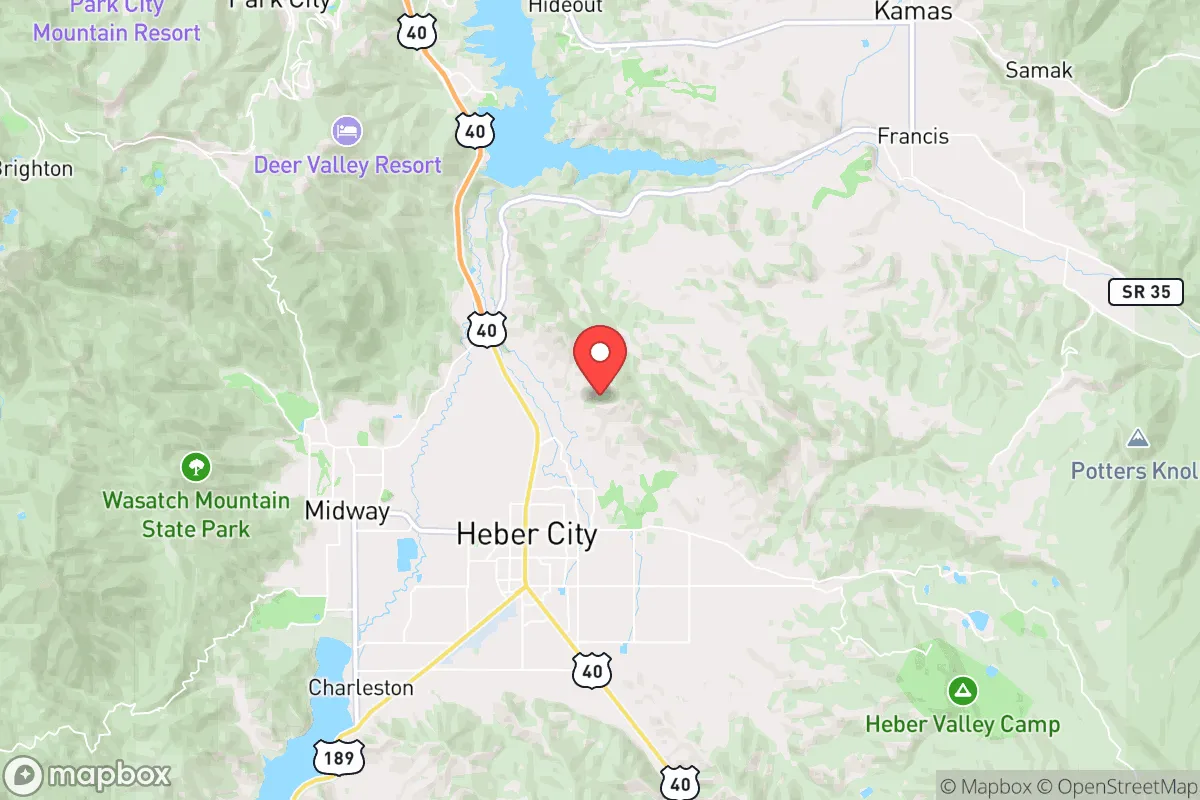
District shown is the primary district for this city’s centroid. Cities may span multiple districts.
Local Political AnalysisPolitical Analysis of Heber City, UT
Heber City and the broader Wasatch County area lean solidly Republican, with a Cook PVI of R+10 that places it just a shade less conservative than Utah as a whole (R+11). In practice, that means local elections are decided in GOP primaries, and Democratic candidates rarely crack 35% of the county vote. But the political reality here is more nuanced than a single number suggests—the valley has been shifting subtly as new residents arrive from the Wasatch Front and out-of-state transplants bring a mix of fiscal conservatism and moderate social views.
How it compares
While Heber City’s R+10 is nearly identical to Utah’s R+11, the difference matters on the ground. The state’s overall PVI is pulled rightward by deeply red rural counties like Duchesne and San Juan, while Heber City sits in a corridor that’s becoming more politically mixed. Neighboring Park City, just 20 minutes west over the pass, is a Democratic stronghold (roughly D+15), and its influence seeps into eastern Summit County. To the south, Provo and Orem are reliably conservative but with a younger, more libertarian streak than Heber’s older, family-oriented base. The real contrast is with Salt Lake City (D+20), where the urban core votes overwhelmingly blue—a world away from Heber’s small-town Republicanism. Wasatch County itself has seen its Republican primary margins shrink from 80-20 in 2016 to closer to 70-30 in 2024, driven by an influx of remote workers and second-home owners who tend to be moderate on environmental and growth issues.
What this means for residents
For conservative residents, Heber City is a comfortable fit: local government prioritizes low taxes, gun rights are widely supported, and the county commission has resisted state-level pressure to adopt more restrictive land-use policies. School board meetings rarely feature the culture-war battles seen in larger Utah districts. For liberal or moderate residents, the reality is more about finding your niche. There’s no local Democratic party infrastructure to speak of—the county party is a handful of volunteers—but the proximity to Park City means you can access progressive social circles, arts events, and dining without leaving the valley entirely. The practical impact of the lean shows up in policy: property taxes are among the lowest in the state (around 0.6% of assessed value), but public transit is minimal, and the county has been slow to adopt affordable housing initiatives. Growth management is the dominant local issue, and it splits the conservative vote between pro-development and slow-growth factions.
Culturally, Heber City retains a distinct Western ranching heritage that sets it apart from Utah’s dominant LDS-influenced corridor. The annual Heber Valley Cowboy Poetry Gathering and the county’s strong 4-H and rodeo traditions reflect a libertarian-leaning conservatism that values personal freedom over strict social conformity. This means alcohol sales are more relaxed than in neighboring Provo (where many restaurants are dry), and the local government has resisted Sunday closing laws. For newcomers, the political climate feels less like a monolithic red wall and more like a pragmatic, live-and-let-live conservatism—one that’s slowly evolving as the valley grows. The long-term trajectory points toward a slight moderation, but Heber City will likely remain R+8 to R+10 for the foreseeable future, shaped more by growth debates than by national partisan shifts.

State Political ClimatePolitical Climate in Utah
State Political AnalysisPolitical Environment in the State
Utah is one of the most reliably Republican states in the country, with a Cook Partisan Voting Index of R+11, meaning it votes about 11 points more Republican than the national average. The state hasn't voted for a Democratic presidential candidate since 1964, and Republicans hold every statewide office and supermajorities in both legislative chambers. Over the last 10-20 years, however, the political picture has gotten more interesting — the dominant LDS (Mormon) cultural influence has moderated some social conservatism, while explosive growth along the Wasatch Front has brought in a wave of out-of-state transplants, many from blue states, who are slowly nudging the urban core leftward even as rural areas harden their Republican allegiance.
Urban vs. rural divide
The political map of Utah is essentially a battle between the Wasatch Front and everything else. Salt Lake City and its immediate suburbs — Sugar House, Millcreek, and parts of Park City — are the state's blue islands. Salt Lake County as a whole has trended purple; in 2020, Joe Biden won it by about 10 points, a dramatic shift from 2012 when Mitt Romney carried it by 18. Provo and Orem in Utah County remain deeply conservative, driven by Brigham Young University and a dense LDS population, though even there, younger voters are starting to split tickets. St. George in the southwest is a fast-growing retirement and conservative haven, while Moab and Summit County (home to Park City) are the only other reliably blue pockets, fueled by tourism and outdoor recreation transplants. The rural counties — Duchesne, Uintah, San Juan — routinely vote 80-90% Republican. The divide isn't just urban vs. rural; it's also generational, with voters under 35 far more willing to vote Democratic or third-party than their parents.
Policy environment
Utah's policy environment is defined by low taxes, limited regulation, and a strong emphasis on local control, but with a distinctive LDS-influenced social framework. The state has a flat income tax of 4.65% (recently cut from 4.95%) and no state-level property tax on vehicles. Sales tax is moderate, around 6.1% state rate, but local options push it higher in some cities. Education policy is a mixed bag: Utah spends among the lowest per pupil in the nation, but has also been a national leader in school choice, with a robust charter school system and a new universal school voucher program (HB 215, passed in 2023) that gives every student access to state-funded education savings accounts. Healthcare policy leans toward market-based solutions; the state did not expand Medicaid under the ACA until voters passed a ballot initiative in 2018, and even then, the legislature imposed work requirements. Election laws are moderately restrictive: voter ID is required, same-day registration is not available, and mail-in voting is universal but with signature verification. The state has no income tax on Social Security benefits and offers a retirement income tax credit, making it attractive for retirees.
Recent policy direction
The last five years have seen Utah move in a distinctly conservative direction on several fronts, but with some notable libertarian streaks. On gun rights, Utah is a shall-issue state for concealed carry, permits are not required for open carry, and in 2021 the legislature passed a law (SB 115) prohibiting state and local law enforcement from enforcing federal gun laws that don't have a state equivalent — a kind of Second Amendment sanctuary measure. Parental rights have been a major focus: HB 261 (2023) requires schools to notify parents of any curriculum changes related to sexuality or gender identity, and the state has banned transgender girls from participating in female school sports (HB 11, 2022). On medical autonomy, Utah has a medical cannabis program (passed by ballot initiative in 2018) but it's tightly regulated — no smokable flower, only oils, tinctures, and edibles. Abortion is heavily restricted: a trigger law banning most abortions after 18 weeks took effect after Dobbs, and a near-total ban (with exceptions for rape, incest, and maternal health) was passed in 2023 but is currently blocked by court order. Property rights are strong; the state has a robust "right to farm" law protecting agricultural operations from nuisance lawsuits, and there's no state-level rent control. Privacy and surveillance saw a notable win for civil liberties in 2023 when the legislature passed a law requiring a warrant for police to access cell phone location data. Tax policy has been trending downward: the flat income tax was cut from 5% to 4.65% in 2022, and the state eliminated the state portion of the sales tax on food. Voting access has tightened slightly: in 2021, the legislature passed a law requiring a valid excuse for absentee voting (though it was later overturned by a court), and voter ID requirements were strengthened.
Civil unrest & political movements
Utah is not a hotbed of street-level political conflict, but there have been notable flashpoints. The Black Lives Matter protests in Salt Lake City during summer 2020 were large and occasionally confrontational, with some property damage downtown. The John Birch Society and other far-right groups have a historical presence in Utah, but modern activism is more focused on constitutional sheriffs and county-level Second Amendment sanctuary resolutions — nearly half of Utah's 29 counties have passed such measures. Immigration politics are relatively muted compared to border states; Utah has a "compact" with the federal government that allows local law enforcement to cooperate with ICE, but Salt Lake City and a few other municipalities have declared themselves "welcoming cities" and limit cooperation. The Utah State Legislature passed a law in 2021 (HB 2001) that preempts local sanctuary policies, creating a legal tug-of-war. Election integrity controversies have been less intense than in some states, though the 2020 election saw a small but vocal group of activists pushing for audits; the legislature responded with a bill (HB 3001, 2021) that created a post-election audit process. The most visible political movement in recent years has been the "Utah Way" — a pragmatic, business-friendly conservatism that prioritizes economic growth and quality of life over culture war battles, though that consensus is fraying as national polarization seeps in.
Projection
Over the next 5-10 years, Utah is likely to remain solidly Republican, but the margin will continue to narrow in the Wasatch Front. The state is growing fast — about 1.5% annually — and a significant share of new arrivals come from California, Oregon, and Washington, bringing more moderate or liberal political views. Salt Lake County will likely become a swing county within a decade, and the state's overall PVI could shift from R+11 to R+6 or R+7 by 2030. However, the rural counties are growing too, and the legislature is actively gerrymandering to protect Republican supermajorities (the 2021 redistricting was heavily litigated, with a state supreme court ruling that the map violated a constitutional ban on partisan gerrymandering, though the legislature has so far resisted redrawing). The LDS Church's influence is slowly waning among younger members, which could further loosen the cultural lock on conservative voting. Expect continued fights over education funding, water rights (a looming crisis), and housing affordability — all of which will shape the political landscape. A new resident moving in now should expect a state that remains conservative but is becoming more internally contested, especially in the urban core.
For a new resident, the bottom line is this: Utah offers a low-tax, business-friendly, family-oriented environment with strong property rights and a relatively stable political culture. Conservative residents will find their values reflected in state law and local governance, especially on education, gun rights, and religious liberty. Liberal residents will find Salt Lake City and Park City as welcoming enclaves, but will face an uphill battle on statewide policy. The state's political trajectory is one of slow moderation in the cities and hardening conservatism in the countryside, so where you choose to live within Utah matters enormously. If you're looking for a place where your vote will reliably count in a Republican primary, rural Utah or Utah County is your spot. If you want a more mixed environment with a growing progressive community, the Salt Lake Valley is the place to be. Either way, the state's practical governance — efficient, transparent, and relatively corruption-free — is a draw for most relocators regardless of party.
* Values derived from national, state, county, city and local statistics and may differ in a specific area. Last updated: 2026-10-01T16:27:04.000Z
Narrative content on this page is AI-generated and may contain mistakes. Verify any details that matter before acting on them.
ReloMaps may earn a commission from affiliate links at no extra cost to you.

