Photo: Wikipedia
Demographics of Heber City, UT
Affluence Level in Heber City, UT
An upper-middle-class area. Household wealth, education levels, and homeownership run ahead of national benchmarks.
People of Heber City, UT
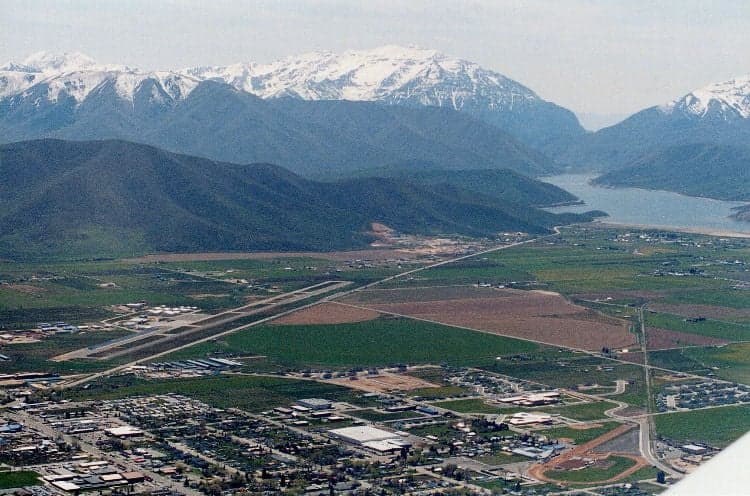
Heber City, Utah, today is a rapidly growing mountain community of 17,438 residents, characterized by a predominantly white population (76.4%) with a significant and growing Hispanic minority (17.5%). The city retains a distinctly conservative, family-oriented culture, shaped by its Mormon pioneer roots and recent waves of domestic migrants seeking outdoor recreation and a slower pace of life. With 42.6% of adults holding a college degree, the population is increasingly educated, yet the foreign-born share remains modest at 5.6%, reflecting a community that is both attracting new talent and preserving its established character.
How the city was settled and grew
Heber City’s human history begins with Mormon pioneers dispatched by Brigham Young in the late 1850s to settle the Heber Valley. The first permanent settlers arrived in 1859, drawn by the promise of irrigated farmland and the security of a tightly knit religious community. These early families—predominantly of English, Scottish, and Scandinavian descent—established the city’s original core around Center Street and Main Street, where the historic Heber City Tabernacle still stands. The town was named after Heber C. Kimball, a prominent Mormon apostle, and its early economy revolved around dry farming, livestock, and timber. By the early 20th century, the arrival of the Denver and Rio Grande Western Railroad spurred modest growth, with new homes and businesses spreading into what is now the Old Town district, a neighborhood still defined by its pioneer-era grid and historic homes. The population remained overwhelmingly white and Mormon through the mid-20th century, with little ethnic or religious diversity.
Modern era (post-1965)
The post-1965 era brought two distinct demographic currents to Heber City. The first was a steady trickle of Hispanic immigrants, primarily from Mexico, who arrived to work in agriculture, construction, and the growing service sector tied to the nearby Deer Valley and Park City ski resorts. These families initially settled in more affordable areas, including the Lake Creek neighborhood and pockets along 100 South, where a small but visible Hispanic community began to form. The second, larger wave was domestic in-migration from California, Colorado, and other Western states, accelerating after 2000 as remote work and the Wasatch Back’s recreational appeal drew professionals and retirees. This influx concentrated in newer subdivisions like Red Ledges and River’s Edge, master-planned communities that attracted affluent, predominantly white families seeking large homes and access to golf, fishing, and skiing. The Hispanic share of the population rose from roughly 5% in 1990 to 17.5% today, while the white share declined from over 90% to 76.4%. The East/Southeast Asian population (2.4%) and Black population (0.1%) remain very small, and the Indian subcontinent population is effectively zero. These shifts have created a subtle cultural divide: older, long-time residents in Old Town and Lake Creek maintain a traditional, agrarian Mormon lifestyle, while newcomers in Red Ledges and River’s Edge bring a more secular, outdoor-oriented ethos.
The future
Heber City’s population is projected to continue growing, driven by ongoing domestic migration and the expansion of the Silicon Slopes tech corridor into Utah County. The Hispanic share is likely to increase modestly, potentially reaching 20-22% by 2035, as families already in the area grow and new immigrants arrive for construction and hospitality jobs. However, the city is not expected to become a major hub for Asian or Black communities, given the lack of established ethnic enclaves and the high cost of housing. New development is concentrating in the Daniel’s Summit area and along US-40, where large-lot subdivisions are attracting a mix of remote workers and second-home buyers. Culturally, the city is becoming more politically and religiously diverse, though it remains solidly conservative—Wasatch County voted over 70% Republican in the 2024 presidential election. The tension between preservation and growth will define the next decade, as long-time residents resist denser zoning while newcomers push for more amenities and services.
For someone moving in now, Heber City offers a stable, safe, and family-friendly environment with strong schools and unmatched outdoor access, but it is a place where newcomers should expect to integrate into an established, predominantly white and Mormon social fabric. The city is becoming more educated and slightly more diverse, but its core identity as a conservative, recreation-oriented mountain town is likely to persist for the foreseeable future.

* Values derived from national, state, county, city and local statistics and may differ in a specific area. Last updated: 2026-10-01T16:27:04.000Z
Narrative content on this page is AI-generated and may contain mistakes. Verify any details that matter before acting on them.
ReloMaps may earn a commission from affiliate links at no extra cost to you.

