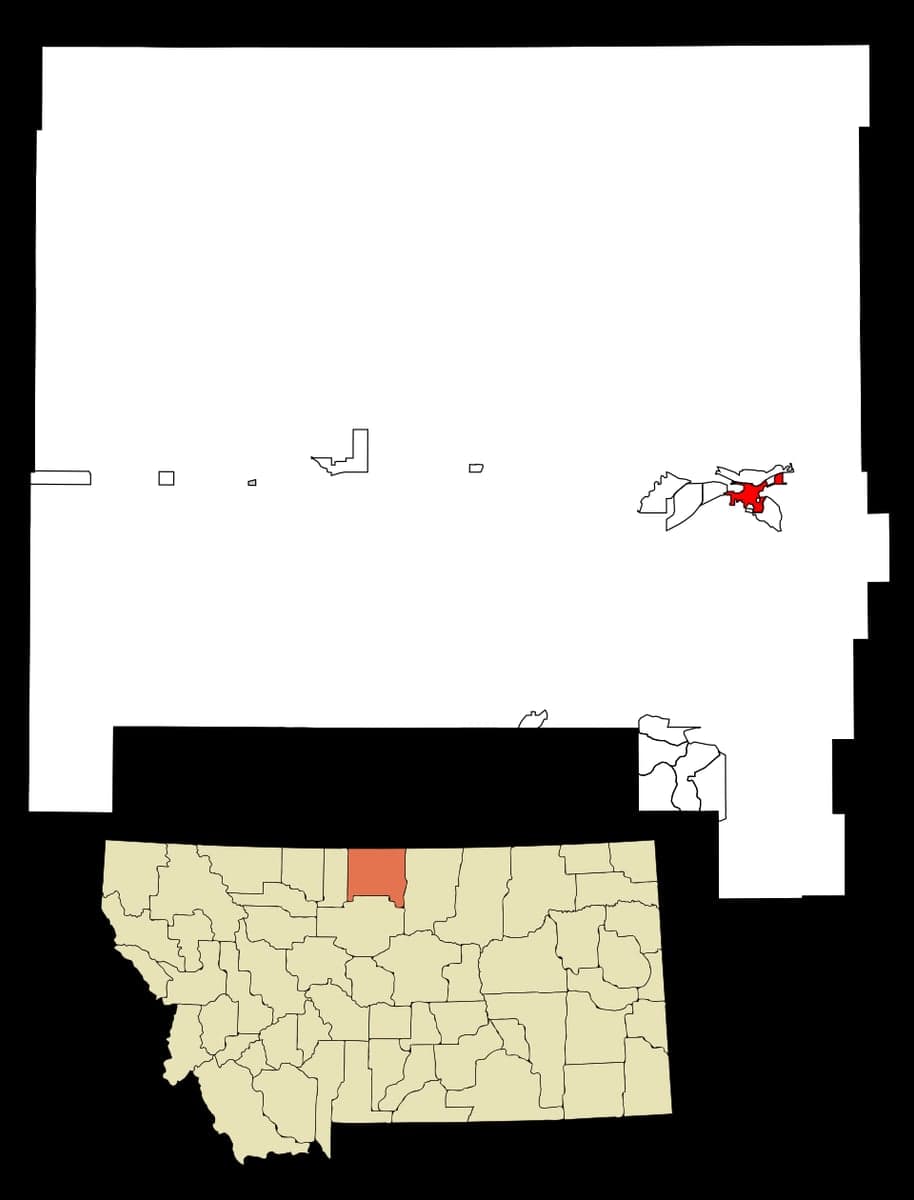
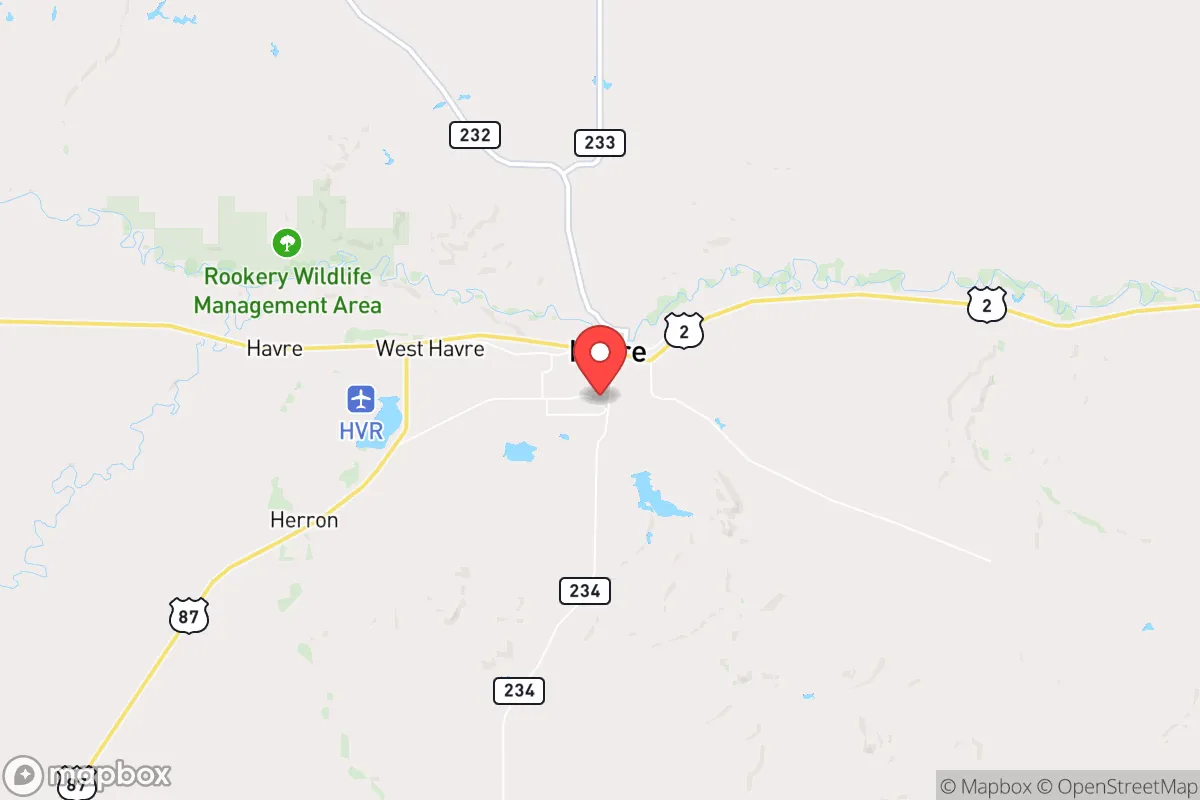
Photo: Wikipedia
Political ClimatePolitical Climate in Havre, MT
District shown is the primary district for this city’s centroid. Cities may span multiple districts.
Local Political AnalysisPolitical Analysis of Havre, MT
Havre, Montana, sits in a deeply conservative corner of the state, and that’s not changing anytime soon. The Cook PVI rating of R+15 tells you the math: this area votes Republican by a wide margin, and it’s been that way for as long as anyone can remember. You’ll see it in the local elections, the school board meetings, and the way folks talk about their rights—there’s a real suspicion of government overreach here, and that’s not a bad thing. The trajectory is steady, maybe even a little more conservative as people from out of state move in looking for the freedom they can’t find in places like Missoula or Bozeman.
How it compares
Drive an hour south to Great Falls, and you’ll find a similar conservative vibe, though it’s a bit more mixed with military families and a few more moderate pockets. Head west toward the Rocky Boy’s Indian Reservation, and the politics shift—tribal sovereignty and local governance create a different dynamic, but it’s still not what you’d call progressive. The real contrast is with Missoula, about four hours southwest, where the university crowd and out-of-state transplants have pushed things left. Havre feels like a different world: no bike lanes, no rent control debates, and no one apologizing for owning a gun. The surrounding Hi-Line towns—Chinook, Harlem, Malta—are even more rural and conservative, so Havre actually feels like the big city sometimes, but it’s still solidly red.
What this means for residents
For the people living here, the political climate means you’re mostly left alone. Property taxes are low compared to the rest of the country, and there’s no city income tax. The county commission isn’t looking to impose new regulations on your business or your land. You can build a shed without three permits, and you won’t get a fine for burning trash in a barrel. That’s the kind of freedom that keeps people here. The downside? If you’re hoping for big government programs or rapid infrastructure upgrades, you’ll be disappointed. The roads get patched, not rebuilt. The schools are decent but not fancy. And if you’re worried about progressive ideology creeping in—like diversity training in the schools or zoning laws that limit what you can do with your property—you’ll find most folks here are watching for it and pushing back. The local paper, the Havre Daily News, still runs letters to the editor about Second Amendment rights and local control. That’s the norm.
One thing that stands out culturally is the strong sense of self-reliance. Havre isn’t a place where people look to the state or federal government for answers. When the railroad was the backbone of the economy, folks figured things out themselves. Today, with Montana State University-Northern in town, there’s a practical, hands-on vibe—trade skills, agriculture, and energy work are valued over abstract policy debates. You won’t see many protests or political rallies, but you will see a lot of people quietly living their lives, paying their taxes, and expecting the government to stay out of their way. That’s the Havre way, and it’s not going anywhere.

State Political ClimatePolitical Climate in Montana
State Political AnalysisPolitical Environment in the State
Montana has long been a reliably Republican state in presidential elections, voting for the GOP candidate in every contest since 1968 except for Bill Clinton’s 1992 win. However, the state’s political landscape is far more nuanced than a simple red-state label suggests. Over the past 10-20 years, a surge of new residents—many from deep-blue states like California and Washington—has begun to reshape the electorate, particularly in fast-growing counties like Gallatin (Bozeman) and Missoula. While the state legislature remains firmly under Republican supermajority control, the governor’s office and key local races have seen increasing competition, creating a dynamic where conservative policy wins at the state level but faces growing resistance in urban centers.
Urban vs. rural divide
The political map of Montana is a textbook study in the urban-rural split. The state’s two largest cities, Billings (Yellowstone County) and Great Falls (Cascade County), lean Republican but are not monolithic. Billings, the economic hub, votes reliably red, while Great Falls has trended more purple in recent cycles. The real action is in the western mountain valleys. Missoula (Missoula County) is the state’s progressive stronghold, consistently voting Democratic by double digits and home to the University of Montana. Bozeman (Gallatin County) was once reliably red but has flipped to a swing county—and even blue in some races—as tech workers and remote professionals flood in. In 2024, Gallatin County voted for the Democratic presidential candidate, a seismic shift from its Republican past. Meanwhile, the vast rural expanse—counties like Toole, McCone, and Wibaux—vote 80-90% Republican. The divide is stark: the three most populous counties (Yellowstone, Gallatin, Missoula) now cast nearly 40% of the state’s vote, and their politics are diverging sharply from the rest of Montana.
Policy environment
Montana’s policy environment is a mixed bag for conservatives. On the positive side, the state has no sales tax, a flat income tax rate of 5.9% (recently cut from 6.75%), and a business-friendly regulatory climate. The 2023 legislature passed major property tax relief for homeowners and expanded school choice through a new education savings account program. However, the state’s ballot initiative process has produced some unwelcome surprises. In 2022, voters approved a constitutional right to abortion (CI-128), overriding a Republican-backed trigger law. This shows that while the legislature is conservative, the electorate can be libertarian-leaning on personal issues. On election integrity, Montana requires voter ID with a photo, and the 2023 session tightened absentee ballot rules. The state also has a constitutional right to hunt and fish, and gun laws are among the most permissive in the nation—no permit needed for concealed carry, no magazine bans, and a strong preemption law that prevents local governments from enacting their own restrictions.
Trajectory & freedom
Montana is at a crossroads regarding personal freedom. On the positive side, the 2023 session was a banner year for liberty: the legislature passed a parental rights bill (SB 99) requiring schools to notify parents of any curriculum involving sexuality or gender identity, and a medical freedom bill (HB 702) prohibiting vaccine mandates by private employers. The state also expanded gun rights by allowing permitless carry for anyone 18 or older. However, the influx of new residents is driving up housing costs and property taxes, which is a de facto erosion of economic freedom for long-time residents. The growth of local land-use regulations in Bozeman and Missoula—like inclusionary zoning and short-term rental caps—is a concerning trend for property rights advocates. The state’s medical marijuana program remains intact, but recreational use is still illegal, creating a tension between personal liberty and the legislature’s conservative social values. The trajectory is mixed: state-level freedom is expanding, but local governments in growing areas are imposing more restrictions.
Civil unrest & political movements
Montana has seen relatively little civil unrest compared to coastal states, but flashpoints exist. The Standing Rock pipeline protests in 2016-2017 drew activists from across the state, particularly from Missoula and Bozeman, and left a lasting activist infrastructure. In 2020, Black Lives Matter protests in Missoula and Bozeman were large for the state’s size, but they were met with counter-protests and a strong law enforcement presence. The Yellowstone County Republican Party has been a hotbed of internal factionalism between establishment conservatives and more populist, Trump-aligned activists. The Montana Freedom Caucus in the legislature has pushed for more aggressive action on election integrity and immigration, including a 2023 bill to ban sanctuary cities (which passed). There is also a growing county supremacy movement in rural areas like Lincoln County, where local officials have passed resolutions asserting county authority over federal land management—a direct challenge to federal overreach. New residents should expect a politically engaged populace, but the activism is generally civil and focused on policy rather than street confrontations.
Projection
Over the next 5-10 years, Montana is likely to become more politically competitive at the state level, but not necessarily more liberal. The in-migration is heavily skewed toward younger, college-educated professionals who are fiscally conservative but socially moderate or libertarian. This could push the state toward a New Hampshire-style politics: low taxes, gun-friendly, but tolerant on social issues like marijuana and abortion. The Republican supermajority in the legislature is likely to shrink, but the GOP will probably retain control of both chambers. The wild card is Gallatin County: if it continues to trend blue, it could flip the entire state in close races. However, rural counties are growing faster than expected due to remote work, and they remain deeply conservative. The biggest threat to freedom in Montana is not a Democratic takeover, but rather the housing crisis and property tax burden that could drive out the very people who made the state attractive. If the legislature fails to address these economic pressures, the state could see a backlash against growth that leads to more regulation, not less.
For a conservative-leaning individual or family moving to Montana, the bottom line is this: you will find a state that respects your gun rights, keeps taxes low, and protects parental authority. But you need to choose your location carefully. If you move to Bozeman or Missoula, you will be living in a blue bubble with high housing costs and local progressive policies. If you choose Billings, Kalispell, or a smaller town like Hamilton or Lewistown, you will find a community that matches your values more closely. The state is still a great bet for freedom, but the window is narrowing as the newcomers arrive. Get in now, get involved in local politics, and help keep Montana the Last Best Place for liberty.
* Values derived from national, state, county, city and local statistics and may differ in a specific area. Last updated: 2026-04-29T21:49:15.000Z
Narrative content on this page is AI-generated and may contain mistakes. Verify any details that matter before acting on them.
ReloMaps may earn a commission from affiliate links at no extra cost to you.

