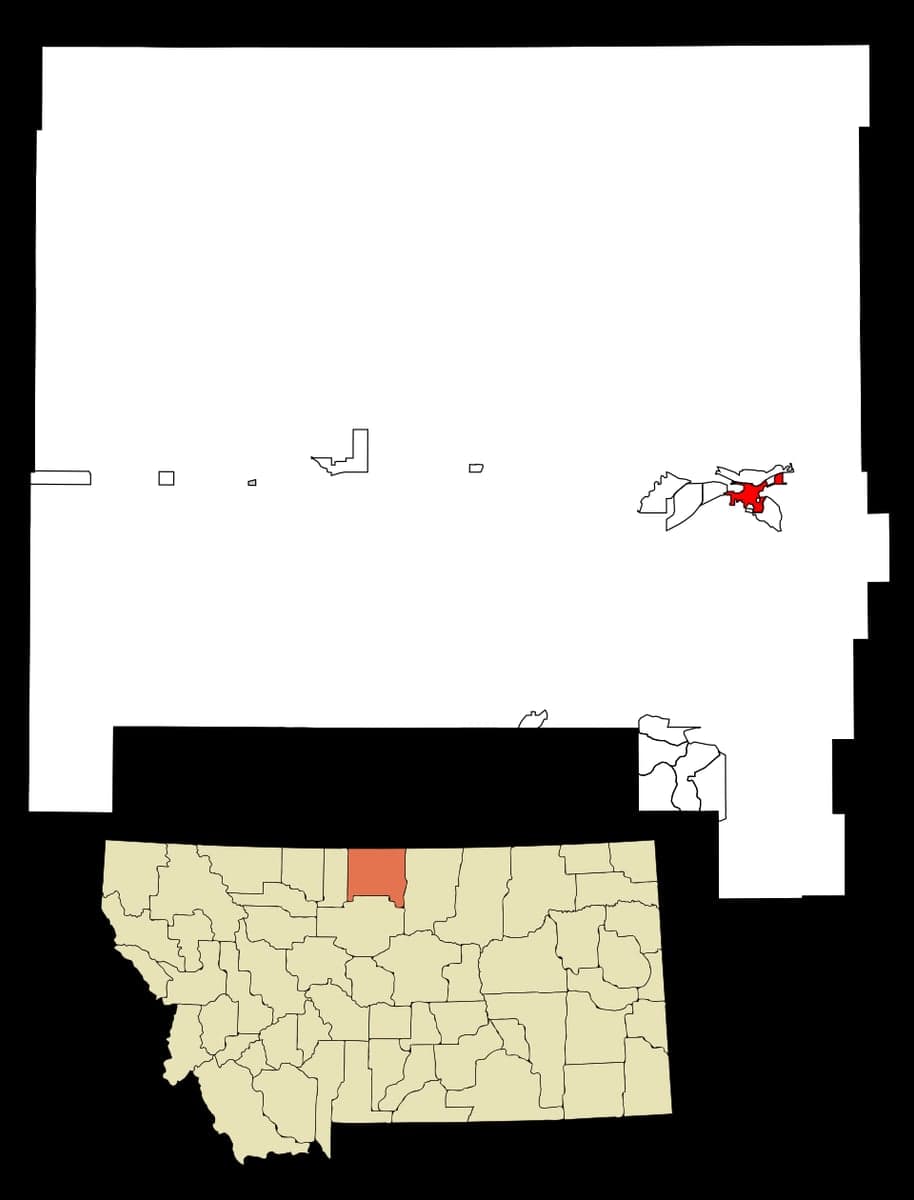
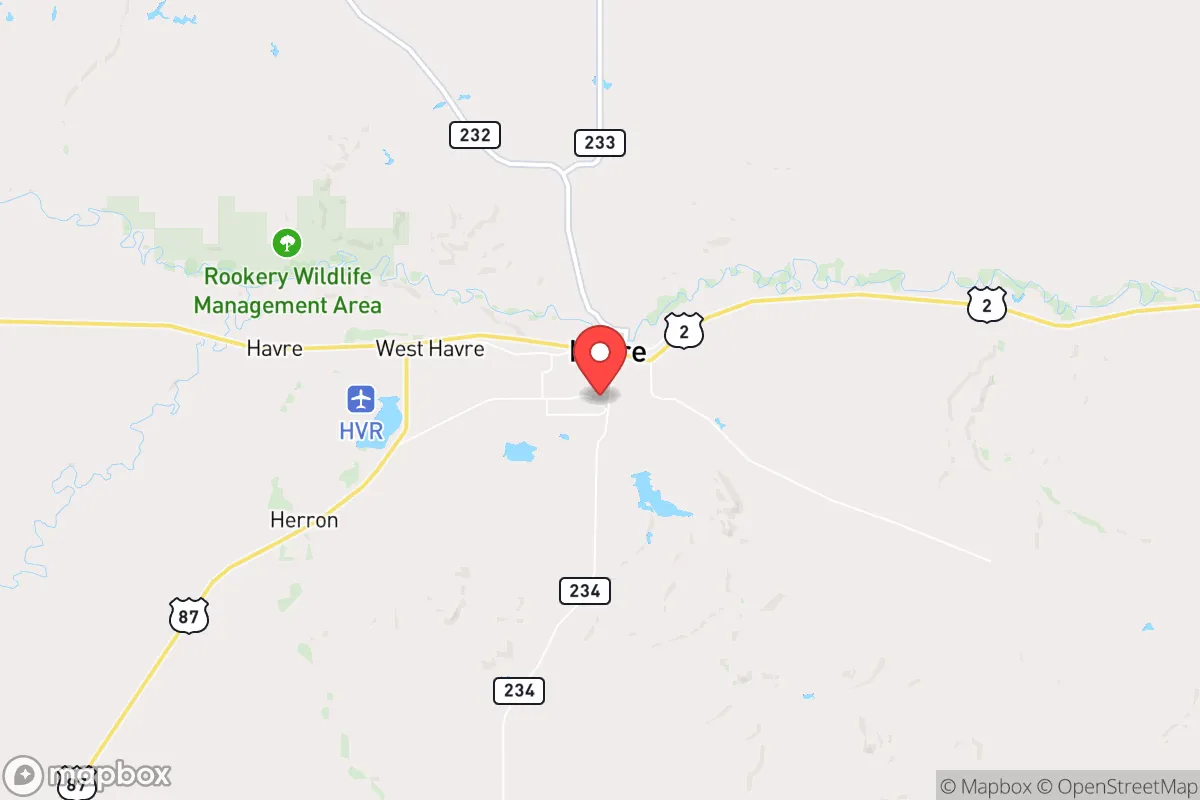
Photo: Wikipedia
Strategic Assessment of Havre, MT
Workable tactical position. Some exposure to population density or targets, but generally defensible in a crisis.
What does the Strategic Assessment tell us?
Our Strategic Assessment grades tactical survivability of an area. Major population centers, military targets, fallout zones, natural disasters, and border exposure all drive risk — lower exposure means a more defensible position in a crisis.
This is heavily inspired by Joel Skousen's Strategic Relocation book. Highly recommended you checkout the book ($)What does this tell us?
Our Strategic Assessment grades tactical survivability of an area. Major population centers, military targets, fallout zones, natural disasters, and border exposure all drive risk — lower exposure means a more defensible position in a crisis.
This is heavily inspired by Joel Skousen's Strategic Relocation book. Highly recommended you checkout the book ($)Strategic Pillars

Key Distances
Regional Safe Places
Below is our recommended "safe zones" in Montana and the surrounding area based on our strategic heuristics. For most people, it's unrealistic to live in a “safe zone” full-time due to work, family or other personal reasons. They tend to be more rural. However, many of these areas are perfect for second homes and retreat properties that double as a vacation home or even a short-term rental.
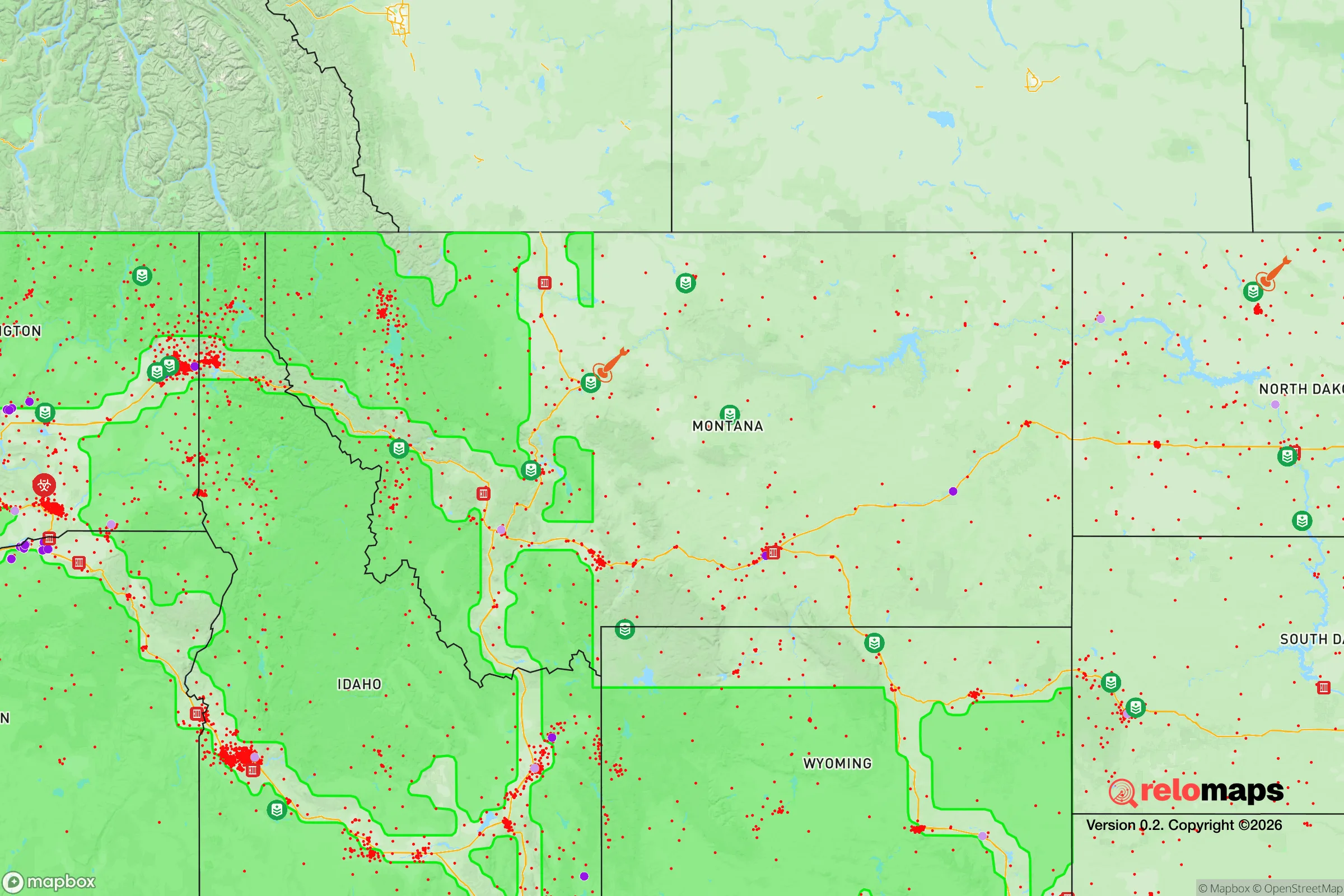


Important Note: For informational purposes only. This does not mean nothing bad ever happens in the green zones. Please use common sense. This is based on public data and modeled with AI. We tried to take a conservative approach but mistakes happen. We update this regularly as new information becomes available.
Solar Generator Recommendations
Backup power matters more here than in safer locations. We've picked three solar generators across budgets and capacity tiers — start with the budget unit if you only need a few essentials, or step up if you want to run a fridge and HVAC for days at a time.

Jackery Portable Power Station Explorer 300
Budget OptionPower on the Go: Weighing only 11 lbs, it's convenient to set up and store with book-sized foldable solar panels

BLUETTI Portable Power Station AC180
Designed for both indoor and outdoor scenarios, AC180 is highly capable as it has a robost capacity and continuous output power.

EF ECOFLOW DELTA Pro Ultra Power Station
Upgraded PickEcoFlow DELTA Pro Ultra is a whole-home energy system designed to grow with your family. Integrated with the Smart Home Panel 2, it scales to meet your evolving energy needs — keeping your home powered, intelligent, and secure through every stage of life.
We earn a commission, at no additional cost to you.
Strategic Assessment Analysis
Havre, Montana, sits as a genuine outlier in the Lower 48—a community whose geographic isolation is its primary strategic asset. For someone thinking in terms of resilience, this isn't just a small town on the Hi-Line; it's a location that offers a rare combination of distance from major population centers, access to the Canadian border as a potential buffer, and a local economy rooted in agriculture and rail that can function without constant outside resupply. The area's low population density and harsh climate act as natural filters, meaning the people who live here are already accustomed to self-reliance and long winters, which are exactly the traits that matter when the systems start to strain.
Geographic position and natural advantages for long-term security
Havre's location in north-central Montana places it roughly 40 miles from the Canadian border, which provides a strategic depth that few U.S. towns can claim. The surrounding Hill County is vast and sparsely populated—over 2,900 square miles with fewer than 17,000 residents total. That density is roughly 6 people per square mile, which means your nearest neighbor could be miles away if you choose land outside the town limits. The Milk River runs through the area, offering a perennial water source that doesn't depend on municipal infrastructure. The terrain is rolling prairie and coulees, which provides natural cover and defensible positions if you're thinking about security. Winters are brutal—average January highs are around 20°F—but that cold is a barrier in itself. It discourages transient populations and means that anyone unprepared for extreme cold simply won't last. The growing season is short, around 120 days, but the region's wheat and cattle operations prove that serious food production is possible here. For a relocator, the key takeaway is that Havre is not a destination for the casual or the unprepared; it's a place that rewards those who come with skills, supplies, and a plan.
Risks, exposures, and proximity to fallout-relevant landmarks
No location is without risk, and Havre has its own set of exposures that a strategic relocator needs to weigh. The most obvious is the Burlington Northern Santa Fe rail line that runs through the heart of town. Havre is a major rail hub, with a large classification yard and maintenance facility. In a scenario of national disruption, that rail line could become a target for sabotage or a vector for unwanted traffic. The town itself sits along U.S. Highway 2, which is a primary east-west route across the northern tier. While traffic is light compared to interstates, it's still a corridor that could see movement during a crisis. On the positive side, Havre is over 300 miles from the nearest major city—Billings, Great Falls, and even Calgary are all distant. That distance is your buffer. There are no nuclear power plants within a 200-mile radius. The closest significant military installation is Malmstrom Air Force Base near Great Falls, about 110 miles southwest, which is far enough to avoid direct fallout from a strike but close enough that you'd want to monitor wind patterns. The biggest risk is likely economic isolation rather than physical danger. Havre's economy depends on rail, agriculture, and the local college. If supply chains break down, the town will feel it, but it's also the kind of place where people still hunt, garden, and barter. The real threat is a prolonged winter power outage, which is why any serious prepper here needs backup heat and fuel storage.
Practical resilience for a relocator: food, water, energy, and defensibility
For someone looking to establish a resilient household, Havre offers a mix of advantages and challenges that require upfront investment. Water is the first consideration. The Milk River is a reliable surface water source, but it's also subject to agricultural runoff and seasonal low flows. Most rural properties rely on wells, and the groundwater in Hill County is generally good, with depths ranging from 50 to 200 feet. If you're buying land, a tested well is non-negotiable. Food production is viable but not easy. The short growing season limits what you can grow, but cold-hardy crops like potatoes, carrots, kale, and squash do well. The area is also prime for raising chickens, goats, and rabbits. Hunting is a major part of the local culture—deer, elk, and upland birds are abundant on public lands like the nearby Bear Paw Mountains. For energy, grid reliability is average for rural Montana, which means outages are common during winter storms. Solar is viable but requires battery storage to handle the long, dark winters. Wind is a constant here—the Hi-Line is known for it—so a small wind turbine could be a smart supplement. Defensibility is where Havre really shines. The low population density means you can buy acreage with clear sightlines and limited road access. The local culture is heavily armed and self-reliant; Montana has some of the most permissive firearm laws in the country, with no permit required for concealed carry and no state-level registration. The local sheriff's office is responsive but small, so you are ultimately your own first responder. The community itself is tight-knit and wary of outsiders, which is a double-edged sword. It means you'll need to invest time in building trust, but once you're in, you have neighbors who will watch your back.
The overall strategic picture for Havre is one of high potential paired with high demands. This is not a location for someone looking for a soft landing. It's a place for those who are willing to trade convenience for security, and who understand that true resilience requires physical preparation, social integration, and a tolerance for isolation. The distance from fallout-relevant targets, the availability of water and agricultural land, and the cultural predisposition toward self-sufficiency make it one of the stronger options in the northern Rockies. But the climate is unforgiving, the economy is narrow, and the margin for error is thin. If you come with a year's worth of supplies, a reliable vehicle, and a willingness to learn from the locals, Havre can serve as a long-term base that will remain stable when the rest of the country is in chaos. If you come unprepared, the Hi-Line will eat you alive. That's not a warning—it's a filter.

* Values derived from national, state, county, city and local statistics and may differ in a specific area. Last updated: 2026-04-29T21:49:15.000Z
Narrative content on this page is AI-generated and may contain mistakes. Verify any details that matter before acting on them.
ReloMaps may earn a commission from affiliate links at no extra cost to you.

