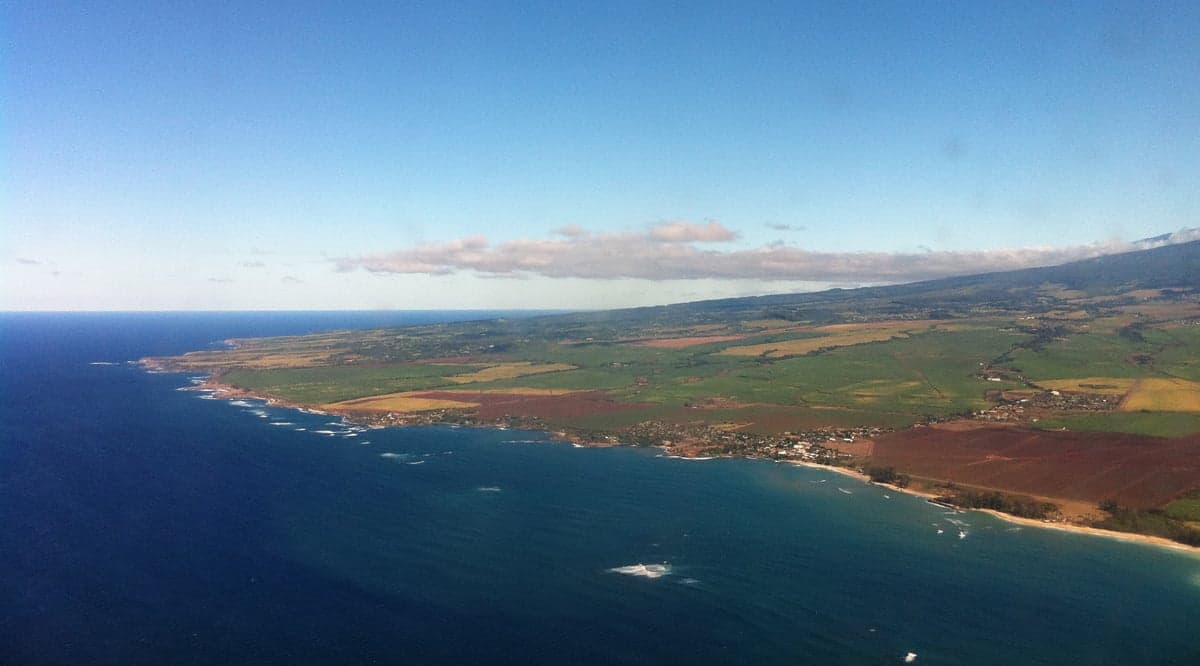
Photo: Wikipedia
Strategic Assessment of Haiku, HI
Strong survivability profile. Good buffer from population centers, with manageable environmental and tactical risks.
What does the Strategic Assessment tell us?
Our Strategic Assessment grades tactical survivability of an area. Major population centers, military targets, fallout zones, natural disasters, and border exposure all drive risk — lower exposure means a more defensible position in a crisis.
This is heavily inspired by Joel Skousen's Strategic Relocation book. Highly recommended you checkout the book ($)What does this tell us?
Our Strategic Assessment grades tactical survivability of an area. Major population centers, military targets, fallout zones, natural disasters, and border exposure all drive risk — lower exposure means a more defensible position in a crisis.
This is heavily inspired by Joel Skousen's Strategic Relocation book. Highly recommended you checkout the book ($)Strategic Pillars

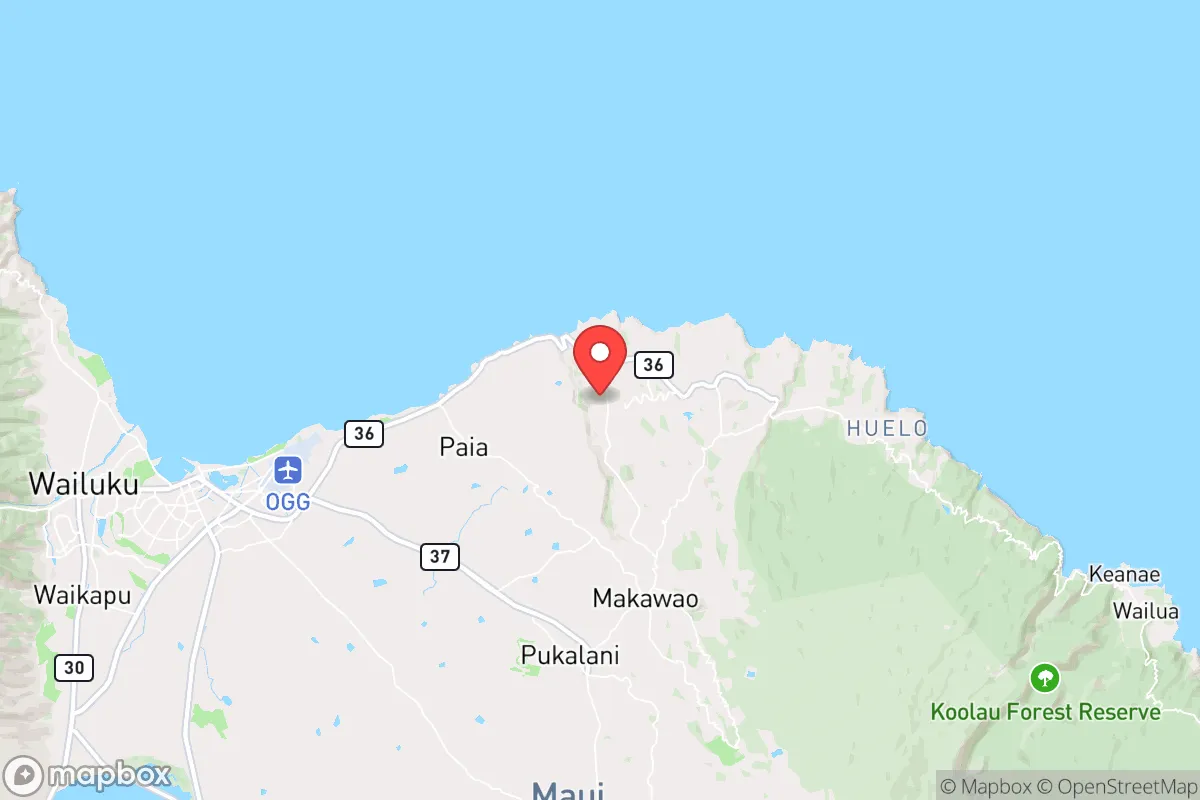
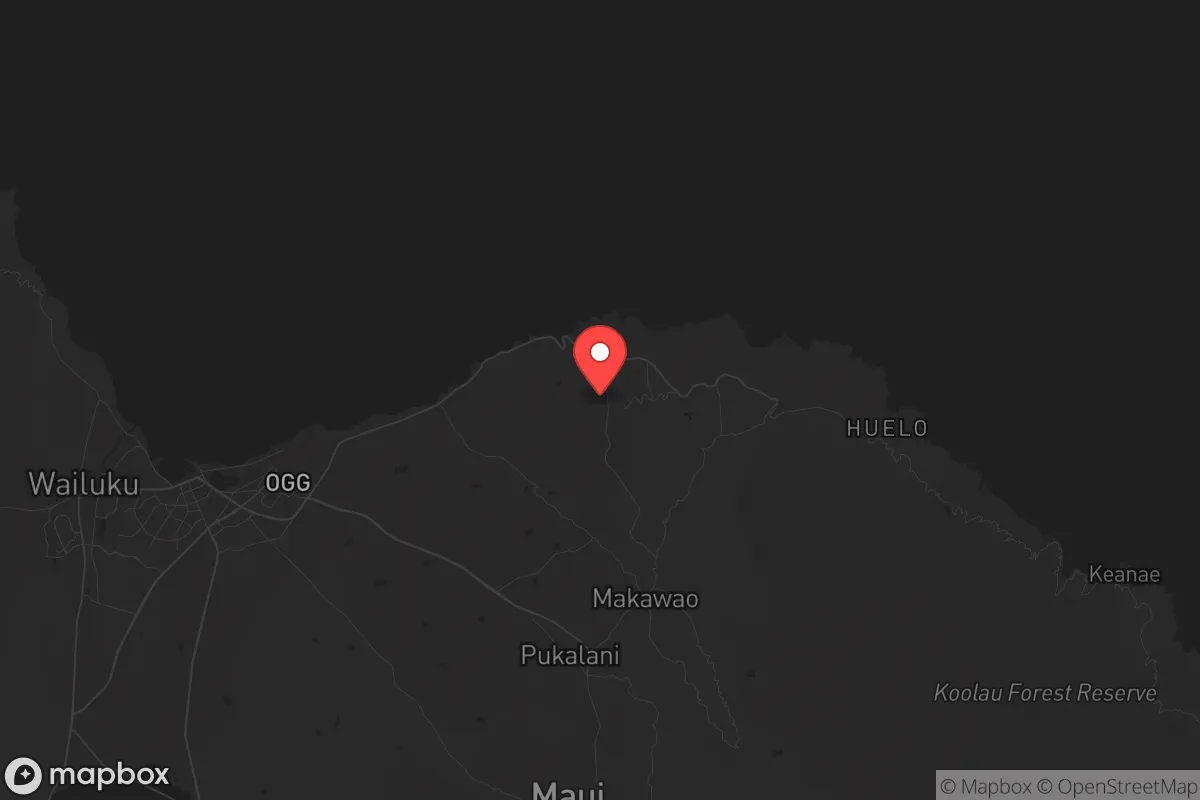
Key Distances
Regional Safe Places
Below is our recommended "safe zones" in Hawaii and the surrounding area based on our strategic heuristics. For most people, it's unrealistic to live in a “safe zone” full-time due to work, family or other personal reasons. They tend to be more rural. However, many of these areas are perfect for second homes and retreat properties that double as a vacation home or even a short-term rental.

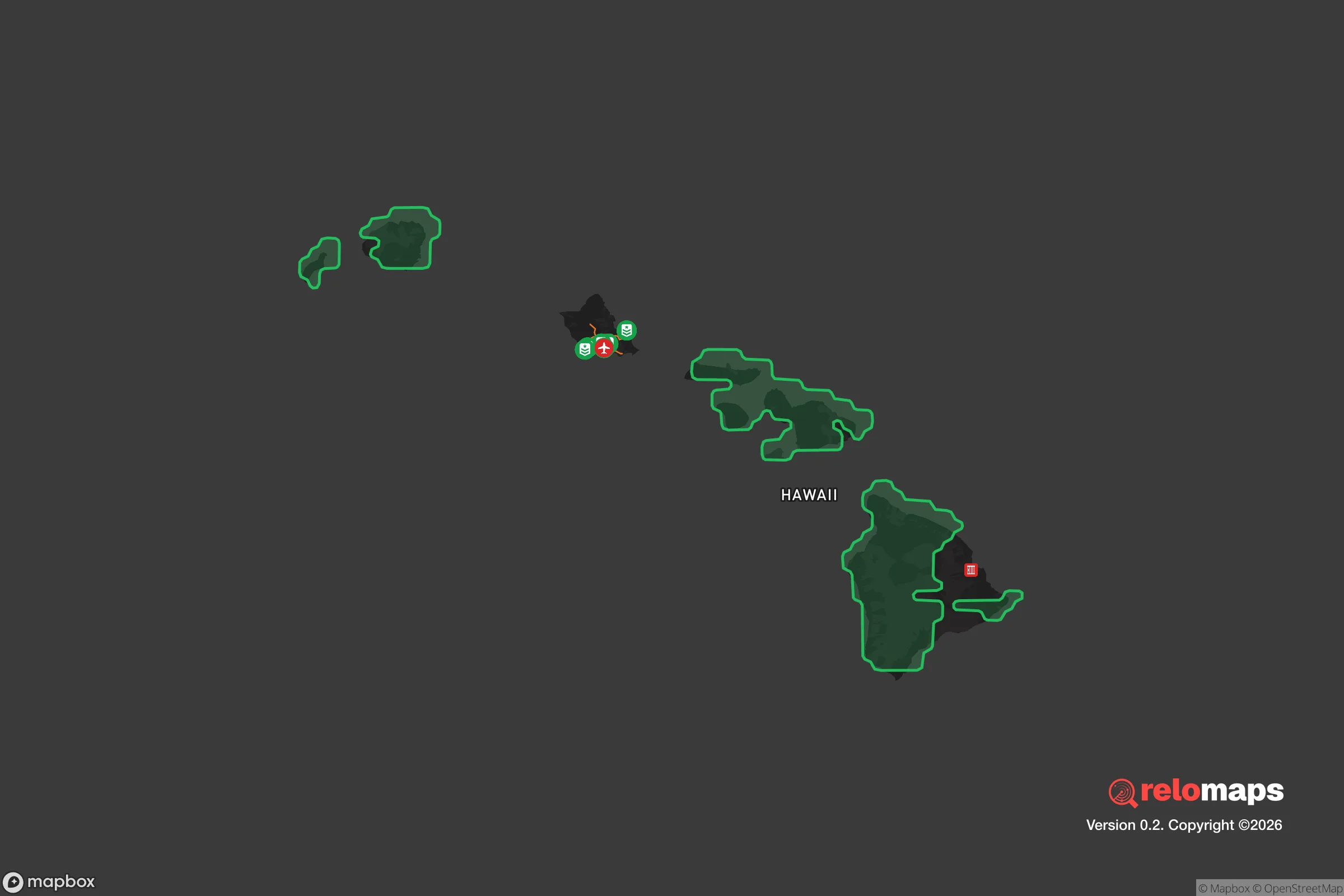


Important Note: For informational purposes only. This does not mean nothing bad ever happens in the green zones. Please use common sense. This is based on public data and modeled with AI. We tried to take a conservative approach but mistakes happen. We update this regularly as new information becomes available.
Solar Generator Recommendations
Backup power matters more here than in safer locations. We've picked three solar generators across budgets and capacity tiers — start with the budget unit if you only need a few essentials, or step up if you want to run a fridge and HVAC for days at a time.

Jackery Portable Power Station Explorer 300
Budget OptionPower on the Go: Weighing only 11 lbs, it's convenient to set up and store with book-sized foldable solar panels

BLUETTI Portable Power Station AC180
Designed for both indoor and outdoor scenarios, AC180 is highly capable as it has a robost capacity and continuous output power.

EF ECOFLOW DELTA Pro Ultra Power Station
Upgraded PickEcoFlow DELTA Pro Ultra is a whole-home energy system designed to grow with your family. Integrated with the Smart Home Panel 2, it scales to meet your evolving energy needs — keeping your home powered, intelligent, and secure through every stage of life.
We earn a commission, at no additional cost to you.
Strategic Assessment Analysis
Haiku, on Maui's north shore, presents a mixed strategic picture for the relocation-minded reader prioritizing resilience and self-sufficiency. Its primary advantage is geographic isolation from major population centers and the most obvious man-made threats, but this comes with significant trade-offs in accessibility and exposure to natural hazards. For a conservative-leaning individual or family weighing disaster readiness, Haiku offers a genuine off-grid potential that is rare in Hawaii, yet demands a serious commitment to self-reliance that most suburban relocators underestimate.
Geographic position and natural advantages for self-sufficiency
Haiku's location on the windward (northeast) slope of Haleakalā provides a distinct set of natural advantages for those seeking resilience. The area receives abundant rainfall — often 80 to 120 inches annually — which means a reliable freshwater supply for catchment systems, a critical asset in any grid-down scenario. Unlike leeward areas such as Kihei or Wailea, Haiku is not dependent on the county water system for its primary supply; many long-term residents already rely on roof catchment and filtration, a practice that aligns directly with self-sufficiency goals. The elevation, ranging from roughly 500 to 1,500 feet, places Haiku above the coastal storm surge zone and well away from tsunami inundation areas that threaten lower-lying communities like Paia or Kahului. The terrain is steep and heavily vegetated, which naturally limits access points and provides a degree of defensibility and privacy that is difficult to find on Maui's more developed south and west shores. The climate is consistently mild, rarely exceeding 85°F or dropping below 60°F, which reduces the energy burden for temperature regulation and makes long-term food storage more practical than in hotter climates. The volcanic soil, while acidic, is fertile and supports year-round growing of staples like taro, sweet potato, breadfruit, and tropical fruits, giving a determined household a realistic path toward food autonomy.
Risks, exposures, and proximity to fallout-relevant landmarks
The same geography that provides advantages also creates distinct vulnerabilities. Haiku sits in a high-risk wildfire zone, particularly during the drier summer months when trade winds weaken. The 2023 Lahaina fire demonstrated that Maui's wildland-urban interface can burn catastrophically, and Haiku's dense vegetation and narrow, winding roads create a similar risk profile. Evacuation routes are limited: the main artery, Hana Highway (Route 36), is a two-lane road that can become impassable with a single accident or downed tree, a frequent occurrence during storms. The secondary route, Kaupakalua Road, is even narrower and more prone to blockage. For a relocator thinking about man-made risks, Haiku's position is a double-edged sword. It is roughly 15 miles from Kahului, home to Maui's main airport, seaport, and the Kahului Power Plant — a 37-megawatt oil-fired facility that is a plausible target for disruption. The port at Kahului is the island's sole lifeline for fuel, food, and manufactured goods; any significant disruption there would cascade across the island within days. While Haiku is far enough from Kahului to avoid a direct blast or fallout zone from a conventional attack, its complete dependence on that port for fuel and non-local supplies means that a port closure would render the area's self-sufficiency efforts moot unless a household has already achieved near-total independence. Additionally, the proximity to the Kahului Airport — a potential staging area for federal response or, in a worst-case scenario, a target — means that Haiku is not remote enough to be irrelevant to a major incident. It is a 20- to 30-minute drive under normal conditions, but that drive becomes a choke point during any emergency.
Practical resilience for a relocator: food, water, energy, and defensibility
For the relocator serious about practical resilience, Haiku offers a realistic foundation but requires significant upfront investment. Water is the strongest asset: a properly sized catchment system with first-flush diversion, sediment filters, and UV or carbon filtration can provide a household with an independent, high-quality water supply for drinking, cooking, and sanitation. The rainfall pattern is reliable enough that a 10,000- to 20,000-gallon tank can carry a family through a dry spell of several weeks. Food production is viable but labor-intensive: the growing season is year-round, but the soil requires amendment (lime, compost, and trace minerals) to reach its potential. Pests — particularly rats, coqui frogs, and invasive insects — are a constant challenge that demands integrated pest management rather than casual gardening. A serious homesteader can produce a significant portion of their calories, but staples like rice, cooking oil, and protein (beyond eggs and occasional poultry) will still need to be imported. Energy independence is achievable but expensive: the area receives less solar radiation than leeward Maui due to frequent cloud cover, so a solar array must be oversized by roughly 30-40% compared to a Kihei installation. Battery storage is essential, as grid power in Haiku is prone to weather-related outages. A combined solar-plus-battery system sized for a typical 3-bedroom home runs $25,000 to $40,000 after federal tax credits, but it eliminates dependence on the island's fragile and expensive grid. Defensibility is moderate: the limited road access works both ways — it restricts outsiders but also restricts the homeowner's ability to leave. The dense vegetation provides cover but also creates blind spots. A well-placed property with a single driveway and clear sightlines can be made quite secure, but the overall neighborhood is not a gated or organized community; security is an individual responsibility. There is no meaningful law enforcement presence in Haiku; the nearest Maui Police Department substation is in Paia, and response times for emergencies can exceed 30 minutes.
The overall strategic picture for Haiku is one of high potential paired with high personal responsibility. It is not a location where a relocator can simply buy a house and expect resilience to follow; it demands active management of water, food, energy, and security systems. For a family willing to invest the time and capital to build a truly self-sufficient homestead, Haiku's natural advantages — abundant water, fertile soil, mild climate, and relative isolation — make it one of the more viable locations in Hawaii for long-term disaster preparedness. However, for someone expecting a turnkey solution or a community that will organize collectively in a crisis, Haiku will disappoint. The area's dependence on the Kahului port for fuel and bulk goods, its limited evacuation routes, and its wildfire risk mean that resilience is never fully achieved; it is a continuous process of preparation and adaptation. The conservative-leaning relocator who values independence, hard work, and strategic thinking will find Haiku a worthy challenge. The one looking for security without sacrifice should look elsewhere.

* Values derived from national, state, county, city and local statistics and may differ in a specific area. Last updated: 2026-06-29T22:52:27.000Z
Narrative content on this page is AI-generated and may contain mistakes. Verify any details that matter before acting on them.
ReloMaps may earn a commission from affiliate links at no extra cost to you.

