
Photo: Wikipedia
Political ClimatePolitical Climate in Haiku, HI
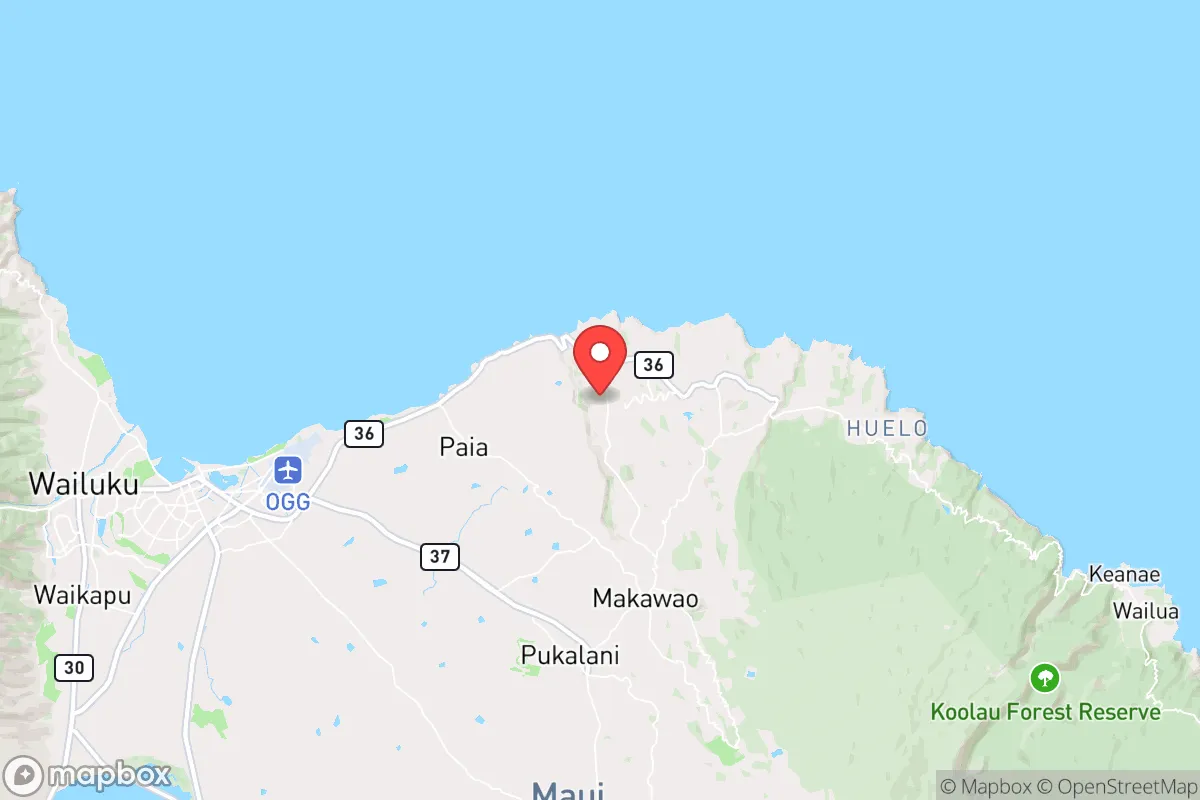
District shown is the primary district for this city’s centroid. Cities may span multiple districts.
Local Political AnalysisPolitical Analysis of Haiku, HI
Haiku, on Maui’s north shore, leans solidly and reliably Democratic, with a Cook PVI of D+12 that places it among the more left-leaning communities in Hawaii. That number means the district consistently votes about twelve points more Democratic than the national average, and in practice, local elections here are seldom competitive for Republicans—the real political action is in Democratic primaries. The trajectory has held steady for years; there’s no recent swing toward the center or right, and the area’s growth—mostly second-home owners and remote workers from the mainland—tends to reinforce the existing blue tilt rather than challenge it.
How it compares
Compared to the state of Hawaii as a whole, Haiku is slightly more Democratic in intensity. The state itself has a strong Democratic lean (roughly D+14 in recent presidential cycles), but Haiku’s D+12 PVI is actually a shade to the right of the state average—a quirk that reflects the fact that Maui’s north shore includes a fair number of retirees and small-business owners who are moderate or socially liberal but fiscally cautious. Neighboring towns offer a useful contrast: Makawao, just up the hill, is notably more conservative, with a mix of ranching families and evangelical churches that produce Republican votes in local races; Paia, a few miles west, is the most progressive pocket, full of surf-tourism and organic farms, pushing its precincts closer to D+18. Meanwhile, West Maui (Lahaina, Kaanapali) and the central valley (Kahului, Wailuku) are more solidly D+14 to D+16, so Haiku sits between the rural-red uplands and the beach-blue resort belts.
What this means for residents
For a liberal or progressive resident, Haiku is comfortable—local council members, state representatives, and congressional delegates nearly all run as Democrats, so your vote carries weight in primaries but rarely in general elections. You’ll find community support for environmental restrictions, conservation easements, and agricultural protections. For a conservative resident, life is workable but politically isolated: you can expect to lose most local elections, and your views on development, property rights, or school curriculum will often be the minority perspective in public meetings. That said, political disagreement here rarely turns hostile—rural north-shore neighborliness usually overrides party labels, and many Haiku residents prioritize local issues like water rights and vacation-rental regulation ahead of national partisan fights.
A key cultural distinction: Haiku has a stronger libertarian streak than its PVI suggests. You’ll find signed up in the Democratic party but voting idiosyncratically—opposing mandatory GMOs, supporting hunting rights, and pushing back against certain shoreline-access rules. This makes the area feel more live-and-let-live than a mainland D+12 district typically would. Long term, as more remote workers and climate-relocation buyers arrive from California and the Pacific Northwest, that libertarian flavor is slowly giving way to a more conventional coastal-liberal identity, but for now, Haiku remains a place where a Republican can find common ground with a progressive over surf conditions and the price of papaya.

State Political ClimatePolitical Climate in Hawaii
State Political AnalysisPolitical Environment in the State
Hawaii has been a solidly Democratic state for decades, but its political reality is far more complex than a simple blue label might suggest. The state leans heavily Democratic at the federal level—every presidential election since 1964 has gone to the Democratic candidate, and the state legislature has had a Democratic supermajority for the better part of 40 years. However, this isn’t a progressive stronghold in the mainland sense; the local Democratic Party is a broad coalition that includes conservative-leaning locals, union households, and Native Hawaiian interests. Over the past 20 years, the state has become more polarized between its dominant urban core and its rural, neighbor-island communities, with a notable shift in places like Hawaii County and Maui toward more independent or Republican-leaning candidates in local races.
Urban vs. rural divide
The political map of Hawaii is stark. On the island of Oahu, the city of Honolulu and its suburbs—places like Mililani, Kapolei, and Kailua—drive the state’s Democratic dominance. These areas are home to a large government workforce, a strong union presence, and a diverse population that consistently votes blue. Outside Oahu, the story changes. The Big Island (Hawaii County) is politically split: the Hilo side leans Democratic, while the Kona and Puna districts have a growing mix of libertarian-leaning, anti-establishment, and Republican voters. Maui County, including towns like Kihei and Lahaina, is generally Democratic but with a robust independent streak. Kauai tends to vote Democratic in presidential races but often elects moderate Republicans to local office. The rural districts of all islands—places like Waimea, Honokaa, or Hana—often produce candidates who are conservative on fiscal issues but protective of local land rights. The urban-rural divide here isn’t about red vs. blue; it’s about the urban core’s institutional Democrats versus the outer islands’ pragmatic, sometimes anti-government voters.
Policy environment
Hawaii’s policy environment is shaped by its high cost of living and unique geography. The state has a progressive income tax with rates up to 11%, a high general excise tax (4% statewide, often higher with county surcharges), and some of the highest property taxes in the nation when adjusted for home values. There is no state-level sales tax on groceries, but almost everything else is taxed. Regulatory posture is generally heavy: housing development is slow due to land use laws and a thicket of permitting, and the state has some of the strongest tenant protections in the country. Education policy is centralized—the state has a single school district for all islands, which means school funding is uniform but also subject to Honolulu’s political whims. Healthcare is a major focus; Hawaii has had a near-universal employer mandate since the 1970s, and recent expansions to Medicaid and telehealth reflect a generally interventionist approach. Election laws are relatively accessible: no-excuse absentee voting is standard, and the state shifted to all-mail voting in 2020. Voter registration is same-day during early voting, and turnout is consistently high (often 60-70%).
Recent policy direction
In the last five years, Hawaii has moved in distinctly different directions depending on the issue. On gun and self-defense law, the state has tightened restrictions: Act 36 (2022) increased the minimum age for rifle purchases to 21, expanded the waiting period to 14 days, and required registration of all firearms. Hawaii also has a “may issue” concealed carry system, though after the Bruen decision, the state briefly shifted toward “shall issue” before the legislature passed a new law in 2023 requiring a “good moral character” certification—a controversial move that faces ongoing legal challenges. On parental and education rights, Hawaii has maintained strong support for public schools, with no school choice programs beyond a small charter sector. The state passed a law in 2023 banning corporal punishment in all schools, but also strengthened opt-out provisions for parents on sex education materials. Medical and bodily autonomy is broadly protected: Hawaii has no gestational age limit on abortion and covers the procedure under Medicaid. Physician-assisted dying was legalized in 2018. Property rights are heavily constrained by land use law and a strong regulatory environment; the state has a notoriously slow permitting process for new construction, and a 2022 bill (SB 2029) attempted to fast-track some projects but has had limited impact. Taxation has seen no major cuts; in 2023, the legislature passed a modest child tax credit but also expanded the general excise tax base to include digital services. Voting and ballot access remain relatively open, though there were concerns in 2024 about mail ballot completion rates in remote rural areas.
Civil unrest & political movements
Hawaii has a low level of organized political violence but a high degree of grassroots activism. The most visible movements are around land and housing: the Kahaloa and Mauna Kea protests (2019-2020) drew thousands of Native Hawaiians and allies against the construction of the Thirty Meter Telescope, reflecting deep sovereignty and land rights sentiments. More recently, the 2022-2023 housing crisis in Kona and Hilo has produced local “affordable housing” groups that are cross-partisan, drawing from both left-wing tenant unions and right-wing property rights advocates. Immigration politics are muted because Hawaii doesn’t share a land border, but the state has some sanctuary policies—it doesn’t honor ICE detainer requests unless a judicial warrant is provided. There is no serious secession movement, though there is a vocal sovereignty movement that seeks federal recognition of Native Hawaiian self-governance (the Akaka Bill process continues). Election integrity controversies are minimal; Hawaii’s all-mail system has been broadly accepted, though some rural precincts reported logistical issues in 2024. The most visible political flashpoint is the high cost of living; “tax revolt” candidates occasionally emerge, usually from the Big Island or Maui, but rarely succeed against incumbents.
Projection
Over the next decade, Hawaii’s political trajectory points toward a gradual slowing of the solid Democratic tilt. Out-migration of younger, working-age residents to the mainland (especially to Nevada, Arizona, and Texas) is reducing the size of the traditional Democratic base. In-migration is mostly retirees or remote workers, many of whom lean conservative or libertarian on taxes but not necessarily on social issues. The Big Island and Maui are likely to produce more competitive state legislative races, while Oahu will remain firmly Democratic. The high cost of living will dominate politics; expect continued pressure for housing deregulation and tax reform, but also for expanded social services. A new resident moving in now should expect to find in a decade: a slightly more competitive two-party landscape at the local level, but still a Democratic-controlled state government that is somewhat more moderate on fiscal issues than the current one. The biggest wildcard is whether the sovereignty movement gains federal traction, which could reshape the state’s entire political structure.
For a new resident, the bottom line is practical: Hawaii’s politics are not as ideologically charged as on the mainland, but the cost of living and land use create constant friction. If you own property or run a small business, you’ll encounter heavy regulation and high taxes; if you’re a renter or union employee, you’ll find strong protections. The state is a solidly blue environment, but it’s not hostile to moderates or even libertarian-leaning conservatives—just don’t expect low taxes or fast permits. The best fit is for someone who values community, localism, and a hands-off government on social issues but can accept high costs and slow bureaucracy. If that’s you, Hawaii is more welcoming than its reputation suggests.
* Values derived from national, state, county, city and local statistics and may differ in a specific area. Last updated: 2026-06-29T22:52:27.000Z
Narrative content on this page is AI-generated and may contain mistakes. Verify any details that matter before acting on them.
ReloMaps may earn a commission from affiliate links at no extra cost to you.

