
Photo: Wikipedia
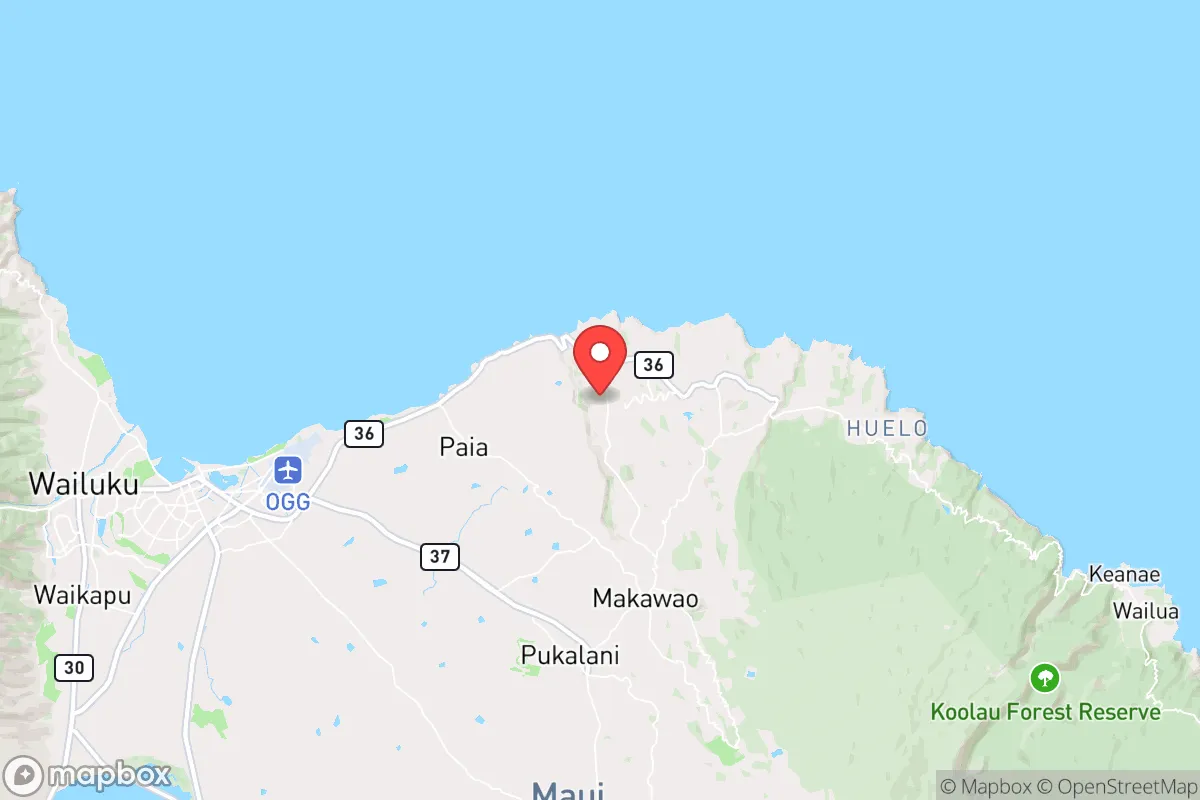
Personal Sovereignty in Haiku, HI
Moderate friction. Expect trade-offs in some aspect of personal liberty and independence.
What does Personal Sovereignty tell us?
Personal Sovereignty measures your capacity for self-reliance and independence with minimal government friction. Higher scores mean fewer barriers between you and the way you want to live... but it assumes you have the space you need and good neighbors.
What does this tell us?
Personal Sovereignty measures your capacity for self-reliance and independence with minimal government friction. Higher scores mean fewer barriers between you and the way you want to live... but it assumes you have the space you need and good neighbors.
State Policy
Energy independence: Importer (2% of energy produced in-state)
Personal Liberty
Homesteading

Personal Liberty Analysis
Haiku, on Maui's north shore, offers a unique sovereignty environment that reflects the broader tensions of Hawaii — a state with some of the nation's most restrictive gun laws, highest tax burdens, and most centralized governance, yet a community-minded local culture that prizes self-reliance in a remote, rural setting. For a relocation-minded individual or family valuing personal freedom, Haiku presents a trade-off: you gain significant autonomy in daily life and property use, but operate within a state-level legal framework that is decidedly heavy-handed on firearms, business regulation, and certain personal liberties. Understanding these specific constraints and local workarounds is critical before making a move.
Tax burden and regulatory posture: What you pay and what you can do
Hawaii's overall tax burden is among the highest in the nation, and Haiku residents feel this acutely. The state levies a general excise tax (GET) of 4% on nearly all business transactions, including services and rent — a hidden cost that inflates everyday prices by 5-15%. There is no local sales tax, but the GET applies on top of already-high mainland prices due to shipping. Property taxes in Maui County are comparatively moderate, averaging around 0.35% of assessed value, but assessments have risen sharply in recent years; a typical Haiku home valued at $1.2 million carries an annual tax bill of roughly $4,200. Income tax is progressive, topping out at 11% for single filers earning over $200,000. The regulatory posture is heavy: building permits in rural Haiku can take 6-12 months, and any new construction must navigate county zoning, shoreline setbacks, and state conservation district rules for properties near gulches or forests. The county's "Ohana Zoning" allows a second dwelling unit on agricultural lots over one acre, but strict permitting and wastewater requirements limit practicality. For remote work or small-scale e-commerce, the GET creates a significant drag — you must register, file monthly, and remit tax on gross revenue with few deductions.
Self-defense and gun law specifics: Navigating Hawaii’s restrictive framework
Hawaii has some of the strictest gun laws in the United States, and Haiku is no exception. Open carry is prohibited for all non-law enforcement, and concealed carry permits are issued only on a "may-issue" basis — Maui County historically issued very few, though the 2024 Bruen decision has led to a modest increase. As of 2025, you must demonstrate "exceptional cause" beyond personal protection, and the process involves a firearms safety course, FBI background check, psychiatrist evaluation, and a $200+ fee. Wait times for a permit to purchase a handgun can exceed 14 days due to mandatory state background checks. Long guns require a separate permit with similar delays. Magazine capacity is limited to 10 rounds. The state maintains a registry of all firearms. Self-defense with a firearm in the home is legally permissible under the "castle doctrine," but Hawaii does not have a stand-your-ground law; you have a duty to retreat in most public spaces. For those prioritizing armed self-defense, Haiku's legal environment is among the most restrictive in the country. Many locals rely on non-lethal options (pepper spray, blade weapons) or secure their homes with aggressive lighting and dogs — a practical adaptation to the legal reality.
Self-reliance and homesteading viability: Lot sizes, zoning, and off-grid feasibility
Haiku is one of the few places in Hawaii where genuine off-grid living is possible, though it requires navigating specific regulatory hurdles. Many residential lots range from 1 to 5 acres, and agricultural-zoned land is common, allowing chickens, goats, and small livestock without special permits. Raising pigs or cattle usually requires a county "farm plan." Off-grid solar is not only feasible but common — Hawaiian Electric's net metering program has limited capacity, so many households go fully off-grid with battery storage (Tesla Powerwall or Enphase systems are typical). Rainwater catchment is standard: most homes use a 5,000-20,000 gallon tank for drinking water, with UV filtration required for safety. Composting toilets are legal on septic systems, but graywater reuse is restricted. Growing food year-round is practical: avocados, citrus, taro, sweet potatoes, and tropical fruits thrive. However, the county requires a building permit for any structure over 120 square feet, and unpermitted "farm shacks" can trigger fines. The Department of Health strictly regulates animal slaughter; home butchering for personal consumption is tolerated but technically requires a facility permit. For the determined homesteader, Haiku offers fertile soil and a cooperative local culture, but you must accept either strict permitting or the risk of regulatory enforcement.
Personal liberties in daily life: Parental rights, medical autonomy, speech, and property
Hawaii generally ranks as one of the most progressive states on social liberties, which creates a specific legal environment for Haiku. Parental rights in education are limited: the state mandates comprehensive sex education in public schools, and while parents can opt children out, there is no formal "parental bill of rights." Homeschooling is legal with a simple notification form and quarterly progress reports; the required subjects are not overly burdensome. Medical autonomy is mixed: Hawaii has legalized medical cannabis (available with a state card that is easy to obtain), but recreational use remains illegal and possession of any amount is a criminal offense. The state has broad vaccine mandates for school attendance, with only medical exemptions recognized. Speech protections follow First Amendment standards, though Hawaii's courts have upheld strict time-place-manner restrictions on political signage in residential zones. Property rights are significantly constrained by state land-use law: the Land Use Commission classifies all land into urban, rural, agricultural, or conservation districts, and any non-conforming use demands a lengthy reclassification process. The Hawaii Supreme Court has ruled that the state can restrict property use without compensation to protect "public trust resources" (water, reefs, cultural sites). In practice, Haiku property owners enjoy fair latitude for landscaping and home improvements, but any major commercial activity or subdivision faces years of hearings. This is a place where personal freedom in day-to-day life is high — you can live quietly, grow your own food, and raise your family — but formal legal protections for individual rights are weaker than in mainland states with "right-to-farm" laws or stronger property rights statutes.
Overall, Haiku offers a distinctive sovereignty profile: a high degree of practical self-reliance in a rural, low-population-density setting, but operating within a state framework that is among the most regulatory and tax-heavy in the nation. Compared to a community like Marble Falls, Texas — where gun rights are broad, property taxes are higher but with no income tax, and off-grid living faces fewer permitting barriers — Haiku gives you more agricultural productivity and a tighter-knit local culture in exchange for less personal autonomy under state law. For the freedom-minded individual who values fertile land and the ability to live quietly, Haiku can work, but it takes careful legal navigation and a willingness to accept significant state oversight on guns, taxes, and property development.

* Values derived from national, state, county, city and local statistics and may differ in a specific area. Last updated: 2026-06-29T22:52:27.000Z
Narrative content on this page is AI-generated and may contain mistakes. Verify any details that matter before acting on them.
ReloMaps may earn a commission from affiliate links at no extra cost to you.

