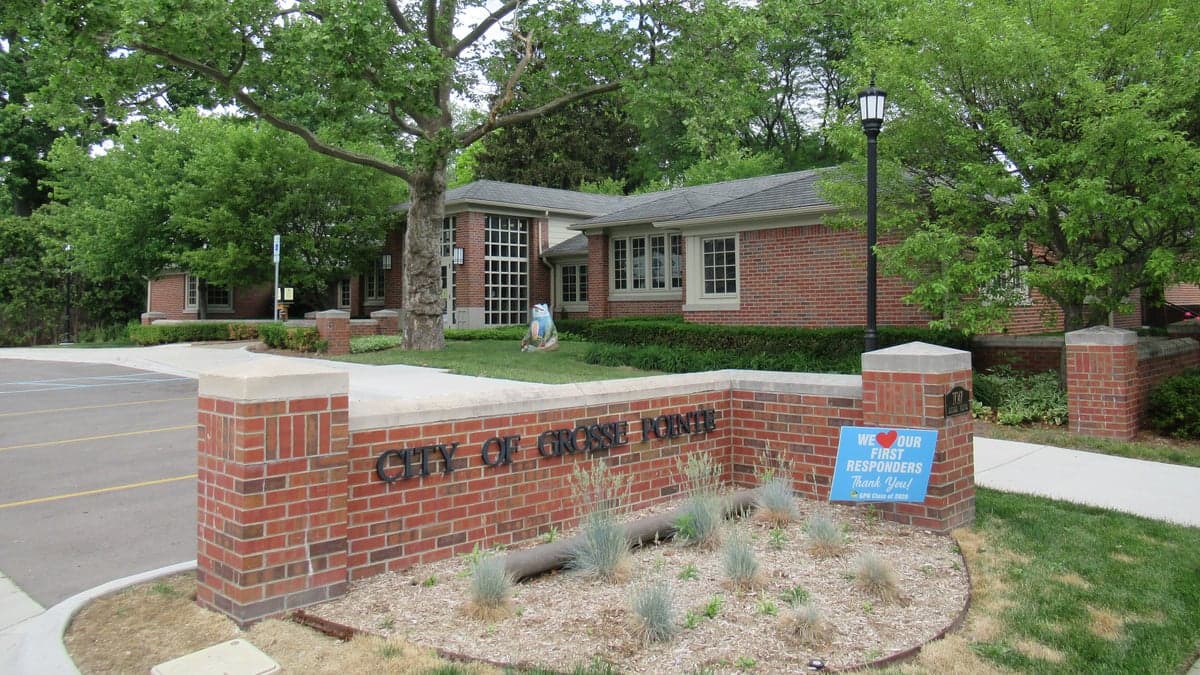
Photo: Wikipedia
Political ClimatePolitical Climate in Grosse Pointe, MI
District shown is the primary district for this city’s centroid. Cities may span multiple districts.
Political rankings in Michigan
- Most Conservative Cities in Michigan
- Most Liberal Cities in Michigan
- Best Liberal-Leaning Towns in the Midwest
- Safest Liberal-Leaning Towns in the Midwest
- Safest Conservative-Leaning Towns in the Midwest
- Affordable Small Towns for Conservatives
- Most Affordable Liberal-Leaning Small Towns in the U.S.
- Safest Conservative-Leaning Cities in the U.S.
- Most Conservative Counties in Michigan
- Most Liberal Counties in Michigan
Local Political AnalysisPolitical Analysis of Grosse Pointe, MI
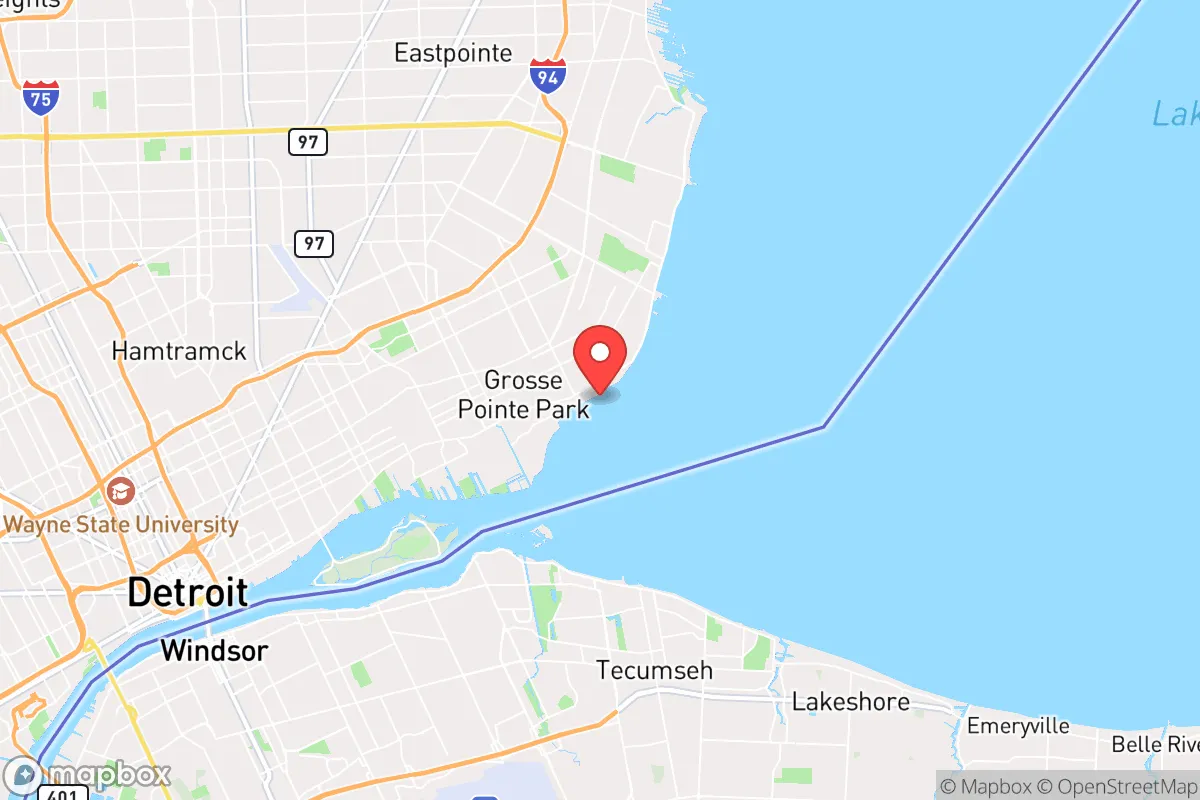
Grosse Pointe is one of the most reliably Democratic strongholds in Michigan, carrying a Cook Partisan Voting Index (PVI) of D+22. That means the five lakeside communities—Grosse Pointe Park, Grosse Pointe Farms, Grosse Pointe City, Grosse Pointe Shores, and Grosse Pointe Woods—vote about 22 points more Democratic than the national average in presidential elections. For context, the state of Michigan as a whole sits at exactly EVEN on the PVI scale, making Grosse Pointe a striking outlier in a swing state that often decides national elections by razor-thin margins. This isn't a recent shift either; the area has been trending blue for decades, and the 2020 and 2024 cycles only deepened that pattern, with Democratic margins in some precincts exceeding 70%.
How it compares
To understand how unusual Grosse Pointe's politics are, look at the surrounding communities. Just a few miles west, Detroit's political lean is even more Democratic (D+40 or higher), but that's expected for a major urban core. The real contrast comes when you drive north or west into Macomb County. Neighboring cities like St. Clair Shores and Warren are classic swing territory—often tipping Republican in statewide races, especially in the 2016 and 2024 cycles. Grosse Pointe's D+22 rating places it closer politically to Ann Arbor (D+28) than to its immediate neighbors in Macomb. The difference is stark: a Grosse Pointe voter is far more likely to support progressive candidates on education, environmental policy, and social issues than someone living 15 minutes away in Shelby Township, which leans Republican by about R+10. This makes the Pointes a blue island in a region that's otherwise a patchwork of purple and red.
What this means for residents
For liberal residents, the political climate is comfortable. Local elections are rarely competitive for Democrats, and the city councils and school boards across the five Pointes are dominated by Democrats or left-leaning independents. Progressive policies on climate resilience—like the shoreline restoration projects and electric vehicle charging infrastructure—move forward with broad support. For conservative residents, life is more about finding your niche. You won't feel isolated—there are plenty of Republican-leaning households, especially in the older, wealthier enclaves of Grosse Pointe Farms and Grosse Pointe Shores—but you'll be in the minority. Local GOP clubs exist but are smaller and less influential than their counterparts in Macomb or Oakland counties. The practical effect is that conservative viewpoints on taxes or development often get a fair hearing but rarely carry the day in a vote. It's a polite, civic-minded environment where political disagreements don't usually turn into shouting matches, but the direction of the community is unmistakably left of center.
Culturally, Grosse Pointe's Democratic lean is tied to its identity as an affluent, highly educated lakeside suburb with deep roots in the auto industry and a strong sense of place. The area has a tradition of moderate, fiscally responsible governance that leans left on social issues—think of it as old-school Rockefeller Republicanism that evolved into mainstream Democratic over the last 20 years. You'll see more "Black Lives Matter" signs than "Don't Tread on Me" flags, and local civic groups focus heavily on regional equity, public transit expansion, and environmental stewardship. The biggest policy distinction from the rest of Michigan is probably the local tax structure: Grosse Pointe has its own municipal services and schools, funded by relatively high property taxes, and residents generally support those levies because they see direct returns in top-rated schools, well-maintained parks, and low crime. That's a very different conversation than you'd hear in, say, rural Lapeer County, where tax resistance is a core political value. For anyone moving here, the key takeaway is simple: if you're comfortable in a blue-leaning, community-minded, high-service suburb, you'll fit right in. If you're looking for a red-leaning enclave, you'll find a few like-minded neighbors but not a political majority.

State Political ClimatePolitical Climate in Michigan
State Political AnalysisPolitical Environment in the State
Michigan is a true battleground state, with a Cook PVI of EVEN, meaning it votes almost exactly in line with the national average. Over the past 20 years, the state has swung from reliably blue (voting for Gore, Kerry, Obama twice) to a toss-up that flipped for Trump in 2016 by less than 11,000 votes, then flipped back for Biden in 2020 by about 154,000 votes, and saw Trump win it again in 2024. The dominant coalitions are the heavily unionized, diverse, and urbanized southeast (Detroit, Ann Arbor, Flint) pulling left, balanced by the vast, culturally conservative rural and exurban areas of western and northern Michigan (Grand Rapids, Traverse City, the Thumb). The key swing territory is the ring of suburban and exurban counties around Detroit—places like Macomb, Oakland, and Kent counties—which have become the state’s permanent political battlefield.
Urban vs. rural divide
The political map of Michigan is stark. The city of Detroit and its inner-ring suburbs in Wayne County are overwhelmingly Democratic, often delivering margins of 70-80% for Democratic candidates. Ann Arbor (Washtenaw County) is a progressive stronghold, while Flint and Saginaw are reliably blue. In contrast, the western side of the state—the Grand Rapids metro area (Kent County) and the Lake Michigan shoreline—has shifted from moderate Republican to solidly red over the last decade, driven by evangelical Christian voters and a growing manufacturing base. The rural Upper Peninsula, once a Democratic stronghold due to mining unions, has flipped hard red in the Trump era. The critical swing counties are Macomb County (north of Detroit), which went for Trump in 2016 and 2024 but for Biden in 2020, and Oakland County (wealthy Detroit suburbs), which has trended blue but still contains pockets of conservative voters. Kent County itself flipped from red to blue in 2020 and back to red in 2024, making it the epicenter of the state’s political volatility.
Policy environment
Michigan’s policy environment reflects its split identity. The state has a flat income tax rate of 4.25%, which was reduced from 4.35% in 2023 via a triggered automatic cut. Property taxes are relatively high, with an average effective rate around 1.5%, but the Proposal A system caps annual increases for homeowners. Sales tax is 6%, with no local add-ons. The state is a “right-to-work” state for private-sector workers only after a 2024 law repealed the 2023 repeal of right-to-work—meaning the law has flipped twice in two years, creating uncertainty for employers. Education policy is decentralized; school funding is per-pupil based, and there are no statewide school choice programs, though charter schools are common. Healthcare is dominated by the Big Three automakers’ legacy plans and the Healthy Michigan Medicaid expansion. Election laws are moderately restrictive: no-excuse absentee voting was approved by voters in 2018, and same-day voter registration is available. Voter ID is required but can be satisfied with an affidavit if no ID is presented.
Recent policy direction
The last four years have seen a dramatic policy pendulum swing. Under Democratic Governor Gretchen Whitmer and a Democratic legislature (2023-2024), the state repealed its 1931 abortion ban and codified abortion rights via the Reproductive Health Act. It also repealed the “right-to-work” law for private employees, only for a Republican-led ballot initiative to reinstate it in 2024. On gun policy, the state passed universal background checks and a “red flag” law (extreme risk protection orders) in 2023, but concealed carry remains shall-issue, and no permit is needed for open carry. Parental rights in education saw a flashpoint with the 2023 “Don’t Say Gay” debate, which failed to pass, but local school boards remain battlegrounds over curriculum transparency. On privacy, Michigan has no comprehensive data privacy law, though a 2024 bill to create one stalled. Medical and recreational marijuana are legal and heavily taxed (10% excise tax plus 6% sales tax). Property rights are generally strong, with no statewide rent control and limited zoning preemption. Voting access expanded with the 2018 Proposal 3 (no-excuse absentee, straight-ticket voting, automatic voter registration), but a 2024 law tightened ballot drop box rules and shortened the absentee application window.
Civil unrest & political movements
Michigan has been a flashpoint for political activism. The 2020 “Wolverine Watchmen” militia plot to kidnap Governor Whitmer highlighted the extreme fringe of the anti-lockdown movement. The 2020-2021 protests at the state capitol over COVID-19 restrictions were among the largest and most confrontational in the nation, with armed protesters entering the building. On the left, the “Detroit Will Breathe” movement and racial justice protests in 2020 were large and occasionally violent. Immigration politics are relatively quiet, as Michigan has no sanctuary city policies, though Detroit and Ann Arbor have “welcoming city” ordinances that limit cooperation with ICE. Election integrity remains a live issue: the 2020 “Stop the Steal” movement was active, and a 2024 audit of Antrim County (which initially reported a software error) fueled ongoing distrust. The state’s independent redistricting commission, created by a 2018 ballot initiative, has reduced gerrymandering but remains controversial among both parties. A new resident would notice the prevalence of political yard signs, especially in swing counties like Macomb and Kent, and the intensity of local school board and city council races.
Projection
Over the next 5-10 years, Michigan is likely to remain a toss-up state, but with a slight rightward drift. The key demographic shift is the continued exodus from Detroit and its inner suburbs to exurbs like Livingston County (one of the fastest-growing and most conservative counties in the state) and the Grand Rapids area. The state’s population is aging and slowly declining, which tends to favor Republicans in non-presidential years. In-migration from blue states (Illinois, California) is modest and concentrated in Ann Arbor and Traverse City, which are already blue. The wildcard is the auto industry’s transition to electric vehicles: if it creates jobs in conservative western Michigan, it could solidify the GOP; if it causes layoffs in the southeast, it could hurt Democrats. The 2026 gubernatorial race will be a bellwether—if a Republican wins, expect a push for further tax cuts, school choice, and tighter election laws. If Democrats hold, expect continued expansion of healthcare and gun control. For a new resident, the state will remain politically competitive, meaning your vote will matter more than in a safe state, but policy will swing sharply with each election cycle.
For a conservative relocator, Michigan offers a low-tax environment (flat income tax, no estate tax) and strong property rights, but you’ll face a Democratic governor until at least 2026 and a legislature that could flip either way. The best bet for a conservative-friendly community is the Grand Rapids area (Kent County’s exurbs like Byron Center or Rockford), the Lake Michigan shoreline (Holland, Saugatuck), or the rural Thumb (Bad Axe, Sandusky). For liberals, Ann Arbor, Detroit’s Midtown, and Traverse City are safe havens. The bottom line: Michigan is a state where your local community’s politics will feel stable, but state-level policy will be a roller coaster. If you value having your vote count in a national election, this is one of the few states where it truly does. If you want policy stability, look elsewhere.
* Values derived from national, state, county, city and local statistics and may differ in a specific area. Last updated: 2026-11-14T16:59:05.000Z
Narrative content on this page is AI-generated and may contain mistakes. Verify any details that matter before acting on them.
ReloMaps may earn a commission from affiliate links at no extra cost to you.

