Photo: Wikipedia
Demographics of Grosse Pointe, MI
Affluence Level in Grosse Pointe, MI
An upper-middle-class area. Household wealth, education levels, and homeownership run ahead of national benchmarks.
People of Grosse Pointe, MI
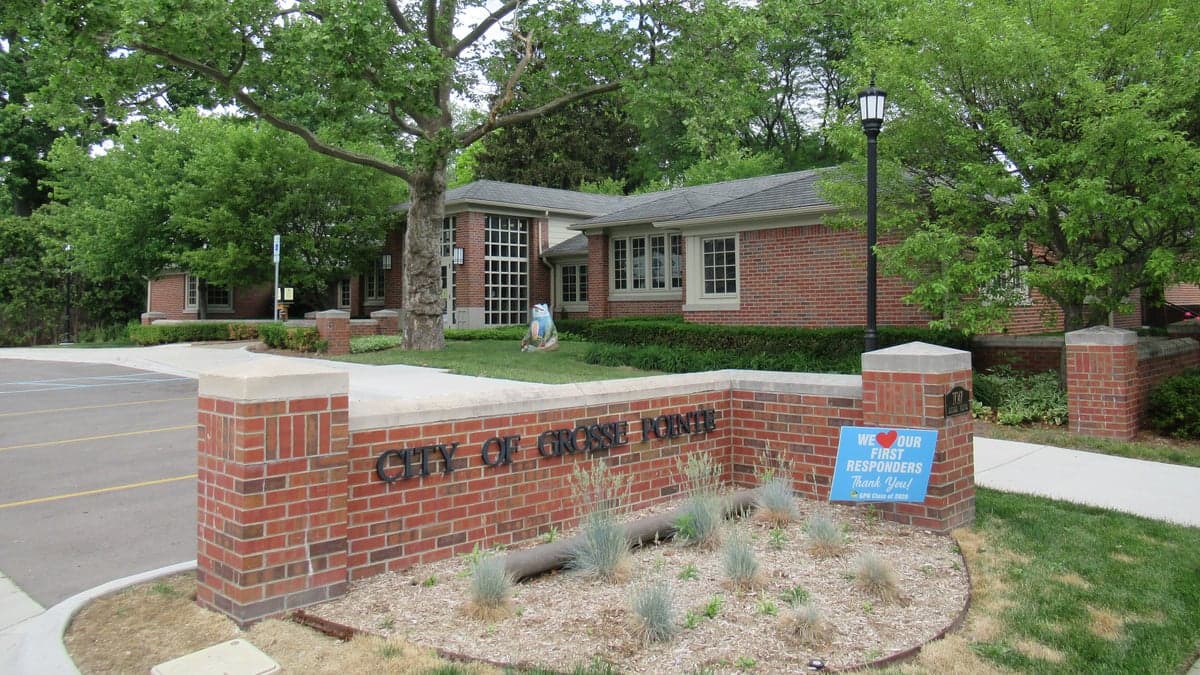
The people of Grosse Pointe, Michigan, today form a small, highly educated, and predominantly white community of 5,561 residents, with 74.5% holding a college degree. The city is characterized by its historic lakefront estates, tight-knit neighborhoods, and a strong sense of local identity rooted in its early 20th-century development as an exclusive suburb for Detroit's industrial elite. While the population is 88.7% white, with small but notable Hispanic (3.1%) and Black (3.0%) communities, the foreign-born share is very low at 1.7%, reflecting a population that is largely multigenerational and stable rather than a destination for new international arrivals.
How the city was settled and grew
Grosse Pointe was not a colonial-era settlement but a planned suburban enclave that grew rapidly after 1900. The area was originally part of Grosse Pointe Township, with the city of Grosse Pointe incorporating in 1934. The first major wave of population came from Detroit's industrial boom in the 1910s and 1920s, when wealthy automotive families—including the Fords, Dodges, and Chryslers—built sprawling lakefront estates along Lake Shore Road. These families were drawn by the combination of water access, proximity to Detroit's factories, and the ability to create an exclusive, low-density community. The Lakeshore district, running along the lake, became the heart of this elite settlement, with mansions designed by prominent architects like Louis Kamper. A second wave of upper-middle-class professionals—doctors, lawyers, and executives—arrived in the 1920s through the 1950s, filling the interior neighborhoods. The Country Club area, centered around the Grosse Pointe Yacht Club and the Country Club of Detroit, attracted families seeking a suburban lifestyle with social amenities. The Kerby and Moross neighborhoods, developed in the 1930s and 1940s, offered more modest but still substantial homes for second-tier executives and small business owners. By 1960, the city's population peaked at around 6,800, and the character was firmly established as a white, affluent, and socially homogeneous community.
Modern era (post-1965)
The post-1965 era brought gradual demographic change, but Grosse Pointe remained far more stable than its Detroit neighbor. The 1967 Detroit riot and subsequent white flight accelerated suburbanization across the region, but Grosse Pointe's high property values and restrictive zoning limited in-migration from the city. The University neighborhood, near the Grosse Pointe Woods border, saw some influx of younger families and professionals in the 1970s and 1980s, but the city's population actually declined slightly from its peak as households shrank in size. The Hispanic population, now 3.1%, began growing in the 1990s, with families settling primarily in the Kerby area, drawn by affordable older homes and proximity to service-sector jobs in nearby St. Clair Shores. The Black population, at 3.0%, is concentrated in the Moross and University neighborhoods, reflecting a pattern of gradual integration rather than rapid turnover. The East/Southeast Asian community (0.8%) and Indian subcontinent community (0.2%) are very small and dispersed, with no single ethnic enclave. The foreign-born share of 1.7% is among the lowest in Metro Detroit, indicating that the city has not been a destination for recent immigrants, who instead have gravitated toward more diverse suburbs like Troy or Canton.
The future
The population of Grosse Pointe is projected to remain stable or decline slightly over the next 10–20 years, as the city's housing stock—largely single-family homes on large lots—limits new construction and density. The population is aging, with a median age of 47.3, and younger families are increasingly priced out by high home values (median home price above $400,000). The Hispanic and Black shares are expected to grow modestly, perhaps reaching 5% each by 2040, as older white residents sell to a more diverse buyer pool, but the city will likely remain predominantly white. The Lakeshore district will continue to attract wealthy buyers, while the Kerby and Moross neighborhoods may see the most demographic turnover. The city's cultural identity—rooted in tradition, private clubs, and a strong local school system—will persist, but it may become slightly less insular as new residents arrive from other parts of Metro Detroit rather than from within the Grosse Pointe system.
For someone moving in now, Grosse Pointe offers a stable, safe, and highly educated community with a strong sense of place, but it is not a diverse or rapidly changing environment. The city is best suited for families and professionals who value top-rated public schools, lakefront recreation, and a quiet, established suburban lifestyle, and who are comfortable in a community where the population is overwhelmingly white and multigenerational. The next decade will likely see gradual, modest diversification rather than dramatic transformation.

* Values derived from national, state, county, city and local statistics and may differ in a specific area. Last updated: 2026-11-14T16:59:05.000Z
Narrative content on this page is AI-generated and may contain mistakes. Verify any details that matter before acting on them.
ReloMaps may earn a commission from affiliate links at no extra cost to you.

