Photo: Wikipedia
Political ClimatePolitical Climate in Grass Valley, CA
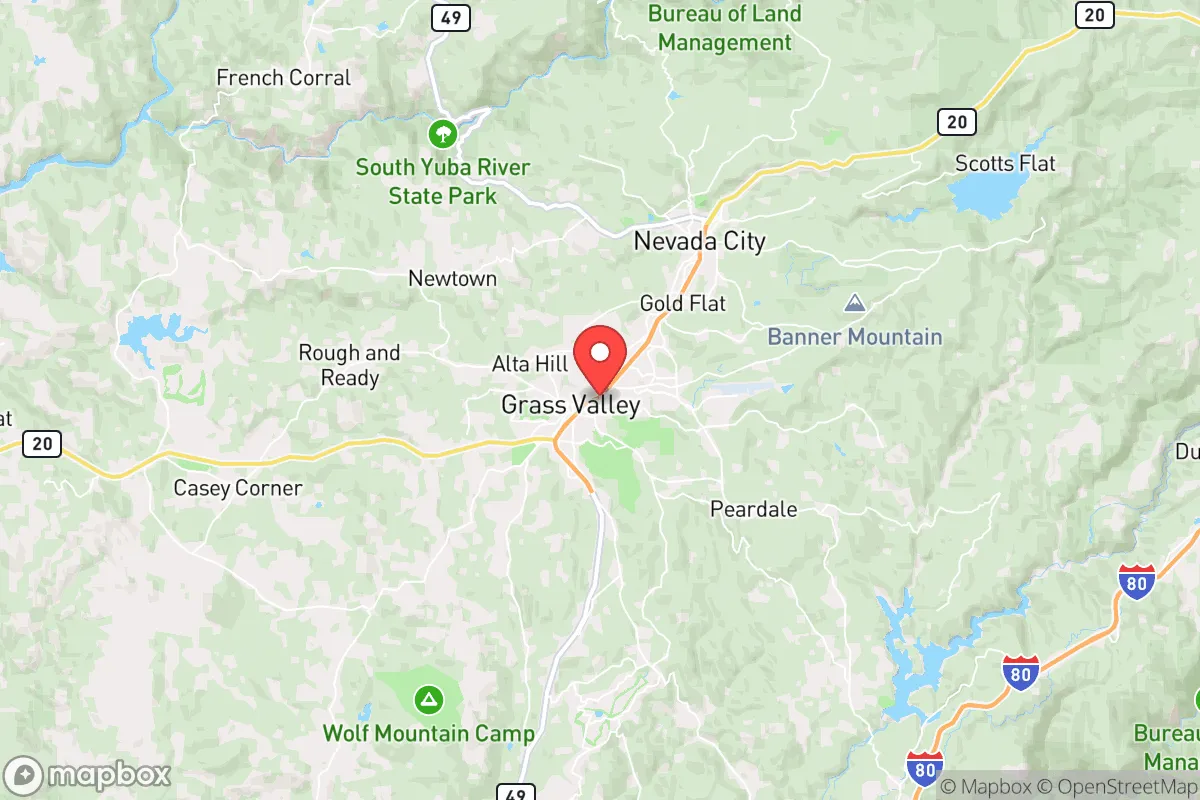
District shown is the primary district for this city’s centroid. Cities may span multiple districts.
Local Political AnalysisPolitical Analysis of Grass Valley, CA
Grass Valley is one of those rare California towns where you can feel the political pendulum swing just a bit to the right of the state average. With a Cook Partisan Voting Index (PVI) of R+2, it leans slightly Republican, but it’s not a deep-red stronghold—more of a purple patch in a deeply blue state. Over the past decade, the area has held steady, with local elections often decided by single-digit margins, though the surrounding Nevada County has trended a bit more Democratic in presidential years. If you’re moving here, you’ll find a community that values its independence, with a libertarian streak that shows up in everything from land-use debates to local school board races.
How it compares
Compared to the rest of California—where the statewide Cook PVI is effectively D+13—Grass Valley’s R+2 is a noticeable outlier. Drive 20 minutes south to Auburn (Placer County) and you’ll hit a more reliably conservative area, while heading 30 minutes west to the Sacramento suburbs shifts you into solidly blue territory. The real contrast is with the Bay Area, about two hours southwest, where politics are overwhelmingly progressive. In Grass Valley, you’ll hear more talk about water rights, wildfire mitigation, and property taxes than about rent control or transit expansion. The city itself is a bit more moderate than the unincorporated parts of Nevada County, where rural voters often push the needle further right. Statewide, California’s Cook PVI is unknown in the dataset, but for context, the state hasn’t voted Republican in a presidential race since 1988—so Grass Valley’s lean is a genuine local exception.
What this means for residents
For conservative residents, Grass Valley offers a rare California foothold where your vote actually matters in local races. City council and county supervisor seats are often competitive, and you’ll find a vocal contingent at town halls on issues like Second Amendment rights and development restrictions. For liberal residents, it’s not a hostile environment—just one where you’ll need to engage in more persuasion than in, say, Berkeley. The local Democratic club is active, and progressive candidates can win if they focus on bread-and-butter issues like healthcare access and affordable housing. In practice, the R+2 lean means policy tends to be pragmatic: the city has a relatively low sales tax (7.25%) compared to nearby Sacramento (8.75%), and zoning laws favor single-family homes over dense development. Both sides will find common ground on wildfire preparedness and preserving open space, which are nonpartisan concerns here.
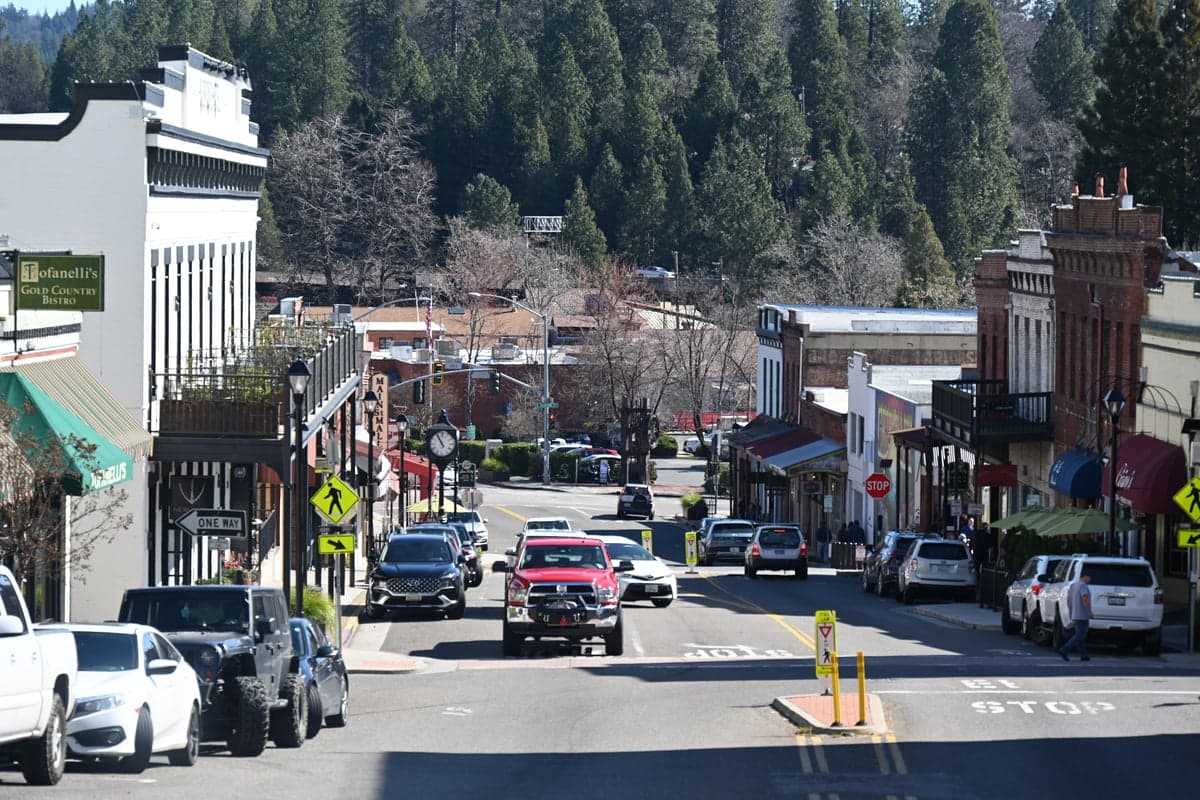
Culturally, Grass Valley feels more like a Western mining town than a California coastal enclave. The annual Constitution Day parade and the strong presence of veterans’ groups reflect a conservative civic tradition, but the local arts scene—including the Center for the Arts and the Nevada County Fair—draws a diverse crowd. You won’t see many political yard signs outside of election season, and most residents prioritize neighborly relations over partisan bickering. The biggest policy distinction from the rest of California is the area’s resistance to state-level housing mandates; Grass Valley has fought to keep its rural character, with minimum lot sizes that discourage high-density projects. For newcomers, the takeaway is simple: if you’re looking for a place where politics are a backdrop, not a battleground, and where your vote actually shifts the needle, Grass Valley delivers that rare balance in California.

State Political ClimatePolitical Climate in California
State Political AnalysisPolitical Environment in the State
California is a deeply blue state, with Democrats holding every statewide office, supermajorities in both legislative chambers, and a 58.5% to 38.4% margin for Joe Biden in 2020. Over the past 20 years, the state has shifted roughly 10 points leftward in presidential races, driven largely by the Bay Area and Los Angeles County, though recent registration data shows a slight flattening as Republicans have consolidated in inland areas and some suburban voters have drifted toward the center. For a conservative relocator, the practical reality is that you’ll be living under one-party Democratic rule at the state level, but your day-to-day experience will vary dramatically depending on whether you settle in a coastal metro, a Central Valley farm town, or a mountain community like Shasta County or El Dorado County.
Urban vs. rural divide
The political map of California is a stark checkerboard. The coastal metros — San Francisco, Los Angeles, Oakland, and San Jose — are among the most liberal jurisdictions in the nation, routinely voting 80-90% Democratic. These areas drive the state’s overall lean, with Los Angeles County alone casting more than a quarter of the state’s votes. In contrast, the Central Valley and interior regions are reliably red: Bakersfield (Kern County) voted +16 for Trump in 2020, and Redding (Shasta County) went +30. The Inland Empire around Riverside and San Bernardino is a true battleground — Riverside County flipped from Obama to Trump in 2016 and then back to Biden by a slim 5-point margin in 2020, reflecting its mix of suburban conservatives and growing Latino and Asian populations. Orange County, once a GOP stronghold, has shifted left: it voted for Hillary Clinton in 2016 and Biden by 9 points in 2020, though its northern cities like Yorba Linda and Huntington Beach remain conservative enclaves. The practical takeaway: if you want a conservative community, look inland — Placer County (Auburn, Roseville) and San Diego’s East County (Santee, El Cajon) are reliably red, while coastal suburbs are increasingly purple or blue.
Policy environment
California’s policy environment is defined by high taxes, heavy regulation, and expansive state government. The state has a progressive income tax with a top marginal rate of 13.3% (the highest in the nation), a state sales tax of 7.25% that can reach over 10% with local add-ons, and property taxes capped at 1% of assessed value under Proposition 13 (though reassessment on sale can spike bills). For a conservative, the regulatory posture is the bigger friction: California has some of the nation’s strictest environmental laws (CEQA is frequently used to block housing and infrastructure), a statewide rent control cap (AB 1482), and a mandate for zero-emission vehicle sales by 2035. Education policy is dominated by the California Teachers Association, with per-pupil spending around $15,000 but middling outcomes. Healthcare is heavily regulated, with a state-run insurance exchange (Covered California) and a recent law (SB 184) that allows the state to manufacture generic insulin. Election laws are among the most accessible in the country: universal mail-in ballots (since 2021), same-day registration, and no-excuse absentee voting. For a conservative, the policy environment means higher costs and less local control, but the state’s economy remains the world’s fifth-largest, and many find the trade-off acceptable for the climate and job market.
Recent policy direction
Over the past five years, California has moved decisively left on a broad range of liberties. On gun and self-defense law, the state has some of the nation’s strictest regulations: a 10-day waiting period, an assault weapons ban (SB 880), a ban on high-capacity magazines (upheld by the 9th Circuit), and a “may-issue” concealed carry regime that was partially overturned by the Supreme Court’s Bruen decision in 2022. The state responded with SB 2 (2023), which created “sensitive places” where carry is banned — including parks, public transit, and hospitals — and is currently being litigated. On parental and education rights, California passed AB 1955 (2024), which prohibits school districts from requiring parental notification when a child changes gender identity or pronouns, and AB 1078 (2023), which restricts book bans in schools. On speech and privacy, the state has a strong consumer privacy law (CCPA/CPRA) but also passed AB 587 (2023), which requires social media companies to report their content moderation policies — critics call it a “censorship” bill. On medical and bodily autonomy, California is a sanctuary for abortion access (Prop 1, 2022) and has expanded gender-affirming care protections (AB 2223). On property rights, the state’s rent control and tenant protections (AB 1482, AB 12) are strong, but Proposition 13 still caps property tax increases. On taxation, the trend is toward higher taxes on the wealthy: Prop 30 (2022) would have raised taxes on millionaires for EV subsidies (it failed), but the state’s budget relies heavily on top earners. On voting and ballot access, California has expanded mail-in voting and automatic voter registration, but also passed AB 1761 (2024) which requires voter ID for certain elections — a rare nod to election integrity concerns. For a conservative, the direction is clear: the state is doubling down on progressive policies, especially on social issues, while facing legal challenges on guns and parental rights.
Civil unrest & political movements
California has been a flashpoint for political movements on both sides. The 2020 George Floyd protests were massive and sometimes destructive, particularly in Los Angeles and Oakland, where looting and arson led to a $1 billion insurance loss. The state’s sanctuary law (SB 54, 2017) limits local law enforcement cooperation with federal immigration authorities, and California has sued the Trump administration over immigration policies multiple times. On the right, the “California Exodus” narrative is real but exaggerated — net domestic migration has been negative since 2020, with many moving to Texas, Arizona, and Idaho. There’s a small but vocal secession movement (Calexit), though it has no serious political traction. Election integrity controversies have been minimal compared to swing states, but the 2021 recall election of Governor Gavin Newsom failed 61.9% to 38.1%, with Orange County and San Diego County voting to recall but the Bay Area and LA blocking it. Visible flashpoints include frequent protests at the state capitol in Sacramento over housing, homelessness, and COVID mandates, and periodic clashes at school board meetings over curriculum and parental rights. For a new resident, the most noticeable political tension is the homelessness crisis in coastal cities, which has become a proxy for broader ideological battles over housing, mental health, and public safety.
Projection
Over the next 5-10 years, California is likely to remain solidly Democratic, but the margin may narrow slightly. Demographic trends are mixed: the state’s Latino population, which leans Democratic but is less progressive than white liberals, is growing, while white conservative migration out of state continues. However, the state is also attracting high-income, college-educated migrants from other states, who tend to vote Democratic. The housing crisis is the wild card — if California builds more housing (as recent legislation like SB 9 and SB 10 encourages), it could attract more moderate voters; if it doesn’t, the state will continue to lose middle-class families to red states. Politically, expect continued fights over crime and homelessness: Proposition 36 (2024), which increased penalties for theft and fentanyl trafficking, passed with 70% support, signaling a shift toward more centrist criminal justice policies. On social issues, the state will likely double down on LGBTQ+ and abortion protections, while gun laws will face ongoing litigation. For a conservative moving in now, the next decade will mean living under a Democratic supermajority, but with potential for more moderate policy on crime and housing as the state grapples with affordability and public safety concerns.
Bottom line for a new resident: California is a one-party state where your political experience is determined by your zip code. If you’re a conservative, you’ll find like-minded communities in the Central Valley, inland suburbs, and mountain counties, but you’ll have little influence on state policy. You’ll pay higher taxes and navigate more regulations, but you’ll also enjoy a world-class economy, unmatched natural beauty, and a climate that’s hard to beat. The practical advice: visit the specific city you’re considering — Roseville feels like a different country from San Francisco — and understand that state-level politics will be a constant source of frustration if you lean right, but local community and quality of life can still be excellent.
* Values derived from national, state, county, city and local statistics and may differ in a specific area. Last updated: 2026-09-22T20:12:37.000Z
Narrative content on this page is AI-generated and may contain mistakes. Verify any details that matter before acting on them.
ReloMaps may earn a commission from affiliate links at no extra cost to you.

