Photo: Wikipedia
Demographics of Grass Valley, CA
Affluence Level in Grass Valley, CA
A below-average socioeconomic profile. Incomes, home values, and educational attainment trail the U.S., with higher poverty and unemployment.
People of Grass Valley, CA
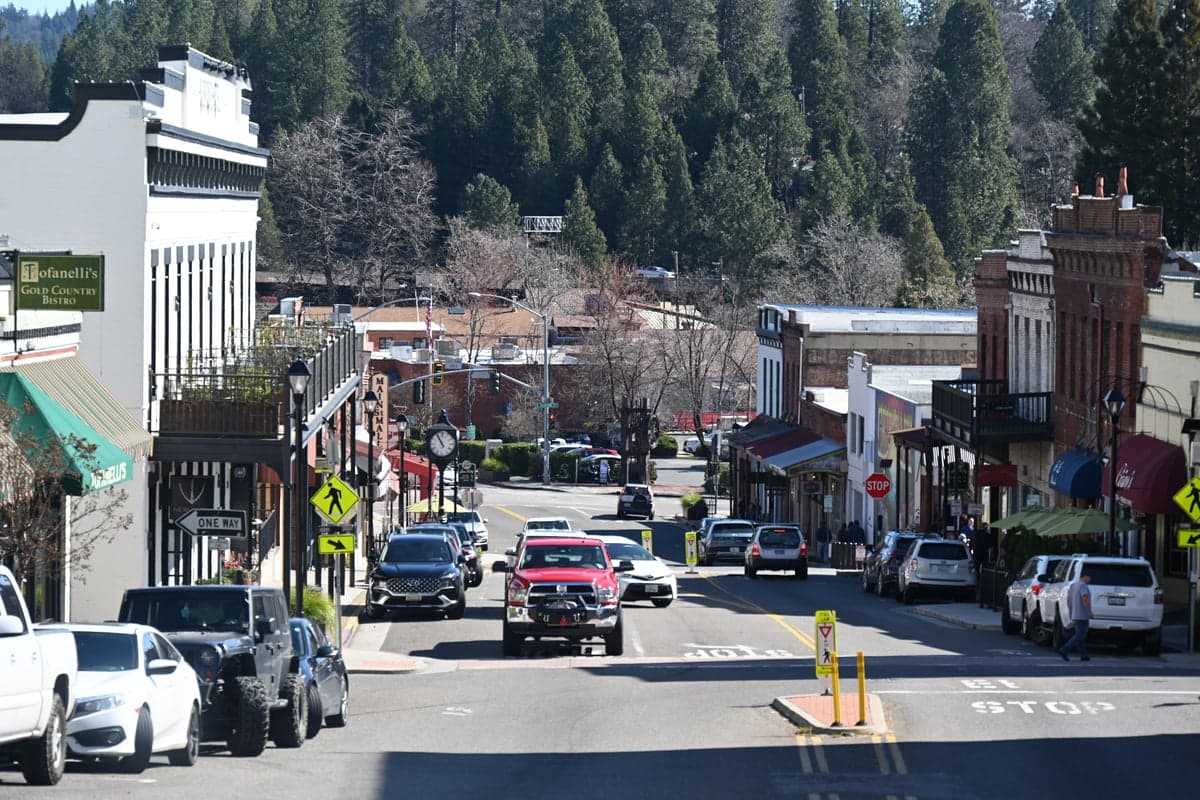
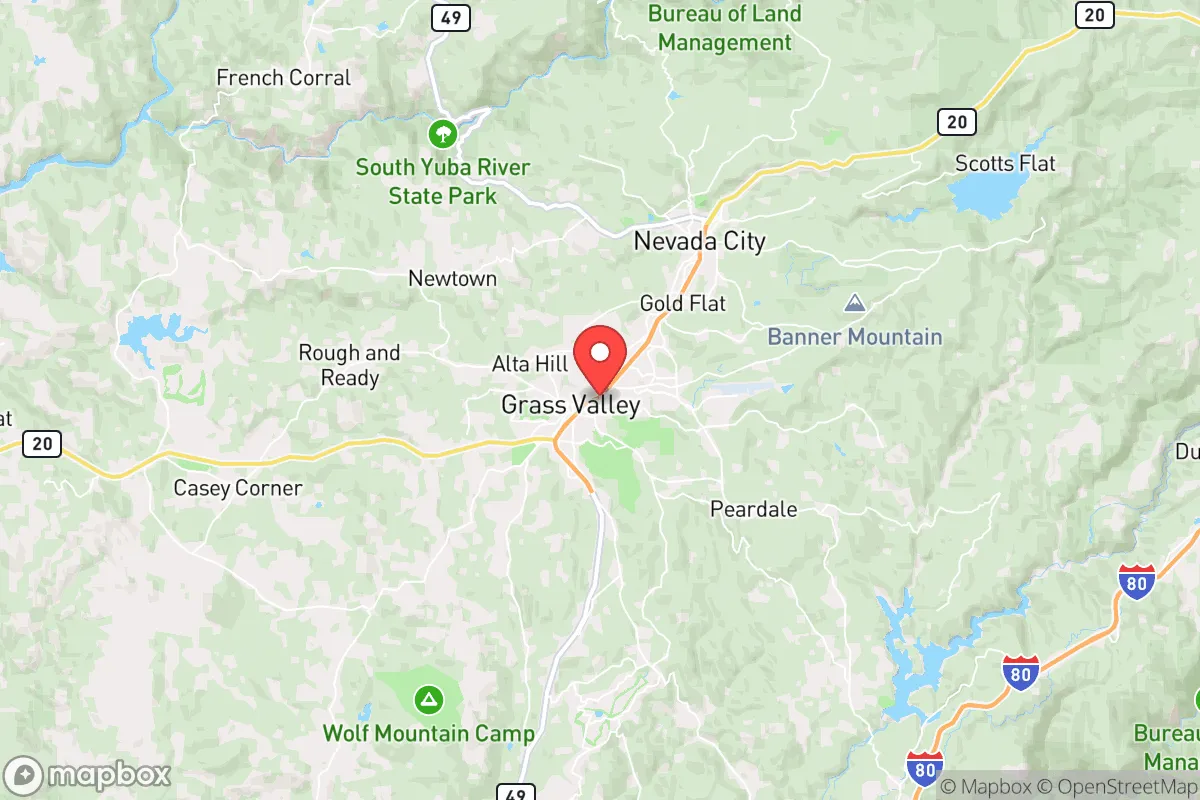
Grass Valley, California, is a historically white, working-class city of 14,126 residents that retains a distinctly small-town, Gold Country character. The population is 79.5% white and 8.7% Hispanic, with a foreign-born share of just 3.5%—well below the state average. The city’s identity is rooted in its mining past, and today it attracts a mix of retirees, remote workers, and families seeking a lower-cost, rural-oriented lifestyle within commuting distance of Sacramento and Reno.
How the city was settled and grew
Grass Valley’s population history begins with the California Gold Rush of 1849. The discovery of gold in nearby streams drew a massive influx of miners, mostly from the eastern United States, Europe, and China. The hard-rock mining industry—particularly the Empire Mine—transformed the area from a transient camp into a permanent settlement. Cornish miners, known as “Cousin Jacks,” arrived in large numbers during the 1860s and 1870s, bringing deep-shaft mining expertise. They settled in the Banner Mountain and East Grass Valley neighborhoods, building the stone cottages and Methodist churches that still define those areas. Chinese laborers, who arrived in the 1850s, established a small Chinatown near the intersection of Main and Mill streets, though little physical evidence remains today. By the early 20th century, the city’s population was overwhelmingly white, with a small but established Hispanic community working in mining and agriculture. The decline of hard-rock mining after World War II led to a population plateau, with the city hovering around 5,000 residents through the 1950s and 1960s.
Modern era (post-1965)
After the 1965 Immigration and Nationality Act, Grass Valley saw very little of the large-scale immigration that reshaped California’s coastal cities. Instead, the city’s population growth came from domestic in-migration—primarily white retirees from the Bay Area and Sacramento, along with counterculture back-to-the-landers in the 1970s. The Lake of the Pines area, a gated community just outside city limits, became a destination for Bay Area retirees seeking a quieter, more conservative environment. The Alta Hill neighborhood attracted younger families and artists drawn by lower home prices and the area’s natural beauty. The Hispanic population grew modestly, from roughly 3% in 1980 to 8.7% today, with many families settling in the South Auburn Street corridor and the Brunswick Basin area, where older, more affordable housing stock is concentrated. The Asian population remains very small at 1.4%, and the Indian-subcontinent population is negligible at 0.3%. The Black population is 0.4%, reflecting the city’s historical lack of industrial or military employment that drew Black families to other parts of California. The college-educated share of 32.0% is slightly below the national average, consistent with the city’s blue-collar heritage and its appeal to those seeking an alternative to high-cost, high-stress urban life.
The future
Grass Valley’s population is slowly diversifying, but the pace is glacial compared to the rest of California. The Hispanic share is projected to rise to roughly 12-14% by 2040, driven by natural increase and continued in-migration of families seeking service-sector jobs in healthcare, hospitality, and construction. The white share will likely decline to the mid-70% range, but the city will remain overwhelmingly white for the foreseeable future. New residential development is concentrated in the Loma Rica Ranch area, a master-planned community on the city’s western edge, which is attracting younger families and some remote workers from the Bay Area. The city’s cultural identity is evolving slowly: the old mining-town ethos is giving way to a more amenity-oriented, outdoor-recreation focus, but the political and social character remains center-right. The population is aging—the median age is 46—and the city will need to attract more young families to sustain its tax base and school enrollment.
For someone moving in now, Grass Valley offers a stable, predominantly white community with a strong sense of local history and a slower pace of life. The demographic trends point toward gradual, moderate diversification rather than rapid change, making it a predictable choice for those who value continuity and a low-crime, family-oriented environment. The city is not becoming a multicultural hub, but it is becoming more welcoming to the modest Hispanic and remote-worker populations that are reshaping its economy and social fabric.

* Values derived from national, state, county, city and local statistics and may differ in a specific area. Last updated: 2026-09-22T20:12:37.000Z
Narrative content on this page is AI-generated and may contain mistakes. Verify any details that matter before acting on them.
ReloMaps may earn a commission from affiliate links at no extra cost to you.

