Photo: Wikipedia
Quality of Life in Grass Valley, CA
A high quality of life with strong walkability, manageable living costs, healthy neighborhood signals, and solid amenity access.
What does Quality of Life tell us?
Quality of Life blends cost of living, nearby amenities, socioeconomic signals, and neighborhood character. City-level scores represent the whole municipality; individual neighborhoods can differ.
What does this tell us?
Quality of Life blends cost of living, nearby amenities, socioeconomic signals, and neighborhood character. City-level scores represent the whole municipality; individual neighborhoods can differ.
Cost of Living
38% above national average
The Real Cost of Living in Grass Valley, CA for 2026
| Tier | Individual | Family (4) |
|---|---|---|
| Survival | $23k | $43k |
| Comfortable | $65k | $96k |
| Luxury | $88k+ | $137k+ |
| Elite (Top 5%) | $112k+ | $174k+ |
51%
The Area Signal
A metric tracking the socioeconomic signals of the area.
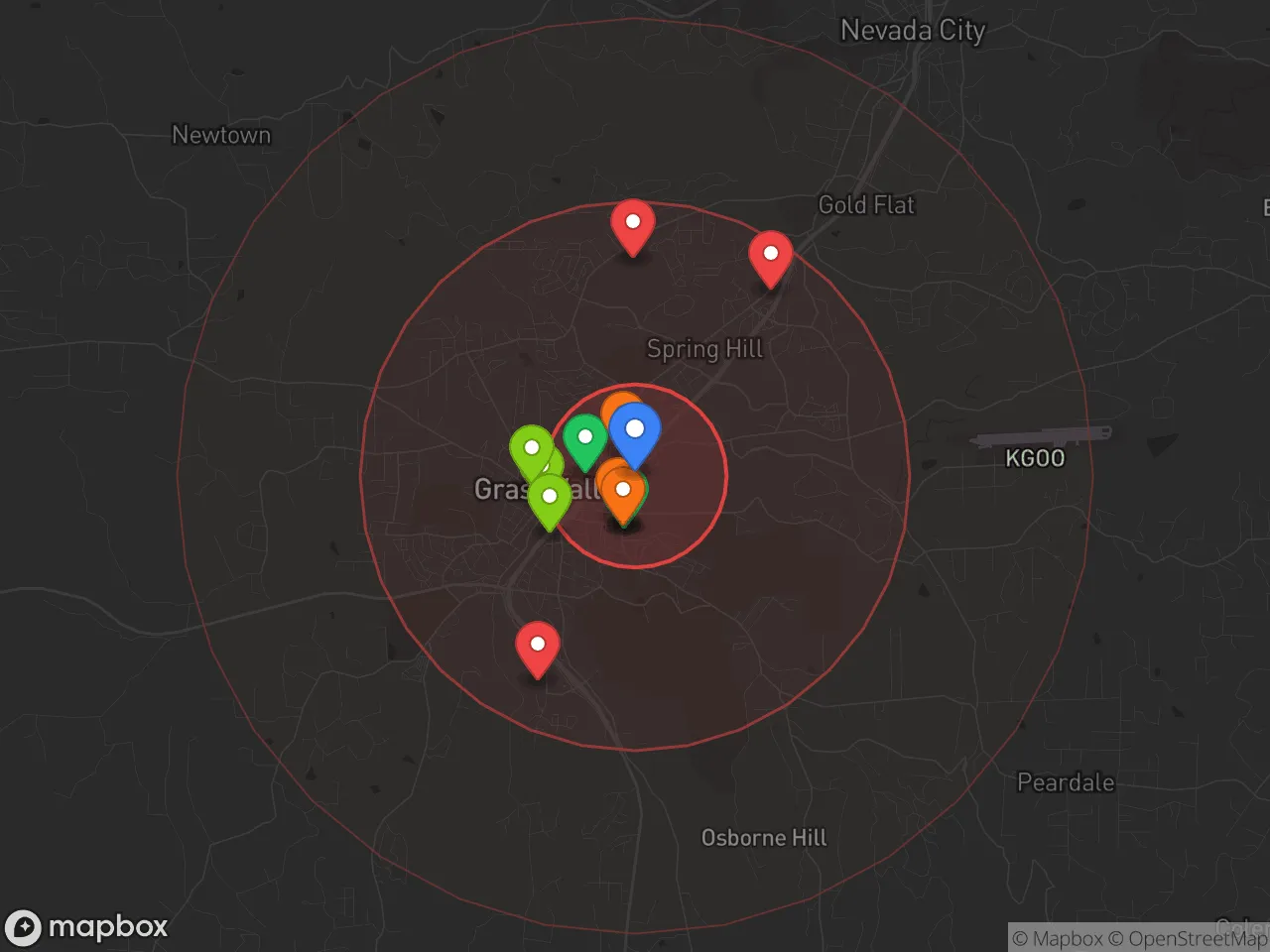
Hobbies
Explore the areaGroceries
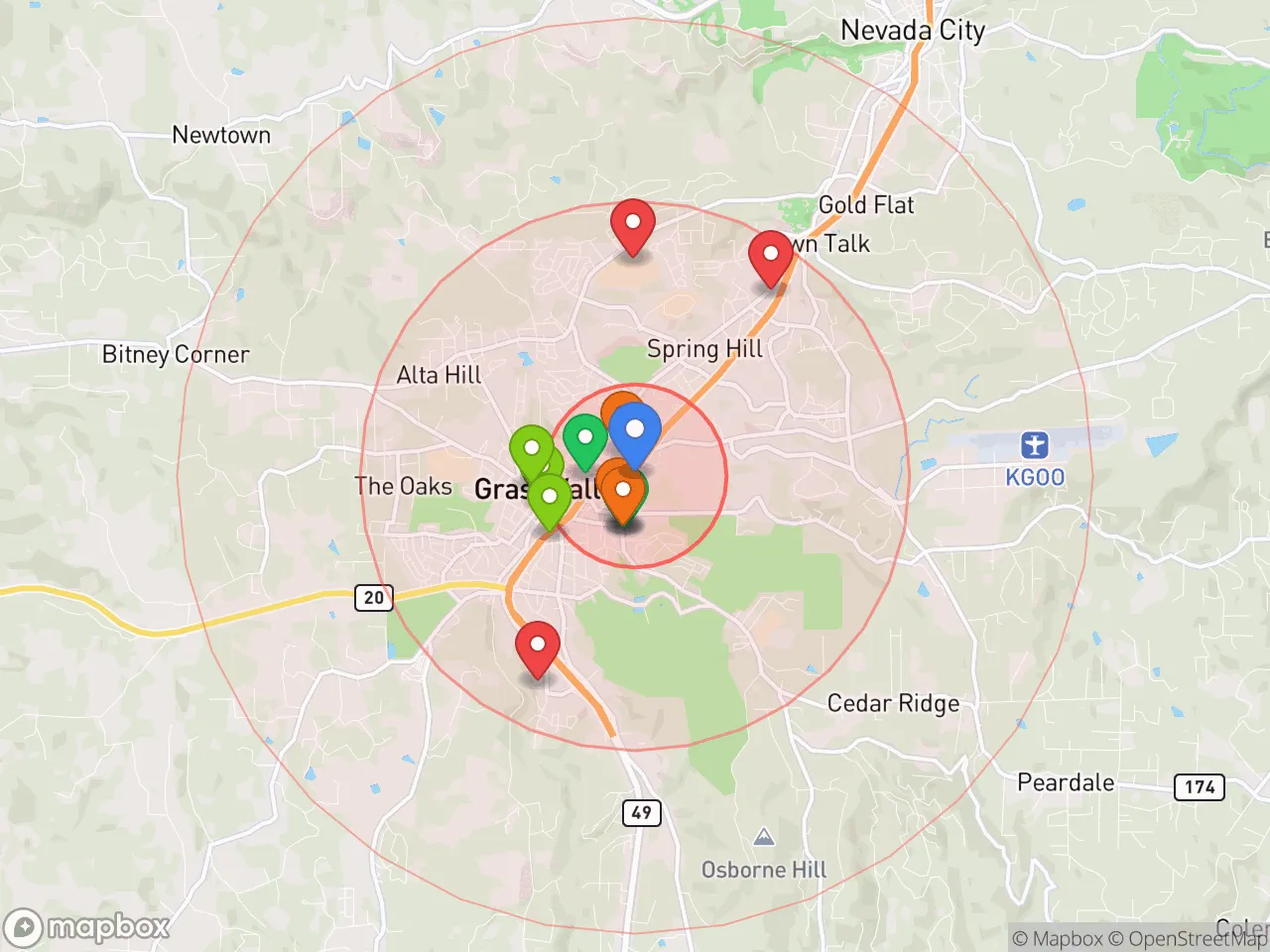
4 within 10 miles
Gas
16 within 10 miles
Hospital
3 within 20 miles
Airport
SAN — Oakland San Francisco Bay
Post Office
USPS — Grass Valley, CA
Critical Amenities
Quality-of-Life Analysis
Grass Valley, California, presents a quality of life defined by its historic Gold Country character and a notably higher cost of living than the national average, attracting a mix of retirees, remote workers, and families seeking a slower pace near the Sierra Nevada foothills. With a cost of living index of 138 (100 = U.S. average), the city is significantly more expensive than the typical American town, yet it remains a relative bargain compared to the San Francisco Bay Area or Sacramento’s pricier suburbs. The population skews older and more affluent than the state average, with a median age around 46, and the local economy is anchored by healthcare, tourism, and a growing cohort of telecommuters drawn by the area’s natural beauty and historic downtown.
Cost of living and housing affordability compared to Nevada County and Sacramento
Housing is the primary driver of Grass Valley’s elevated cost of living, with the median home value at $458,400—roughly 30% above the national median but still well below the Bay Area’s $1.2 million. Renters face a median monthly rent of $1,417, which is about 10% higher than the national average but notably cheaper than Sacramento’s median rent of $1,600. For buyers, the market is competitive but not overheated; a typical home in Grass Valley costs about $50,000 less than a comparable property in nearby Nevada City, and roughly $100,000 less than in Truckee. The average commute of just 17 minutes is a standout advantage—far shorter than the 30-minute average for the Sacramento metro—meaning residents spend less on transportation and gain more time for recreation. However, wages in Grass Valley lag behind the state average, with median household income around $62,000, making homeownership a stretch for many single-income households without significant savings or equity from a prior home sale.
What daily life is like for families, retirees, and remote workers
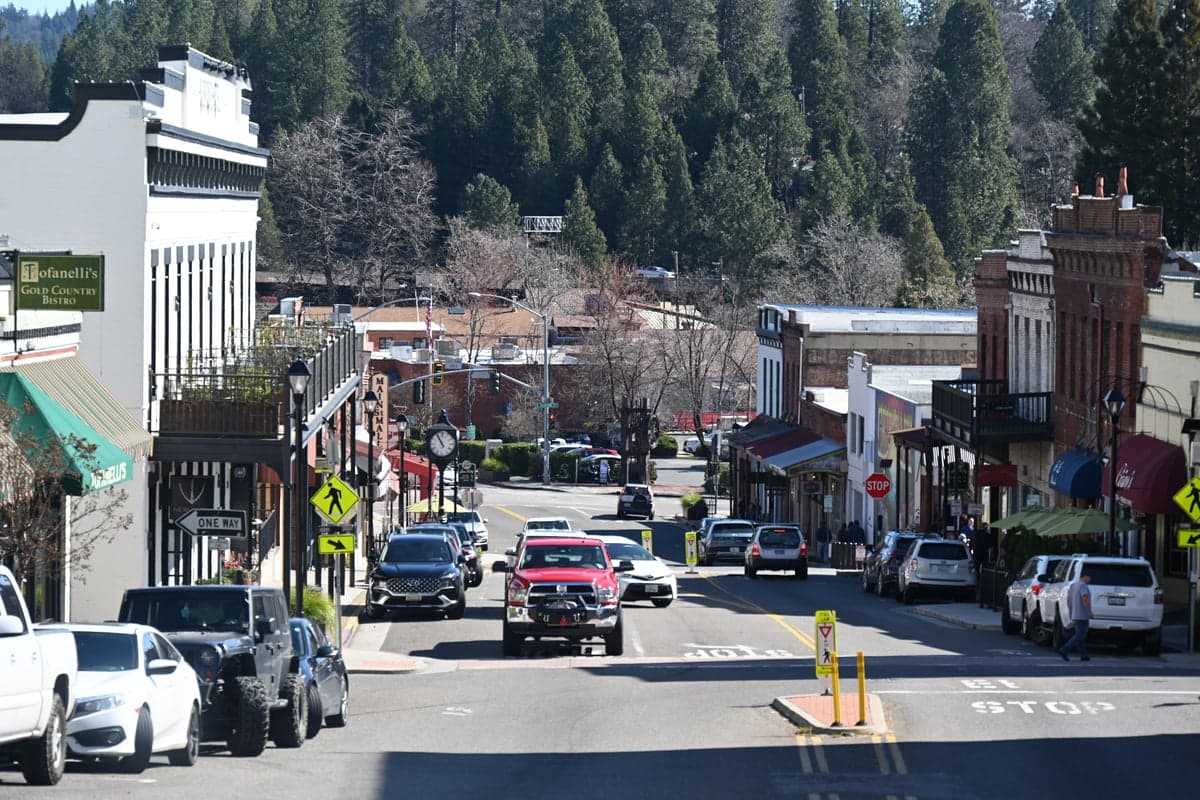
Daily life in Grass Valley revolves around a compact, walkable downtown with independent shops, cafes, and the historic Del Oro Theatre, alongside a calendar of community events like the Cornish Christmas festival and the Nevada County Fair. The Grass Valley School District serves most families, with Grass Valley Charter School and Lyman Gilmore Middle School receiving above-average ratings on GreatSchools, while private options like the Forest Lake Christian School provide alternatives. For outdoor recreation, the 1,000-acre Empire Mine State Historic Park offers hiking and mountain biking trails minutes from downtown, and the South Yuba River’s swimming holes are a 15-minute drive. Retirees benefit from the Sierra Nevada Memorial Hospital, a 104-bed facility with a Level III trauma center, and a robust network of senior services through the Nevada County Office of Aging. Remote workers find reliable internet via Spectrum and local fiber providers, though speeds can be inconsistent in the surrounding rural areas. The rhythm of life is notably slower than in Sacramento or the Bay Area, with fewer chain restaurants and a stronger emphasis on local agriculture, craft breweries, and community gatherings at the Grass Valley Farmers’ Market.
Grass Valley is best suited for those who prioritize a small-town, nature-oriented lifestyle and can absorb the higher housing costs—particularly retirees with fixed incomes from home sales, remote workers earning Bay Area or tech salaries, and families who value short commutes and outdoor access over urban amenities. It is less ideal for young professionals seeking nightlife or diverse job markets, as employment options outside healthcare, education, and retail are limited. For buyers or renters who can afford the premium, the trade-off is a safe, scenic community with strong social ties and a pace of life that feels deliberately unhurried.

Crime in Grass Valley, CA
Higher crime rates than 58% of comparable U.S. locations.
Violent CrimeViolent Crime Analysis
Property CrimeProperty Crime Analysis
Crime Analysis
Grass Valley, California, presents a mixed safety picture for prospective residents. The city's violent crime rate of 434.7 incidents per 100,000 residents is notably higher than the national average, while its property crime rate of 1,820.6 per 100,000 significantly exceeds both state and national benchmarks. These figures place Grass Valley in a higher-risk category compared to many other small cities in the Sierra Nevada foothills, a reality shaped in part by the broader criminal justice environment in Nevada County.
Crime in context
To understand Grass Valley's safety, it is essential to compare its crime rates to larger reference points. The city's violent crime rate is roughly 24% higher than the national average of approximately 350 per 100,000, and its property crime rate is about 40% higher than the national average of roughly 1,300 per 100,000. These numbers are also elevated relative to the statewide California average, which itself is above the national norm. A key contributing factor is the progressive judicial philosophy prevalent in Nevada County. Local district attorneys and judges have, in recent years, emphasized diversion programs, reduced sentencing for property crimes under Proposition 47, and a general leniency toward repeat offenders. While intended to reduce incarceration, this approach has a direct, negative consequence: more criminals are released back onto the streets quickly, increasing the likelihood of recidivism and diminishing justice for victims. This ideological tilt in the justice system is a significant concern for anyone evaluating long-term safety in the area.
What residents experience
For those living in Grass Valley, the most tangible impact is property crime. Residents frequently report vehicle break-ins, package thefts from porches, and burglaries of sheds and garages. The downtown commercial corridor and areas near Highway 49 see higher foot traffic from transient populations, which correlates with increased shoplifting and vandalism. Violent crime, while less common, is not rare; incidents of assault and robbery occur, often concentrated in specific pockets. The progressive justice system's focus on offender rehabilitation over public protection means that even when arrests are made, perpetrators of non-violent property crimes often face minimal consequences, creating a cycle of low-risk, high-reward criminal activity that frustrates homeowners and small business owners alike.
Neighborhood-level variation
Safety is not uniform across Grass Valley. The historic downtown core and the areas immediately surrounding the main commercial strip experience the highest rates of both property and violent crime. In contrast, the more rural, outlying neighborhoods—such as those along Brunswick Road, Alta Street, and the areas closer to the Nevada County Fairgrounds—tend to see lower crime incidence. Gated communities and newer subdivisions on the city's periphery generally report fewer incidents. However, the county-wide leniency in prosecution means that even in safer neighborhoods, residents must remain vigilant about locking vehicles and securing property, as opportunistic crime can occur anywhere. Prospective residents should prioritize visiting specific blocks at different times of day and consulting local crime mapping tools to assess their particular street's safety profile.
* Values derived from national, state, county, city and local statistics and may differ in a specific area. Last updated: 2026-09-22T20:12:37.000Z
Narrative content on this page is AI-generated and may contain mistakes. Verify any details that matter before acting on them.
ReloMaps may earn a commission from affiliate links at no extra cost to you.

