Photo: Wikipedia
Strategic Assessment of Grand Beach, MI
Meaningful friction. Expect exposure to either population pressure, blast zones, or natural disaster risk. Consider buying a retreat property.
What does the Strategic Assessment tell us?
Our Strategic Assessment grades tactical survivability of an area. Major population centers, military targets, fallout zones, natural disasters, and border exposure all drive risk — lower exposure means a more defensible position in a crisis.
This is heavily inspired by Joel Skousen's Strategic Relocation book. Highly recommended you checkout the book ($)What does this tell us?
Our Strategic Assessment grades tactical survivability of an area. Major population centers, military targets, fallout zones, natural disasters, and border exposure all drive risk — lower exposure means a more defensible position in a crisis.
This is heavily inspired by Joel Skousen's Strategic Relocation book. Highly recommended you checkout the book ($)Strategic Pillars
Key Distances
Regional Safe Places
Below is our recommended "safe zones" in Michigan and the surrounding area based on our strategic heuristics. For most people, it's unrealistic to live in a “safe zone” full-time due to work, family or other personal reasons. They tend to be more rural. However, many of these areas are perfect for second homes and retreat properties that double as a vacation home or even a short-term rental.


Important Note: For informational purposes only. This does not mean nothing bad ever happens in the green zones. Please use common sense. This is based on public data and modeled with AI. We tried to take a conservative approach but mistakes happen. We update this regularly as new information becomes available.
Solar Generator Recommendations
Backup power matters more here than in safer locations. We've picked three solar generators across budgets and capacity tiers — start with the budget unit if you only need a few essentials, or step up if you want to run a fridge and HVAC for days at a time.
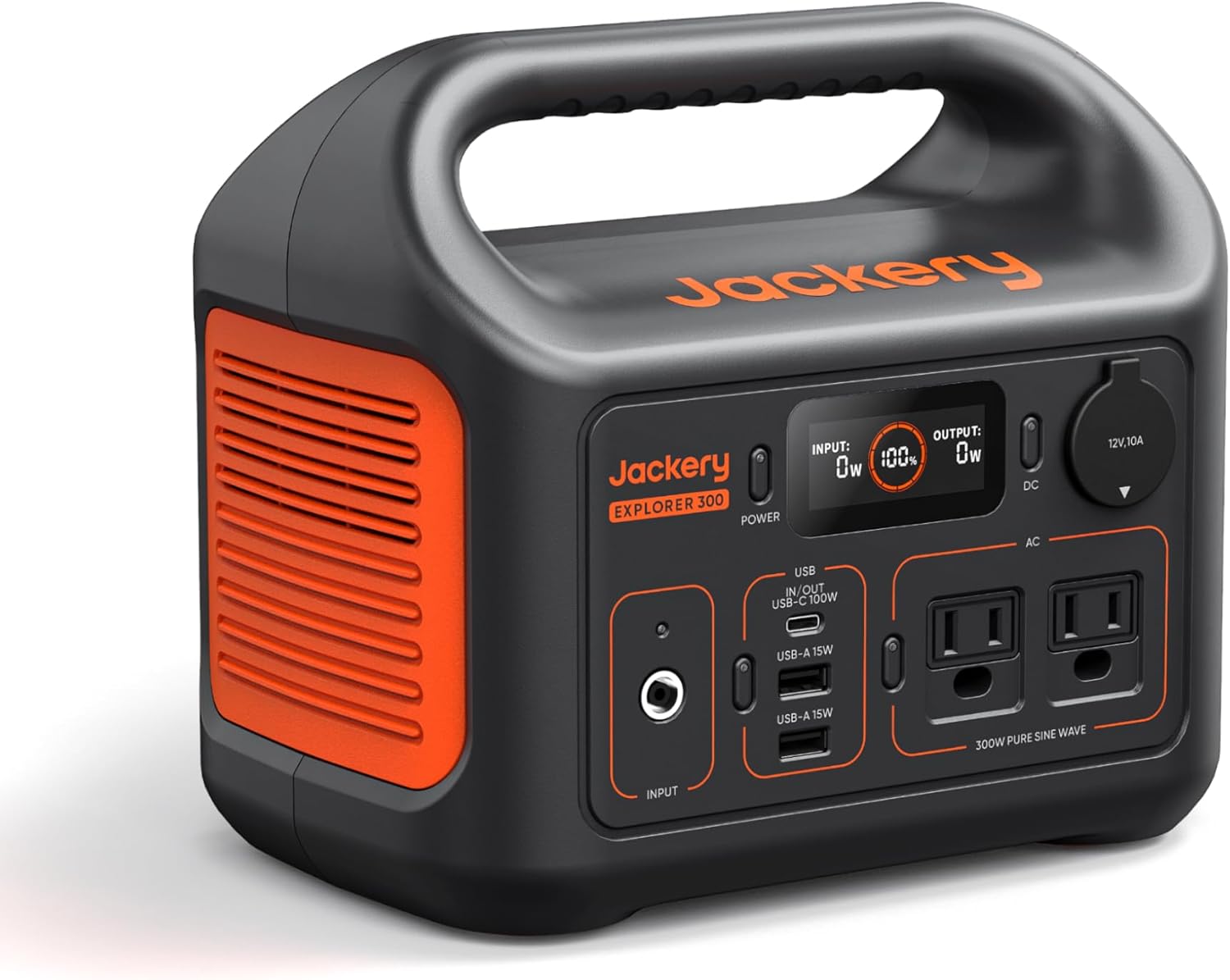
Jackery Portable Power Station Explorer 300
Budget OptionPower on the Go: Weighing only 11 lbs, it's convenient to set up and store with book-sized foldable solar panels

BLUETTI Portable Power Station AC180
Designed for both indoor and outdoor scenarios, AC180 is highly capable as it has a robost capacity and continuous output power.

EF ECOFLOW DELTA Pro Ultra Power Station
Upgraded PickEcoFlow DELTA Pro Ultra is a whole-home energy system designed to grow with your family. Integrated with the Smart Home Panel 2, it scales to meet your evolving energy needs — keeping your home powered, intelligent, and secure through every stage of life.
We earn a commission, at no additional cost to you.
Strategic Assessment Analysis
Grand Beach, Michigan, offers a resilience profile that is stronger than its small footprint suggests, largely because of its position on the southeastern shore of Lake Michigan. For a relocator weighing disaster readiness and self-sufficiency, this is a location where the water is both the primary asset and the principal risk, and where proximity to Chicago cuts both ways. The community’s strategic value lies in its access to fresh water, a moderate climate, and a low-density footprint, but its exposure to lake-effect weather and its location within a major metropolitan commuter shed require a clear-eyed assessment before committing.
Geographic position and natural advantages for long-term stability
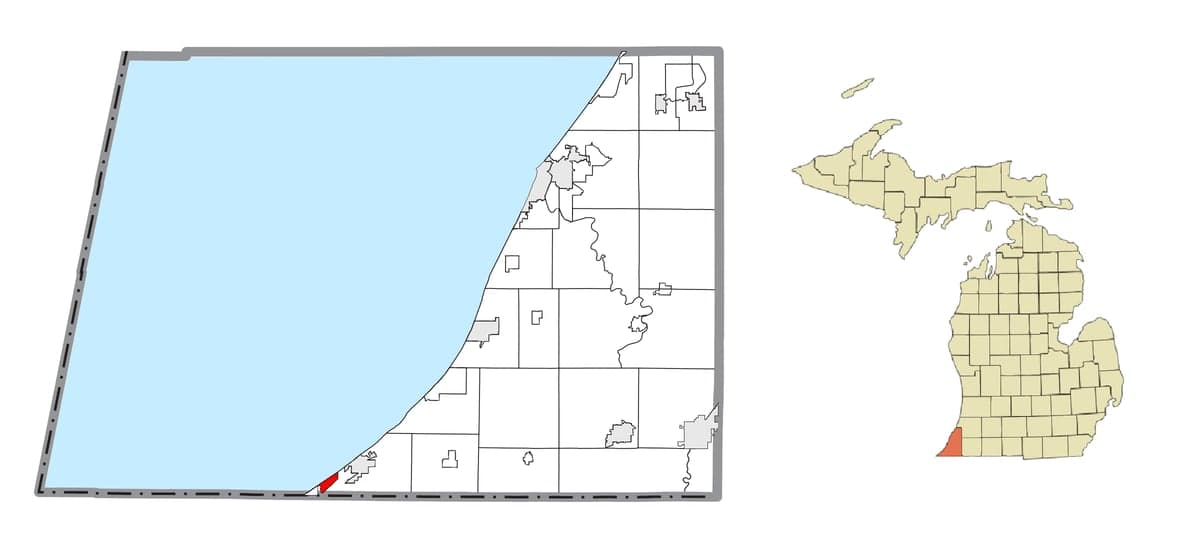
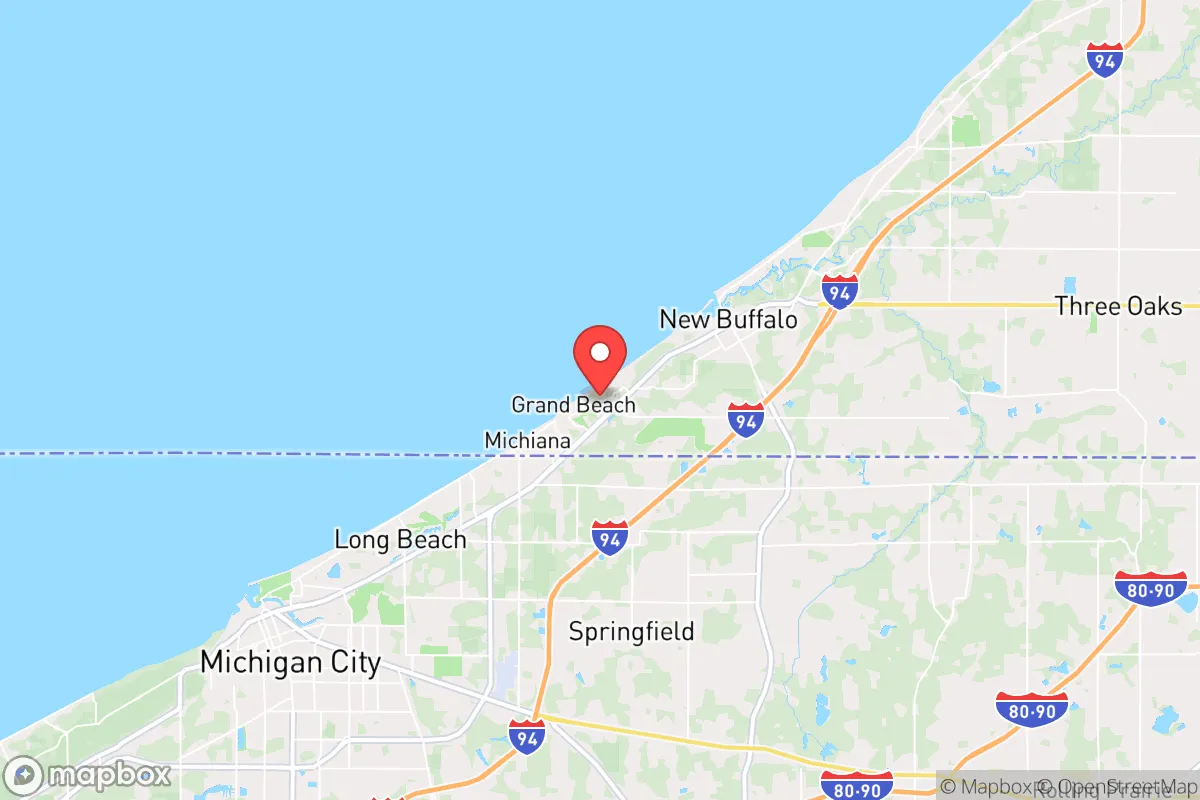
Grand Beach sits in Berrien County, roughly 60 miles east of Chicago’s Loop and about 10 miles west of Benton Harbor–St. Joseph. That proximity to a major metro area is a double-edged sword, but from a pure resilience standpoint, the location offers a meaningful buffer. The town is not in the immediate blast or fallout zone of a major urban target; prevailing westerly winds would carry any airborne contamination from Chicago toward the east, which is a genuine, if uncomfortable, advantage for this specific community. The Lake Michigan shoreline provides a nearly limitless supply of fresh water, and the area’s sandy, well-drained soil supports small-scale agriculture, orchards, and vineyards—Berrien County is one of Michigan’s top fruit-producing counties, which matters for local food security.
The natural topography is gentle, with no significant floodplain within the village itself, though bluff erosion is a real and ongoing concern along the lakefront. The climate is moderated by the lake, meaning slightly cooler summers and warmer winters than inland Michigan, which reduces extreme temperature stress on infrastructure and people. The tree canopy is dense, offering natural windbreaks and building-material resources. For a family or individual looking to be less dependent on fragile supply chains, the area’s combination of fresh water, arable land, and moderate weather is a solid foundation.
Risks, exposures, and proximity to fallout-relevant landmarks
The most significant strategic risk for Grand Beach is not natural disaster but its position relative to Chicago and the broader industrial corridor along the southern shore of Lake Michigan. Chicago is a Tier-1 target in any major conflict scenario, and while Grand Beach is outside the immediate blast radius, it is not outside the fallout plume under certain wind conditions. The prevailing westerlies that protect the town from Chicago’s immediate smoke and debris also mean that any ground-level contamination from the metro area could drift eastward. The Indiana Dunes and Gary, Indiana, industrial complex—including steel mills and oil refineries—lie roughly 30 miles to the southwest, adding another layer of man-made risk. A conventional strike on that corridor would produce significant secondary hazards, including chemical releases and fires, that could affect air quality across the lake.
Natural risks are more predictable. Lake Michigan generates intense lake-effect snow bands, with Grand Beach routinely seeing 80–100 inches of snow per season, which can isolate the community for days at a time. Severe thunderstorms and occasional tornado warnings are part of the spring and summer pattern, though the lake moderates the most violent outbreaks. The bigger long-term concern is bluff erosion and shoreline recession; several homes in the area have been lost or threatened in the past decade as high lake levels accelerated erosion. The village’s low elevation near the water also makes it vulnerable to storm surge and seiche events, which can cause rapid water-level changes. None of these are existential threats, but they require preparation and, for lakefront properties, serious structural investment.
Practical resilience for a relocator: food, water, energy, and defensibility
For a relocator serious about self-sufficiency, Grand Beach offers a workable but not ideal setup. The town itself is a small, seasonal community—many homes are vacation properties—which means that in the off-season, the permanent population is thin. That is an advantage for privacy and defensibility, but it also means fewer year-round neighbors to rely on in an emergency. The nearest full-service grocery is in New Buffalo (about 8 miles south) or Stevensville (about 10 miles east), and both are vulnerable to supply-chain disruptions. A serious preparedness plan should include at least a 30-day food reserve, given that a major winter storm or regional grid failure could close roads for a week or more.
Water is the area’s strongest card. Lake Michigan is a massive, reliable freshwater source, but it requires treatment or filtration for safe consumption. A simple sand-point well or a high-quality gravity filter system is a practical investment. Municipal water in Grand Beach is supplied by the surrounding township and is generally reliable, but a private well with a hand-pump backup is the gold standard for true independence. Energy is the weakest link. The region is served by Indiana Michigan Power, and outages are common during winter storms. Natural gas is available in parts of the community, but a wood-burning stove or a propane generator with a 500-gallon tank is a realistic necessity, not a luxury, for year-round residence.
Defensibility is moderate. Grand Beach is a peninsula-like community, bounded by the lake on the west and the Galien River and wetlands to the east, which limits road access to a few choke points. That is a natural advantage for security, but it also means that if those roads are compromised—by flooding, snow, or civil disruption—egress is difficult. The community is not gated, but its layout naturally discourages casual through-traffic. For a family, the local school district (River Valley) is small and community-oriented, which is a plus for social cohesion, but the nearest hospital is in St. Joseph, about 15 miles away, which is a meaningful gap in a major medical emergency.
The overall strategic picture for a preparedness-minded relocator
Grand Beach is a defensible, water-rich location with a genuine buffer from major urban targets, but it is not a remote survivalist retreat. It is a lakefront community with seasonal rhythms, a thin permanent population, and a real dependency on regional infrastructure for food, fuel, and medical care. The smart relocator here would treat it as a base camp, not a bunker: invest in water filtration, backup power, and a solid food reserve; build relationships with the year-round neighbors who actually live there; and accept that the lake is both the greatest asset and the greatest variable. For a single individual or a family that wants a beautiful, low-density home base with a fighting chance in a disrupted world, Grand Beach is a reasonable choice—provided you go in with eyes open about the snow, the erosion, and the fact that Chicago is close enough to matter but far enough to give you time to react.

* Values derived from national, state, county, city and local statistics and may differ in a specific area. Last updated: 2026-11-01T01:03:04.000Z
Narrative content on this page is AI-generated and may contain mistakes. Verify any details that matter before acting on them.
ReloMaps may earn a commission from affiliate links at no extra cost to you.

