Photo: Wikipedia
Demographics of Grand Beach, MI
Affluence Level in Grand Beach, MI
A wealthy area with high-earning, well-educated households. Incomes, home values, and educational attainment meaningfully outpace national averages.
People of Grand Beach, MI
Grand Beach, Michigan, is a tiny, affluent lakeshore community of 368 residents where the population is overwhelmingly white (89.9%) and highly educated, with 70.4% holding a college degree. The city has zero foreign-born residents and no Black, East/Southeast Asian, or Indian-subcontinent population, though Hispanic residents make up 6.0% of the community. This is a place defined by its summer-resort origins, its transformation into a year-round commuter enclave, and its remarkable demographic stability over the past century.
How the city was settled and grew
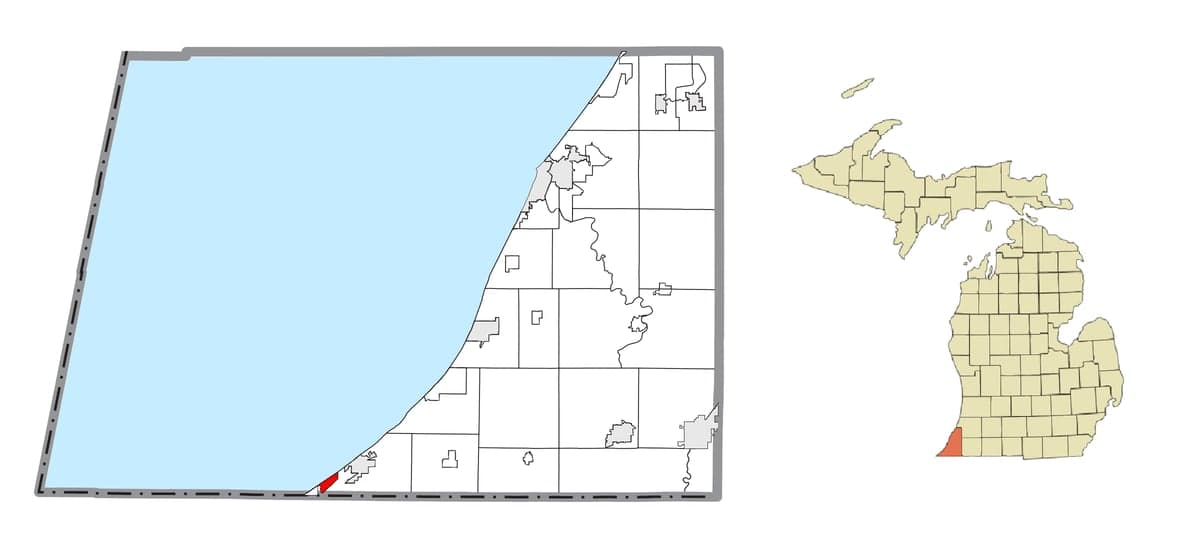
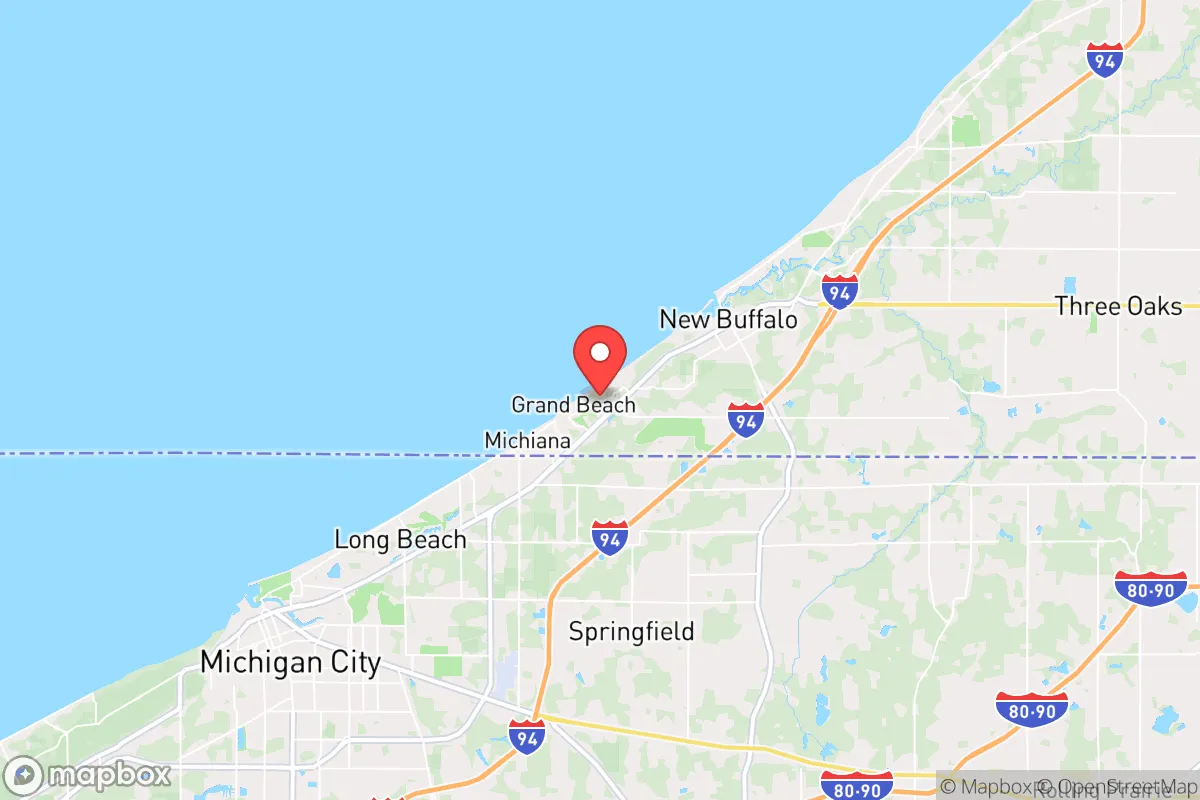
Grand Beach was not a farming settlement or an industrial town; it was a planned resort community from its inception. The city sits on a narrow strip of Lake Michigan shoreline just north of the Indiana border, and its development began in the 1920s when the Pere Marquette Railroad established a stop here to ferry Chicagoans to the beach. The original population was almost entirely wealthy white families from Chicago and South Bend who built large summer cottages along Lake Shore Drive and the streets closest to the water, including Idlewild Avenue and Sunset Boulevard. These early residents were predominantly of Northern European stock — German, Irish, and English ancestry — and they came for the cool summers, the sand dunes, and the privacy of a gated, planned community.
The city incorporated in 1931, and its character was set early: this was never a working-class beach town. The original plat included a golf course, a clubhouse, and strict building covenants that kept the population small and homogeneous. Through the 1940s and 1950s, the community remained a seasonal destination, with many homes sitting empty from Labor Day to Memorial Day. The North Shore section, near the current city hall, was the last area to fill in during this era, as the original lots along the lakefront were already built out.
Modern era (post-1965)
The post-1965 period brought the most significant shift in Grand Beach's population: the transition from seasonal to year-round residency. The 1967 opening of Interstate 94, which connects directly to Chicago and Detroit, made Grand Beach a viable daily commute for professionals working in Michigan City or even as far as the Chicago Loop. This drove a wave of domestic in-migration — not of new ethnic groups, but of white professionals seeking a small-town lakeside address with big-city employment. The East End neighborhood, along the city's boundary with Michiana Shores, saw the most new construction during the 1970s and 1980s, as empty lots were filled with permanent homes rather than summer cottages.
Unlike many Midwestern communities, Grand Beach did not experience the racial diversification that followed the 1965 Hart-Cellar Act. The city's housing stock is expensive, its lots are large, and its identity as a private, gated community (the gates came down in the 1990s, but the character remained) has kept the population almost entirely white. The 6.0% Hispanic share is a recent development, concentrated in the West Bluff area, where a few families of Mexican descent have purchased older cottages and converted them to year-round homes. This is a small but notable shift in a city that has otherwise seen virtually no demographic change in fifty years.
The future
Grand Beach's population is aging, and the city faces a demographic crossroads. The median age is rising as original summer families age in place, and the limited housing stock — there are only about 200 parcels in the entire city — means new residents must wait for a home to come on the market. The most likely near-term trend is continued stability: the city will remain overwhelmingly white, highly educated, and affluent, with the Hispanic share growing only marginally as a few families move into the South Shore section near the marina. There is no realistic path to significant diversification given the housing costs (median home values exceed $500,000) and the absence of rental or multi-family housing.
What is changing is the age profile. Younger families are beginning to replace retirees, drawn by the Michiana Shores border area where lots are slightly smaller and prices more attainable. The city's school-age population, while small, is growing for the first time in decades, and the 2020s have seen a modest uptick in children enrolled in the New Buffalo Area Schools district. The cultural identity is shifting from a quiet retirement haven to a family-oriented commuter suburb, though the pace of change is glacial given the housing constraints.
For someone moving to Grand Beach today, the bottom line is this: you are joining a small, stable, overwhelmingly white community of highly educated professionals who value privacy, lake access, and proximity to Chicago. The population is not diversifying in any meaningful way, but it is getting younger and more family-focused. If you are looking for a place where your neighbors will be similar to you in background and income, and where the demographic character has been essentially unchanged for a century, Grand Beach delivers exactly that — and it is unlikely to change in your lifetime.

* Values derived from national, state, county, city and local statistics and may differ in a specific area. Last updated: 2026-11-01T01:03:04.000Z
Narrative content on this page is AI-generated and may contain mistakes. Verify any details that matter before acting on them.
ReloMaps may earn a commission from affiliate links at no extra cost to you.

