Photo: Wikipedia
Strategic Assessment of Grafton, WI
Meaningful friction. Expect exposure to either population pressure, blast zones, or natural disaster risk. Consider buying a retreat property.
What does the Strategic Assessment tell us?
Our Strategic Assessment grades tactical survivability of an area. Major population centers, military targets, fallout zones, natural disasters, and border exposure all drive risk — lower exposure means a more defensible position in a crisis.
This is heavily inspired by Joel Skousen's Strategic Relocation book. Highly recommended you checkout the book ($)What does this tell us?
Our Strategic Assessment grades tactical survivability of an area. Major population centers, military targets, fallout zones, natural disasters, and border exposure all drive risk — lower exposure means a more defensible position in a crisis.
This is heavily inspired by Joel Skousen's Strategic Relocation book. Highly recommended you checkout the book ($)Strategic Pillars
Key Distances
Regional Safe Places
Below is our recommended "safe zones" in Wisconsin and the surrounding area based on our strategic heuristics. For most people, it's unrealistic to live in a “safe zone” full-time due to work, family or other personal reasons. They tend to be more rural. However, many of these areas are perfect for second homes and retreat properties that double as a vacation home or even a short-term rental.
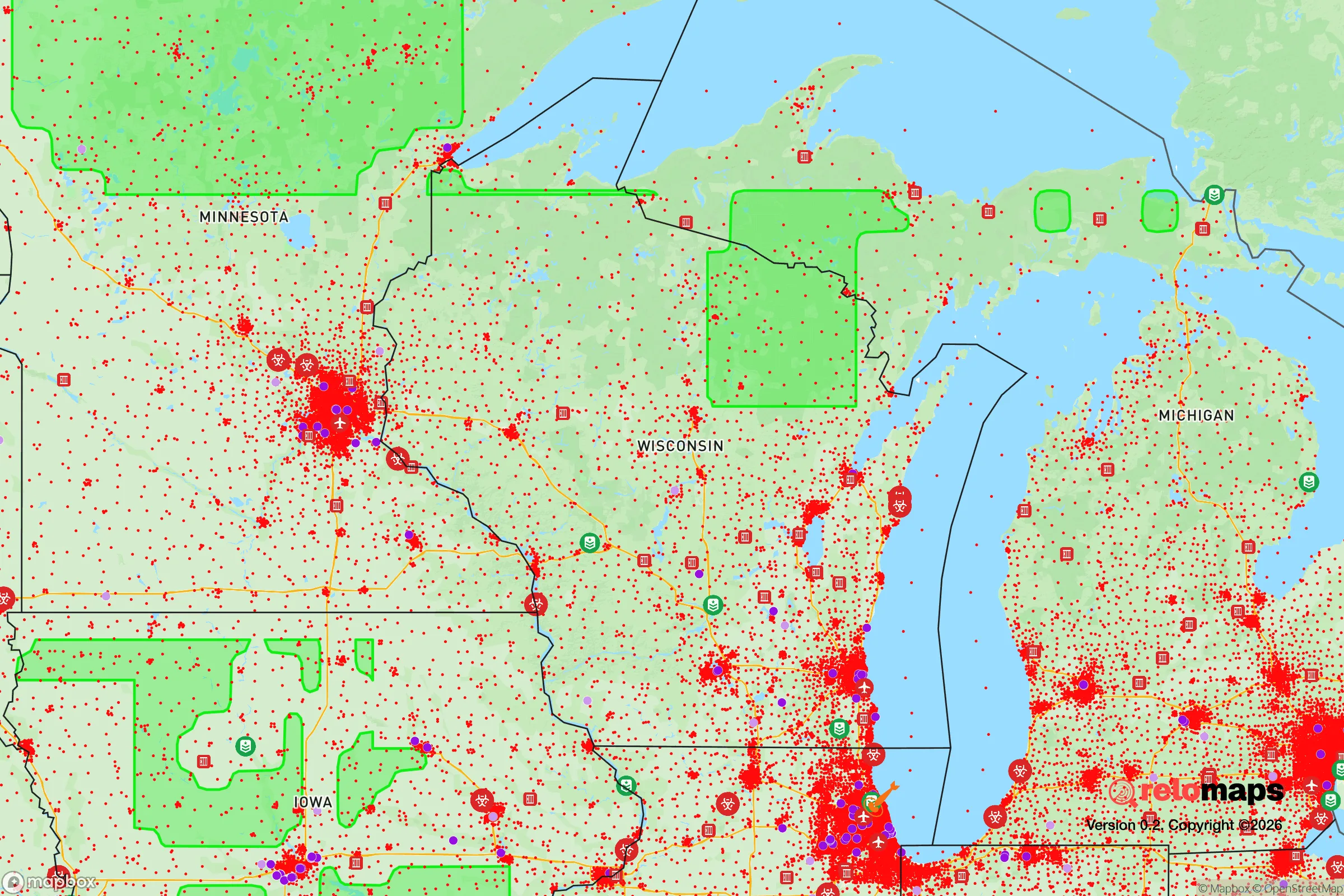
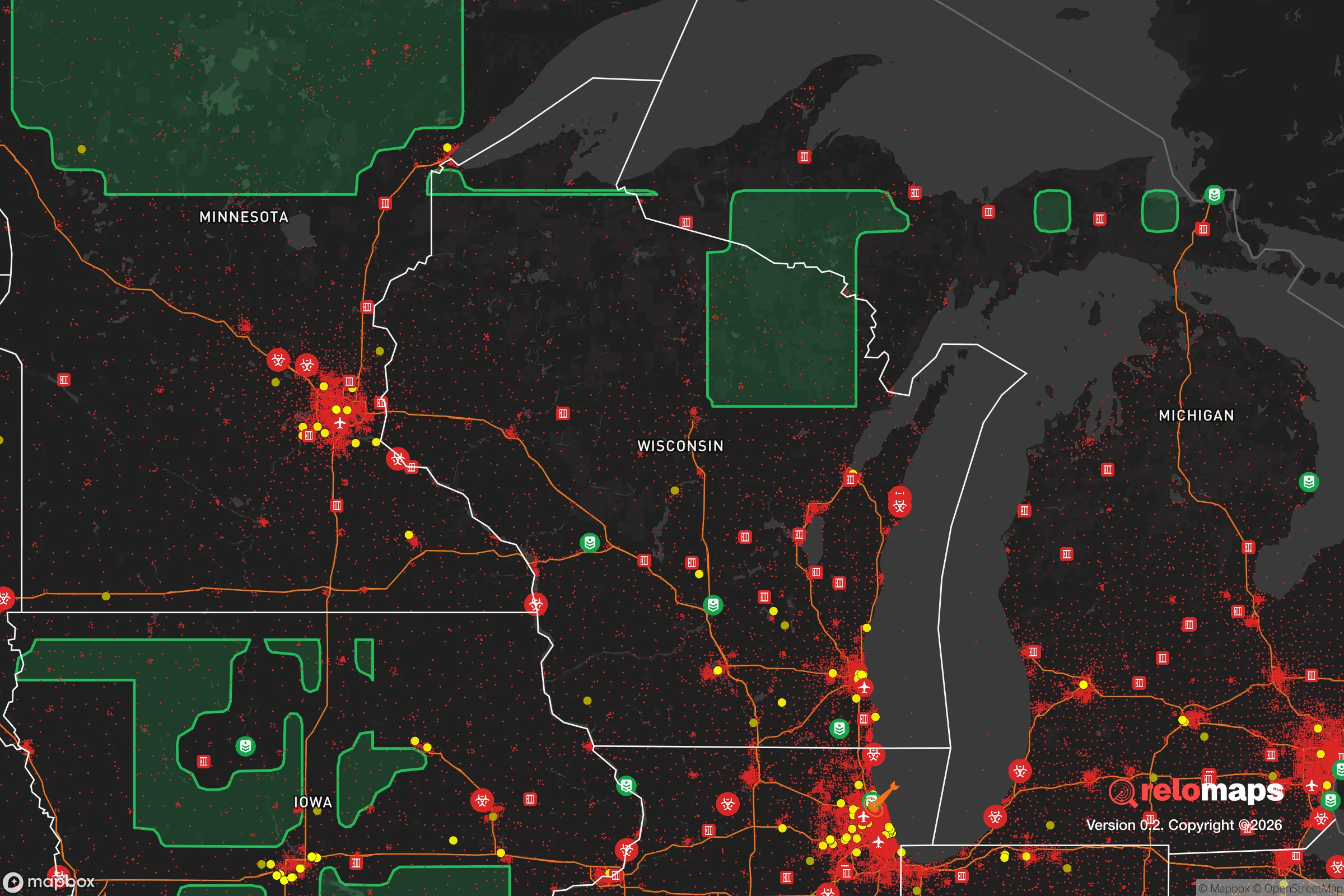


Important Note: For informational purposes only. This does not mean nothing bad ever happens in the green zones. Please use common sense. This is based on public data and modeled with AI. We tried to take a conservative approach but mistakes happen. We update this regularly as new information becomes available.
Solar Generator Recommendations
Backup power matters more here than in safer locations. We've picked three solar generators across budgets and capacity tiers — start with the budget unit if you only need a few essentials, or step up if you want to run a fridge and HVAC for days at a time.
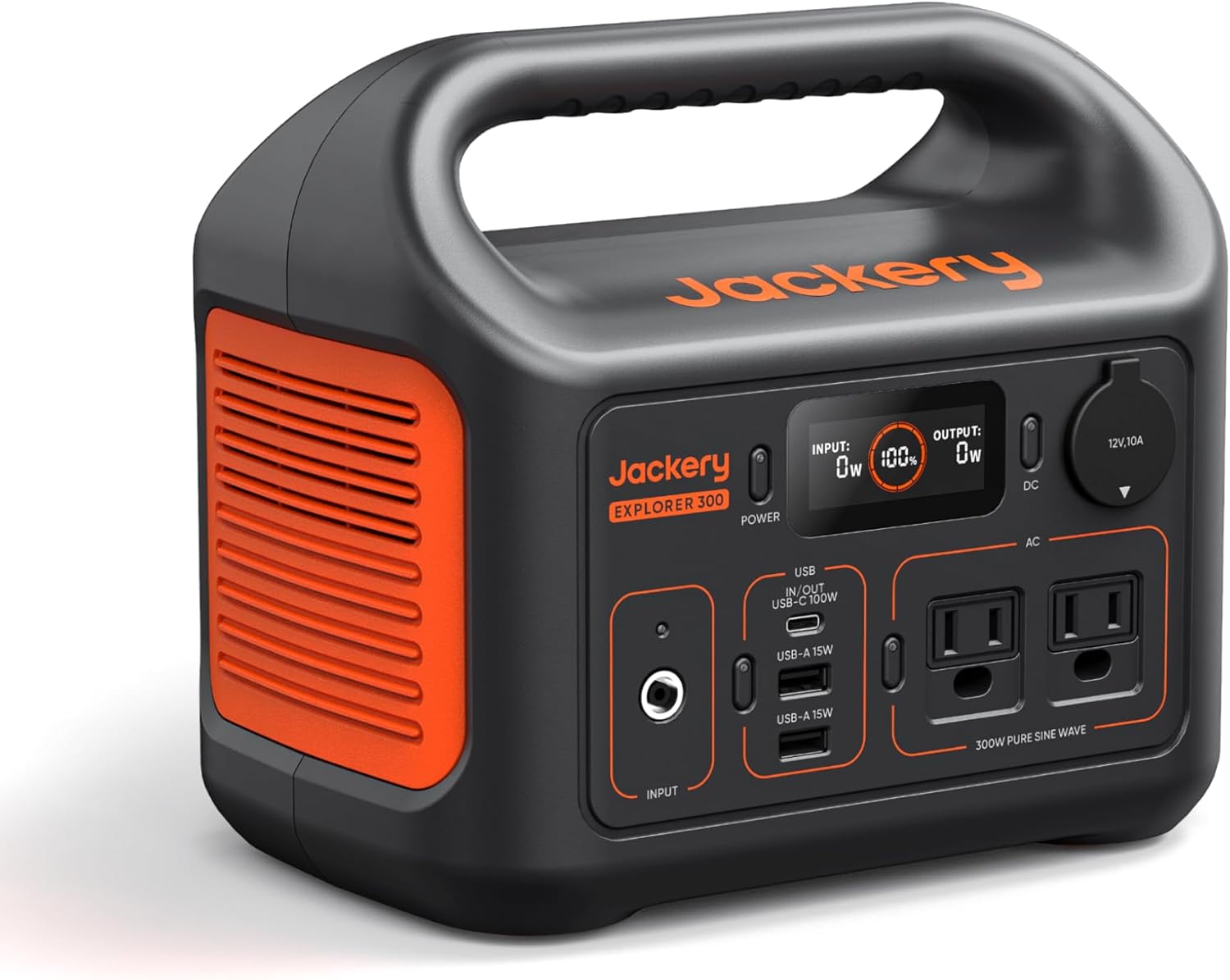
Jackery Portable Power Station Explorer 300
Budget OptionPower on the Go: Weighing only 11 lbs, it's convenient to set up and store with book-sized foldable solar panels

BLUETTI Portable Power Station AC180
Designed for both indoor and outdoor scenarios, AC180 is highly capable as it has a robost capacity and continuous output power.

EF ECOFLOW DELTA Pro Ultra Power Station
Upgraded PickEcoFlow DELTA Pro Ultra is a whole-home energy system designed to grow with your family. Integrated with the Smart Home Panel 2, it scales to meet your evolving energy needs — keeping your home powered, intelligent, and secure through every stage of life.
We earn a commission, at no additional cost to you.
Strategic Assessment Analysis
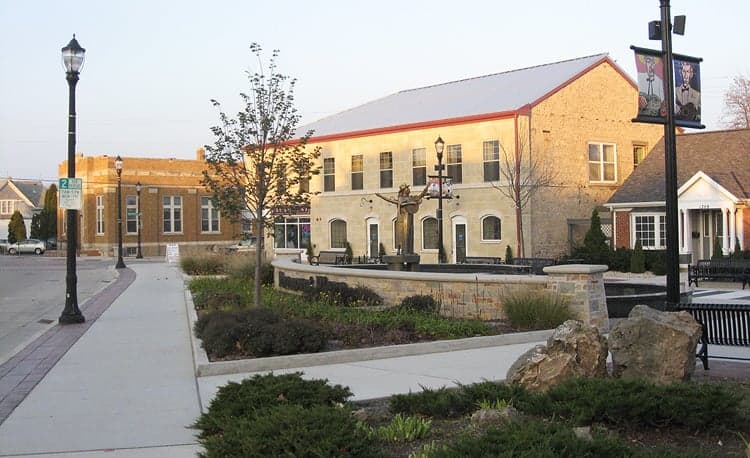
Grafton, Wisconsin, sits in a sweet spot that few relocation guides talk about: close enough to Milwaukee's economy to matter, far enough from its blast radius to matter more. For a reader weighing disaster readiness and self-sufficiency, this Ozaukee County village of roughly 12,000 offers a genuinely defensible position — a bluff-top community with Lake Michigan on one flank and productive farmland on the other. The strategic picture here is not about hiding from the world; it's about being positioned to ride out disruptions that would cripple denser, more exposed population centers to the south.
Geographic position and natural advantages for long-term stability
Grafton's most underrated asset is its elevation and drainage. The village core sits on the bluffs overlooking the Milwaukee River and Lake Michigan, roughly 60 to 80 feet above the lake plain. That means the catastrophic flooding that periodically swamps lakefront communities like Port Washington or river towns further inland is largely a non-issue here. The 2010 and 2019 flood events that damaged parts of Cedarburg and Saukville caused only localized basement issues in Grafton's older neighborhoods — not the structural losses seen elsewhere. For a relocator thinking about water risk, this is a meaningful differentiator.
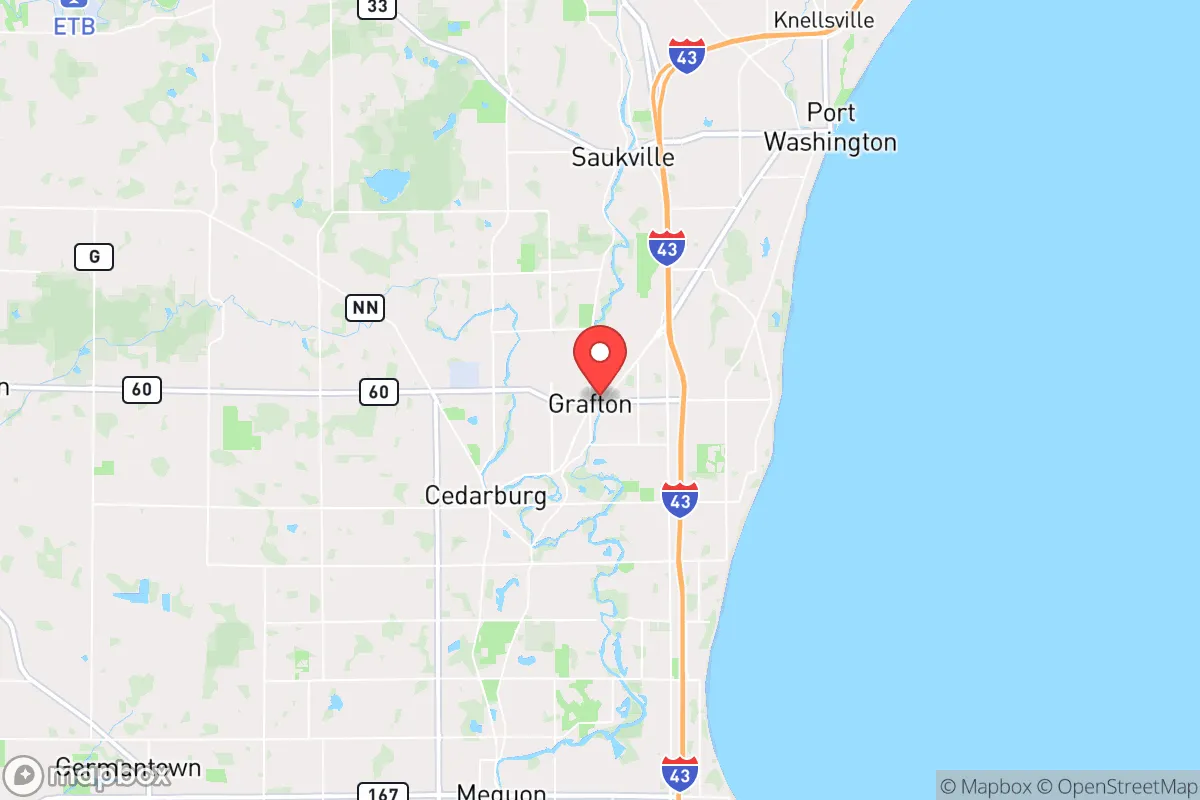
The broader region compounds that advantage. Ozaukee County is part of the Milwaukee metropolitan statistical area, but it functions as a separate economic and agricultural unit. The county is roughly 40 percent farmland, with active dairy, grain, and vegetable operations within a 15-minute drive of Grafton's downtown. That is not true of most suburban communities in the Midwest, and it matters enormously for food security. The village also sits at the intersection of Interstate 43 and Wisconsin Highway 60, giving residents two independent evacuation or supply corridors — one running north-south along the lake, the other cutting west toward the interior. If one route is compromised, the other remains viable.
Risk exposure and proximity to fallout-relevant landmarks
No honest strategic assessment can ignore what sits to the south. Grafton is 25 miles north of downtown Milwaukee, which places it outside the immediate blast and thermal zones for a hypothetical ground-burst detonation at the city's core — but inside the zone where radioactive fallout could arrive within hours depending on wind direction. The prevailing summer winds in southeastern Wisconsin blow from the southwest, which would carry fallout from a Milwaukee-area event directly toward Ozaukee County. This is the single largest man-made risk in the region, and a relocator should plan for it rather than dismiss it.
There are secondary considerations. The Point Beach Nuclear Plant sits roughly 40 miles north in Two Rivers, and while it has operated safely for decades, its proximity means a severe accident scenario would put Grafton in a potential downwind path. On the conventional side, the village is 12 miles from the Fort McCoy rail spur network and within 30 miles of the General Mitchell Air National Guard Base — both are plausible secondary targets in a broader conflict, though neither is a primary strategic asset. The practical takeaway is not alarm, but preparation: Grafton's risk profile is dominated by its proximity to Milwaukee, not by anything unique to the village itself. A family with a 72-hour kit, a battery-powered weather radio, and a plan to shelter in place for 48 hours has addressed the realistic worst case.
Practical resilience for a relocator: food, water, energy, and defensibility
Grafton's practical resilience is where the analysis turns favorable. The village draws its municipal water from two deep sandstone aquifers, not from Lake Michigan surface intake — which means a lake contamination event, whether industrial or biological, does not automatically compromise the tap water. The Ozaukee County Water Utility maintains backup diesel pumping capacity, and most newer residential developments in the area have private wells as an alternative. For a self-sufficiency-minded relocator, the ability to drill a private well on a 5-acre parcel outside village limits is a genuine strategic asset that suburban communities in Illinois or Indiana simply do not offer.
Energy resilience is moderate but improving. We Energies serves the area with a grid that has performed well in recent winter storms, but outages of 12 to 24 hours are not uncommon during ice events. The practical workaround is that Grafton's housing stock — much of it built between 1990 and 2015 — is predominantly natural-gas heated, and gas service rarely fails for extended periods. A relocator who adds a dual-fuel generator and a 100-gallon propane tank has effectively solved the energy problem for 95 percent of realistic scenarios. Solar is viable but not exceptional; the region averages 4.2 peak sun hours per day, comparable to much of the Northeast.
Food security is the strongest pillar. The Cedarburg Farmers Market, six miles south, operates May through October, and the Ozaukee County Food Pantry network provides a safety net. But the real advantage is the agricultural ring around the village. Within a 10-mile radius, a relocator can find u-pick orchards, CSAs, and direct-from-farm meat and dairy operations — not as a lifestyle amenity, but as a functional supply chain. The village's defensibility is also better than most. Grafton's bluff geography creates natural chokepoints on the roads leading into town, and the residential neighborhoods are laid out in a way that would be difficult to navigate for anyone unfamiliar with the area. This is not a fortress by design, but it is a community that would be hard to overwhelm quickly.
The overall strategic picture for a serious relocator
Grafton's strategic assessment comes down to a trade-off that a thoughtful relocator can live with. The village is close enough to Milwaukee to offer jobs, healthcare, and supply chains — but that proximity is also its primary vulnerability. The mitigation is straightforward: the risk is predictable, the warning time for a man-made event is measurable in hours, and the natural risks (flood, tornado, blizzard) are all manageable with standard preparedness. What Grafton offers that most comparable communities do not is a genuine agricultural buffer, independent water sources, and a geography that gives residents options. For a single individual or family that wants to be part of a functioning community rather than isolated from one, this is a defensible, rational choice — provided they treat the Milwaukee proximity as a known variable and plan accordingly.

* Values derived from national, state, county, city and local statistics and may differ in a specific area. Last updated: 2026-10-12T02:07:22.000Z
Narrative content on this page is AI-generated and may contain mistakes. Verify any details that matter before acting on them.
ReloMaps may earn a commission from affiliate links at no extra cost to you.

