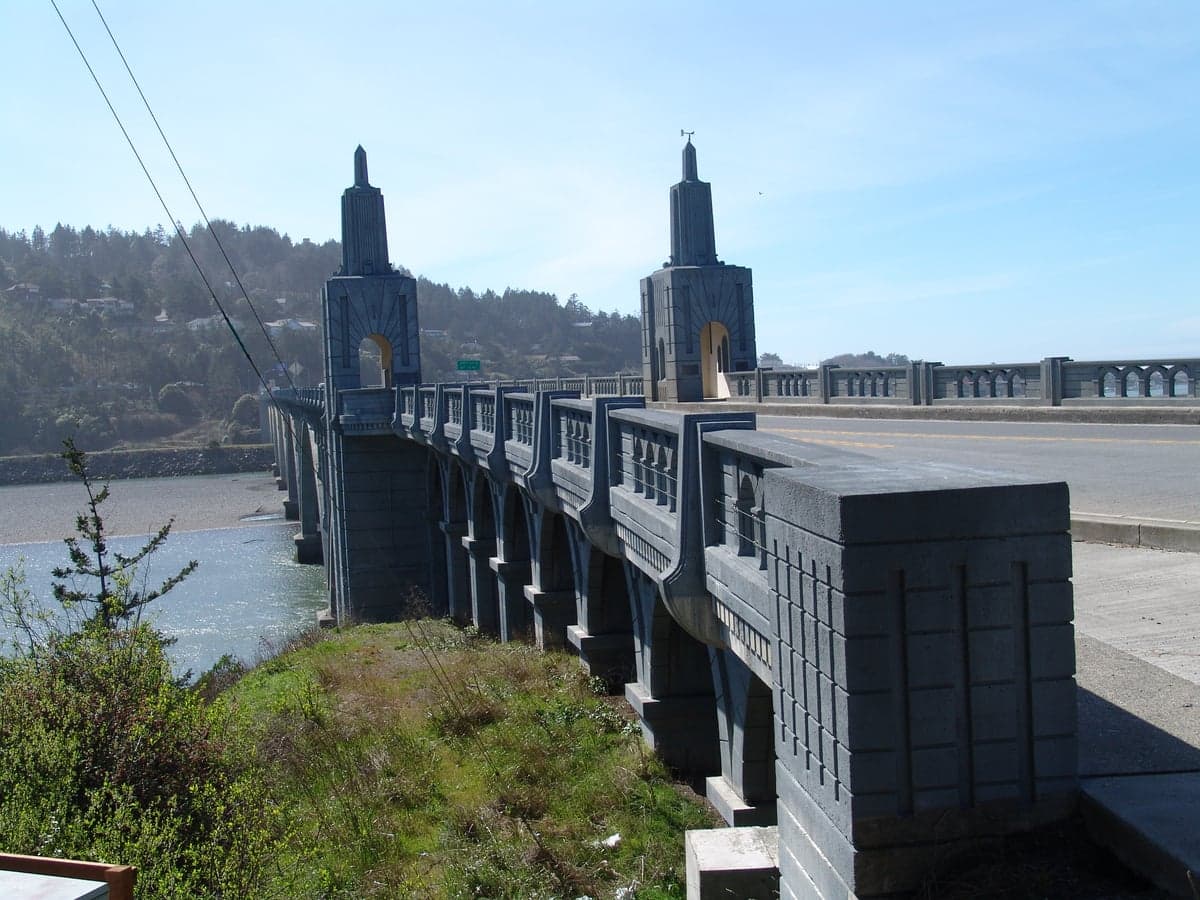
Photo: Wikipedia
Strategic Assessment of Gold Beach, OR
Workable tactical position. Some exposure to population density or targets, but generally defensible in a crisis.
What does the Strategic Assessment tell us?
Our Strategic Assessment grades tactical survivability of an area. Major population centers, military targets, fallout zones, natural disasters, and border exposure all drive risk — lower exposure means a more defensible position in a crisis.
This is heavily inspired by Joel Skousen's Strategic Relocation book. Highly recommended you checkout the book ($)What does this tell us?
Our Strategic Assessment grades tactical survivability of an area. Major population centers, military targets, fallout zones, natural disasters, and border exposure all drive risk — lower exposure means a more defensible position in a crisis.
This is heavily inspired by Joel Skousen's Strategic Relocation book. Highly recommended you checkout the book ($)Strategic Pillars
Key Distances
Regional Safe Places
Below is our recommended "safe zones" in Oregon and the surrounding area based on our strategic heuristics. For most people, it's unrealistic to live in a “safe zone” full-time due to work, family or other personal reasons. They tend to be more rural. However, many of these areas are perfect for second homes and retreat properties that double as a vacation home or even a short-term rental.


Important Note: For informational purposes only. This does not mean nothing bad ever happens in the green zones. Please use common sense. This is based on public data and modeled with AI. We tried to take a conservative approach but mistakes happen. We update this regularly as new information becomes available.
Solar Generator Recommendations
Backup power matters more here than in safer locations. We've picked three solar generators across budgets and capacity tiers — start with the budget unit if you only need a few essentials, or step up if you want to run a fridge and HVAC for days at a time.
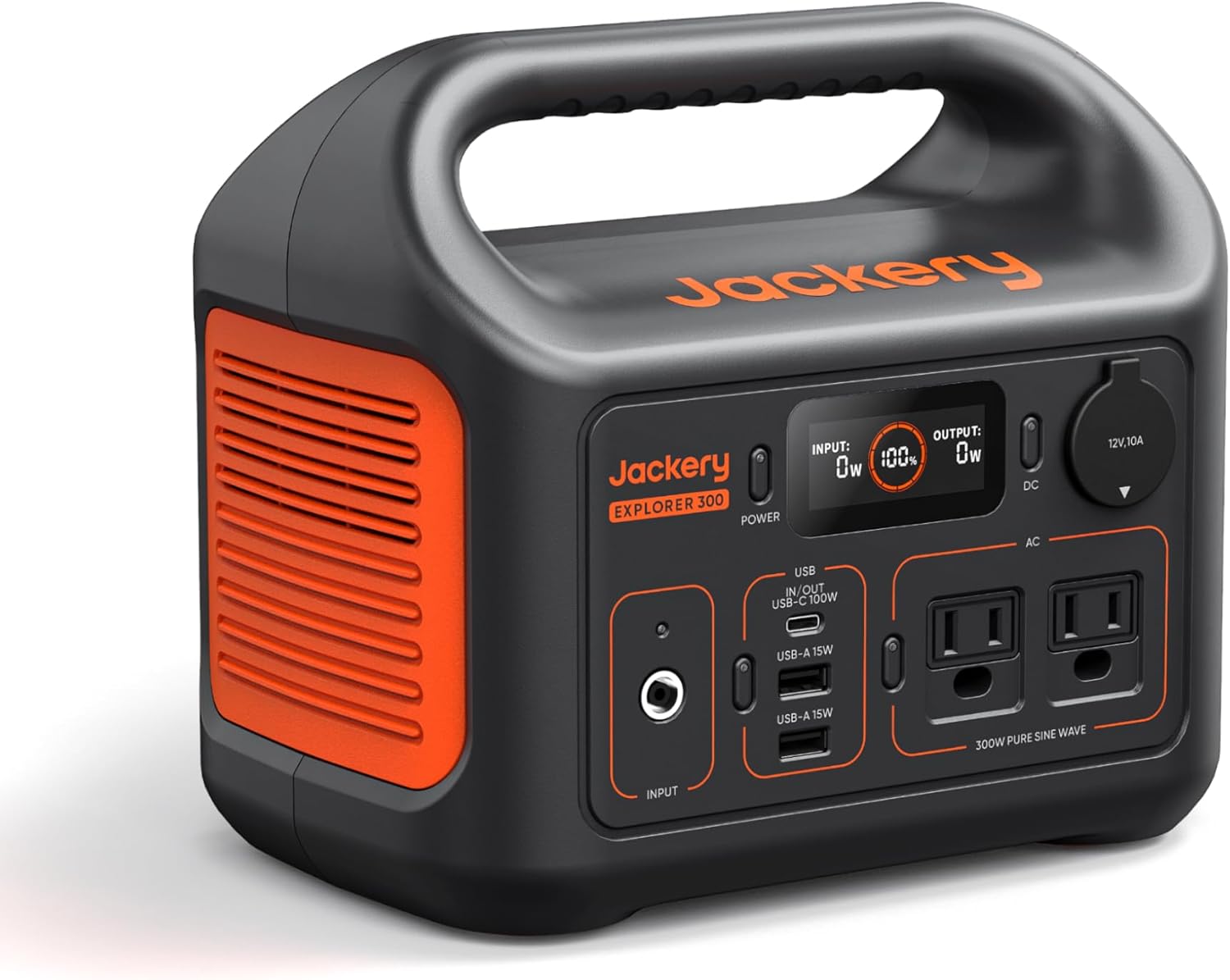
Jackery Portable Power Station Explorer 300
Budget OptionPower on the Go: Weighing only 11 lbs, it's convenient to set up and store with book-sized foldable solar panels

BLUETTI Portable Power Station AC180
Designed for both indoor and outdoor scenarios, AC180 is highly capable as it has a robost capacity and continuous output power.

EF ECOFLOW DELTA Pro Ultra Power Station
Upgraded PickEcoFlow DELTA Pro Ultra is a whole-home energy system designed to grow with your family. Integrated with the Smart Home Panel 2, it scales to meet your evolving energy needs — keeping your home powered, intelligent, and secure through every stage of life.
We earn a commission, at no additional cost to you.
Strategic Assessment Analysis
Gold Beach, Oregon, offers a resilience profile that is genuinely rare on the West Coast: a remote coastal town with limited access points, a working harbor, and a community that has weathered decades of economic boom-and-bust cycles without losing its character. For a relocator thinking seriously about disaster readiness, the town's position at the mouth of the Rogue River provides a combination of isolation, natural resources, and logistical independence that few other Pacific Northwest locations can match. The trade-offs are real—tsunami exposure, wildfire risk, and a thin supply chain—but the strategic picture is more favorable than most coastal alternatives from Eureka to Astoria.
Geographic position and natural advantages for long-term self-sufficiency
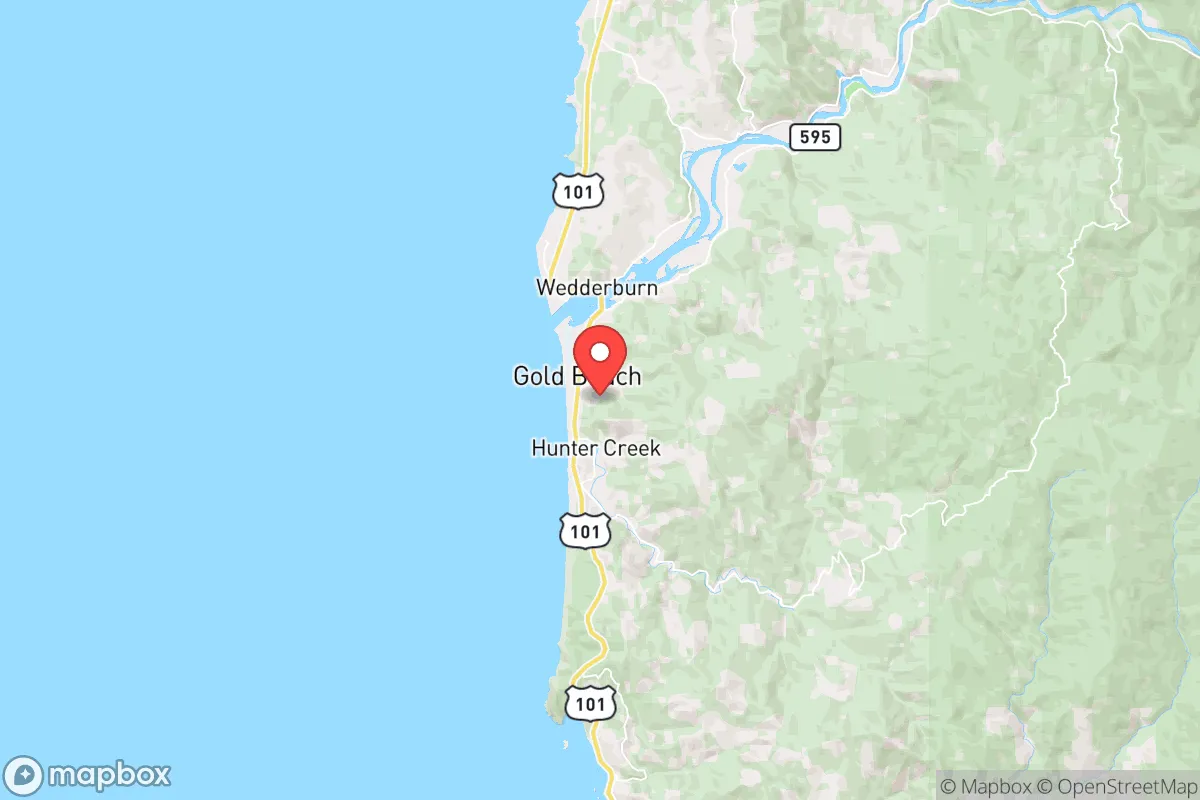
Gold Beach sits roughly 30 miles north of the California border and about 70 miles southwest of Grants Pass, the nearest city of any significant size. That distance is the core of its strategic value. The town is served by two primary routes: U.S. Highway 101 running north-south along the coast, and Oregon Route 36 (the Jerry's Flat Road corridor) heading inland toward the Interstate 5 corridor. Both are two-lane roads through mountainous terrain, which means that in a regional emergency, Gold Beach is not on anyone's natural path of mass evacuation or looting. The nearest metropolitan areas—Medford (population ~85,000) and Eureka, California (~26,000)—are both 2.5 to 3 hours away by car, and neither is a major strategic target in a conflict scenario.
The Rogue River itself is the town's most underappreciated asset. It provides a reliable freshwater source, a salmon and steelhead fishery that has sustained human habitation for millennia, and a navigable waterway for small craft. The surrounding Siskiyou and Coast Range mountains offer timber, game, and defensible terrain. The climate is mild—winter lows rarely drop below freezing, summer highs typically stay in the 60s and 70s—which means heating needs are modest and crop-growing seasons are longer than inland Oregon. Annual rainfall averages around 80 inches, which is a nuisance for some but a genuine strategic advantage for anyone planning rainwater catchment or off-grid water storage.
Risks, exposures, and proximity to fallout-relevant landmarks
The most significant natural threat is the Cascadia Subduction Zone. Gold Beach sits directly on the coast, and a full-margin rupture would produce a tsunami arriving within 15 to 25 minutes of the initial earthquake. The town's low-lying areas—including much of the downtown commercial district along the river mouth—are in the tsunami inundation zone. However, the surrounding hills rise steeply and quickly; evacuation routes to high ground are short, and the community has invested in tsunami warning sirens and signage. The 1964 Good Friday tsunami, generated by the Alaskan earthquake, caused significant damage here, so the threat is not theoretical. That said, the earthquake itself would likely cause less structural damage than in Portland or Seattle, because building stock is mostly low-rise wood-frame construction on relatively stable coastal terraces.
Wildfire is the second major risk. The 2020 and 2021 fire seasons brought smoke and evacuation notices to the area, and the surrounding forests are dry and overgrown after a century of fire suppression. The town itself is not heavily forested, but the access roads are. A major fire in the Rogue River canyon could cut off the inland route for days or weeks. The coastal route north to Bandon and Coos Bay is the backup, but it is also vulnerable to slides and washouts.
From a man-made risk standpoint, Gold Beach's isolation is its shield. It is not near any major military installations, nuclear power plants, or industrial chemical facilities. The nearest significant targets—the Port of Coos Bay to the north and the Klamath Falls/Medford area to the east—are over 70 miles away. In a nuclear exchange scenario, prevailing westerly winds would carry fallout inland, not toward the coast. The town's small population (~2,300 in the city proper, ~8,800 in Curry County) makes it an unlikely target for any adversary. The primary man-made risk is supply chain disruption: the town relies on truck deliveries for nearly all goods, and a prolonged closure of Highway 101 or Route 36 would create shortages within a week.
Practical resilience for a relocator: food, water, energy, and defensibility
For a family or individual serious about self-sufficiency, Gold Beach offers a workable baseline. The fishing is not recreational—it is subsistence-grade. Salmon, steelhead, and bottomfish are available seasonally, and crabbing in the lower Rogue estuary is productive. The climate supports year-round vegetable gardening, and the surrounding area has a small but established network of small farms, ranchers, and homesteaders. The Curry County Farmers Market and local food co-ops provide some buffer against grocery store dependency, but the town's grocery options are limited to a Ray's Food Place and a few smaller markets. Anyone planning long-term food security should assume they are growing, catching, or bartering for a significant portion of their calories.
Water is the town's strongest resilience card. The Rogue River is a reliable, high-volume water source, and the local aquifer is generally productive. Most homes in the area use private wells or municipal water drawn from the river. Rainwater catchment is viable given the precipitation levels. The main vulnerability is power: the town is at the end of the electrical grid, and winter storms routinely cause outages lasting 12 to 72 hours. Solar is a practical investment—the coast gets less sun than inland Oregon, but the mild temperatures mean lower energy demand. Propane, wood, and diesel are the backup fuels of choice among local preppers and homesteaders.
Defensibility is a mixed picture. The access roads are choke points—a handful of determined residents could effectively control the two main routes in. The terrain is rugged, with dense forest and steep ridges providing natural cover. However, the town itself is spread out along a narrow coastal strip, and the harbor area is exposed. The local culture is independent and armed; Curry County has a strong rural gun culture, and the sheriff's office is generally supportive of Second Amendment rights. For a relocator, the practical takeaway is that Gold Beach is defensible at the perimeter but not a fortress. The strategic value is in the isolation and the natural resources, not in any man-made infrastructure.
The overall strategic picture for a disaster-conscious relocator
Gold Beach is not a bug-out location for a short-term crisis; it is a long-term resilience play. The town's weaknesses—tsunami exposure, wildfire risk, supply chain fragility, and distance from advanced medical care—are real and should be weighed honestly. But its strengths are structural: geographic isolation from major targets, abundant fresh water, a productive fishery, a mild climate, and a community that has historically been self-reliant out of necessity rather than ideology. For a single individual or family willing to invest in solar, rainwater catchment, food storage, and a boat or capable 4x4, Gold Beach offers one of the better strategic positions on the Pacific Coast. The key is to treat it as a permanent base, not a temporary refuge—because the town's resilience is built on long-term relationships, local knowledge, and the slow accumulation of practical skills, none of which can be acquired in a weekend.

* Values derived from national, state, county, city and local statistics and may differ in a specific area. Last updated: 2026-10-29T04:45:54.000Z
Narrative content on this page is AI-generated and may contain mistakes. Verify any details that matter before acting on them.
ReloMaps may earn a commission from affiliate links at no extra cost to you.

