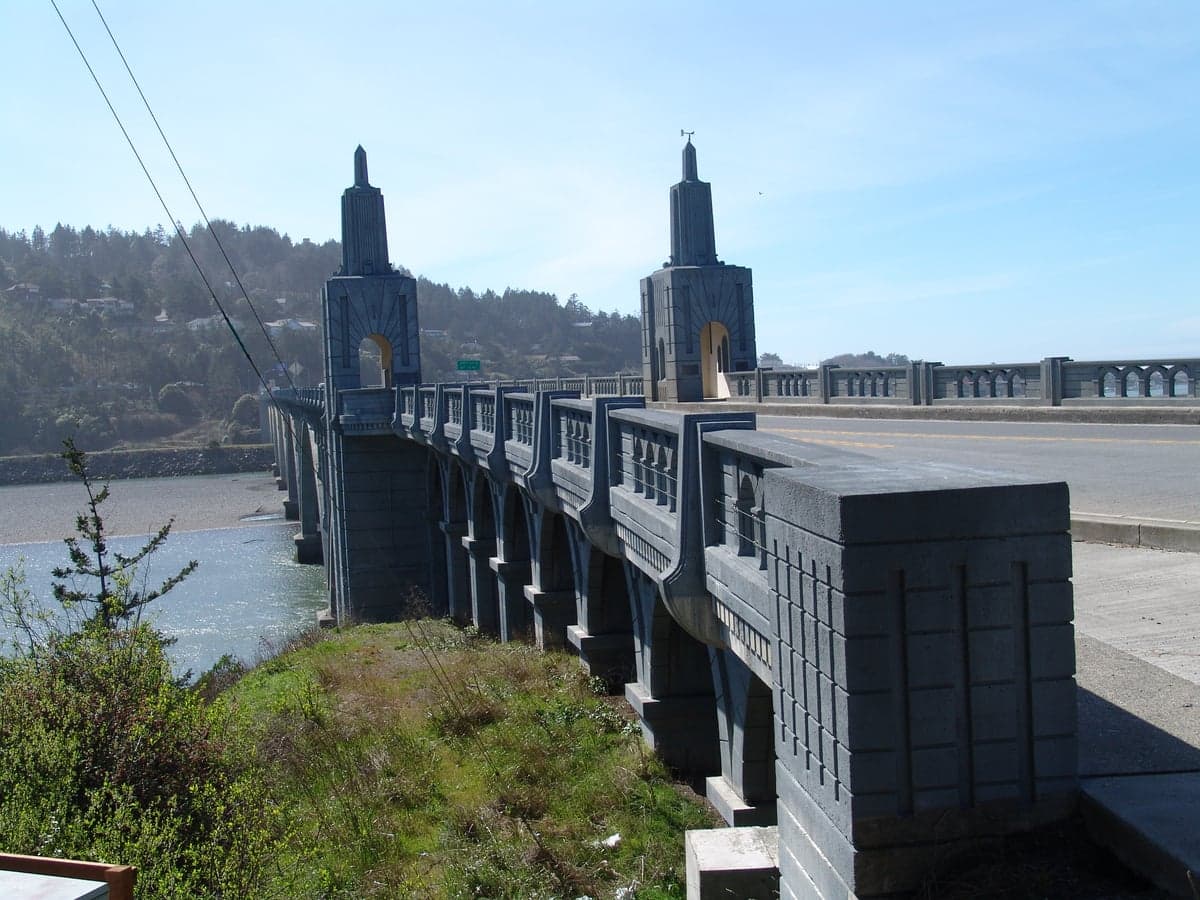
Photo: Wikipedia
Political ClimatePolitical Climate in Gold Beach, OR
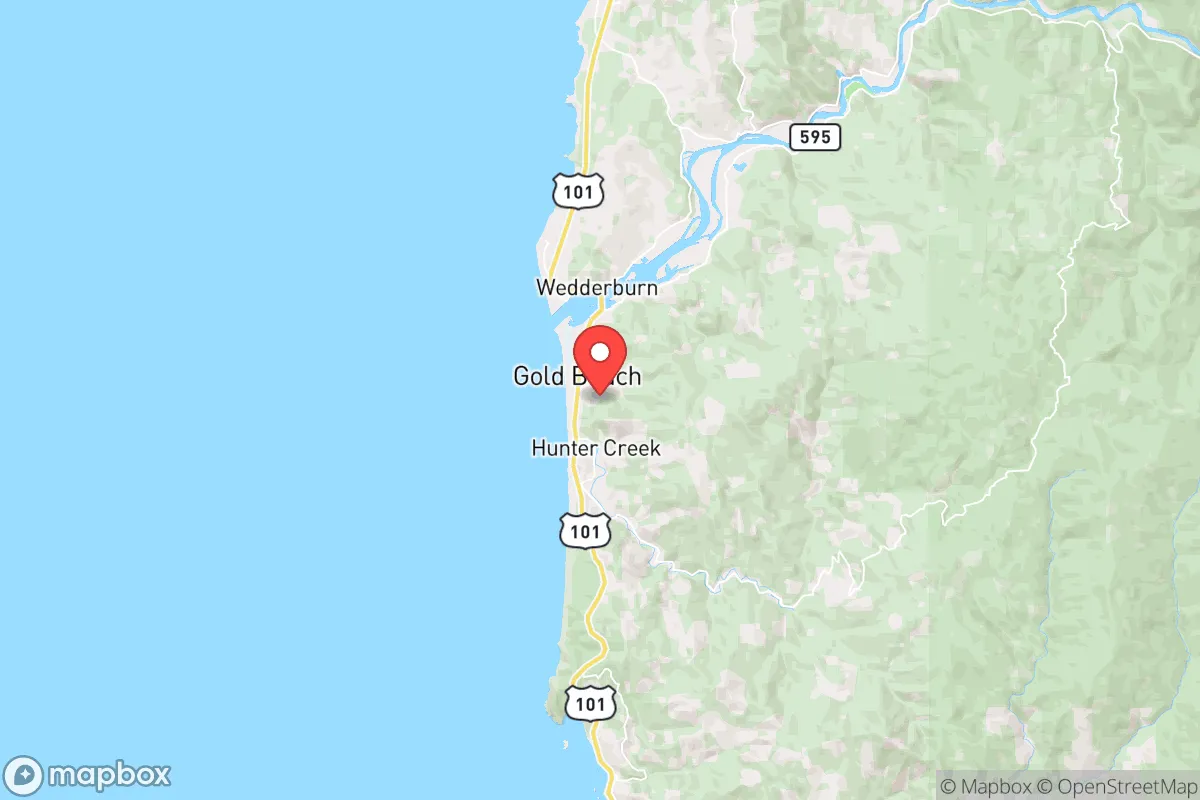
District shown is the primary district for this city’s centroid. Cities may span multiple districts.
Inherited from parent state — no local data available.
Local Political AnalysisPolitical Analysis of Gold Beach, OR
Gold Beach sits in a political bubble that’s distinctly out of step with the rest of Oregon. While the state as a whole carries a Cook PVI of D+8 and reliably votes blue in presidential races, Curry County—where Gold Beach is the county seat—has voted Republican in every presidential election since 2000, often by margins of 20 points or more. This isn’t a recent shift; it’s a long-standing rural-versus-urban divide that has only hardened as the Portland metro area has grown more liberal. If you’re moving here from the Willamette Valley, the culture shock can be real, but the political reality is more nuanced than the raw numbers suggest.
How it compares
The contrast between Gold Beach and the rest of Oregon is stark. In 2024, Curry County went for Donald Trump by roughly 25 points, while the state overall backed Kamala Harris by a similar margin. That’s a 50-point swing in a single county. The nearest liberal-leaning population centers—Brookings to the south and Coos Bay to the north—are also conservative, though Brookings tends to be slightly less so due to its retiree influx from California. The truly blue pockets are hours away: Medford and Ashland in Jackson County, and Eugene further north. For context, Jackson County is a purple battleground, but Curry County is reliably red. The political geography here is simple: the coast is conservative, the interior valleys are mixed, and the I-5 corridor cities are liberal.
What this means for residents
For conservative residents, Gold Beach is comfortable. Local elections are dominated by Republican candidates, the county commission is solidly GOP, and the gun culture is mainstream. You’ll see Trump flags on pickup trucks and “Let’s Go Brandon” bumper stickers without anyone batting an eye. For liberal residents, it’s a different experience. You’ll be in the minority, and political conversations at the grocery store or the local diner can get uncomfortable. That said, most people here keep politics out of daily interactions—the community is small, and everyone knows everyone. The bigger issue is policy: Curry County consistently votes against statewide ballot measures that pass in Oregon, like stricter gun laws and drug decriminalization rollbacks. That means local enforcement of state laws can be lax, and residents often feel the state government in Salem doesn’t represent them. The practical effect is a live-and-let-live attitude, but with an undercurrent of resentment toward Portland-centric policymaking.
What daily life is like for families
For families, the political climate shapes daily life in subtle ways. Schools here are less ideological than in urban districts—curriculum debates that dominate Portland school board meetings barely register locally. The cost of living is lower, but so are public services; the county has limited public transit, and the hospital is small. Parents tend to rely on community networks rather than government programs. Outdoor recreation is the great unifier—fishing, hiking, and beachcombing are apolitical activities that bring people together. The local economy is driven by fishing, timber, and tourism, and most residents are more concerned about the price of diesel and the salmon run than national politics. That’s not to say national issues don’t seep in—they do, especially around federal land management, since the county is surrounded by national forest and BLM land. But the day-to-day rhythm is more about survival and community than political affiliation.
Looking ahead, Gold Beach’s political trajectory is unlikely to change dramatically. The county’s population is aging, and while new residents are moving in—many from California—they tend to be retirees seeking lower taxes, not young progressives. The one wildcard is climate change: as coastal erosion and wildfire risk grow, federal and state intervention could become a flashpoint. But for now, Gold Beach remains a place where the politics are conservative, the pace is slow, and the ocean is the real boss. If you’re considering a move, come for the scenery and the quiet, not for the political debate—there’s plenty of that, but it’s mostly between neighbors who’ve known each other for decades.

State Political ClimatePolitical Climate in Oregon
State Political AnalysisPolitical Environment in the State
Oregon has been a reliably Democratic state for over three decades, carrying a Cook PVI of D+8, but that headline number hides a deeply fractured political landscape. The state’s blue lean is powered almost entirely by the Portland metro area — Multnomah, Washington, and Clackamas counties — while the vast rural expanse east of the Cascades votes as Republican as any district in Idaho or Wyoming. Over the last 20 years, the state has drifted left on social policy and criminal justice reform, but a recent backlash over homelessness, drug decriminalization, and pandemic-era mandates has tightened the margins in once-safe suburbs and given conservatives their first real foothold in a generation.
Urban vs. rural divide
Oregon’s political map is essentially two states sharing a border. The Portland tri-county area, home to roughly 45% of the state’s population, delivers the Democratic majorities that decide statewide races. Multnomah County alone cast about 75% of its 2024 presidential vote for Kamala Harris, while Washington County — home to Nike’s world headquarters in Beaverton and a massive tech corridor in Hillsboro — has shifted from a swing county to a solidly blue one over the past decade. Clackamas County, which includes suburbs like Oregon City and Lake Oswego, is the most competitive of the three, flipping to Trump in 2020 before swinging back to the Democratic column in 2024.
Outside the Willamette Valley, the math flips hard. Central Oregon’s Deschutes County, anchored by Bend, is the state’s most interesting political battleground — a former timber town turned outdoor recreation mecca that has trended blue as California transplants moved in, but still elects Republicans to local office. East of the Cascades, counties like Malheur, Baker, and Grant routinely vote 70-80% Republican. The state’s second-largest city, Salem, sits in Marion County, a perennial toss-up that often decides close statewide races. Eugene, home to the University of Oregon, is the state’s most progressive city outside Portland, while Medford and Ashland in the south represent a microcosm of the broader urban-rural split — Ashland is deeply liberal, Medford is conservative-leaning, and the surrounding Jackson County is purple.
Policy environment
Oregon has no state sales tax, which sounds great until you look at the property tax system — Measure 5 and Measure 50 from the 1990s capped property tax growth, which has created wildly uneven tax burdens depending on when you bought your home. The state income tax is among the highest in the nation, with a top marginal rate of 9.9% kicking in at just $125,000 for single filers. The regulatory posture is decidedly pro-environment and pro-labor: Oregon has strict land-use laws that create an urban growth boundary around every city, a statewide paid family leave program funded by payroll deductions, and some of the strongest tenant protections in the country, including statewide rent control passed in 2019.
Education policy is a mixed bag. Oregon spends above the national average per pupil, but graduation rates and test scores consistently rank near the bottom nationally. The state has no charter school law to speak of, and school choice options are limited compared to neighboring Washington. Healthcare is dominated by the Oregon Health Plan, the state’s expanded Medicaid program, which covers about one in four residents. Election law is among the most accessible in the nation — Oregon was the first state to vote entirely by mail in 1998, and automatic voter registration through the DMV has pushed registration rates above 90% of eligible adults.
Recent policy direction
The last five years have been a whiplash of progressive experimentation followed by partial retreat. In 2020, Oregon became the first state to decriminalize possession of small amounts of hard drugs via Measure 110, but the policy was widely blamed for worsening open-air drug use in Portland and was partially rolled back in 2024 when the legislature recriminalized possession while keeping treatment funding. On guns, Oregon passed a 2022 ballot measure requiring permits for concealed carry and banning magazines over 10 rounds, though it remains tied up in federal court. The state has also enacted strict abortion protections, codifying access into law in 2017 and passing a 2023 shield law protecting providers from out-of-state prosecution.
On parental rights and education, Oregon has gone the opposite direction of states like Florida. The state passed a 2019 law requiring schools to adopt curriculum inclusive of LGBTQ history, and in 2021 eliminated the requirement that parents be notified if their child changes their gender identity at school. Property rights are constrained by the land-use system, which makes it difficult to build on rural land without going through lengthy approval processes. On voting, Oregon has automatic registration, same-day registration, and no voter ID requirement — a system conservatives frequently criticize but which has shown no evidence of fraud.
Civil unrest & political movements
Portland became the national symbol of left-wing protest during the summer of 2020, when nightly demonstrations over police brutality escalated into property destruction and federal intervention. The city’s downtown still shows scars — boarded-up storefronts and a slower recovery than comparable West Coast cities. The right has organized in response, with rural counties passing resolutions declaring themselves “Second Amendment sanctuaries” and several eastern Oregon counties voting to explore joining Idaho — a movement called “Greater Idaho” that has gained real traction, with 13 counties now supporting the idea. Immigration politics are less volatile than in border states, but Oregon has been a sanctuary state since 1987, and Portland has repeatedly clashed with federal immigration authorities over enforcement cooperation.
Projection
Oregon’s demographic trajectory points toward continued Democratic dominance in statewide races, but with shrinking margins. The state lost population for two consecutive years after 2020 — a rare reversal driven by high housing costs, homelessness, and crime concerns — and the people leaving are disproportionately moderate and conservative-leaning. The people arriving are still predominantly from California, which reinforces the blue tilt in the Willamette Valley. However, the Greater Idaho movement and rural frustration are not going away, and the state’s urban-rural divide will likely widen. A decade from now, expect Oregon to look like a more extreme version of today: Portland and the valley solidly blue, the east and south deeply red, and the state government continuing to pass progressive legislation that rural residents resent.
Bottom line for new residents: If you’re liberal, Oregon will feel like home — progressive policies, strong environmental protections, and a culture that values tolerance and community. If you’re conservative, you can still live comfortably, especially in Deschutes, Jackson, or Marion counties, but you’ll be voting against the state government on most issues. The practical reality is that Oregon’s politics are defined by geography: choose your county carefully, because your local government will shape your daily life far more than the statehouse in Salem.
* Values derived from national, state, county, city and local statistics and may differ in a specific area. Last updated: 2026-10-29T04:45:54.000Z
Narrative content on this page is AI-generated and may contain mistakes. Verify any details that matter before acting on them.
ReloMaps may earn a commission from affiliate links at no extra cost to you.

