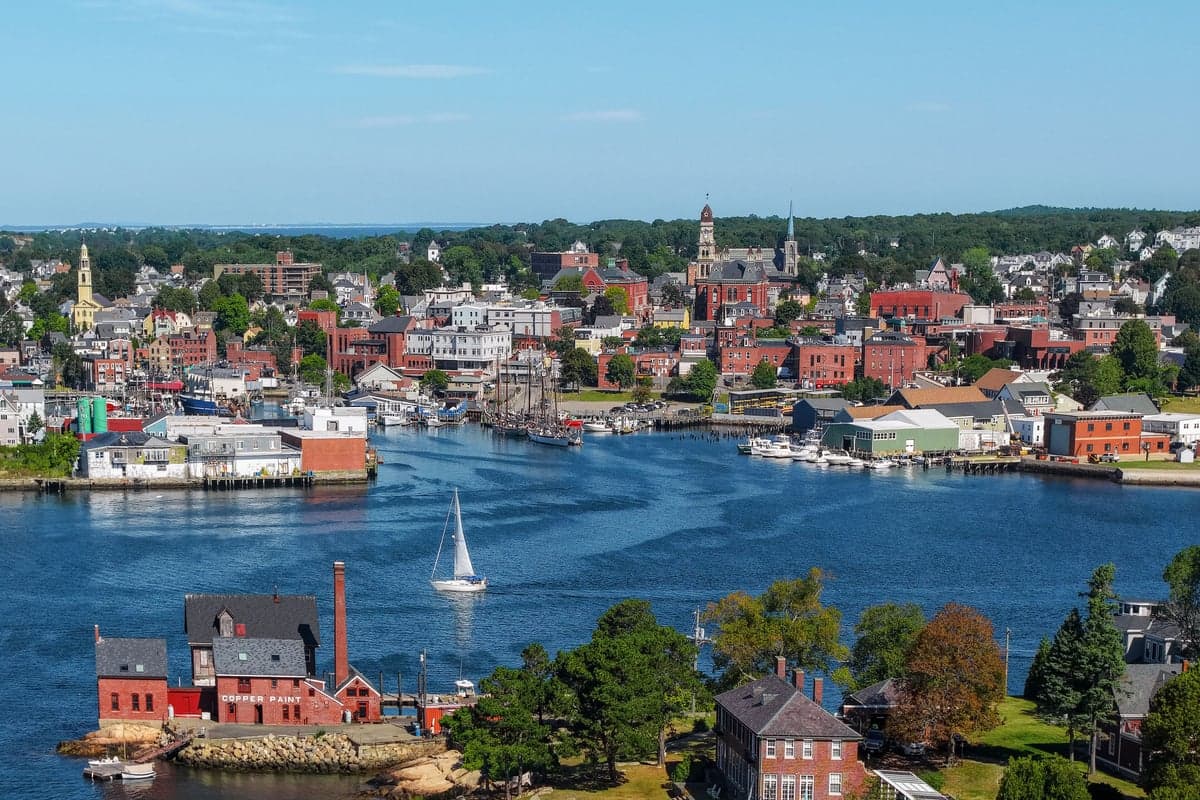

Photo: Wikipedia
Political ClimatePolitical Climate in Gloucester, MA
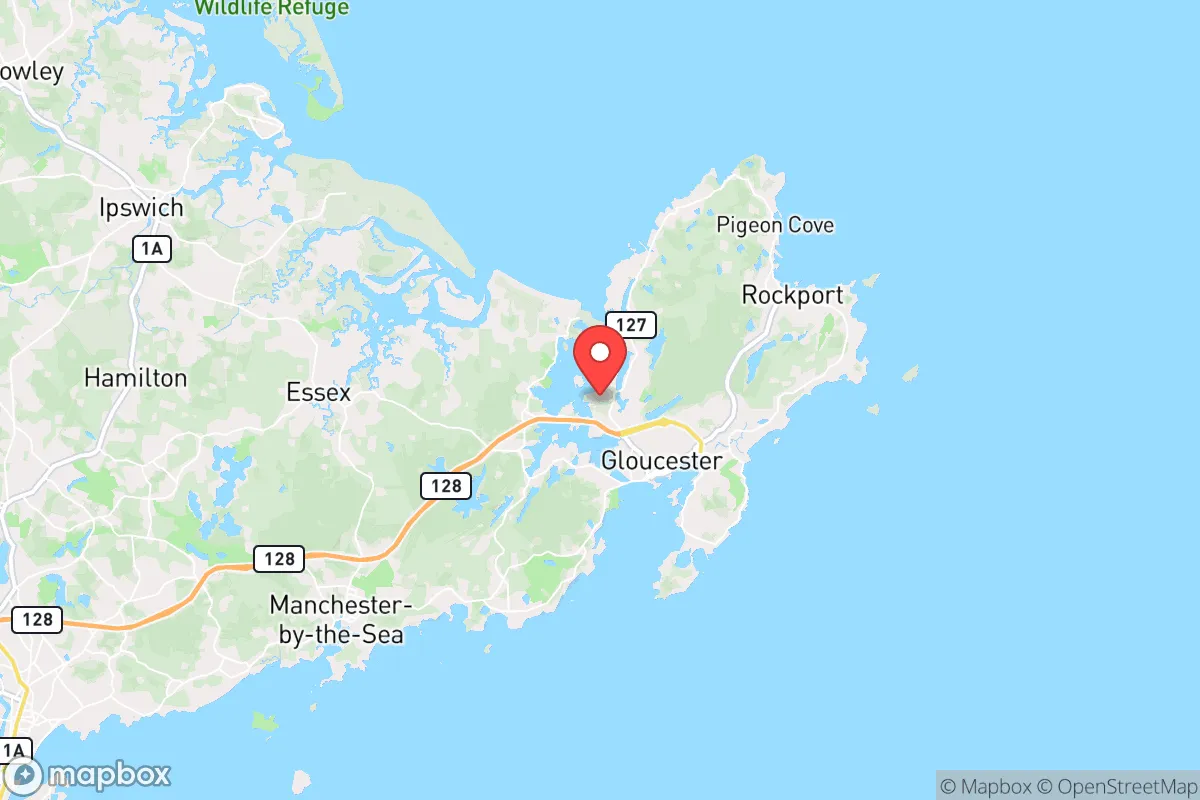
District shown is the primary district for this city’s centroid. Cities may span multiple districts.
Local Political AnalysisPolitical Analysis of Gloucester, MA
Gloucester has long been a reliably Democratic city, but it leans a bit more moderate than the state as a whole. With a Cook Partisan Voting Index (PVI) of D+11, it’s solidly blue, but that’s a notch less progressive than Massachusetts’ statewide D+15 rating. You can feel that difference on the ground—Gloucester’s political identity is shaped by its working waterfront, its deep-rooted fishing and maritime industries, and a strong independent streak that doesn’t always march in lockstep with Boston or Cambridge. The city has trended leftward over the past two decades, but it’s a slower, more pragmatic shift than what you’d see in the urban core.
How it compares
Gloucester’s D+11 PVI puts it in the same Democratic column as the rest of Massachusetts, but it’s noticeably less liberal than the state’s D+15 average. For context, neighboring towns like Rockport and Essex also lean Democratic but are even more moderate, often hovering around D+5 to D+8. Head inland to Manchester-by-the-Sea or Hamilton, and you’ll find more Republican-leaning pockets—those communities can swing R+5 or R+10 in local races. Gloucester sits in between: it’s not as conservative as the North Shore’s inland suburbs, but it’s not as deep blue as Cambridge or Somerville. In presidential elections, Gloucester typically votes Democratic by a comfortable margin—think 55-60% for Biden in 2020—while the state as a whole hit 65%. That gap reflects a real, if subtle, political moderation.
What this means for residents
For liberal residents, Gloucester is a comfortable place to live—Democratic candidates almost always win, and progressive policies on environmental protection, public transit, and social services generally have strong support. But don’t expect the same intensity of activism you’d find in Boston. The city’s politics are more practical, focused on issues like harbor management, fishing regulations, and affordable housing for working families. For conservative residents, life is still perfectly fine. You’ll find plenty of neighbors who vote Republican, especially in the outer wards and along the coast. Local elections are often less partisan, and many residents pride themselves on voting for the person, not the party. The biggest practical difference is that conservative voters are unlikely to see their preferred candidates win at the federal or state level, but they’re not marginalized in local civic life. The city’s small-town feel means most political disagreements stay civil.
Culturally, Gloucester stands apart from the rest of Massachusetts in a few key ways. The city has a strong independent streak—it’s the kind of place where people value self-reliance, whether they’re fishing boats or running a gallery on Rocky Neck. That ethos sometimes puts it at odds with state-level policies, especially around environmental regulations that affect the fishing industry. There’s also a noticeable divide between year-round residents and the summer crowd, which can shape local debates about zoning, short-term rentals, and property taxes. Gloucester is not a place that gets swept up in ideological battles; it’s more concerned with keeping the harbor working, the schools funded, and the community intact. That pragmatic, grounded approach is what makes its D+11 lean feel less like a political statement and more like a reflection of everyday life.

State Political ClimatePolitical Climate in Massachusetts
State Political AnalysisPolitical Environment in the State
Massachusetts is one of the most reliably Democratic states in the country, with a Cook Partisan Voting Index of D+15, meaning it votes about 15 points more Democratic than the national average in presidential elections. The state hasn't voted for a Republican presidential candidate since Ronald Reagan in 1984, and the Democratic Party holds every statewide office and a supermajority in the state legislature. Over the last 10-20 years, the shift has been subtle but real: the old moderate Republican tradition, once embodied by figures like Governors William Weld and Mitt Romney, has all but collapsed, replaced by a dominant progressive-liberal coalition centered in Boston and its inner suburbs, while the more conservative western and coastal regions have seen their political influence steadily diminish.
Urban vs. rural divide
The political map of Massachusetts is a classic story of a deep blue core surrounded by lighter blue and a few red pockets. The Boston metro area, including Cambridge, Somerville, and Brookline, is the engine of the state's Democratic dominance — these are among the most liberal jurisdictions in the country, routinely giving Democrats 80-90% of the vote. The western part of the state, anchored by Springfield and Worcester, leans Democratic but is more moderate and working-class, with significant Puerto Rican and other Latino populations in Springfield and a growing immigrant community in Worcester. The truly conservative areas are small and shrinking: towns like Sandwich on Cape Cod and rural communities in the Berkshires and central Massachusetts, such as Sturbridge and Palmer, where you'll find Trump signs and gun rights advocates. But even these areas are surrounded by liberal-leaning suburbs and second-home communities, so the red is isolated and rarely translates into state-level power. The 2020 presidential election saw Bristol County, a historically more conservative area in the southeast, flip from Trump in 2016 to Biden in 2020, reflecting the broader suburban shift away from the GOP.
Policy environment
Massachusetts has a progressive tax and regulatory structure that is among the most robust in the nation. The state has a flat income tax rate of 5%, but voters approved a surtax of 4% on income over $1 million in 2022 (the "Millionaire's Tax"), pushing the top marginal rate to 9%. Property taxes are moderate compared to the national average, but vary wildly by town — Boston has a relatively low rate due to its commercial base, while rural towns like Sandwich have higher residential rates. The state has a strong regulatory posture on environmental issues, including a 2021 climate law mandating net-zero emissions by 2050, and a 2023 law banning new gas hookups in many new construction projects. Education policy is a major priority: Massachusetts consistently ranks first in K-12 outcomes nationally, and the state spends over $18,000 per pupil, among the highest in the country. Healthcare is also a defining issue — the state's 2006 health reform law was the model for the Affordable Care Act, and Massachusetts has near-universal coverage, with a strong Medicaid program (MassHealth) and a state-run health insurance exchange. Election laws are among the most accessible in the country: no-excuse mail-in voting, same-day voter registration, and early voting are all permanent fixtures since the pandemic.
Recent policy direction
The last few years have seen Massachusetts move decisively in a progressive direction on a wide range of issues. On gun and self-defense law, the state already had some of the strictest regulations in the country, but in 2024, the legislature passed a major gun reform bill that bans "ghost guns," expands the state's red flag law, and requires firearms to be stored with a trigger lock or in a locked container. On parental and education rights, the state has moved in the opposite direction from many red states: in 2023, it passed a law requiring public schools to adopt policies supporting transgender students, including allowing them to use bathrooms and locker rooms matching their gender identity, and it has resisted efforts to restrict curriculum on race or gender. On speech and privacy, Massachusetts has a strong public records law and a 2020 police reform bill that banned facial recognition technology for most law enforcement purposes, but it also has a broad anti-SLAPP law that protects citizens from frivolous lawsuits over public participation. On medical and bodily autonomy, the state is a stronghold for abortion rights, with a 2020 law codifying Roe v. Wade protections and a 2022 law expanding access to abortion care and protecting providers from out-of-state lawsuits. On property rights, the state's zoning laws have been a flashpoint: in 2021, it passed the MBTA Communities Act, which requires towns near transit to allow multi-family housing by right, overriding local zoning control — a major shift that has sparked backlash in suburbs like Milton, which initially refused to comply. On taxation, the Millionaire's Tax is the biggest recent change, and it's already generating over $1 billion annually for education and transportation. On voting and ballot access, the state has expanded mail-in voting permanently and made it easier to register, but it has also faced criticism for slow vote-counting in some elections due to the volume of mail ballots.
Civil unrest & political movements
Massachusetts has a long history of political activism, and recent years have seen both left-wing and right-wing movements make their presence felt. The 2020 Black Lives Matter protests in Boston were large and sustained, leading to the police reform bill mentioned above. The state has a strong sanctuary policy: the 2017 "Safe Communities Act" was not passed, but the state's 2020 police reform bill limited cooperation with federal immigration enforcement, and many cities, including Cambridge and Somerville, have their own sanctuary ordinances. Immigration politics are a live issue, with periodic clashes between state officials and ICE over detainers and enforcement. On the right, there is a small but vocal movement around election integrity, with some activists questioning the state's mail-in voting system, though no major fraud has been found. There have also been protests against the MBTA Communities Act and the gas hookup ban, particularly in more conservative towns. Secession or nullification rhetoric is virtually nonexistent — Massachusetts is firmly within the Union and has no serious separatist movement. The most visible flashpoint for a new resident would likely be the tension between the state's progressive policies and the more conservative local cultures in places like Sandwich or Sturbridge, where you'll see "Don't Tread on Me" flags alongside local opposition to state mandates.
Projection
Over the next 5-10 years, Massachusetts is likely to become even more Democratic and more progressive, driven by demographic trends and in-migration patterns. The state's population is aging and growing slowly, but the areas that are growing — the Boston metro and its suburbs — are overwhelmingly liberal, while the more conservative rural areas are shrinking. The influx of young professionals and tech workers from other states, particularly to Cambridge and Somerville, reinforces the progressive tilt. The Republican Party in Massachusetts is in a deep structural decline, with no clear path to statewide office and a base that is increasingly confined to a few rural towns and exurbs. The state's policy direction will likely continue on its current trajectory: more gun control, more housing mandates, more climate regulation, and more expansion of social services. The Millionaire's Tax will likely be followed by other progressive tax proposals, such as a wealth tax or a higher corporate tax. The biggest wild card is housing: if the MBTA Communities Act and other zoning reforms succeed in building more housing, it could moderate the cost of living and slow the outflow of middle-class families; if they fail, the state could become even more expensive and exclusive, deepening the divide between the liberal urban core and the conservative periphery.
For a new resident, especially one with conservative leanings, Massachusetts presents a clear trade-off. You'll be living in a state where your vote for president or Senate is unlikely to matter in the national outcome, and where state-level politics will be dominated by progressive policies on taxes, guns, education, and social issues. On the other hand, you'll have access to some of the best public schools in the country, a strong economy, world-class healthcare, and a high quality of life in many communities. If you're moving here, you should expect to pay higher taxes and live under strict gun laws, but you'll also find a state that invests heavily in public services and infrastructure. The key is to choose your town carefully — a place like Sandwich or Sturbridge will feel much more like a red state enclave than Cambridge or Somerville, even if the overall state leans heavily blue.
* Values derived from national, state, county, city and local statistics and may differ in a specific area. Last updated: 2026-10-13T18:16:17.000Z
Narrative content on this page is AI-generated and may contain mistakes. Verify any details that matter before acting on them.
ReloMaps may earn a commission from affiliate links at no extra cost to you.

