Photo: Wikipedia
Personal Sovereignty in Gloucester, MA
Viable for self-reliance. Generally workable, though some barriers may limit total independence.
What does Personal Sovereignty tell us?
Personal Sovereignty measures your capacity for self-reliance and independence with minimal government friction. Higher scores mean fewer barriers between you and the way you want to live... but it assumes you have the space you need and good neighbors.
What does this tell us?
Personal Sovereignty measures your capacity for self-reliance and independence with minimal government friction. Higher scores mean fewer barriers between you and the way you want to live... but it assumes you have the space you need and good neighbors.
State Policy
Energy independence: Importer (5% of energy produced in-state)
Personal Liberty
Homesteading

Personal Liberty Analysis
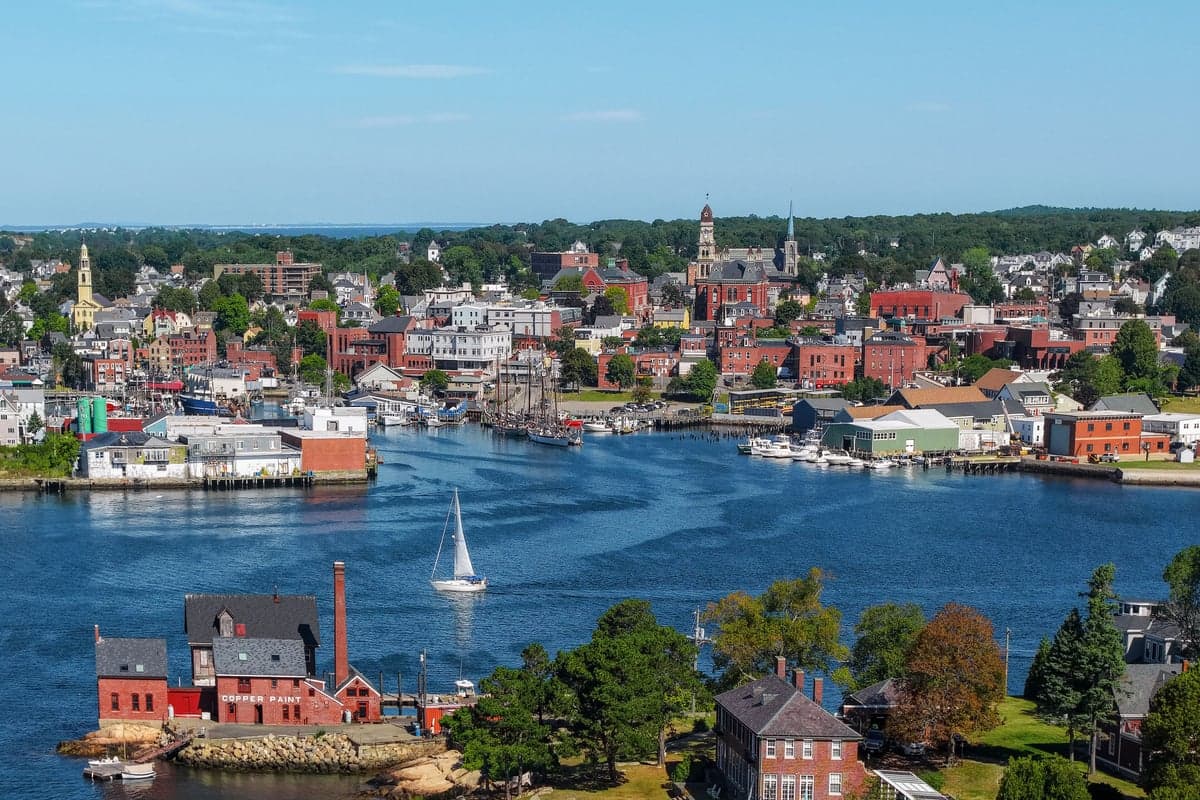
Gloucester, Massachusetts, presents a nuanced environment for personal sovereignty, where the rugged individualism of a historic fishing port meets the dense regulatory framework of the Commonwealth. For a relocation-minded reader prioritizing autonomy, the city offers a tangible sense of self-reliance rooted in its maritime culture and coastal geography, but this is consistently tempered by state-level policies that limit certain freedoms. The practical reality is that Gloucester provides a high degree of personal liberty in daily life and community affairs, while residents must navigate one of the nation's most assertive state governments on taxation, gun rights, and property use. Understanding this tension between local character and state control is essential for anyone evaluating the area's fit for a freedom-oriented lifestyle.
Tax burden and regulatory posture in Gloucester and Massachusetts
Massachusetts carries a reputation for high taxes and extensive regulation, and Gloucester operates squarely within that framework. The state's income tax is a flat 5.0% on most earnings, and the sales tax is 6.25%, both of which are moderate by New England standards but higher than many Sun Belt states. Property taxes in Gloucester are significant: the 2025 residential rate is approximately $11.50 per $1,000 of assessed value, which on a median home value of roughly $650,000 translates to an annual bill near $7,500. This is a heavy burden compared to national averages, though it funds robust local services including excellent schools and public safety. The regulatory posture in Gloucester itself is more pragmatic than ideological; the city's zoning board and conservation commission are active, particularly regarding coastal development and wetlands, reflecting the community's dependence on its marine environment. State-level regulations add layers, from strict vehicle emissions testing to energy codes for home renovations. For a self-reliant individual, the key takeaway is that Gloucester's local governance is generally reasonable and community-responsive, but the state's regulatory appetite means that starting a business, building a workshop, or modifying a home involves more permitting and cost than in less regulated states.
Self-defense and gun law specifics in Gloucester and Massachusetts
On self-defense and firearms, Massachusetts is among the most restrictive states in the country, and Gloucester residents must comply fully with these laws. The state requires a License to Carry (LTC) for any handgun possession, whether open or concealed, and the issuing authority is the local police department. Gloucester's police chief has historically been reasonable in processing LTC applications for law-abiding residents, but the process is not discretionary in the way it is in some other states; applicants must complete a state-approved safety course, pass a background check, and provide references. The state's "approved firearms roster" limits which new handguns can be sold by dealers, and magazine capacity is capped at 10 rounds. "Stand your ground" laws do not exist in Massachusetts; instead, the state imposes a "duty to retreat" if safely possible before using deadly force in self-defense outside the home. Castle Doctrine applies inside one's residence, but the legal landscape is less forgiving than in states with explicit self-defense statutes. For a freedom-oriented individual, the practical effect is that owning and carrying a firearm in Gloucester is legally possible but administratively burdensome, and the legal environment strongly discourages defensive gun use outside the home. Those who prioritize unfettered Second Amendment rights will find Massachusetts a challenging jurisdiction.
Self-reliance and homesteading viability in Gloucester: lot sizes, zoning, and off-grid feasibility
Gloucester's geography and zoning create a mixed picture for homesteading and off-grid living. The city is densely settled along the coast, with typical residential lot sizes ranging from 0.1 to 0.5 acres in the downtown and harbor areas, though larger parcels of 1 to 5 acres exist in the more rural western neighborhoods like Magnolia, Lanesville, and Bay View. Zoning is primarily residential, and keeping chickens, bees, or small livestock is permitted on most single-family lots with some restrictions, but raising pigs, goats, or cattle is generally not allowed on standard residential parcels. Off-grid feasibility is low: Massachusetts building codes require connection to municipal water and sewer in most areas, and the state's energy code mandates grid-tied electrical systems for new construction. Solar panels are permitted and encouraged, but full energy independence without grid connection is effectively prohibited for habitable dwellings. Rainwater collection for potable use is also restricted by state health codes. The practical reality is that Gloucester supports a lifestyle of self-reliance through fishing, gardening, and community barter, but true off-grid homesteading is not viable within city limits. For those seeking acreage and fewer restrictions, the more rural towns of Essex, Hamilton, or Rockport offer slightly more flexibility, though still within Massachusetts' regulatory umbrella.
Personal liberties in Gloucester: parental rights, medical autonomy, speech, and property
Personal liberties in Gloucester are generally robust in daily life, with the community's independent character supporting a live-and-let-live atmosphere. Parental rights are strong in practice: Gloucester Public Schools are responsive to parent input, and the district has maintained a parental notification policy for health services that aligns with state law while respecting family involvement. Massachusetts law does grant minors the right to consent to certain medical treatments without parental approval, which is a point of concern for some conservative families. Medical autonomy is shaped by state mandates: Massachusetts has compulsory vaccination laws for school attendance (with medical and religious exemptions available, though the latter has been narrowed in recent years), and the state's health insurance mandate requires residents to carry coverage. Free speech is protected under both state and federal constitutions, and Gloucester's public forums, including the iconic St. Peter's Fiesta and the Fishermen's Memorial Service, reflect a community that values open expression. Property rights are constrained by Massachusetts' strong zoning and environmental regulations; the state's Chapter 40B affordable housing law can override local zoning for certain developments, and the Wetlands Protection Act restricts development near coastal and inland waterways. For a property owner, this means that what you can build, modify, or use your land for is subject to significant oversight, particularly near the coast. The trade-off is that these regulations preserve the natural beauty and historic character that make Gloucester desirable.
In the broader landscape of personal sovereignty, Gloucester offers a distinctive balance: a high degree of community-level autonomy and a culture of self-reliance, operating within one of the nation's most assertive state governments. Compared to areas like New Hampshire or Texas, the regulatory and tax burden is heavier, and certain freedoms—particularly regarding firearms, medical choice, and property use—are more limited. However, compared to other coastal Massachusetts communities like Cambridge or Brookline, Gloucester's working-class heritage and geographic remove from Boston create a more permissive and less ideological environment. For the reader who values personal freedom but is not ideologically rigid, Gloucester provides a livable compromise: genuine independence in daily life and community, with the understanding that state-level constraints are a fixed part of the equation. The city rewards those who are willing to navigate the system, engage locally, and accept that sovereignty here is exercised within a framework of collective regulation rather than in spite of it.

* Values derived from national, state, county, city and local statistics and may differ in a specific area. Last updated: 2026-10-13T18:16:17.000Z
Narrative content on this page is AI-generated and may contain mistakes. Verify any details that matter before acting on them.
ReloMaps may earn a commission from affiliate links at no extra cost to you.

