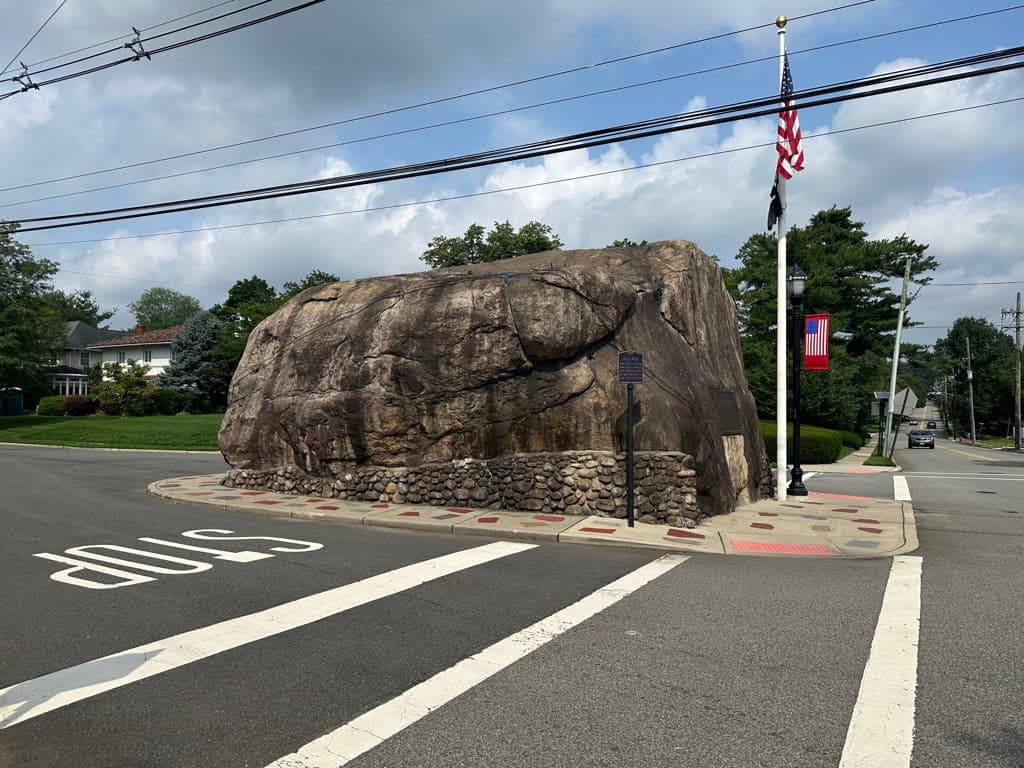
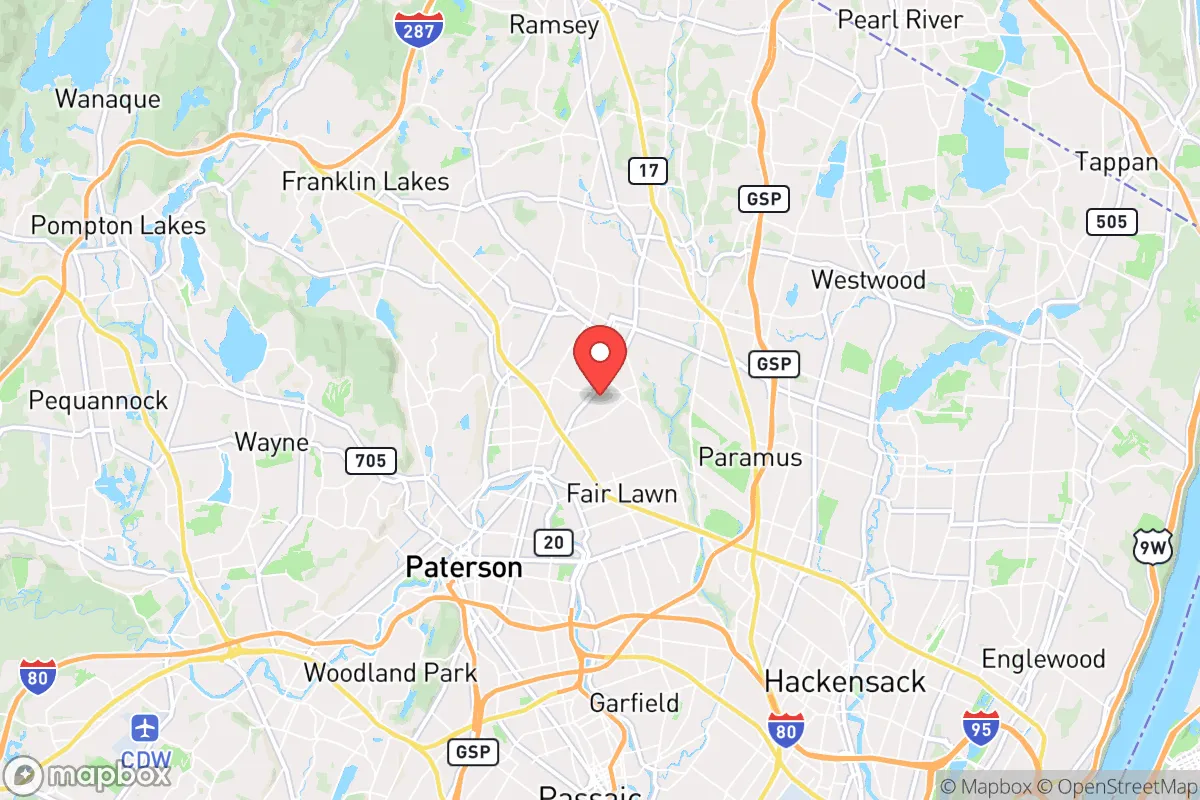
Photo: Wikipedia
Political ClimatePolitical Climate in Glen Rock, NJ
District shown is the primary district for this city’s centroid. Cities may span multiple districts.
Political rankings in New Jersey
- Most Conservative Cities in New Jersey
- Most Liberal Cities in New Jersey
- Best Conservative-Leaning Towns in the Northeast
- Best Conservative-Leaning Towns in the Mid-Atlantic
- Safest Liberal-Leaning Towns on the East Coast
- Safest Conservative-Leaning Towns on the East Coast
- Most Affordable Liberal-Leaning Small Towns in the U.S.
- Safest Liberal-Leaning Cities in the U.S.
- Most Conservative Counties in New Jersey
- Most Liberal Counties in New Jersey
Local Political AnalysisPolitical Analysis of Glen Rock, NJ
Glen Rock is a reliably Democratic borough, but it’s not the deep-blue stronghold you might expect from a Bergen County suburb. With a Cook Partisan Voting Index (PVI) of D+2, it leans left by a modest margin—significantly less than New Jersey’s statewide D+5 rating. In practice, that means local elections are often competitive, and you’ll see a healthy mix of yard signs for both parties during presidential cycles. Over the past decade, the town has shifted slightly leftward, mirroring national trends among college-educated, affluent suburbs, but it hasn’t flipped as dramatically as some neighboring communities.
How it compares
Glen Rock’s D+2 PVI places it to the right of New Jersey as a whole (D+5) and well to the right of nearby Democratic strongholds like Montclair (D+18) or Maplewood (D+16). It’s also less liberal than Ridgewood, its immediate neighbor to the south, which has a D+4 PVI. Head west a few miles, though, and you hit towns like Hawthorne (R+6) or Wayne (R+4), where Republican voters dominate. This makes Glen Rock a genuine swing pocket in a county that’s otherwise trending blue. The borough’s political identity is shaped by its mix of longtime families—many with roots in the area’s Italian and Irish communities—and newer arrivals from New York City, who tend to be more progressive. School board and council races often hinge on local issues like taxes and development, not national party labels, which keeps the tone pragmatic rather than ideological.
What this means for residents
For conservative residents, Glen Rock is a comfortable place to live without feeling politically isolated. You’ll find Republican club meetings at the library and a few GOP candidates on the ballot each cycle, though they rarely win borough-wide races. The local GOP is active enough to field challengers, but the Democratic majority means most policy decisions—like the recent push for electric vehicle charging stations and affordable housing mandates—lean left. Liberal residents, meanwhile, enjoy a community where their views are the norm, but not so dominant that dissent is punished. The town’s moderate character means debates over zoning, school funding, and property taxes rarely devolve into the culture-war fights seen in more polarized suburbs. Both sides can agree on one thing: Glen Rock’s excellent public schools and low crime rate are the real priorities.
Culturally, Glen Rock feels more like a traditional New Jersey suburb than a progressive enclave. You won’t find the same activist energy as in Montclair or Jersey City. The borough’s politics are shaped by a strong sense of localism—residents care more about the condition of the train station or the new downtown development than national headlines. That said, the town has embraced some progressive policies, like a plastic bag ban and a diversity, equity, and inclusion committee, which passed with bipartisan support. The biggest distinction from the rest of New Jersey is the tax burden: Glen Rock’s property taxes are among the highest in the state, a perennial issue that unites voters across party lines. Whether you’re a Democrat or Republican, you’ll find yourself grumbling about the same school budget increases and municipal fees. In the long term, expect Glen Rock to stay D+2 to D+3, as demographic trends favor Democrats but the town’s small-lot zoning and high home prices limit the influx of younger, more liberal buyers. It’s a place where politics matter, but they don’t define daily life.

State Political ClimatePolitical Climate in New Jersey
State Political AnalysisPolitical Environment in the State
New Jersey is a solidly Democratic state with a Cook PVI of D+5, but don’t let that single number fool you—it’s a lot more complicated than a simple blue label. The state has been trending Democratic for about two decades, driven by suburban shifts and an increasingly diverse electorate, but it still has deep Republican roots in its rural and coastal areas. The dominant coalition is a mix of union labor, suburban professionals, and dense urban populations, while the GOP holds sway in the more rural northwest and the Shore counties. For a conservative-leaning relocator, the reality is that you’ll find plenty of like-minded neighbors in specific pockets, but the state-level policy machine is firmly in Democratic hands.
Urban vs. rural divide
The political map of New Jersey is a classic tale of two states. The urban core—Newark, Jersey City, and Paterson—drives the Democratic margin with massive turnout and lopsided margins (think 80-20 or worse for Republicans). These cities are dense, diverse, and heavily unionized, with strong ties to the state party machine. In contrast, the rural northwest, including Sussex County and parts of Warren County, votes reliably Republican, often by 60-40 or more. The real battleground is the suburbs. Bergen County, once a GOP stronghold, has flipped decisively blue over the past 15 years, driven by professional-class voters and growing Asian and Hispanic populations. Ocean County remains a Republican bastion, anchored by retirees and working-class families, while Monmouth County is a classic swing area that leans slightly red but can tip blue in wave years. The Shore towns—Point Pleasant, Toms River, and Long Beach Island—are reliably conservative, but they’re surrounded by increasingly purple suburbs.
Policy environment
New Jersey’s policy environment is a mixed bag that leans heavily progressive on fiscal and social issues. The state has the highest property taxes in the nation, averaging over $9,500 annually, and a progressive income tax that tops out at 10.75% for incomes over $1 million. The regulatory posture is dense—businesses face strict environmental rules, labor laws, and zoning restrictions that make development slow and expensive. On education, New Jersey spends more per pupil than almost any other state, and its public schools are consistently ranked among the best nationally, but the funding formula heavily favors urban districts. Healthcare is a priority: the state expanded Medicaid under the ACA and has its own health insurance exchange. Election laws are among the most accessible in the country, with no-excuse mail-in voting, automatic voter registration, and early voting. For conservatives, the tax burden and regulatory climate are the biggest pain points, while the education and healthcare systems are genuine draws.
Recent policy direction
The last five years have seen New Jersey accelerate its progressive agenda. In 2022, the state passed a clean energy law mandating 100% carbon-free electricity by 2035, one of the most aggressive timelines in the nation. On gun policy, Governor Phil Murphy signed a package of bills in 2022 that banned .50 caliber rifles, required microstamping for handguns, and expanded the state’s “red flag” law—making New Jersey one of the strictest states for gun ownership. Self-defense rights are limited; the state has a “justifiable need” standard for concealed carry that was struck down by the Supreme Court in NYSRPA v. Bruen (2022), but the legislature quickly passed a new law requiring a “reasonable need” demonstration, which is being challenged in court. On parental rights, the state passed a law in 2023 requiring school districts to notify parents if a child requests a name or pronoun change, but it also protects LGBTQ+ students from discrimination. Medical and bodily autonomy is protected: abortion rights are codified into state law, and the state has a shield law protecting providers who serve out-of-state patients. Property rights are constrained by strict rent control laws in many municipalities and a powerful state planning commission. Voting access has expanded, with automatic voter registration and same-day registration now in place. For a conservative relocator, the direction is clear: the state is becoming more restrictive on guns, more interventionist on energy, and more protective of individual rights on healthcare and privacy, but the tax and regulatory burden is only increasing.
Civil unrest & political movements
New Jersey has a long history of organized political activism, but it’s generally more institutional than confrontational. The 2020 Black Lives Matter protests were large in Newark and Jersey City, but they were mostly peaceful. The state’s sanctuary policies are a flashpoint: New Jersey is a “sanctuary state” under a 2018 executive order that limits local police cooperation with federal immigration enforcement, and several cities, including Newark and Trenton, have formal sanctuary ordinances. This has led to tensions in more conservative towns, particularly in Ocean and Monmouth counties, where some local governments have passed resolutions opposing the policy. Election integrity has been a hot topic since 2020, when New Jersey’s universal mail-in voting system (adopted temporarily for the pandemic) led to a lawsuit from the state GOP over ballot harvesting. The state Supreme Court upheld the system, but the issue remains live, with Republicans pushing for stricter voter ID laws. On the right, the New Jersey Firearms Coalition is a well-organized group that has successfully challenged several gun laws in court. On the left, the New Jersey Working Families Party has become a powerful force in local elections, particularly in Newark and Jersey City. A new resident would notice that political signs and bumper stickers are common, but actual civil unrest is rare—most activism happens through lawsuits, lobbying, and local elections.
Projection
Over the next 5-10 years, New Jersey is likely to become more Democratic, but not uniformly. The suburban shift will continue, particularly in Bergen and Middlesex counties, as younger, more diverse families replace older, whiter homeowners. The rural areas will hold steady or even become more Republican as they lose population. The wild card is in-migration: New Jersey has been losing residents to lower-tax states like Florida and Texas for years, but the people moving in are often from New York City and are more liberal. This will reinforce the state’s blue lean. However, the tax burden is reaching a breaking point—property taxes are so high that they’re becoming a political issue even among Democrats, and there’s growing talk of a property tax cap or a “circuit breaker” for seniors. The gun debate will continue to be a legal battleground, with the Supreme Court likely to weigh in again. For a conservative moving in now, expect to see the state’s policies continue to drift left, but with enough local variation that you can find a community that fits your values—just be prepared to pay for it.
For a conservative-leaning relocator, the bottom line is this: New Jersey offers excellent schools, strong healthcare, and proximity to major cities, but you’ll pay a premium in taxes and face a state government that is actively moving in a progressive direction. You can find your people in Ocean County, Sussex County, or the Shore towns, but you’ll be fighting an uphill battle on state-level policy. If you value low taxes, gun rights, and limited government, this is not an easy place to live. But if you prioritize education, infrastructure, and a stable, well-regulated environment, and you’re willing to pay for it, New Jersey can work—just know that your vote will be a minority one in statewide elections.
* Values derived from national, state, county, city and local statistics and may differ in a specific area. Last updated: 2026-11-09T06:00:12.000Z
Narrative content on this page is AI-generated and may contain mistakes. Verify any details that matter before acting on them.
ReloMaps may earn a commission from affiliate links at no extra cost to you.

