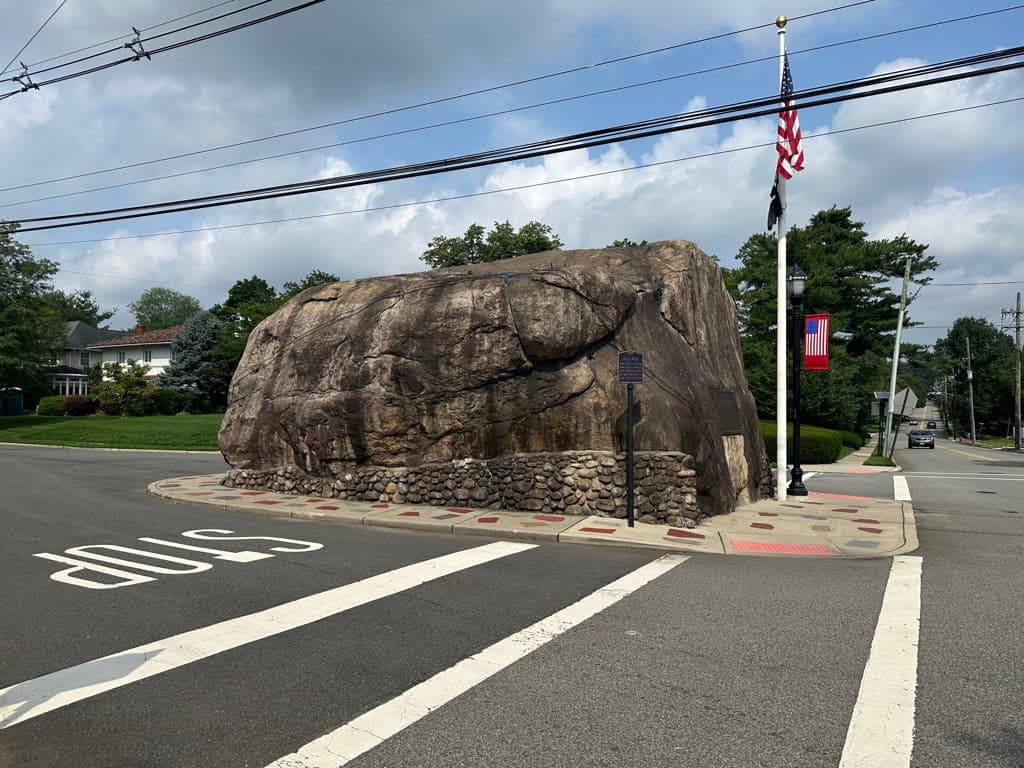
Photo: Wikipedia
Personal Sovereignty in Glen Rock, NJ
Viable for self-reliance. Generally workable, though some barriers may limit total independence.
What does Personal Sovereignty tell us?
Personal Sovereignty measures your capacity for self-reliance and independence with minimal government friction. Higher scores mean fewer barriers between you and the way you want to live... but it assumes you have the space you need and good neighbors.
What does this tell us?
Personal Sovereignty measures your capacity for self-reliance and independence with minimal government friction. Higher scores mean fewer barriers between you and the way you want to live... but it assumes you have the space you need and good neighbors.
State Policy
Energy independence: Importer (17% of energy produced in-state)
Personal Liberty
Homesteading

Personal Liberty Analysis
Glen Rock, New Jersey, presents a complex personal sovereignty environment where the state's heavy regulatory and tax framework significantly constrains individual autonomy, yet the borough's affluent, suburban character offers certain practical freedoms in daily life. For a relocation audience prioritizing self-reliance and minimal government intrusion, Glen Rock sits firmly within New Jersey's high-tax, high-regulation paradigm, but with local nuances that can either frustrate or accommodate specific independence-minded goals. The trade-off is clear: you gain access to top-tier public services and a safe, orderly community, but you surrender substantial control over your property, finances, and lifestyle choices to state and local authorities.
Tax burden and regulatory posture in Bergen County
New Jersey consistently ranks among the highest-taxed states in the U.S., and Glen Rock is no exception. The borough's effective property tax rate hovers around 2.2% of assessed value, meaning a home valued at $700,000 carries an annual tax bill of roughly $15,400. This is among the highest property tax burdens in the nation, and it directly funds the school system and municipal services that many residents cite as the primary reason for living here. The state income tax is progressive, with a top marginal rate of 10.75% on income over $1 million, and a rate of roughly 5.5% on middle-class incomes around $100,000. Sales tax is 6.625%, with no local add-ons. The regulatory posture is equally heavy: New Jersey's COAH (Council on Affordable Housing) mandates and strict land-use laws mean any significant property modification—from adding a deck to building an accessory dwelling unit—requires multiple permits, public hearings, and often legal representation. The state's Environmental Protection Department (NJDEP) imposes rigorous stormwater management and wetland buffer rules that can halt or drastically alter construction plans. For a self-reliant individual, this means that even routine property improvements become bureaucratic ordeals, and the cost of compliance often exceeds the cost of the improvement itself. The borough's own zoning code is detailed and enforced, with strict limits on home-based businesses, signage, and even the number of unrelated adults who can share a single-family home.
Self-defense and gun law specifics in New Jersey
New Jersey is one of the most restrictive states in the nation for firearm ownership and self-defense, and Glen Rock residents must navigate a dense legal landscape. The state requires a Firearms Purchaser Identification Card (FPID) for long guns and a separate Permit to Purchase a Handgun for each handgun, both of which involve fingerprinting, background checks, and a minimum 30-day waiting period. The application process is handled through the Glen Rock Police Department, which has a reputation for thorough—and sometimes slow—processing. Carrying a handgun in public is effectively prohibited for most residents: New Jersey is a "may-issue" state with no constitutional carry, and the standard for obtaining a carry permit requires demonstrating a "justifiable need" that goes beyond general self-defense. The 2024 Bruen decision has prompted some loosening, but the state's Attorney General has aggressively defended the permitting system, and local police chiefs retain significant discretion. Magazine capacity is limited to 10 rounds, and certain firearms, including many popular AR-15 models, are classified as "assault weapons" and banned. Stand-your-ground laws do not exist; New Jersey imposes a duty to retreat if safely possible before using deadly force, even in one's own home. Castle doctrine protections are weak and subject to judicial interpretation. For a reader prioritizing self-defense autonomy, this environment is deeply restrictive: you can own firearms for home defense, but the process is slow, expensive, and heavily monitored, and carrying a weapon for personal protection outside the home is nearly impossible without a special occupation or demonstrated threat.
Self-reliance and homesteading viability in a suburban borough
Glen Rock's dense suburban layout and zoning code make traditional homesteading or off-grid living largely impractical. The typical lot size is 0.15 to 0.25 acres, with most homes on 50x100-foot parcels. Zoning regulations prohibit keeping livestock, including chickens, within the borough limits, and any significant garden or greenhouse structure requires a permit and must meet setback requirements. The borough's Uniform Construction Code enforces strict building standards that make off-grid systems like solar panels with battery storage, rainwater collection, or composting toilets difficult to implement legally. Solar panels are permitted but must be installed by licensed contractors and connected to the grid; net metering is available but with caps. Rainwater collection for outdoor use is allowed, but systems must be designed to avoid mosquito breeding and cannot be used for potable water without extensive treatment and permitting. The borough's water and sewer are municipally provided, and disconnecting from them is not permitted. For a reader seeking self-reliance through food production, energy independence, or reduced reliance on municipal services, Glen Rock offers almost no viable path. The regulatory environment is designed for a fully integrated suburban lifestyle, and any deviation requires significant legal and financial investment. The closest approximation to self-reliance is maintaining a vegetable garden in a backyard bed, but even that is subject to property line setbacks and homeowners' association-style neighborhood covenants in some subdivisions.
Personal liberties: parental rights, medical autonomy, speech, and property
New Jersey's legal framework provides strong protections for certain personal liberties while imposing significant constraints on others. Parental rights are generally respected in Glen Rock's school system, which is part of the highly rated Glen Rock Public Schools district. The district follows state curriculum mandates, including comprehensive sex education and social-emotional learning standards, which some conservative families find intrusive. However, New Jersey law allows parents to opt their children out of specific lessons on moral or religious grounds, and the district has a formal opt-out process. School board meetings in Glen Rock have seen occasional debates over library materials and curriculum content, reflecting broader national tensions. Medical autonomy is limited: New Jersey has mandatory vaccination requirements for school attendance, with only medical exemptions (no religious or philosophical exemptions). The state also has a public health emergency powers law that grants the governor broad authority to mandate treatments or restrictions, as seen during the COVID-19 pandemic. Free speech is protected under the First Amendment, but New Jersey's anti-discrimination laws and hate crime statutes are among the most expansive in the country, meaning certain forms of speech—particularly on public property or in commercial contexts—can lead to legal liability. Property rights are heavily constrained by zoning, environmental regulations, and historic preservation rules. The borough's Historic Preservation Commission reviews exterior changes to homes in designated historic districts, and even non-historic properties face strict design review for additions, fences, and landscaping. The state's Eminent Domain authority is broad, though rarely exercised in Glen Rock. For a reader prioritizing personal sovereignty, the overall picture is one of managed liberty: you have significant freedom in private life choices, but the state and borough maintain a tight regulatory grip on public-facing actions, property use, and medical decisions.
Compared to other areas in the Northeast, Glen Rock's personal sovereignty environment is typical of affluent New Jersey suburbs: high taxes, heavy regulation, and limited self-defense rights, but with strong public services and a stable, orderly community. For a relocation reader who values individual autonomy above all else, this borough will feel restrictive, especially when contrasted with states like New Hampshire or Texas that offer lower taxes, constitutional carry, and looser zoning. However, for a reader who prioritizes safety, excellent schools, and a predictable legal environment—and is willing to trade some personal freedom for those benefits—Glen Rock provides a secure, well-managed setting where the constraints are clear and consistently applied. The key is understanding that personal sovereignty here is not about doing whatever you want on your property; it is about exercising your choices within a dense, well-defined legal framework that rewards compliance and penalizes deviation.

* Values derived from national, state, county, city and local statistics and may differ in a specific area. Last updated: 2026-11-09T06:00:12.000Z
Narrative content on this page is AI-generated and may contain mistakes. Verify any details that matter before acting on them.
ReloMaps may earn a commission from affiliate links at no extra cost to you.

