Political ClimatePolitical Climate in Gilmore, ID
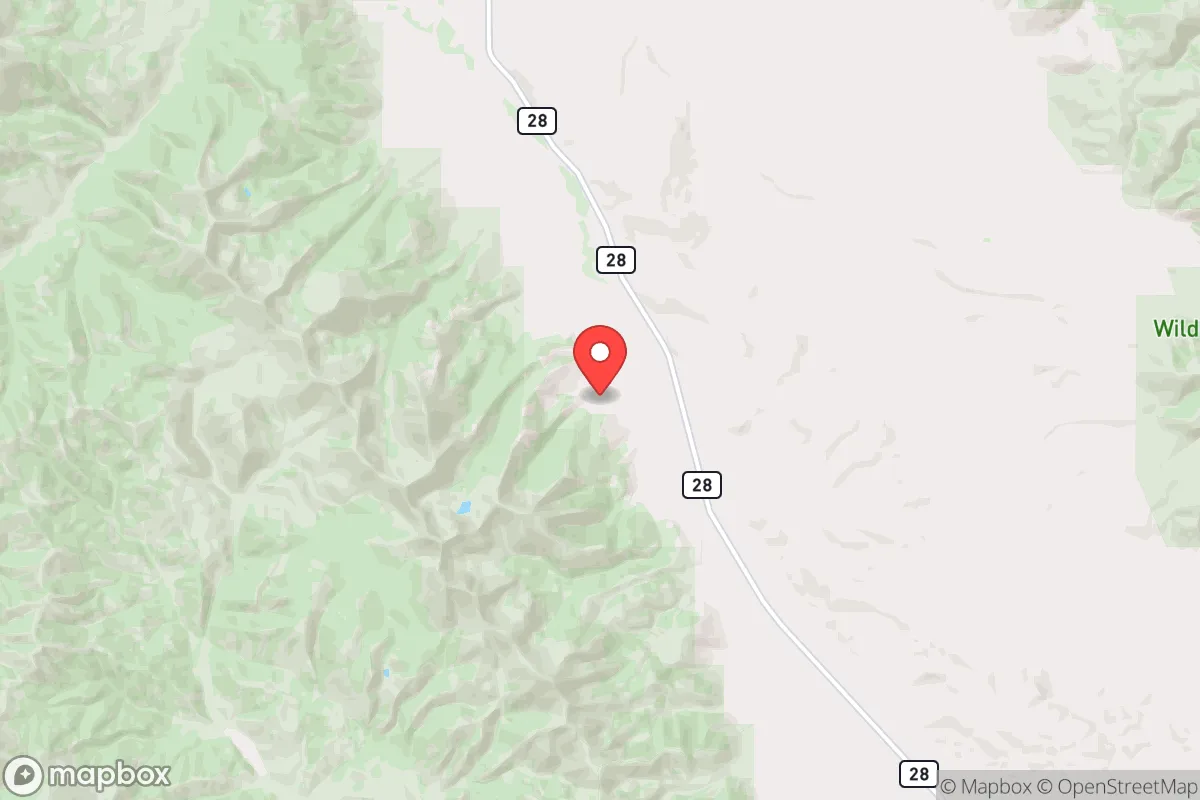
District shown is the primary district for this city’s centroid. Cities may span multiple districts.
Local Political AnalysisPolitical Analysis of Gilmore, ID
Gilmore, Idaho, sits in a reliably Republican area, but it’s a bit more of a mixed bag than the surrounding region. The Cook PVI for Gilmore is R+13, which is solidly red, but notably less conservative than the state of Idaho as a whole, which sits at R+18. That five-point gap is the real story here. It means Gilmore isn’t a deep-red stronghold like you’d find in, say, the rural counties around Boise or the panhandle; it’s more of a place where conservative values are the baseline, but you’ll find a wider range of opinions than you might expect. The trajectory has been slowly shifting toward the center, driven by an influx of folks from out of state looking for a quieter life without the full-on political intensity of some neighboring towns.
How it compares
When you stack Gilmore against the rest of Idaho, the difference is subtle but real. The state’s R+18 rating reflects a deeply conservative electorate, with places like Boise and Idaho Falls trending more moderate, but the rural areas often pushing the needle hard right. Gilmore’s R+13 puts it closer to the moderate end of the state’s spectrum. For context, Salmon to the north and Driggs to the east are both more conservative, with PVIs that likely hover around R+20 or higher. The contrast is most visible in local elections: Gilmore’s county commission races are often competitive, with a few independent or even moderate Democratic candidates getting a real shot, whereas in the surrounding counties, those races are usually decided in the Republican primary. The area’s history as a mining and ranching hub has fostered a practical, “live and let live” attitude that sometimes clashes with the more ideologically rigid politics of the state’s newer suburbs.
What this means for residents
For a conservative resident, Gilmore is a comfortable place. You’ll find plenty of like-minded neighbors, gun rights are widely respected, and the local economy leans heavily on industries like agriculture and outdoor recreation that align with traditional values. The local GOP is active, but not as dominant as in other parts of the state, so you might see more debate over issues like land use or school funding than you would in a deep-red county. For a liberal resident, life here is more about finding your niche. You won’t be ostracized, but you’ll likely be in the minority. The upside is that the community is small enough that personal relationships often trump political labels. You can have a beer with a rancher who voted for Trump and find common ground over the local fishing hole. The practical reality is that state-level policies—like Idaho’s strict abortion laws or its resistance to Medicaid expansion—still shape daily life, but local governance in Gilmore tends to be more pragmatic and less ideological.
The cultural distinction here is that Gilmore feels less like a political battleground and more like a place where people just want to get on with their lives. The influx of new residents from California and Washington has brought some tension, but it’s mostly about housing prices and traffic, not culture wars. The long-term trend is toward a more diverse political landscape, but it’s happening slowly. If you’re looking for a place where your vote feels like it matters, Gilmore offers that—especially in local races. For anyone moving here, the key is to understand that the political climate is conservative but not monolithic, and that your neighbors are more likely to judge you by your character than your bumper stickers.

State Political ClimatePolitical Climate in Idaho
State Political AnalysisPolitical Environment in the State
Idaho is one of the most reliably Republican states in the country, with a Cook Partisan Voting Index of R+18, meaning it votes about 18 points more Republican than the national average. Over the past 20 years, the state has shifted from a more libertarian-leaning, small-government conservatism to a hardline, culturally conservative Republican dominance, driven by explosive growth in the Boise metro area and an influx of out-of-state transplants. While Democrats hold a few strongholds in Boise and the university towns of Moscow and Pocatello, the state legislature and statewide offices are firmly controlled by a GOP supermajority that has grown increasingly assertive on social issues.
Urban vs. rural divide
The political map of Idaho is a study in contrasts. The Treasure Valley, anchored by Boise, Meridian, and Nampa, is the state’s population center and the engine of its growth. Ada County (Boise) has trended purple in recent cycles—it voted for Trump by only 4 points in 2020, down from 12 points in 2016—and local Democrats have won city council and mayoral races in Boise itself. However, the surrounding suburbs like Eagle and Star remain deeply red, and the rural counties that make up the rest of the state are among the most conservative in the nation. Canyon County (Nampa, Caldwell) is a GOP stronghold, voting +35 for Trump in 2020. The northern panhandle, including Coeur d’Alene and Sandpoint, is also heavily Republican, though it has a libertarian streak and a growing population of remote workers who lean more moderate. The only reliably blue areas are the city of Moscow (home to the University of Idaho) and parts of Pocatello (Idaho State University), but these are small islands in a sea of red.
Policy environment
Idaho’s policy environment is defined by low taxes, minimal regulation, and a strong emphasis on local control. The state has a flat income tax rate of 5.8% (recently cut from 6%), no corporate income tax on pass-through entities, and property taxes that are among the lowest in the West. There is no statewide sales tax on groceries, and the overall tax burden is roughly 7% of personal income—well below the national average. The regulatory posture is business-friendly, with few zoning or environmental hurdles for development, especially in rural areas. Education policy is a flashpoint: the state has one of the lowest per-pupil spending levels in the nation, and the legislature has passed laws allowing public funds to flow to private schools via education savings accounts. Election laws are restrictive: voter ID is required, same-day registration is not available, and mail-in voting is limited to those with an approved excuse. The state also has a closed primary system, meaning only registered Republicans can vote in GOP primaries, which effectively decides most general elections.
Recent policy direction
Over the past five years, Idaho’s legislature has moved aggressively on cultural and liberty issues. In 2023, the state passed a near-total abortion ban (the Idaho Defense of Life Act), with exceptions only for rape, incest, or to save the mother’s life. Gun laws are among the most permissive in the country: no permit is required to carry a concealed firearm, and the state has a “stand your ground” law and preemption statutes that prevent local governments from enacting their own gun restrictions. On parental rights, Idaho passed the “Parental Rights in Education” law (similar to Florida’s “Don’t Say Gay” law) in 2022, restricting classroom discussion of sexual orientation and gender identity. The state also enacted a law in 2024 requiring public libraries to restrict minors’ access to “harmful” materials or face liability. On privacy and surveillance, Idaho has a strong biometric privacy law and has resisted federal REAL ID compliance for years, though it now issues compliant licenses. Medical and bodily autonomy is limited: gender-affirming care for minors is banned, and the state has no shield laws for providers of abortion or transgender care. Property rights are strongly protected, with a “right to farm” law and limits on eminent domain. Voting access has been tightened: the legislature passed a law in 2023 requiring proof of citizenship to register, and ballot drop boxes are restricted to one per county.
Civil unrest & political movements
Idaho has a long history of anti-government and militia movements, dating back to the Ruby Ridge standoff in 1992. In recent years, the state has seen a resurgence of far-right activism, particularly in the northern panhandle. The town of Sandpoint has become a hub for the “Patriot” movement, with groups like the Idaho Freedom Foundation and the People’s Rights network (founded by Ammon Bundy) holding regular events. In 2020, the state saw large protests against COVID-19 restrictions, including armed demonstrations at the state capitol in Boise. Immigration politics are heated: the state has a law requiring local law enforcement to cooperate with federal immigration authorities, and there have been high-profile clashes over the relocation of refugees to Twin Falls and Boise. There is no sanctuary city policy anywhere in Idaho. Election integrity controversies have been minimal, though the 2022 primary saw a challenge from far-right candidates who questioned the 2020 results; most lost. A new resident would notice the prevalence of “Don’t Tread on Me” flags and political bumper stickers, especially outside the Boise metro area, but actual civil unrest is rare—most political activity is channeled through local government meetings and social media.
Projection
Over the next 5-10 years, Idaho’s political trajectory is likely to continue its rightward shift, but with increasing internal tension. The Boise metro area is growing rapidly, attracting a mix of conservative families from California and Washington, as well as younger, more moderate remote workers. This could gradually turn Ada County into a swing county, but the state legislature is likely to remain under a GOP supermajority due to gerrymandering and the sheer size of rural districts. The biggest wildcard is the northern panhandle, where a surge of out-of-state transplants—many from liberal-leaning states—could eventually shift the political balance in places like Kootenai County (Coeur d’Alene). However, the state’s political infrastructure is so deeply entrenched that a Democratic statewide win is unlikely for at least a decade. A new resident moving in now should expect a state that is culturally conservative, with low taxes and minimal government services, and where political debates are increasingly focused on education, immigration, and the role of local government.
For a new resident, the bottom line is this: Idaho offers a low-tax, low-regulation environment with strong protections for gun rights and property owners, but it also comes with a restrictive social agenda on abortion, LGBTQ+ issues, and education. If you are a conservative who values limited government and traditional social norms, you will find a welcoming community and a state government that aligns with your views. If you are a liberal, you will find a small but active political minority in Boise and the university towns, but you should expect to be in the minority in most aspects of daily life. The state’s rapid growth is changing its character, but the political fundamentals are likely to remain solidly red for the foreseeable future.
* Values derived from national, state, county, city and local statistics and may differ in a specific area. Last updated: 2026-07-23T02:26:12.000Z
Narrative content on this page is AI-generated and may contain mistakes. Verify any details that matter before acting on them.
ReloMaps may earn a commission from affiliate links at no extra cost to you.

