Personal Sovereignty in Gilmore, ID
Moderate friction. Expect trade-offs in some aspect of personal liberty and independence.
What does Personal Sovereignty tell us?
Personal Sovereignty measures your capacity for self-reliance and independence with minimal government friction. Higher scores mean fewer barriers between you and the way you want to live... but it assumes you have the space you need and good neighbors.
What does this tell us?
Personal Sovereignty measures your capacity for self-reliance and independence with minimal government friction. Higher scores mean fewer barriers between you and the way you want to live... but it assumes you have the space you need and good neighbors.
State Policy
Energy independence: Importer (25% of energy produced in-state)
Personal Liberty
Homesteading

Personal Liberty Analysis
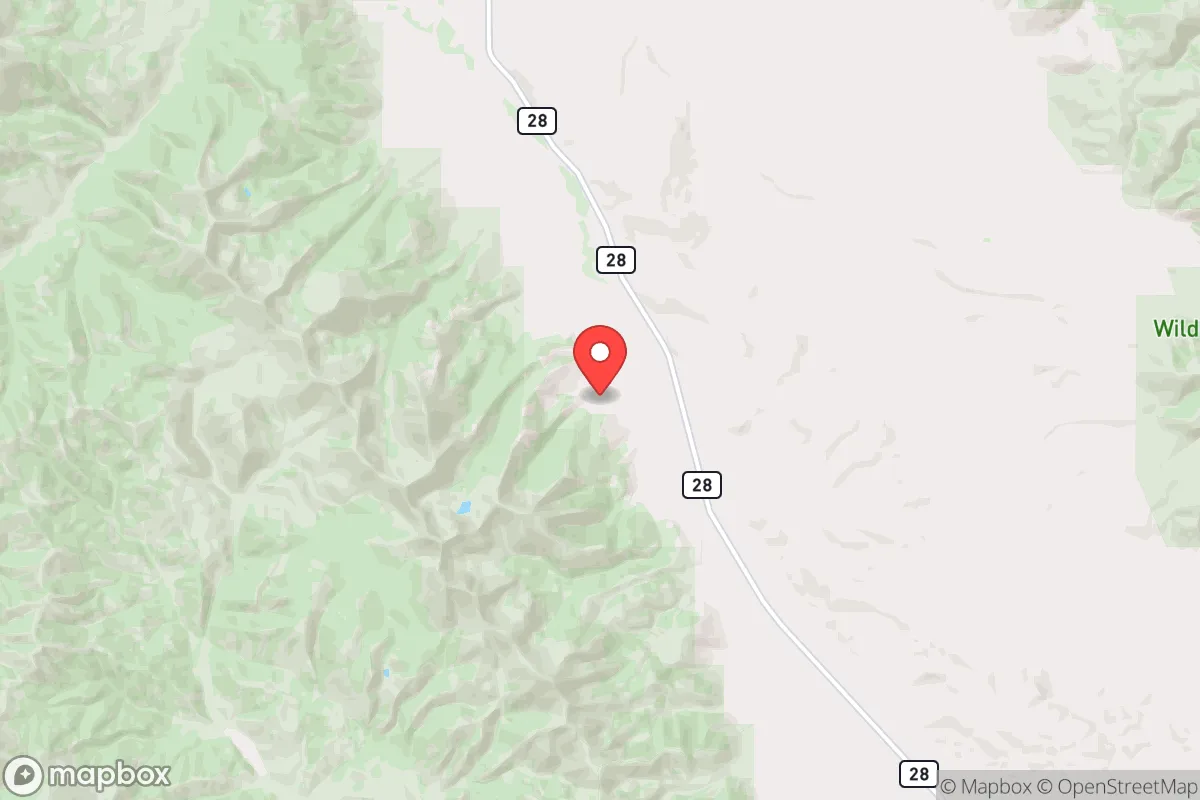
Gilmore, Idaho, offers one of the most permissive personal sovereignty environments in the lower 48, anchored by the state’s constitutional protections and a deeply ingrained culture of self-reliance. For individuals and families prioritizing autonomy over convenience, the area presents a regulatory landscape where the default answer is often “yes” until a specific harm is proven, rather than the reverse. This analysis examines the concrete factors that shape personal freedom in Gilmore, from tax policy and self-defense law to homesteading feasibility and the scope of personal liberties, providing a clear-eyed assessment for relocation decision-making.
Tax burden and regulatory posture: How light-touch is the state and local framework?
Idaho’s tax and regulatory environment is among the most favorable in the nation for those seeking to minimize government intrusion into personal finances and daily operations. The state imposes no corporate or personal income tax on wages, salaries, or business income, a policy that directly increases disposable income and reduces the paperwork burden for self-employed individuals and remote workers. Property taxes in Lemhi County, where Gilmore is located, are notably low, with effective rates typically ranging from 0.5% to 0.7% of assessed value, well below the national average of roughly 1.1%. The state’s regulatory posture is similarly restrained: Idaho operates under a “right-to-farm” law that protects agricultural operations from nuisance lawsuits, and the state has no general business license requirement for most small enterprises. Occupational licensing is less extensive than in many states, and local zoning in unincorporated areas like Gilmore is minimal, often limited to basic health and safety codes rather than prescriptive land-use rules. This combination of low taxes and light regulation creates a baseline where personal economic decisions—whether starting a side business, building a workshop, or keeping livestock—face fewer bureaucratic hurdles than in most of the country.
Self-defense and gun law specifics: What are the legal boundaries for carrying and using force?
Idaho is a constitutional carry state, meaning that as of 2016, any law-abiding adult 18 or older may carry a concealed firearm without a permit. This applies to both residents and non-residents legally present in the state. For those who prefer a permit for reciprocity purposes, Idaho issues licenses to residents and non-residents alike, with no training requirement for renewal after the initial application. The state’s self-defense laws are among the strongest in the nation: Idaho has a “stand your ground” statute that removes any duty to retreat before using deadly force if a person is lawfully present and reasonably believes force is necessary to prevent death, great bodily harm, or a forcible felony. Castle doctrine protections extend to occupied vehicles and workplaces, not just dwellings. Use of force is justified against unlawful entry, even if the intruder is unarmed, provided the occupant reasonably believes the intrusion is for the purpose of committing a violent felony. These laws are enforced consistently across the state, including in Lemhi County, where sheriff’s deputies and local prosecutors generally interpret self-defense statutes broadly. For a reader prioritizing personal security, Gilmore’s legal framework provides near-maximum latitude for armed self-defense, with the primary limitation being federal restrictions on firearm possession by prohibited persons.
Self-reliance and homesteading viability: Lot sizes, zoning, and off-grid feasibility
Gilmore’s location in the remote Salmon River Mountains makes it one of the most viable locations in Idaho for serious homesteading and off-grid living. The area is unincorporated Lemhi County, meaning there is no municipal zoning or building code enforcement beyond state-level health and safety requirements. Minimum lot sizes for residential development are typically 1 to 5 acres in the county’s rural zones, but larger parcels of 20 to 160 acres are common and affordable, with raw land prices often below $1,000 per acre. Off-grid systems are explicitly legal: Idaho has no state law prohibiting rainwater collection, and the state’s water rights framework allows for domestic use wells without a permit for up to 13,000 gallons per day, provided the well does not interfere with senior water rights. Solar panel installation requires no permit for systems under 25 kW, and battery storage is unrestricted. Septic systems must meet Idaho Department of Environmental Quality standards, but the permitting process is straightforward for standard gravity-fed systems on suitable soil. The county does not require building permits for structures under 200 square feet, and owner-built homes are legal with proper septic and well approvals. For a family seeking to minimize reliance on municipal infrastructure, Gilmore offers a regulatory environment where self-sufficient living is not just tolerated but structurally supported by minimal oversight.
Personal liberties: Parental rights, medical autonomy, speech, and property
Idaho’s legal framework strongly favors individual and parental autonomy across several domains. Parental rights are explicitly protected by state statute, which grants parents the fundamental right to direct the upbringing, education, and healthcare of their children. This includes the ability to opt children out of public school curricula without penalty, and the state does not mandate vaccines for school attendance—only a signed exemption form is required. Medical autonomy is similarly broad: Idaho has no state-level vaccine mandate for adults, and the state’s “right to try” law allows terminally ill patients to access experimental treatments without FDA approval. The state does not have a general “informed consent” law that restricts alternative medical practices, though licensed practitioners are subject to standard medical board oversight. Free speech protections are robust, with Idaho having no hate speech laws that criminalize expression beyond the First Amendment baseline. Property rights are strongly protected by the state constitution, which requires “just compensation” for any regulatory taking, and Idaho’s “private property rights protection act” allows landowners to sue local governments for regulations that reduce property value by more than 20%. The combination of these protections means that in Gilmore, an individual’s decisions about their body, their children, their speech, and their land face minimal state interference compared to most other states.
Overall, Gilmore’s personal sovereignty environment ranks among the most permissive in the United States, comparable to rural areas of Alaska, Montana, and Wyoming. The absence of income tax, constitutional carry, minimal zoning, and strong protections for parental and property rights create a legal ecosystem where self-reliance is the default expectation rather than an exception. For a reader who prioritizes personal freedom and independence, Gilmore offers a regulatory climate that is consistently light-touch across nearly every dimension of autonomy, with the primary trade-off being the practical challenges of remote living—distance from medical facilities, limited retail options, and harsh winters—rather than legal restrictions on personal choice. This makes the area particularly well-suited for individuals and families who are willing to accept logistical inconvenience in exchange for maximum personal sovereignty.

* Values derived from national, state, county, city and local statistics and may differ in a specific area. Last updated: 2026-07-23T02:26:12.000Z
Narrative content on this page is AI-generated and may contain mistakes. Verify any details that matter before acting on them.
ReloMaps may earn a commission from affiliate links at no extra cost to you.

