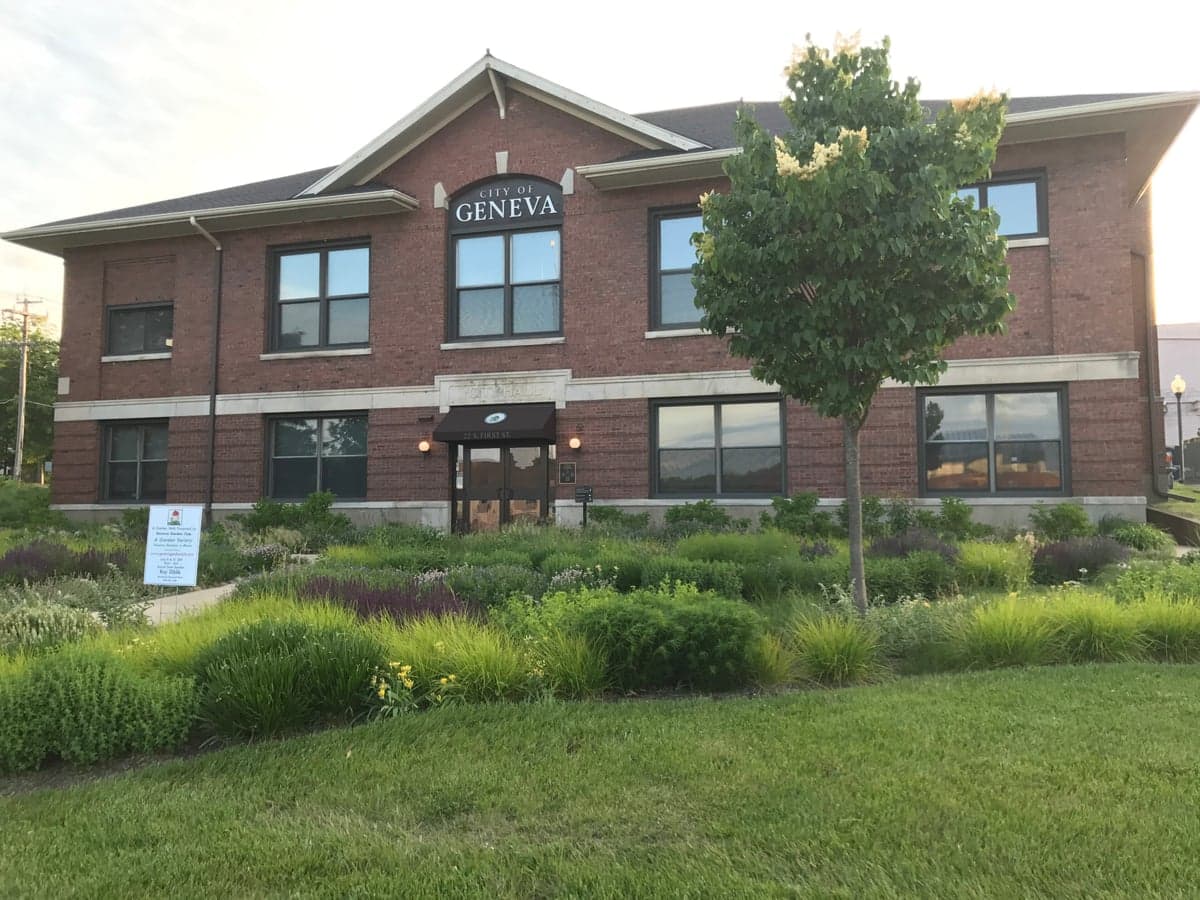
Photo: Wikipedia
Quality of Life in Geneva, IL
A high quality of life with strong walkability, manageable living costs, healthy neighborhood signals, and solid amenity access.
What does Quality of Life tell us?
Quality of Life blends cost of living, nearby amenities, socioeconomic signals, and neighborhood character. City-level scores represent the whole municipality; individual neighborhoods can differ.
What does this tell us?
Quality of Life blends cost of living, nearby amenities, socioeconomic signals, and neighborhood character. City-level scores represent the whole municipality; individual neighborhoods can differ.
Cost of Living
52% above national average
The Real Cost of Living in Geneva, IL for 2026
| Tier | Individual | Family (4) |
|---|---|---|
| Survival | $29k | $54k |
| Comfortable | $81k | $119k |
| Luxury | $235k+ | $364k+ |
| Elite (Top 5%) | $276k+ | $428k+ |
115%
The Area Signal
A metric tracking the socioeconomic signals of the area.
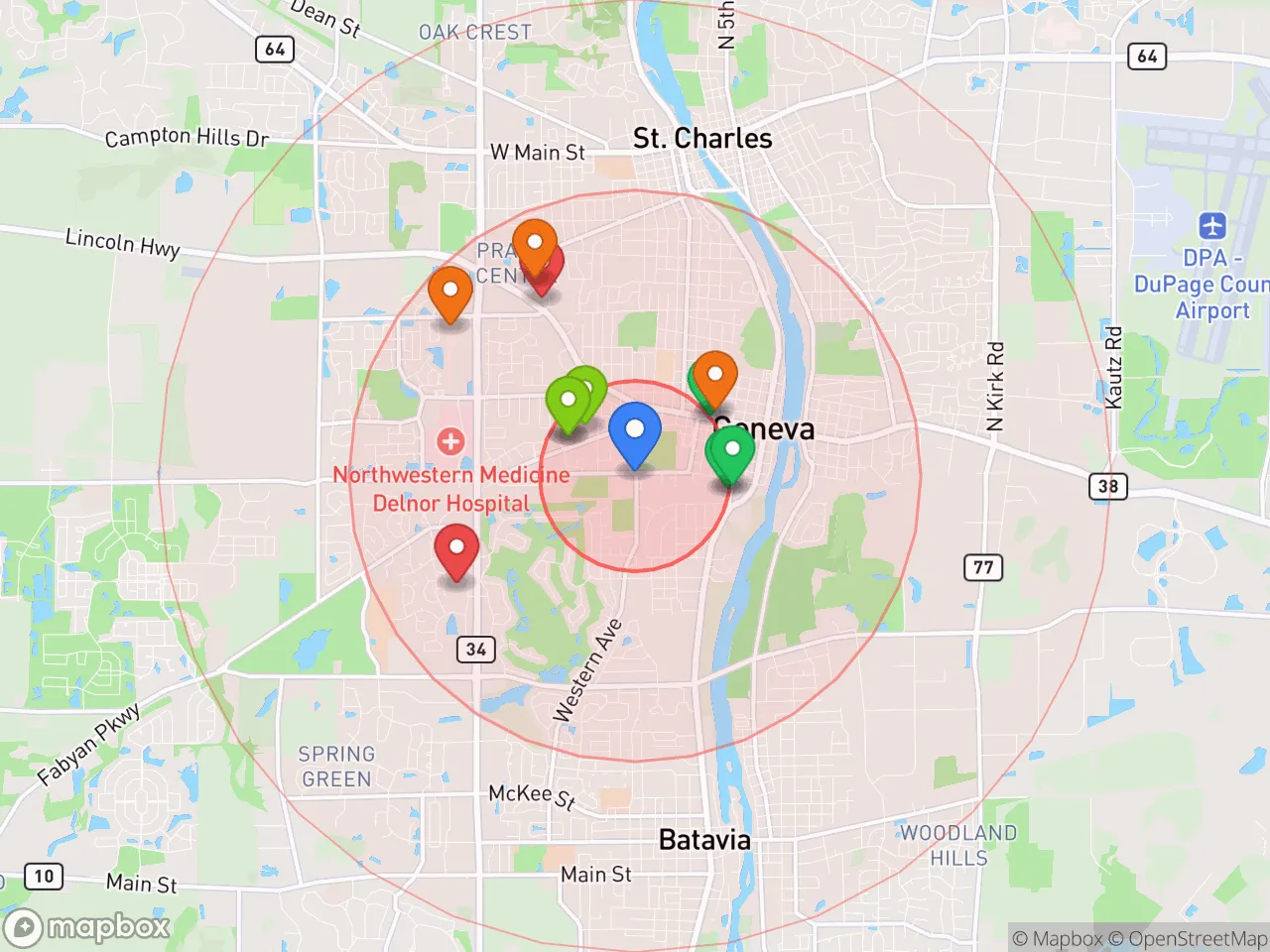
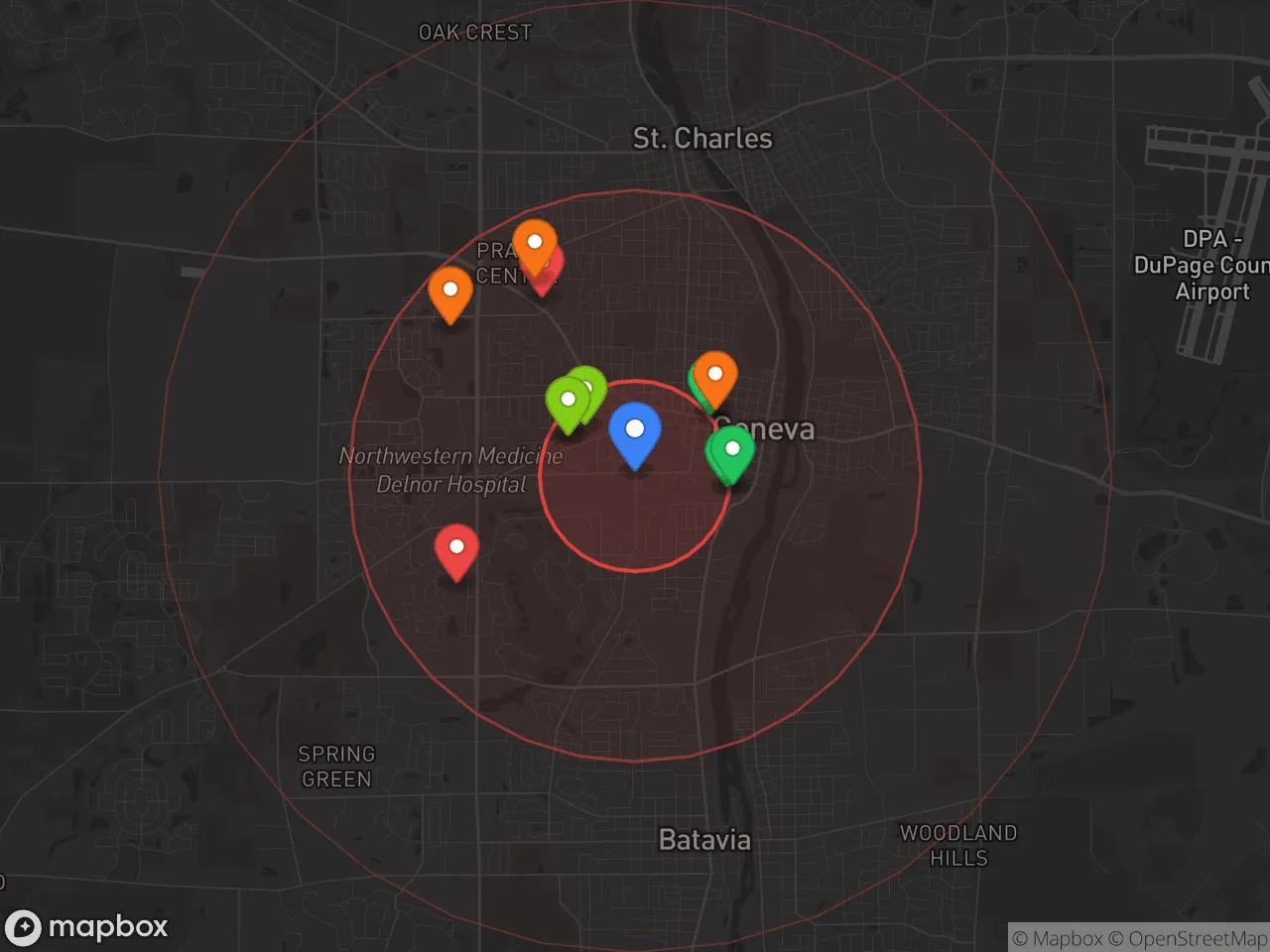
Hobbies
Explore the areaGroceries
0 within 10 miles
Gas
0 within 10 miles
Hospital
0 within 20 miles
Airport
ORD — O'Hare International
Post Office
Critical Amenities
Quality-of-Life Analysis
Geneva, Illinois is a Kane County city of roughly 21,000 where the cost of living runs about 52% above the U.S. average (index 152) and the median home value sits at $415,800. The people who live here skew toward established, dual-income households — commuters to Chicago and the western suburbs, professionals tied to Kane County's courthouse and government offices, and families anchored by Geneva Community Unit School District 304. It is a town that trades affordability for a preserved Victorian downtown, low turnover, and a walkable, river-adjacent core along the Fox River.
Cost of living and housing prices compared with St. Charles and Batavia
Geneva's housing costs are the defining feature of its affordability picture. At a $415,800 median home value, entry into ownership is meaningfully higher than the national figure and competitive with — often slightly above — neighboring St. Charles and Batavia, which share the same Tri-Cities housing market and school reputation. Median rent of $1,805 reflects a rental stock that is thin relative to demand; Geneva is overwhelmingly owner-occupied, and much of the multifamily inventory sits in and around the downtown corridor and the Route 38 (State Street) spine. The cost of living index of 152 is driven less by goods and services than by housing and property taxes — Kane County assessments are a recurring topic at city council meetings. Buyers relocating from Chicago's North Side often find Geneva comparable on price but larger on lot size; buyers from DuPage County suburbs like Wheaton or Glen Ellyn find it roughly in line. Budget-conscious households should expect the trade-off: you pay a premium for the school district and the downtown, not for square footage.
Schools, downtown amenities, and what daily life looks like
Daily rhythm in Geneva orbits two anchors: District 304 schools — Geneva High School, Geneva Middle School North and South, and a cluster of elementary buildings — and the Third Street downtown historic district, a stretch of restored Victorian storefronts, independent shops, and restaurants along the Fox River. The Geneva Metra station on the Union Pacific West Line gives commuters a direct ride to Chicago's Ogilvie Transportation Center, and the average commute of about 28 minutes captures a mix of Metra riders, drivers on Route 38 and I-88, and residents working locally at places like the Kane County Government Center or Delnor Hospital. The Fox River Trail and Fabyan Forest Preserve on the city's south side draw cyclists and runners year-round, and the annual Swedish Days festival each June is the town's signature civic event. Daily life is quiet and family-oriented; evenings are spent at youth sports fields and downtown restaurants rather than in nightlife districts.
Geneva suits households with steady professional incomes who prioritize schools, walkability, and a stable, low-crime small-city environment over lower taxes or larger lots. It is a strong fit for Metra commuters, Kane County professionals, and families planning to stay through high school graduation. It is a weaker fit for renters seeking abundant or inexpensive apartments, for buyers on tight budgets, and for anyone who wants urban density or a fast-paced social scene — those residents typically look to Elgin, Aurora, or closer-in DuPage suburbs instead.

Crime in Geneva, IL
Lower crime rates than 88% of comparable U.S. locations.
Violent CrimeViolent Crime Analysis
Property CrimeProperty Crime Analysis
Crime Analysis
Geneva records a violent crime rate of 137.3 per 100,000 residents and a property crime rate of 762.1 per 100,000, figures that place the Kane County seat well below Illinois' large urban centers and in line with — or slightly under — many comparably sized Chicago suburbs. For a city of roughly 21,000 along the Fox River, the practical result is a community where residents generally treat routine precautions as sufficient rather than living under heightened alert.
How Geneva's crime rates compare to Illinois and the U.S.
Statewide, Illinois violent crime has typically run in the range of 400 to 450 incidents per 100,000 residents, and the national rate has hovered near 370 to 380 per 100,000 in recent FBI reporting years. Geneva's violent crime figure of 137.3 is therefore roughly one-third of the Illinois rate and well under half the national rate. Property crime tells a similar story: the U.S. rate has generally sat between 1,900 and 2,000 per 100,000, and Illinois near 1,700, while Geneva's 762.1 is less than half the national figure. Readers comparing Geneva to other Kane County communities — Batavia, St. Charles, North Aurora — will find rates in a similar band, which reflects the broader Fox Valley corridor rather than anything unique to Geneva.
What daily life and safety feel like for Geneva residents
Most reported incidents in Geneva are property offenses — theft from vehicles, retail theft, burglary of garages and outbuildings — rather than crimes against persons. The Geneva Police Department, headquartered on James Street, patrols the downtown Third Street shopping district, the Metra station on the Union Pacific West line, and residential wards north and south of the river. Residents commonly cite unlocked cars and packages left on porches as the practical vulnerabilities, and the department has periodically run awareness campaigns around those habits. Schools — Geneva Community Unit School District 304's Geneva High School, Geneva Middle School North and South — operate with school resource officers and standard visitor screening. Violent incidents that do occur tend to be concentrated, isolated, and often tied to domestic situations rather than stranger encounters.
Neighborhood variation within Geneva
Geneva does not publish ward-level crime statistics, so neighborhood comparisons rest largely on police blotter patterns and resident reporting. The downtown and Third Street corridor sees more retail theft and after-hours disturbance simply because of foot traffic and bar density. Older blocks closer to the Metra tracks and Route 31 report more vehicle break-ins, while the newer subdivisions on the city's west side — near Peck Road and Western Avenue — are largely quiet. Residents weighing a move should note that Geneva sits within Kane County's court and prosecutor system; county-level charging and bail practices, not city policing alone, shape how quickly repeat offenders return to the street, and voters concerned about victim outcomes should track the Kane County State's Attorney's race and county judicial retention elections accordingly.
* Values derived from national, state, county, city and local statistics and may differ in a specific area. Last updated: 2026-11-28T00:32:19.000Z
Narrative content on this page is AI-generated and may contain mistakes. Verify any details that matter before acting on them.
ReloMaps may earn a commission from affiliate links at no extra cost to you.

