Photo: Wikipedia
Demographics of Geneva, IL
Affluence Level in Geneva, IL
An upper-middle-class area. Household wealth, education levels, and homeownership run ahead of national benchmarks.
People of Geneva, IL
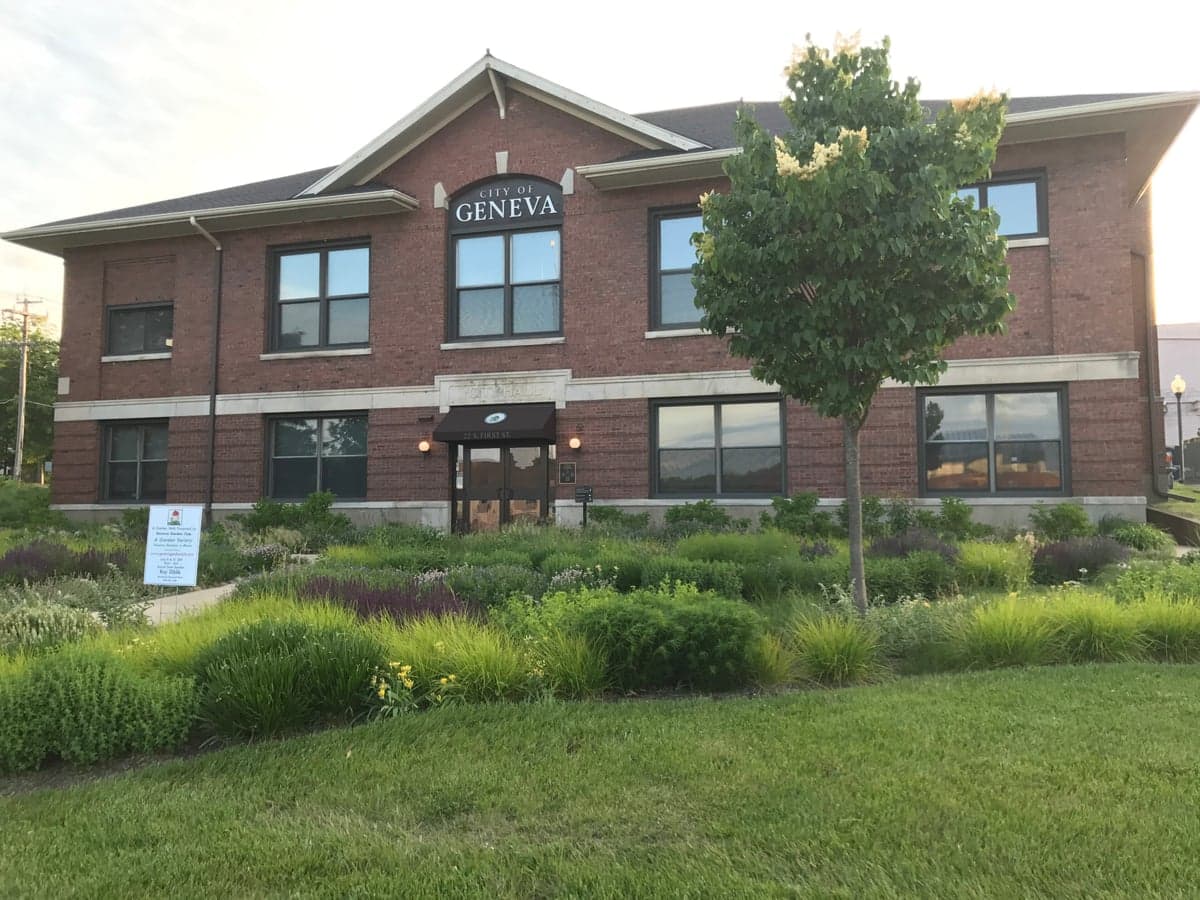
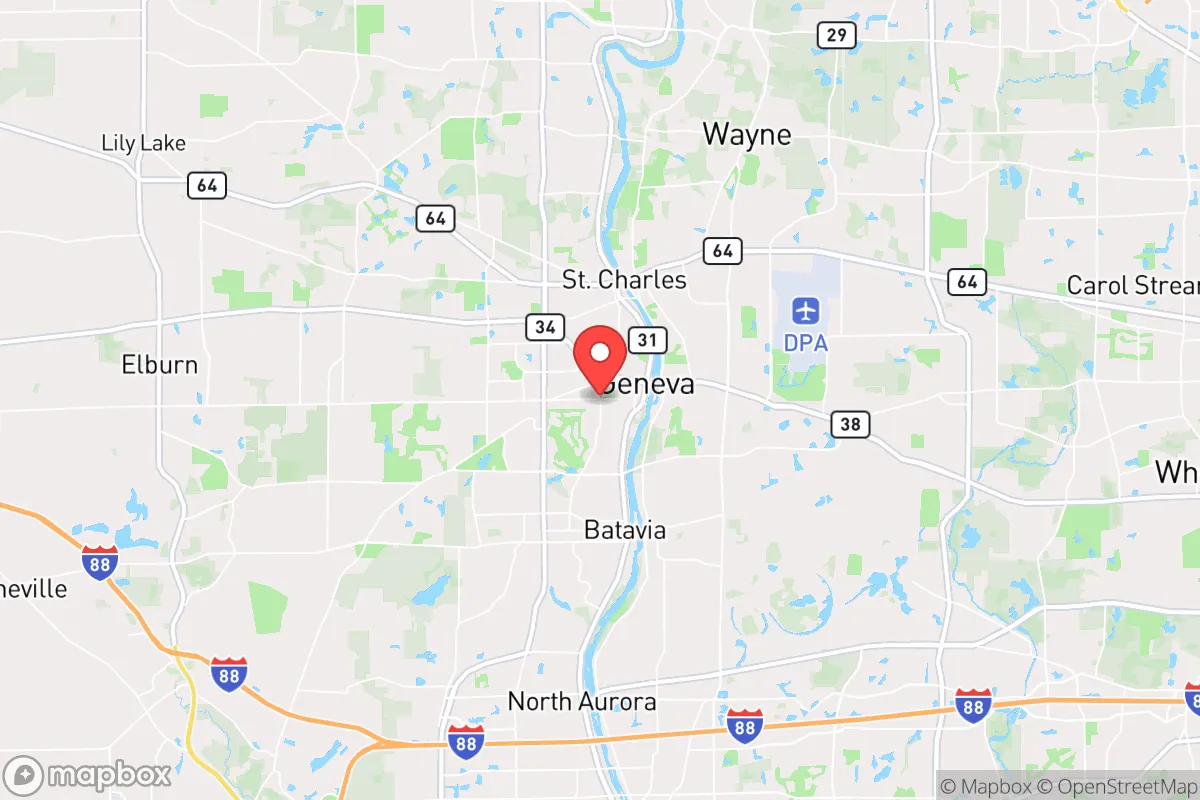
Geneva, Illinois is a Kane County city of 21,299 residents on the west bank of the Fox River, about 40 miles west of Chicago. It is overwhelmingly white (82.9%) and highly educated (63.8% of adults hold a college degree), with a foreign-born share of just 2.5%. Its identity is built on three things: a preserved Victorian downtown, the old Geneva Cutlery and Howell Company industrial corridor along the river, and a settlement pattern where the oldest neighborhoods sit east of the river and the newest subdivisions push west toward Kaneville and Peck Roads.
How Geneva was settled and grew
Geneva was platted in 1835 by James and Charity Herrington, who arrived from New York and built a mill on the Fox River; the town incorporated in 1869. The first wave was Yankee stock from New York and New England, drawn by water power and the fertile prairie, and they built the Geneva Historic District — the grid of Greek Revival and Italianate homes along South Third, Franklin, and James Streets that still defines the city's image. A second wave came with the railroad and industry: Irish and German laborers worked the Geneva Cutlery works and the Howell Company, settling in the blocks near the East Side and the riverfront, while Swedish and later Italian families clustered around North Street and the near-west side. By 1900 Geneva was a manufacturing town of a few thousand, and through the mid-20th century it stayed small and ethnically northern European — the 1960 census counted roughly 8,000 people.
Modern era (post-1965)
The 1965 Hart-Celler Act reshaped national immigration, but its effect on Geneva was indirect: the city's post-1965 growth was driven almost entirely by domestic in-migration — white families leaving Chicago and closer-in suburbs for Kane County schools and the Metra commute. Suburbanization arrived late and fast. The Mill Creek and Eagle Brook subdivisions, built from the 1980s through the 2000s on the city's west and northwest edges, absorbed most of that growth, and the population roughly doubled between 1980 and 2000. The result is visible in the data: Geneva remains 82.9% white, with a Hispanic population of 8.7%, a Black share of 1.5%, an East/Southeast Asian share of 1.3%, and an Indian-subcontinent share of 1.1%. Those minority populations are not concentrated in any single district; they are dispersed across the newer west-side subdivisions and the apartment corridors near Randall Road, with the Hispanic population the largest and most established, anchored by families who arrived in the 1990s and 2000s for the same manufacturing, service, and construction jobs that drew earlier waves.
The future
Geneva is close to built out. With little undeveloped land inside city limits and a downtown preservation ethic that limits density, growth over the next 10–20 years will be slow and incremental — likely a few thousand residents at most, mostly through infill and redevelopment along East State Street and the Randall Road commercial corridor. The population will become modestly more diverse, but gradually: the Hispanic share is the most likely to rise, and the Indian-subcontinent and East/Southeast Asian shares will grow from a small base as professional families are drawn by the schools and the Metra line. The city's cultural identity — a river town of historic homes, a strong public school system, and a downtown that functions as a regional dining destination — is unlikely to change much. What will change is the age profile: like most of Kane County, Geneva is aging, and the share of residents over 65 will climb as the Mill Creek and Eagle Brook cohorts retire in place.
For someone moving in now, Geneva is a stable, high-education, low-diversity outer-ring suburb that is not going to transform quickly. Buyers should expect a market split between the premium historic districts east of the river and the larger, newer homes in Mill Creek and Eagle Brook to the west, and should understand that the city's demographic future is one of slow diversification and an aging population rather than rapid growth. Families seeking a settled, school-driven community will find it; those expecting a fast-changing or highly diverse suburb will not.

* Values derived from national, state, county, city and local statistics and may differ in a specific area. Last updated: 2026-11-28T00:32:19.000Z
Narrative content on this page is AI-generated and may contain mistakes. Verify any details that matter before acting on them.
ReloMaps may earn a commission from affiliate links at no extra cost to you.

