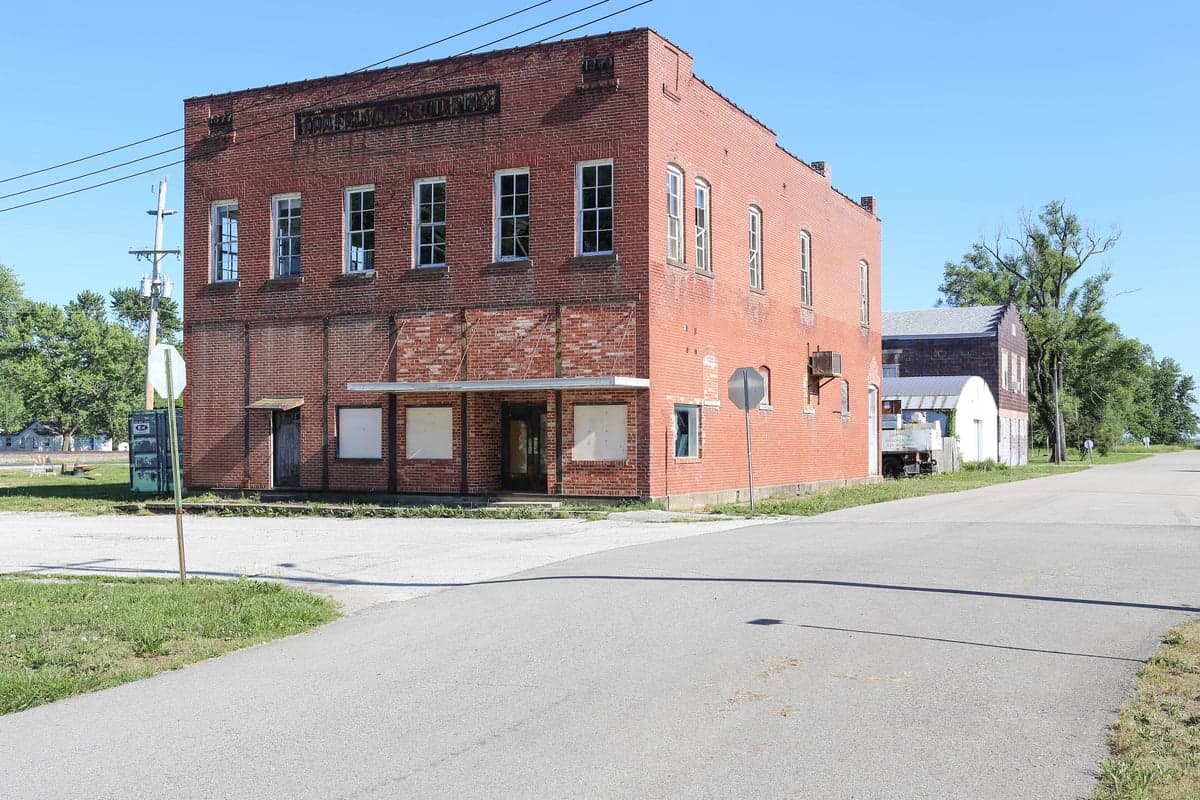
Photo: Wikipedia
Political ClimatePolitical Climate in Foley, MO
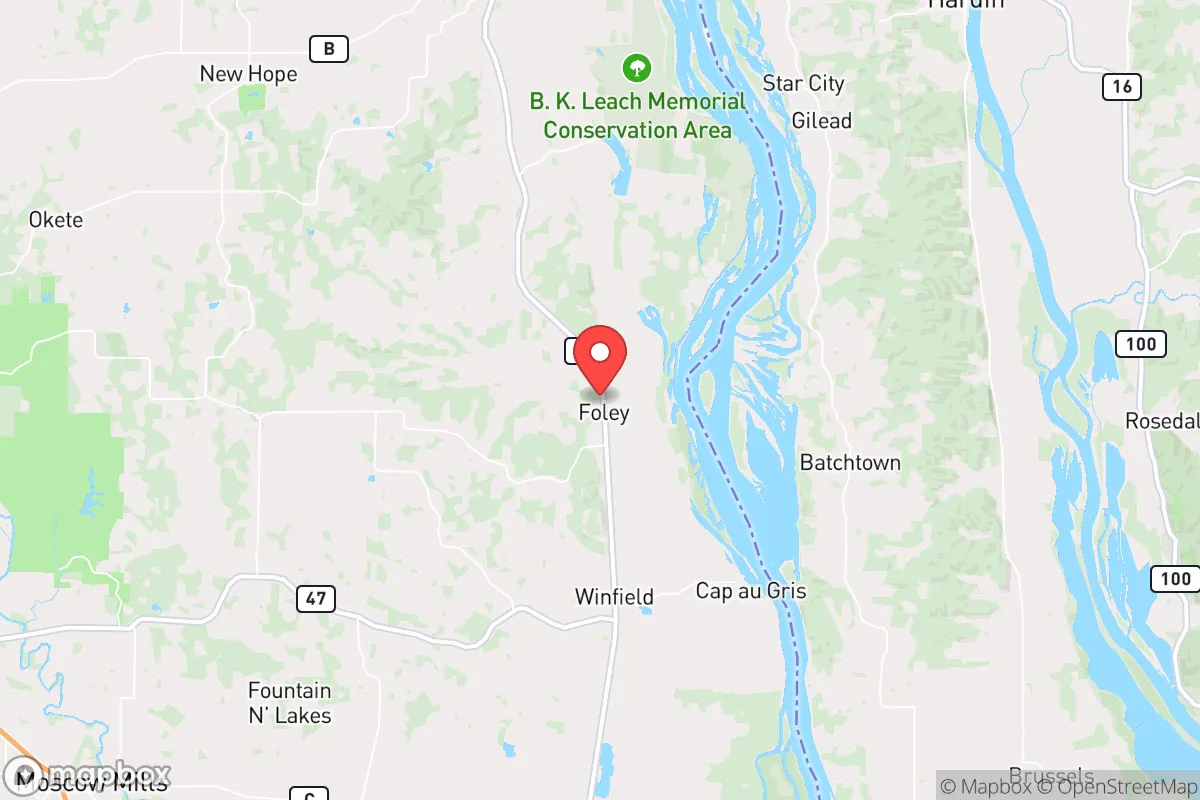
District shown is the primary district for this city’s centroid. Cities may span multiple districts.
Local Political AnalysisPolitical Analysis of Foley, MO
Foley, Missouri, sits in a deeply conservative corner of the state, with a Cook Partisan Voting Index (PVI) of R+13 — meaning the area votes about 13 points more Republican than the national average. That’s a solid five points redder than Missouri as a whole, which sits at R+8. If you’ve been around here a while, you’ve seen that lean only get stronger over the last decade, especially as folks from more liberal parts of St. Louis County have moved out this way, looking for lower taxes and a slower pace. The local vibe is reliably Republican, but it’s not a monolith — there are pockets of blue, especially closer to the river and in the smaller towns like West Alton or Portage Des Sioux, where you’ll find a few more split-ticket voters than you might expect.
How it compares
Compared to the rest of Missouri, Foley is noticeably more conservative. The state’s R+8 rating already puts it in the red column, but Lincoln County — where Foley is located — has been trending rightward faster than the state average. For context, St. Charles County, just south of here, is also R+ but a bit more moderate, especially around the city of St. Charles itself, where you’ll see more competitive races. Head north into Pike County, and you’ll find a similar rural conservatism, but with a stronger Democratic hold in some old farming communities. Foley’s R+13 is a reflection of its rural, agricultural roots and the influx of retirees and families who want to escape the sprawl of the metro area. The nearby town of Troy, the county seat, leans a bit more moderate than Foley, but not by much — maybe R+10 or so, based on local election results.
What this means for residents
For conservative residents, Foley’s political climate is a comfortable fit. You’ll find strong support for gun rights, low taxes, and limited government — the county commission and school board races are usually decided in Republican primaries. For liberal residents, it can feel isolating, but it’s not hostile. Most folks here are live-and-let-live types, and you’ll find a few progressive voices in the local Democratic club, which meets in Troy. The practical impact is that policies tend to favor property rights and small business, with minimal zoning restrictions and a light regulatory touch. If you’re a liberal, you might feel outnumbered at the county fair or the local diner, but you won’t face open hostility — just a lot of friendly disagreements over coffee.
One cultural distinction worth noting: Foley is part of the “Missouri Bootheel” of the St. Louis metro area, but it’s far enough out that it feels more like a small town than a suburb. There’s a strong sense of self-reliance here, and that shows in the local politics. The area has a history of supporting conservative candidates in state and federal races, but it’s not a rubber stamp — local issues like school funding or road maintenance can split the vote. Looking ahead, the trend is likely to continue red, especially as the population grows with folks from more liberal areas. But don’t expect a dramatic shift — Foley’s political DNA is pretty set, and it’s a place where the pace of change is slow, deliberate, and usually conservative.

State Political ClimatePolitical Climate in Missouri
State Political AnalysisPolitical Environment in the State
Missouri has been a reliably Republican state for most of the past two decades, with a Cook Partisan Voting Index of R+8, meaning it votes about eight points more Republican than the nation as a whole. The state hasn't backed a Democrat for president since Bill Clinton in 1996, and the GOP now holds every statewide office and supermajorities in both legislative chambers. But this wasn't always the case — as recently as the early 2000s, Missouri was considered the ultimate bellwether, voting for the winner in every presidential election from 1904 to 2004 except 1956. The shift has been dramatic and steady: the state moved from a pure swing state to a solid red one over the course of about 15 years, driven primarily by rural voters abandoning the Democratic Party and the collapse of the old "Missouri Democrat" tradition in small towns and the Ozarks.
Urban vs. rural divide
The political map of Missouri is a textbook case of the urban-rural split. The two major metro areas — St. Louis and Kansas City — are deep blue islands in a sea of red. St. Louis City and County together cast about 30% of the state's vote and consistently deliver 60-70% for Democrats. Kansas City and its inner suburbs in Jackson County are similarly Democratic, though the outer suburbs like Lee's Summit and Blue Springs are more competitive. The third major metro, Springfield in the southwest, is reliably Republican and growing fast. The real story is in the rural counties: places like Texas County, Howell County, and the Bootheel's Dunklin County have swung from competitive to +40 or +50 Republican over the last two decades. The I-70 corridor from Kansas City to St. Louis is the main battleground, with counties like Boone (Columbia) and Clay trending blue as college towns and KC suburbs grow, while the rest of the state has hardened red. A notable exception is the city of Columbia itself, home to the University of Missouri, which is now one of the most liberal cities in the state outside St. Louis.
Policy environment
Missouri's policy environment is shaped by a conservative legislature and a governor's office that has been Republican since 2017. The state has a flat income tax rate of 4.95% (down from 5.3% in 2022, with further cuts triggered by revenue triggers), and no estate tax. Sales taxes are high — the average combined state and local rate is around 8.4% — but property taxes are among the lowest in the nation, averaging about 0.9% of home value. The state is a right-to-work state (though voters repealed the law in 2018 via referendum, the legislature has since passed other union-restricting measures). Education policy leans toward school choice: Missouri has a robust charter school program in St. Louis and Kansas City, and a tax-credit scholarship program for private school tuition. The state has some of the loosest gun laws in the country, including permitless carry (effective 2017) and a 2021 law that purports to nullify federal gun regulations, though that provision has been blocked in court. Healthcare policy is mixed: Missouri expanded Medicaid in 2021 via ballot initiative, overriding years of legislative resistance, but the state has some of the most restrictive abortion laws in the nation (a near-total ban with no exceptions for rape or incest, only medical emergencies). Election laws have tightened: voter ID is required, and the 2022 legislative session passed restrictions on absentee voting and ballot drop boxes.
Recent policy direction
The last five years have seen Missouri move aggressively in a conservative direction on multiple fronts. On gun rights, the Second Amendment Preservation Act (SAPA) of 2021 was a landmark — it declares federal gun laws unenforceable in Missouri and imposes fines on local police who help enforce them. A federal judge struck down parts of it in 2023, but the state is appealing. On education, the 2021 "Critical Race Theory" law (HB 952) restricts how race and sex can be taught in public schools, and the 2022 "Parents' Bill of Rights" (SB 681) gives parents more control over curriculum and library materials. On medical and bodily autonomy, the 2019 abortion ban (HB 126) went into effect immediately after Roe fell in 2022, with no exceptions for rape or incest — only a narrow medical emergency exception. A 2024 ballot initiative to restore abortion access is currently gathering signatures and could be on the November ballot. On property rights, Missouri has strong eminent domain protections (passed after the Kelo decision in 2005) and no statewide rent control. On privacy and surveillance, the state passed a biometric privacy law in 2023 (HB 417) requiring consent before collecting facial recognition or fingerprint data. On voting, the 2022 election law (SB 3) shortened the absentee voting window, banned ballot drop boxes, and required a notary for mail-in ballots (though in-person absentee voting remains available without one). The overall direction is toward more individual liberty on guns and property, less on reproductive rights, and tighter election administration.
Civil unrest & political movements
Missouri has been a flashpoint for several national political movements. The 2014 Ferguson protests after Michael Brown's death in St. Louis County sparked the Black Lives Matter movement nationally and led to a state-level task force on policing, though major reform legislation has stalled. In 2020, protests in Kansas City and St. Louis over George Floyd's death were large but mostly peaceful, though St. Louis saw some property damage. On the right, the "Patriot" movement has a strong presence in rural Missouri, particularly in the Ozarks and along the Arkansas border. The Missouri State Capitol in Jefferson City has seen multiple armed protests over gun rights and COVID restrictions since 2020. Immigration politics are less visible than in border states, but there's been tension over the state's small but growing immigrant population in St. Louis and Kansas City — the legislature has passed several bills targeting sanctuary policies, though no Missouri city has formally adopted one. Election integrity has been a hot topic since 2020: the state's GOP secretary of state, Jay Ashcroft, has pushed for stricter voter ID and purges of voter rolls, while Democrats have sued over reduced ballot access. The "Show Me State" nickname fits its political culture — there's a strong independent streak, and voters have a history of bucking party lines on ballot initiatives (they voted to expand Medicaid, raise the minimum wage, and legalize medical marijuana, all over legislative opposition).
Projection
Over the next 5-10 years, Missouri is likely to remain solidly Republican at the state level, but the margin may narrow slightly as the St. Louis and Kansas City suburbs continue to trend Democratic. The fast-growing counties around Springfield (Christian, Greene) and along the I-70 corridor (Warren, St. Charles) will add Republican votes, but the urban cores are densifying and becoming more liberal. The wild card is the 2024 abortion ballot initiative — if it passes, it could reshape the electorate by bringing out younger and more Democratic voters in midterms. The state's population is aging and growing slowly (about 0.3% annually), with most growth in the suburbs and exurbs. In-migration from California and Illinois is modest but noticeable in places like Branson and the Lake of the Ozarks, and these newcomers tend to be conservative. The legislature will likely continue pushing on school choice, tax cuts, and gun rights, while the courts will be the main arena for fights over abortion and federal preemption. A new resident moving in now should expect a state where conservative policies dominate, but where ballot initiatives can occasionally override the legislature, and where the urban-rural divide is as sharp as anywhere in the country.
For someone relocating to Missouri, the practical takeaway is that your experience will depend heavily on where you land. In St. Louis or Kansas City, you'll find a liberal bubble with all the amenities of a major city, but with higher crime and taxes. In the suburbs like St. Charles or Lee's Summit, you'll get a more moderate mix with good schools and lower costs. In rural Missouri or the Ozarks, you'll find deep-red politics, low regulation, and a slower pace of life. The state's political climate is stable and predictable — conservative governance with occasional populist flare-ups — and the cost of living is low enough that most people can find a community that fits their values. Just know that the state's politics are increasingly polarized, and the divide between the two Missouris is only getting wider.
* Values derived from national, state, county, city and local statistics and may differ in a specific area. Last updated: 2026-11-05T20:25:09.000Z
Narrative content on this page is AI-generated and may contain mistakes. Verify any details that matter before acting on them.
ReloMaps may earn a commission from affiliate links at no extra cost to you.

