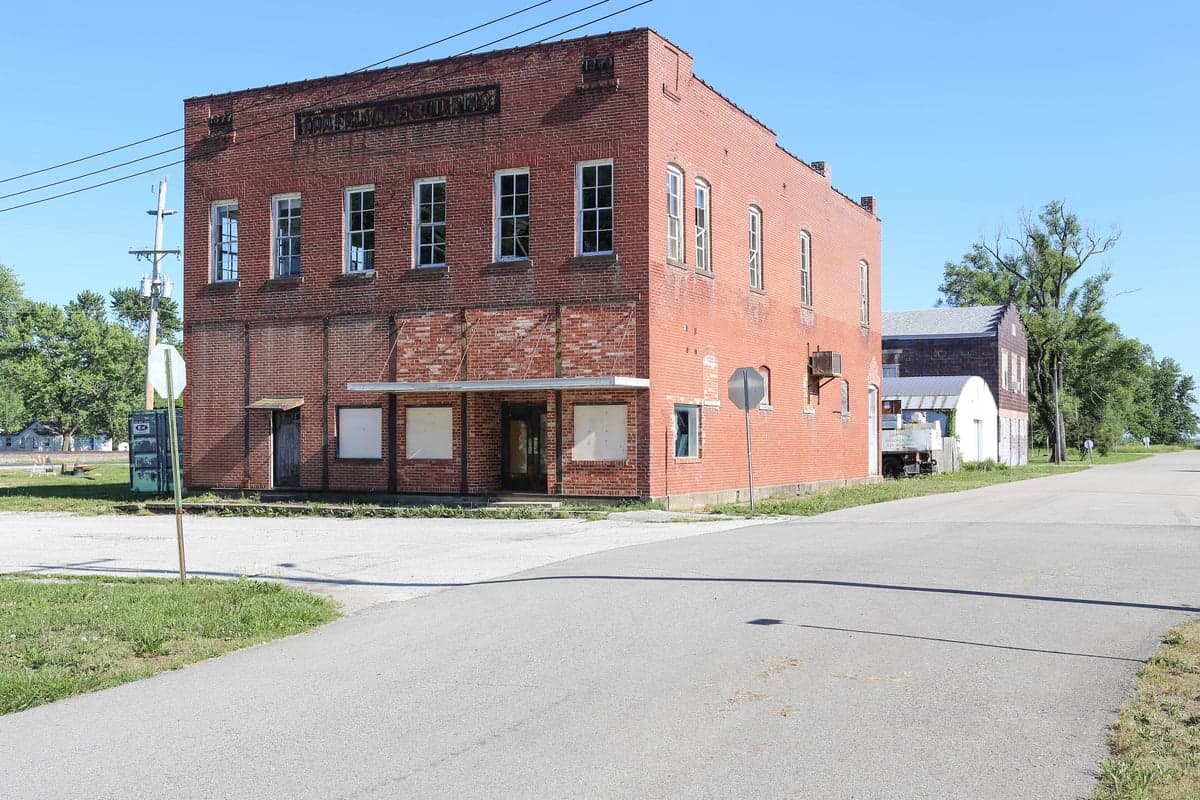
Photo: Wikipedia
Strategic Assessment of Foley, MO
Workable tactical position. Some exposure to population density or targets, but generally defensible in a crisis.
What does the Strategic Assessment tell us?
Our Strategic Assessment grades tactical survivability of an area. Major population centers, military targets, fallout zones, natural disasters, and border exposure all drive risk — lower exposure means a more defensible position in a crisis.
This is heavily inspired by Joel Skousen's Strategic Relocation book. Highly recommended you checkout the book ($)What does this tell us?
Our Strategic Assessment grades tactical survivability of an area. Major population centers, military targets, fallout zones, natural disasters, and border exposure all drive risk — lower exposure means a more defensible position in a crisis.
This is heavily inspired by Joel Skousen's Strategic Relocation book. Highly recommended you checkout the book ($)Strategic Pillars
Key Distances
Regional Safe Places
Below is our recommended "safe zones" in Missouri and the surrounding area based on our strategic heuristics. For most people, it's unrealistic to live in a “safe zone” full-time due to work, family or other personal reasons. They tend to be more rural. However, many of these areas are perfect for second homes and retreat properties that double as a vacation home or even a short-term rental.


Important Note: For informational purposes only. This does not mean nothing bad ever happens in the green zones. Please use common sense. This is based on public data and modeled with AI. We tried to take a conservative approach but mistakes happen. We update this regularly as new information becomes available.
Solar Generator Recommendations
Backup power matters more here than in safer locations. We've picked three solar generators across budgets and capacity tiers — start with the budget unit if you only need a few essentials, or step up if you want to run a fridge and HVAC for days at a time.
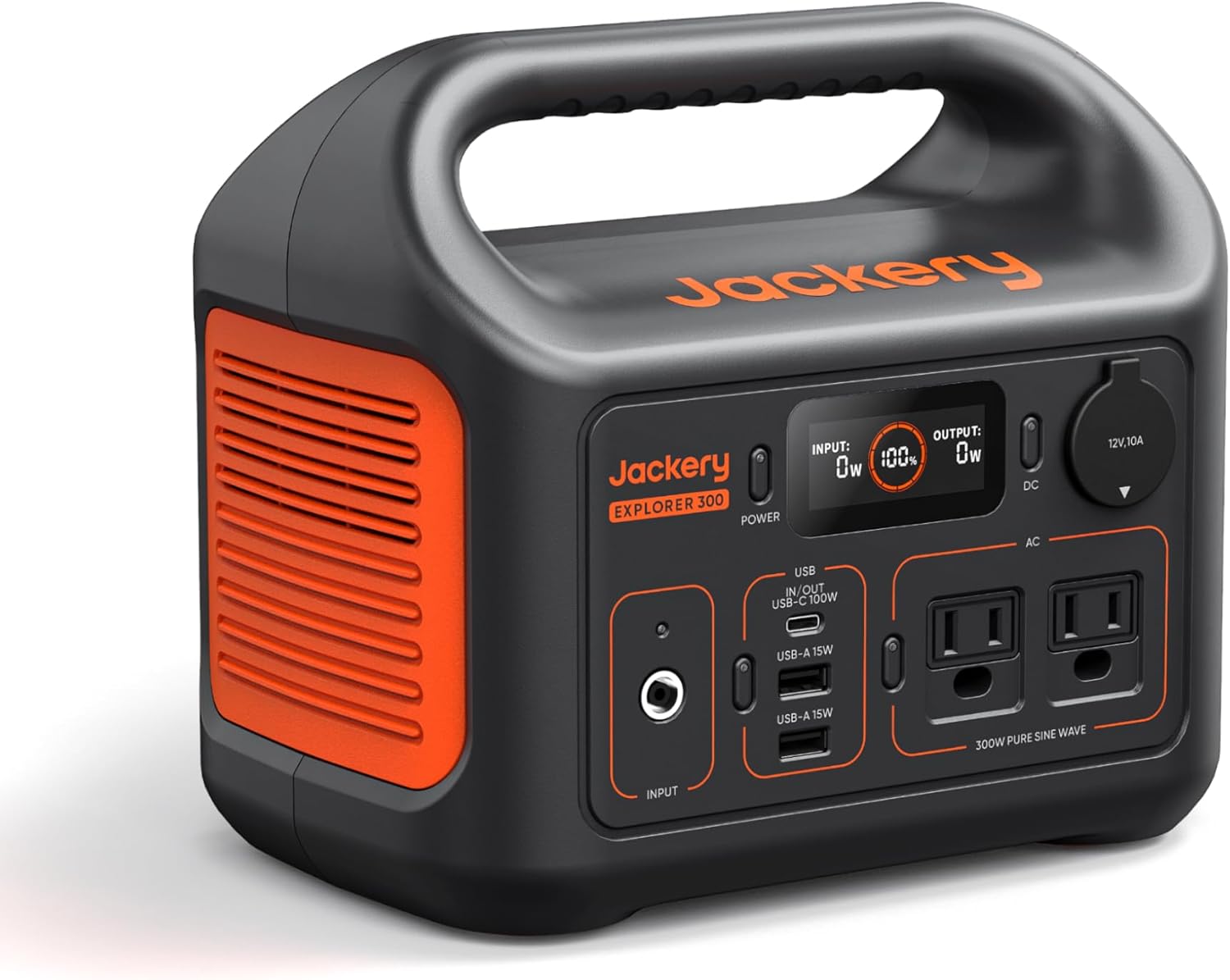
Jackery Portable Power Station Explorer 300
Budget OptionPower on the Go: Weighing only 11 lbs, it's convenient to set up and store with book-sized foldable solar panels

BLUETTI Portable Power Station AC180
Designed for both indoor and outdoor scenarios, AC180 is highly capable as it has a robost capacity and continuous output power.

EF ECOFLOW DELTA Pro Ultra Power Station
Upgraded PickEcoFlow DELTA Pro Ultra is a whole-home energy system designed to grow with your family. Integrated with the Smart Home Panel 2, it scales to meet your evolving energy needs — keeping your home powered, intelligent, and secure through every stage of life.
We earn a commission, at no additional cost to you.
Strategic Assessment Analysis
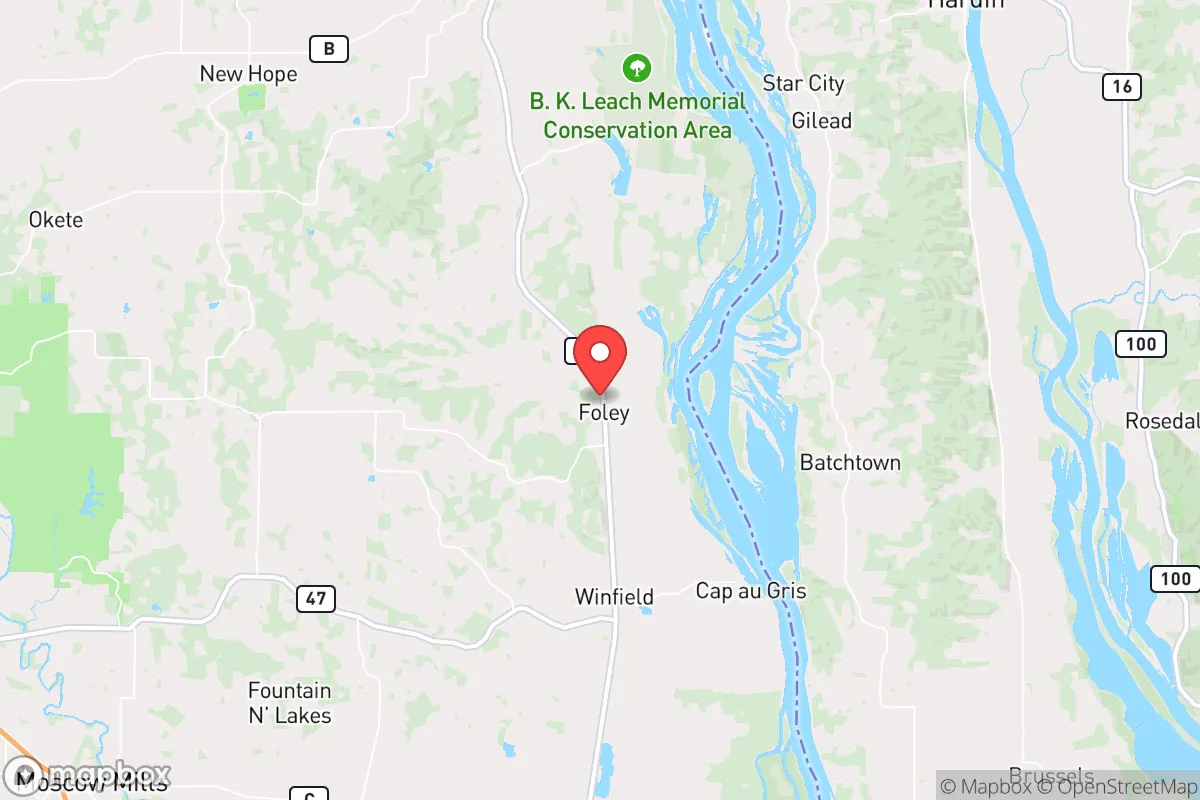
Foley, Missouri, offers a strategic blend of rural seclusion and practical access that appeals to relocators prioritizing disaster readiness and self-sufficiency. Situated in Lincoln County, roughly 50 miles northwest of St. Louis, this unincorporated community sits at a distance from major metropolitan targets while remaining close enough for supply runs or medical care. The area's resilience stems from its position on the Missouri River bluffs, its low population density, and its removal from major interstate corridors—factors that reduce both natural hazard exposure and the likelihood of being caught in a regional crisis cascade.
Geographic position and natural advantages for long-term stability
Foley's location on the western edge of the Mississippi River Valley provides several inherent resilience benefits. The area sits atop limestone bedrock, which offers stable ground for building and reduces risks from soil liquefaction during seismic events—a relevant consideration given the New Madrid Seismic Zone's proximity to the southeast. The Missouri River, while a flood risk in low-lying areas, is less of a threat here due to the elevated terrain; Foley itself sits at roughly 450 feet above sea level, well above the 100-year floodplain. The surrounding landscape is a mix of hardwood forests and agricultural fields, providing natural resources for foraging, timber, and wildlife. The region's temperate climate supports year-round growing seasons for cool-weather crops, and annual rainfall averages around 40 inches, making water catchment viable without extreme drought concerns. For a relocator, this means the land can sustain basic subsistence agriculture without heavy infrastructure investment.
Risk exposure and proximity to fallout-relevant landmarks
The primary risk for Foley residents is not natural disaster but proximity to potential man-made threats. St. Louis, 50 miles southeast, is a major transportation and industrial hub with several facilities that could be targets in a conflict scenario: Lambert International Airport, the nation's largest inland port on the Mississippi, and multiple chemical plants along the river corridor. The nearby Weldon Spring Site, a former uranium processing facility now a Superfund site, is a historical contamination concern rather than an active threat, but its existence underscores the region's industrial legacy. Foley sits outside the immediate blast and fallout zones for most St. Louis targets—a 50-mile distance provides significant protection from initial effects—but prevailing winds from the southwest could carry fallout toward the area in a worst-case event. More immediate risks include tornadoes (Lincoln County averages 2-3 per year) and severe thunderstorms, though the area's low population density means fewer structures are at risk. Flooding along the Cuivre River, which runs near Foley, is a localized concern for properties in the river bottoms, but most homes are on higher ground. The lack of major military installations or nuclear power plants within 30 miles reduces the likelihood of targeted strikes, making Foley a relatively low-priority location in a national security context.
Practical resilience for a relocator: food, water, energy, and defensibility
For someone serious about self-sufficiency, Foley offers a workable baseline. The area's agricultural character means local food sources are accessible: Lincoln County has over 1,200 farms, with a strong presence of livestock, row crops, and orchards. Farmers' markets in nearby Troy and Elsberry operate seasonally, and the region's hunting culture provides protein options (deer, turkey, small game) for those with proper licenses. Water is less straightforward—most homes rely on private wells, which are generally reliable but require electricity for pumping. A hand pump or solar-powered well system is a practical upgrade. The Ozark Aquifer, which underlies the region, provides consistent groundwater at depths of 50-200 feet, but testing for agricultural runoff is advisable. For energy, the grid is served by Ameren Missouri, with above-ground lines that are vulnerable to ice storms and wind. Solar is viable here—the area averages 200 sunny days per year—but battery storage is essential for grid-down scenarios. Wood heating is common, with abundant timber on private and public land (the nearby Cuivre River State Park offers 6,000 acres of forest). Defensibility is a mixed picture: the unincorporated nature of Foley means no police force, relying instead on the Lincoln County Sheriff's Office, which has response times of 15-30 minutes in rural areas. This makes neighborhood watch and personal security measures important. The terrain is gently rolling with good visibility in cleared areas, but dense tree lines provide cover for approach. A perimeter of open fields and maintained sightlines is advisable. The community itself is small (estimated population under 1,000), and social cohesion is high—a factor that can be a force multiplier in crisis situations, as neighbors tend to know each other and share resources.
The overall strategic picture for Foley is one of moderate resilience with manageable trade-offs. It avoids the high-risk zones of major cities and industrial targets while offering enough land and water resources for a semi-self-sufficient lifestyle. The main vulnerabilities are grid dependence, distance from emergency services, and the need for proactive water and energy backups. For a relocator willing to invest in well maintenance, solar infrastructure, and community relationships, Foley provides a defensible, low-profile base that balances isolation with access. It is not a bug-out location for extreme scenarios—it's too close to St. Louis for that—but it is a solid choice for someone looking to build a resilient, long-term homestead within a two-hour drive of urban resources. The area's affordability (median home values around $200,000) and low property taxes (Lincoln County's rate is roughly 0.8%) make it financially accessible for those serious about preparedness without requiring a fortune in upfront investment. For families or individuals seeking a strategic foothold in the Midwest, Foley merits serious consideration.

* Values derived from national, state, county, city and local statistics and may differ in a specific area. Last updated: 2026-11-05T20:25:09.000Z
Narrative content on this page is AI-generated and may contain mistakes. Verify any details that matter before acting on them.
ReloMaps may earn a commission from affiliate links at no extra cost to you.

