Photo: Wikipedia
Demographics of Foley, MO
Affluence Level in Foley, MO
A middle-class area roughly in line with national averages across income, home values, education, and employment.
People of Foley, MO
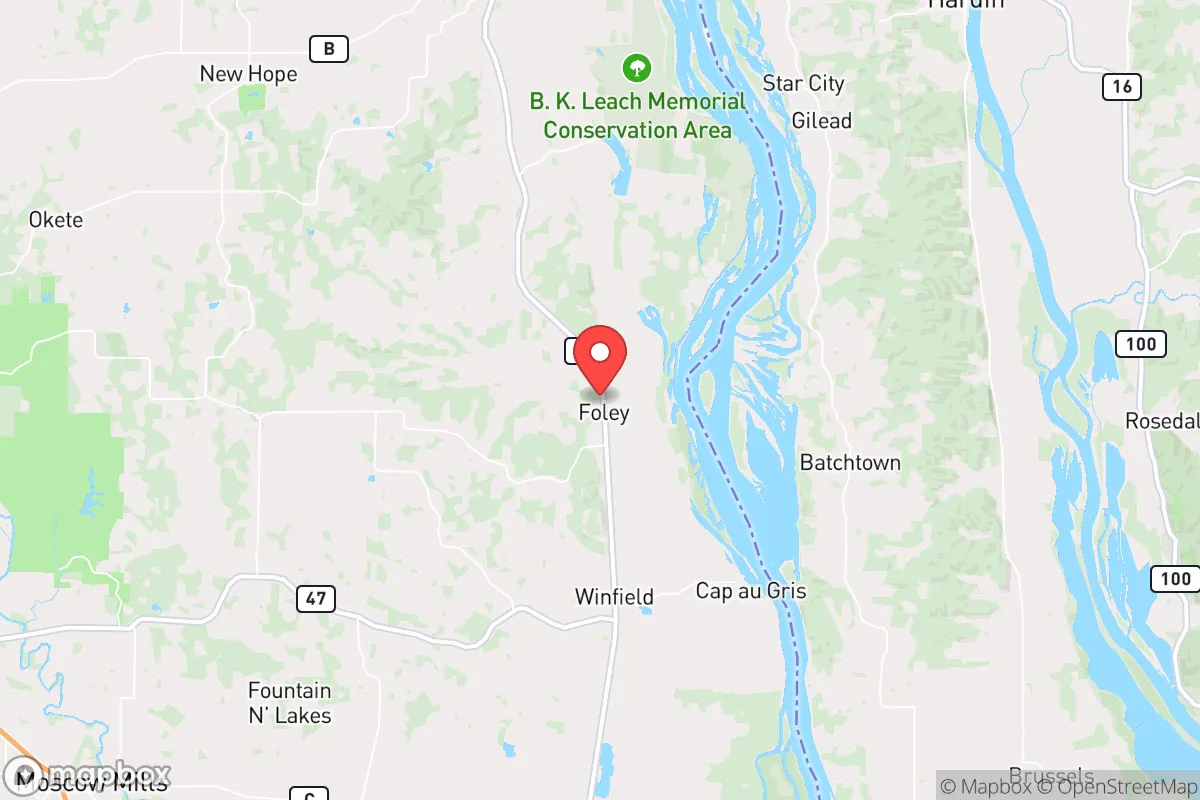
Foley, Missouri, is a small, tight-knit community of 142 residents where nearly everyone shares a common background — 93% of the population identifies as White, with no recorded foreign-born, Hispanic, Black, Asian, or Indian residents. The town’s character is defined by its rural Lincoln County setting, low density, and a population that has remained overwhelmingly homogenous for generations. For those moving in now, Foley offers a quiet, family-oriented environment where neighbors know each other and the pace of life is slow, but the demographic profile suggests little change in cultural diversity on the horizon.
How the city was settled and grew
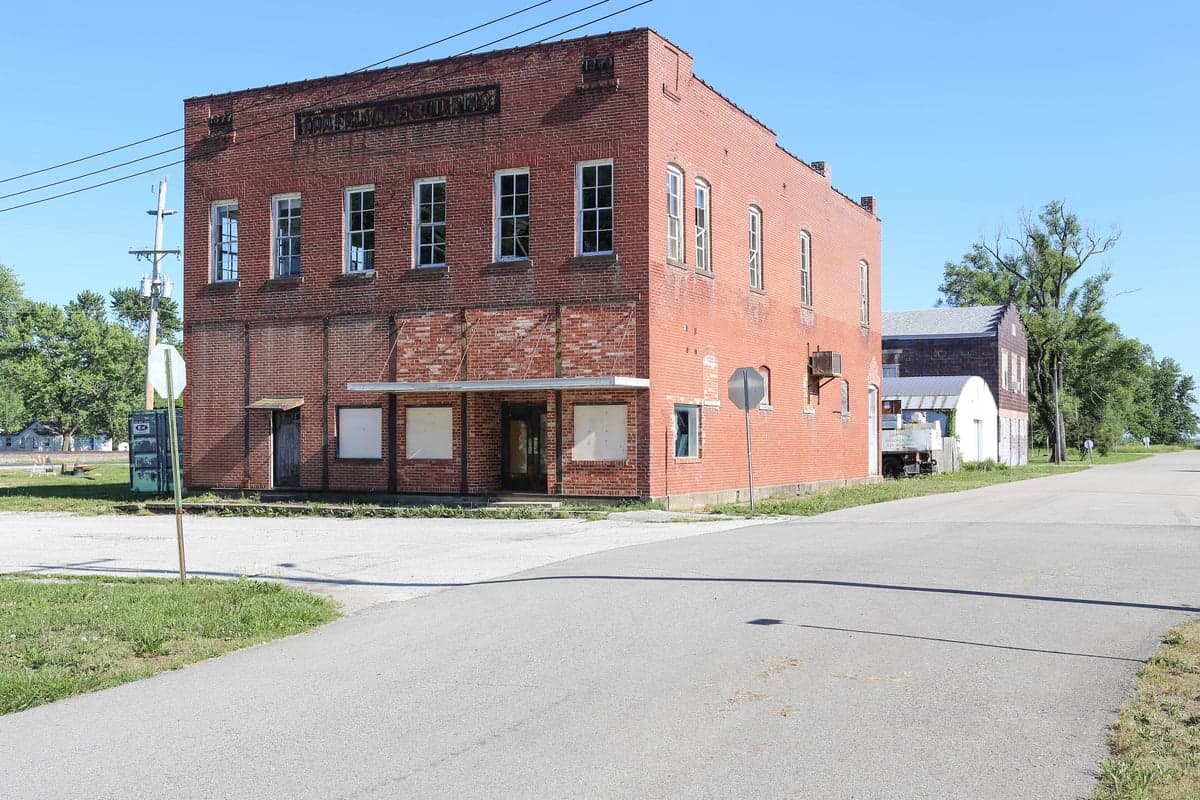
Foley was founded in the late 19th century as a railroad stop along the St. Louis–Kansas City line, drawing its first residents — primarily farmers and railroad workers of German and English descent — who were attracted by cheap land and the promise of agricultural prosperity. The original settlement clustered around the depot and the main crossroads, an area now known as Old Town Foley, where a handful of historic homes and the former general store still stand. By the early 1900s, a second wave of settlers, largely from the same German and Scotch-Irish stock, established homesteads along what is now Foley Bottom Road, a low-lying area near the Cuivre River that offered fertile soil for corn and wheat. The population peaked at around 200 in the 1920s, then stabilized as the railroad’s importance waned and younger generations moved to larger towns like Troy and Elsberry. No significant immigrant or minority groups settled in Foley during this period, as the area’s agricultural economy and remote location offered little draw for outside labor.
Modern era (post-1965)
After the 1965 Immigration and Nationality Act reshaped many American communities, Foley saw virtually no change in its demographic makeup — the foreign-born population remains at 0.0% today, and the town’s White share has stayed above 90% for decades. The post-1965 era instead brought a slow, steady out-migration of young adults seeking jobs in St. Louis (about 50 miles south), leaving an aging population behind. A small number of families moved into Foley Estates, a modest subdivision of single-family homes built in the 1970s along Highway 79, but these newcomers were almost entirely White and from neighboring Lincoln County counties. The town’s racial and ethnic homogeneity persisted through the 1990s and 2000s, with no recorded Black, Hispanic, Asian, or Indian residents in any census since 1980. The lack of rental housing, commercial development, and public transit has kept Foley insulated from the broader demographic shifts seen in St. Louis suburbs like Florissant or St. Charles.
The future
Foley’s population is projected to remain stable or decline slightly over the next 10–20 years, with no major developments or annexations planned. The town’s 0.0% college-educated rate and limited job base mean that younger residents continue to leave for opportunities elsewhere, while retirees and long-term locals age in place. New residential construction is unlikely, as the area lacks the infrastructure — sewers, high-speed internet, and commercial services — to attract large-scale builders. The few homes that do sell are typically purchased by White families from nearby rural areas seeking lower property taxes and a slower pace, reinforcing the existing demographic pattern. Foley’s cultural identity will likely remain rooted in its agricultural and railroad history, with community events centered on the Foley Volunteer Fire Department and the annual Foley Fall Festival. For a mover seeking a racially and culturally homogenous environment with deep local roots, Foley offers exactly that — but those looking for diversity, growth, or urban amenities will find it absent.
Foley is becoming a quieter, older version of itself — a place where the population is shrinking slightly, diversity is nonexistent, and the community’s identity is preserved through tradition rather than change. For someone moving in now, the bottom line is clear: Foley offers stability, safety, and a close-knit rural lifestyle, but no demographic evolution or economic dynamism is on the horizon.

* Values derived from national, state, county, city and local statistics and may differ in a specific area. Last updated: 2026-11-05T20:25:09.000Z
Narrative content on this page is AI-generated and may contain mistakes. Verify any details that matter before acting on them.
ReloMaps may earn a commission from affiliate links at no extra cost to you.

