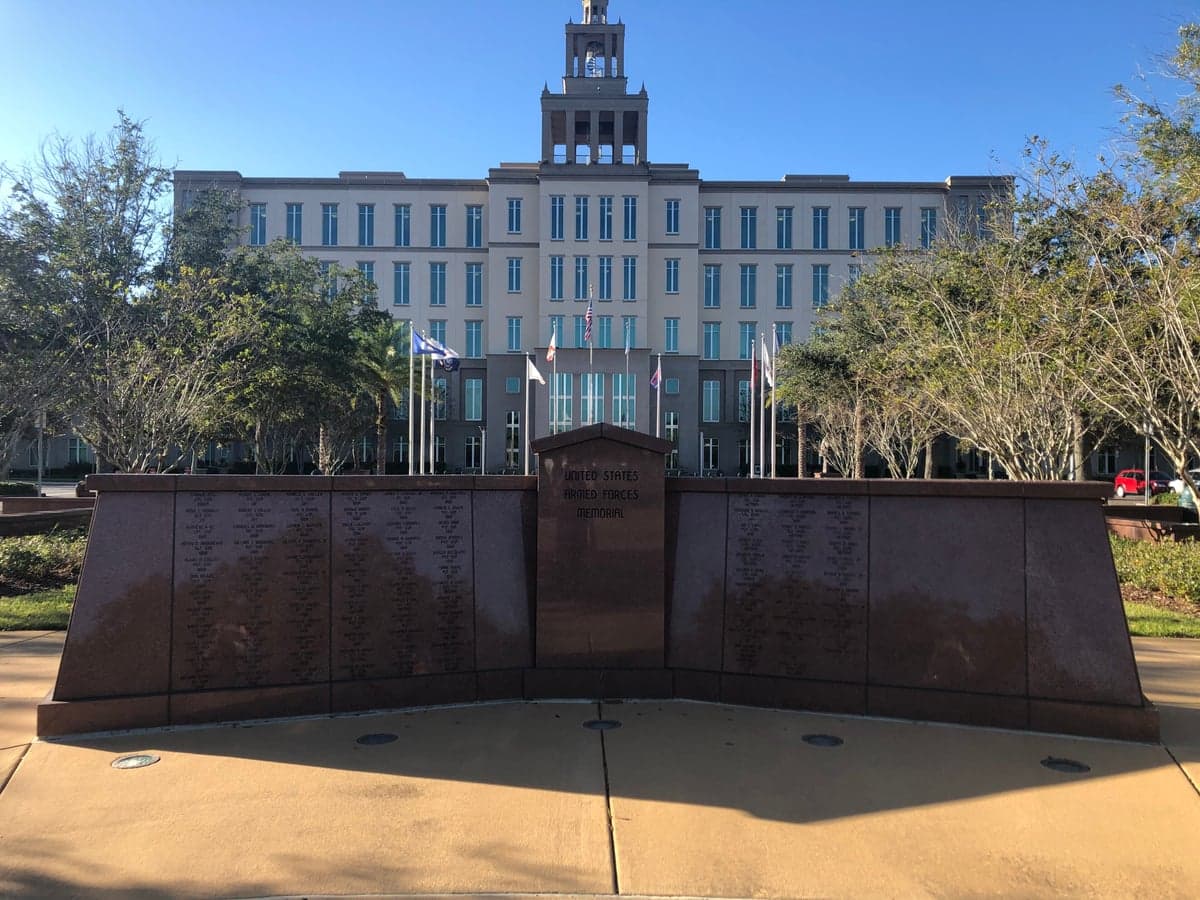
Photo: Wikipedia
Political ClimatePolitical Climate in Seminole County
Showing county-level results — no local-only data available.
Lean and PVI are calculated from this county’s 2020 and 2024 presidential results, Cook-style.
Political rankings in Florida
- Most Conservative Cities in Florida
- Most Liberal Cities in Florida
- Best Liberal-Leaning Towns in the South
- Safest Liberal-Leaning Towns in the South
- Safest Conservative-Leaning Towns in the South
- Safest Liberal-Leaning Towns on the East Coast
- Safest Conservative-Leaning Towns on the East Coast
- Affordable Small Towns for Conservatives
- Most Conservative Counties in Florida
- Most Liberal Counties in Florida
Local Political AnalysisPolitical Analysis of Seminole County
Seminole County, Florida, has long been a bellwether for the state’s shifting political winds, but its current trajectory is unmistakably rightward. The county’s Cook Partisan Voting Index (PVI) of R+5 means it leans about five points more Republican than the national average, a notable shift from its purple status just a decade ago. In the 2024 presidential election, Donald Trump carried Seminole County by roughly 8 points, a stark contrast to 2020 when Joe Biden narrowly won it by less than a single percentage point. This swing isn’t uniform across the county, though—it’s driven by explosive growth in the more conservative northern and eastern suburbs, while the older, denser communities near Orlando hold the line for Democrats.
How it compares
Compared to Florida as a whole, Seminole County is slightly more moderate than the state’s average, but the gap is closing fast. Florida’s statewide PVI is unknown, but the state has trended red in recent cycles—Trump won it by 3.3 points in 2020 and by over 13 points in 2024. Seminole’s R+5 PVI puts it roughly in line with the state’s overall lean, but its internal geography tells a more nuanced story. The city of Sanford, the county seat, remains a Democratic stronghold, with precincts near Historic Downtown and the Goldsboro neighborhood consistently voting 60-70% blue. In contrast, Lake Mary and Heathrow are reliably red, often breaking 55-60% for Republican candidates. The real action is in the swing precincts of Winter Springs and Oviedo, where suburban families and younger professionals have made races increasingly competitive. In 2024, Oviedo’s precincts around the University of Central Florida (UCF) campus actually flipped back to Democrats, while the newer subdivisions along the County Road 419 corridor went heavily for Trump. This patchwork means Seminole is less polarized than Florida’s deep-red rural counties or deep-blue urban cores—it’s a place where local elections often hinge on turnout in a handful of precincts.
What this means for residents
For conservative residents, the R+5 lean means their values are broadly reflected in county governance. The Seminole County Commission has a 4-1 Republican majority, and school board races have become increasingly partisan, with conservative candidates winning seats in 2022 and 2024. Property taxes remain relatively low, and the county has resisted some of the more aggressive growth-management policies seen in neighboring Orange County. For liberal residents, the picture is more mixed. While they can reliably win city council seats in Sanford and parts of Winter Park (which straddles the county line), countywide offices are an uphill climb. However, the presence of UCF and a growing tech sector in Lake Mary has kept the county’s cultural tone more moderate than its voting record suggests—you’ll find as many Harris-Walz yard signs in certain Oviedo neighborhoods as Trump-Pence signs in Heathrow. The practical effect is a kind of live-and-let-live atmosphere: no one’s getting run out of town for their bumper stickers, but the political conversation at a county commission meeting will skew conservative.
Culturally, Seminole County stands apart from Florida’s more extreme political poles. Unlike the hyper-partisan atmosphere of Miami-Dade or the Panhandle, Seminole retains a suburban pragmatism. The county’s large Puerto Rican and Venezuelan communities, concentrated in Sanford and Oviedo, have shifted the Democratic coalition toward more moderate, pro-business stances on issues like housing and infrastructure. Meanwhile, the influx of retirees from the Northeast into places like Longwood and Altamonte Springs has brought a brand of fiscal conservatism that’s less focused on culture wars and more on keeping taxes low and schools functional. The biggest policy distinction you’ll notice is in land use: Seminole County has been more aggressive than Orange County in approving new housing developments, which keeps home prices slightly lower but also fuels the traffic congestion that’s become the county’s defining gripe. Whether you’re left or right, you’ll probably agree on one thing: the I-4 corridor through Sanford needs another lane, and fast.

State Political ClimatePolitical Climate in Florida
State Political AnalysisPolitical Environment in the State
Florida has transformed from a quintessential swing state into a solidly Republican-leaning powerhouse over the past decade, driven by a massive influx of conservative-leaning domestic migrants from the Northeast and Midwest. The state’s overall partisan lean now sits roughly R+3 to R+5 in statewide elections, a dramatic shift from the nail-biter 2000 recount era, and the GOP holds a voter registration advantage of over 500,000 as of 2026. This isn’t just a red wave; it’s a structural realignment, with the state’s growing Hispanic population in places like Miami-Dade and the I-4 corridor moving rightward, while the Panhandle and rural interior remain deeply conservative strongholds.
Urban vs. rural divide
The political map of Florida is a study in stark contrasts. The major urban centers—Miami-Dade County, Broward County (Fort Lauderdale), and Orange County (Orlando)—still lean Democratic, but their margins have shrunk dramatically. Miami-Dade, once a Democratic fortress, flipped to Trump in 2020 and again in 2024, driven by Cuban-American and Venezuelan voters who prioritize anti-socialism rhetoric and economic freedom. Meanwhile, the I-4 corridor counties like Hillsborough (Tampa) and Pinellas (St. Petersburg) are now true battlegrounds, often deciding statewide races. The rural Panhandle, from Pensacola to Tallahassee’s outskirts, and the interior counties like Sumter (The Villages) are deeply red, with Republican margins often exceeding 30 points. The suburbs of Jacksonville and Tampa are also trending right, while college towns like Gainesville (Alachua County) remain liberal islands. The practical takeaway: a relocator moving to Naples or Sarasota will find a deeply conservative environment, while someone settling in St. Petersburg or downtown Orlando will encounter a more mixed, culturally liberal atmosphere.
Policy environment
Florida’s policy environment is defined by a low-tax, low-regulation posture that appeals directly to conservative relocators. There is no state income tax, a major draw for high-earners and retirees, and property taxes are capped by the Save Our Homes amendment, which limits annual increases on homesteaded properties. The state’s regulatory climate is business-friendly, with a right-to-work law and minimal union influence. On education, Florida was a national leader in school choice, with the Family Empowerment Scholarship program and the expansion of vouchers to nearly all income levels under Governor Ron DeSantis. Healthcare policy leans toward market-based solutions, with a relatively low Medicaid enrollment rate and a strong push for telehealth deregulation. Election laws have been tightened: drop boxes are restricted, voter ID requirements are strict, and the state purges non-citizens from rolls, a policy that has drawn both praise for security and criticism for potential disenfranchisement. For a conservative relocator, this environment feels like a deliberate alternative to high-tax, high-regulation states like New York or California.
Recent policy direction
The last five years have seen a dramatic acceleration of conservative policy under Governor Ron DeSantis and a supermajority Republican legislature. On gun rights, Florida enacted permitless carry (constitutional carry) in 2023, allowing residents to carry concealed firearms without a permit, while also raising the age to purchase rifles to 21 after the Parkland shooting—a nuanced position that balances Second Amendment advocacy with school safety concerns. Parental rights in education were codified via the Parental Rights in Education Act (often called the “Don’t Say Gay” law), which restricts classroom instruction on sexual orientation and gender identity in early grades. On speech and privacy, the state passed the Stop WOKE Act, which limits diversity training and race-based discussions in workplaces and schools, though parts were struck down in court. Medical and bodily autonomy saw a major shift with the Heartbeat Protection Act (2023), banning abortions after six weeks, with limited exceptions. Property rights remain strong, with no statewide rent control and a robust homestead exemption. On voting, the state has implemented stricter signature verification and reduced mail-in ballot request windows. These policies signal a state that is actively shaping a conservative legal and cultural environment, which is a key consideration for anyone moving here.
Civil unrest & political movements
Florida has seen its share of political flashpoints, but large-scale civil unrest has been relatively contained compared to states like Oregon or Minnesota. The most visible movements are organized and often partisan. On the right, the state has been a hub for the “Free Florida” movement, with groups like Moms for Liberty gaining significant influence in school board elections, particularly in suburban counties like Pasco and Lee. Immigration politics are front and center: Governor DeSantis made national headlines by flying migrants to Martha’s Vineyard, and the state passed the tough SB 1718 law in 2023, which mandates E-Verify for employers and bans local governments from providing sanctuary policies. This has created a palpable tension in agricultural areas like Immokalee and the Homestead region, where immigrant labor is essential. On the left, protests have focused on abortion rights and LGBTQ+ issues, with large rallies in Tallahassee and Miami Beach. Election integrity remains a hot-button issue, with the state’s Office of Election Crimes and Security actively investigating voter fraud cases, a move that has energized conservatives and alarmed voting rights advocates. A new resident will notice that political bumper stickers, yard signs, and local news coverage are more polarized than in many other states.
Projection
Over the next 5-10 years, Florida is likely to become even more conservative, but with important caveats. The in-migration from blue states shows no signs of slowing, and these new residents tend to be older, wealthier, and more conservative than the national average. The Hispanic vote, particularly in Miami-Dade, is expected to continue its rightward shift, potentially making the state a safe Republican stronghold for a generation. However, the growing population of younger, more diverse residents in the I-4 corridor and the Tampa Bay area could create a countervailing force, especially on issues like abortion and climate change. The state’s housing affordability crisis, driven by soaring insurance costs and property prices, could also reshape the electorate if it pushes out the very retirees and families who have driven the red shift. A relocator moving in now should expect a state that is firmly Republican-led, with a policy environment that prioritizes low taxes, school choice, and individual liberties as defined by the conservative movement, but with ongoing cultural battles in the suburbs and cities.
For a new resident, the bottom line is that Florida offers a political environment that is actively conservative and increasingly stable in its lean. If you are a conservative, you will find a state government that shares your values on taxes, education, and personal freedom, and a culture that rewards self-reliance. If you are a liberal, you will find vibrant urban enclaves in Miami, Orlando, and St. Petersburg where your views are represented, but you should expect state-level policies that may conflict with your preferences on issues like abortion, gun rights, and education. The key is to choose your community carefully—the political reality of Florida is not monolithic, and the experience of living in Key West versus Ocala is vastly different. What unites the state is a sense of rapid change, economic opportunity, and a political trajectory that is being watched closely by the rest of the country.
* Values derived from national, state, county, city and local statistics and may differ in a specific area. Last updated: 2026-10-23T18:43:48.000Z
Narrative content on this page is AI-generated and may contain mistakes. Verify any details that matter before acting on them.
ReloMaps may earn a commission from affiliate links at no extra cost to you.

