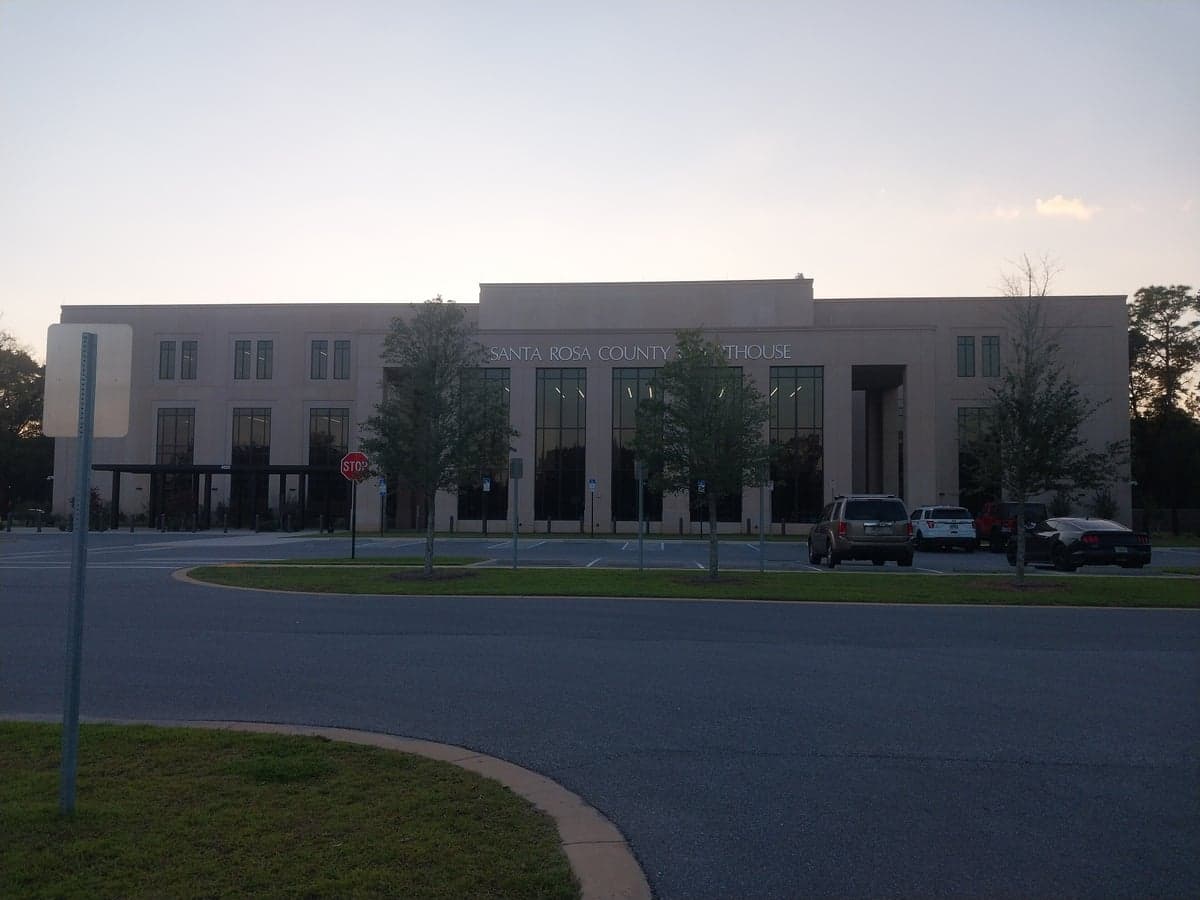
Photo: Wikipedia
Strategic Assessment of Santa Rosa County
Meaningful friction. Expect exposure to either population pressure, blast zones, or natural disaster risk. Consider buying a retreat property.
What does the Strategic Assessment tell us?
Our Strategic Assessment grades tactical survivability of an area. Major population centers, military targets, fallout zones, natural disasters, and border exposure all drive risk — lower exposure means a more defensible position in a crisis.
This is heavily inspired by Joel Skousen's Strategic Relocation book. Highly recommended you checkout the book ($)What does this tell us?
Our Strategic Assessment grades tactical survivability of an area. Major population centers, military targets, fallout zones, natural disasters, and border exposure all drive risk — lower exposure means a more defensible position in a crisis.
This is heavily inspired by Joel Skousen's Strategic Relocation book. Highly recommended you checkout the book ($)Strategic Pillars
Key Distances
Strategic Assessment Analysis
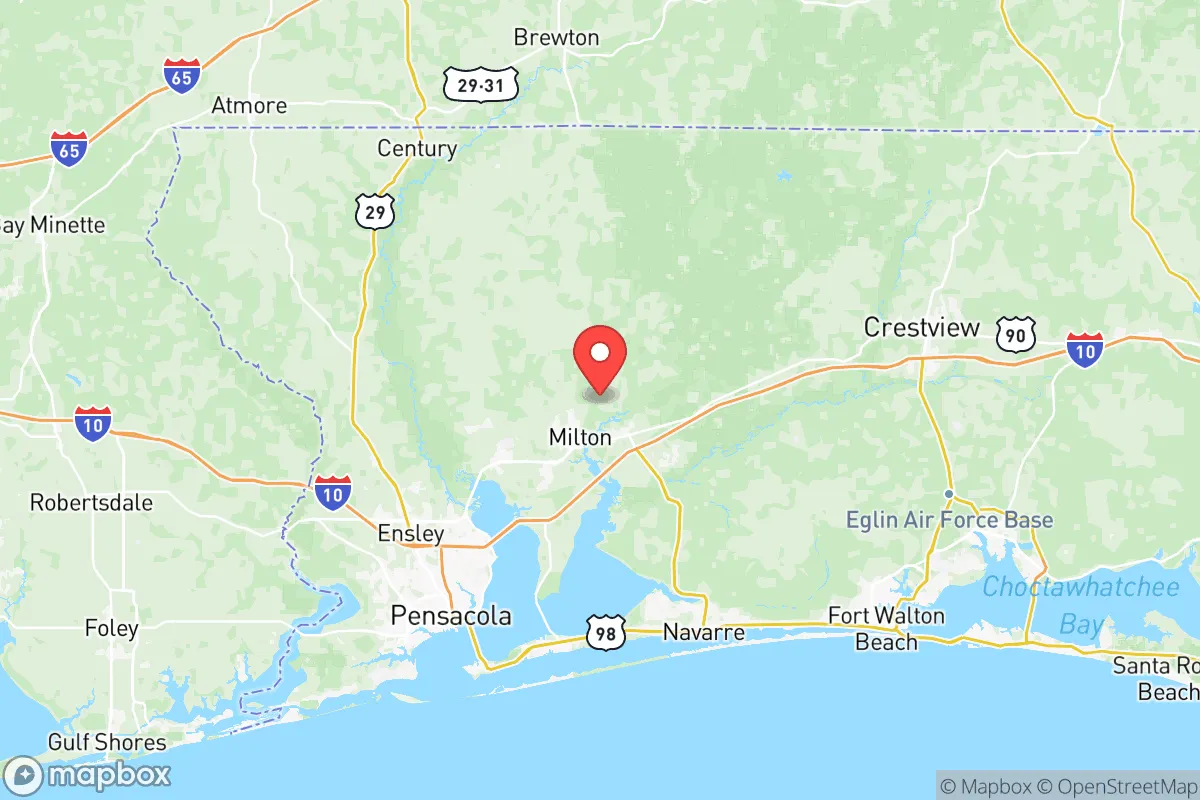
Santa Rosa County, Florida, offers a strategic balance of remoteness from major metropolitan vulnerabilities while retaining access to critical infrastructure, making it a compelling option for relocation-minded individuals prioritizing resilience. Positioned in the Florida Panhandle between the Blackwater River State Forest and the Gulf of Mexico, the county avoids the density-driven risks of cities like Miami or Tampa while maintaining proximity to Pensacola's naval aviation complex and the Port of Pensacola. Its location along Interstate 10 provides a direct east-west evacuation and supply corridor, while the inland communities of Milton and Jay offer deeper buffer zones from coastal storm surge and potential fallout from maritime targets.
Geographic position and natural advantages for self-sufficiency
The county's geography is defined by the Blackwater River and the vast, 200,000-acre Blackwater River State Forest, which provides a natural barrier between the more populated coastal strip and the inland rural areas. This forested expanse offers significant advantages for those seeking defensible space and resource independence: it supplies timber for fuel and construction, abundant freshwater sources, and game for hunting. The inland towns of Jay and Munson sit on higher ground, with Jay located roughly 30 miles from the Gulf, reducing exposure to hurricane storm surge and tsunami risks. The county's position along the Florida-Alabama line also places it within a day's drive of multiple climate zones, allowing for strategic relocation if necessary. The presence of Eglin Air Force Base to the east and NAS Pensacola to the west creates a military buffer zone that deters large-scale civilian development and preserves open space, though it also introduces potential target considerations.
Risks, exposures, and proximity to fallout-relevant landmarks
While Santa Rosa County avoids the worst of Florida's hurricane alley, it remains vulnerable to tropical systems, with the 1995 Hurricane Opal and 2004 Hurricane Ivan causing significant damage along the coast. The county's primary risk exposure comes from its proximity to Pensacola and the Port of Pensacola, a deepwater port handling petroleum products and military cargo that could be a secondary target in a conflict scenario. The Pensacola Naval Air Station, home to the Blue Angels and significant naval aviation training, is a high-value military asset located just across Escambia Bay, roughly 15 miles from Santa Rosa's coastal communities. The Interstate 10 bridge complex over Escambia Bay represents a critical chokepoint; its destruction would sever the county's primary east-west ground link. Inland areas like Milton and Jay are farther from these coastal targets, but the county's industrial facilities — including the Milton oil terminal and chemical storage along the Blackwater River — present localized hazards. The county's position downwind of the Gulf means that fallout from a nuclear event at the port or NAS Pensacola would likely drift eastward, affecting coastal Santa Rosa more than inland communities.
Practical resilience for a relocator: food, water, energy, and defensibility
Santa Rosa County offers strong practical resilience for those willing to invest in preparation. The Blackwater River State Forest provides a reliable freshwater source via the Blackwater River and its tributaries, with year-round flow and minimal industrial pollution upstream. The county's agricultural sector, concentrated around Jay and Munson, produces peanuts, cotton, and livestock, with local farmers' markets in Milton and Navarre offering direct food sources. For energy, the county is served by Gulf Power (now Florida Power & Light), with the Lansing Smith Generating Plant near Lynn Haven providing natural gas-fired electricity, though this facility is a potential grid vulnerability. Solar potential is high, with over 230 sunny days per year, and well water is accessible in rural areas at depths of 50-150 feet. Defensibility is strong in the forested interior: the Blackwater River State Forest's dense pine and hardwood cover provides natural concealment, while the limited road network — primarily State Road 87 and County Road 191 — creates natural chokepoints for monitoring access. The county's low population density (roughly 180 people per square mile overall, with much lower density in the north) reduces competition for resources during a crisis. However, the county lacks a major medical center; the nearest Level I trauma center is in Pensacola, which could be compromised in a disaster.
Overall, Santa Rosa County presents a viable strategic option for the resilience-minded relocator, particularly those willing to settle inland rather than along the coast. The combination of military buffer zones, forested interior, and access to freshwater and agricultural land creates a foundation for self-sufficiency that is rare in coastal Florida. The primary trade-offs are proximity to Pensacola's target-rich environment and the vulnerability of the I-10 corridor, which could isolate the county in a major event. For a family or individual willing to establish a homestead in the Jay or Munson areas, with a well, solar array, and food storage, Santa Rosa County offers a defensible position with reasonable access to supply routes and multiple climate escape options. The key is to avoid the coastal strip and the immediate vicinity of the Milton industrial corridor, focusing instead on the forested interior where natural advantages are strongest.

* Values derived from national, state, county, city and local statistics and may differ in a specific area. Last updated: 2026-11-17T22:31:04.000Z
Narrative content on this page is AI-generated and may contain mistakes. Verify any details that matter before acting on them.
ReloMaps may earn a commission from affiliate links at no extra cost to you.

