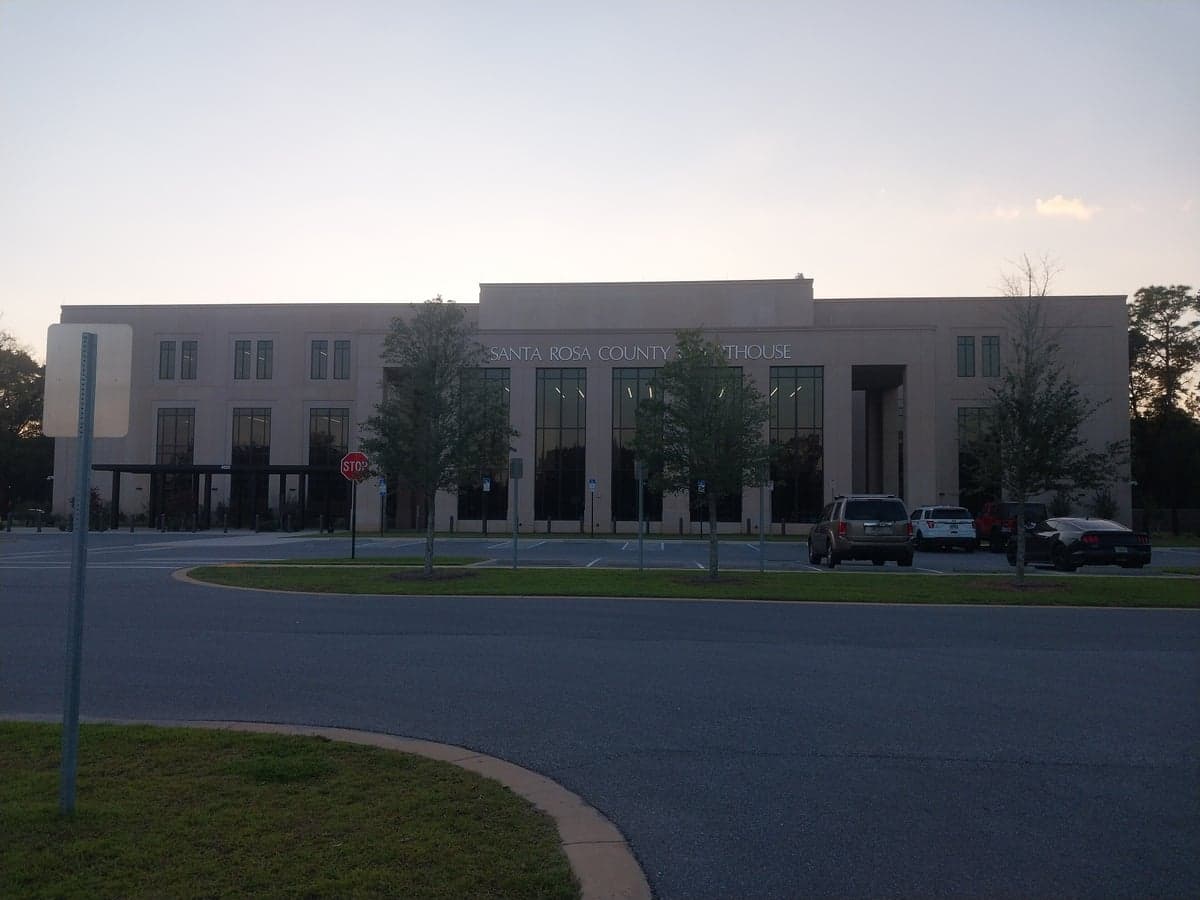
Photo: Wikipedia
Personal Sovereignty in Santa Rosa County
Viable for self-reliance. Generally workable, though some barriers may limit total independence.
What does Personal Sovereignty tell us?
Personal Sovereignty measures your capacity for self-reliance and independence with minimal government friction. Higher scores mean fewer barriers between you and the way you want to live... but it assumes you have the space you need and good neighbors.
What does this tell us?
Personal Sovereignty measures your capacity for self-reliance and independence with minimal government friction. Higher scores mean fewer barriers between you and the way you want to live... but it assumes you have the space you need and good neighbors.
State Policy
Energy independence: Importer (12% of energy produced in-state)
Personal Liberty
Homesteading

Personal Liberty Analysis
Santa Rosa County, Florida, offers one of the strongest personal sovereignty environments in the state, combining Florida’s lack of a state income tax with a deeply ingrained culture of self-reliance and limited government interference. The county’s regulatory posture is notably light-touch compared to neighboring Escambia County or the urban centers of South Florida, with local officials consistently prioritizing property rights, gun access, and parental autonomy. For individuals and families who value making their own decisions without excessive bureaucratic hurdles, the area presents a compelling balance of rural freedom and access to Gulf Coast amenities.
Tax burden and regulatory posture in Santa Rosa County
Florida’s absence of a state income tax is the foundation of Santa Rosa County’s low-tax environment, but the county itself keeps property taxes moderate. The combined millage rate for unincorporated areas typically falls between 4.5 and 5.5 mills, significantly lower than in Escambia County or the city of Pensacola. Property taxes in incorporated towns like Milton and Gulf Breeze run slightly higher due to municipal services, but still remain below the state average. The regulatory climate is business-friendly: the county has no local minimum wage ordinance, no rent control, and a streamlined permitting process for single-family homes. In unincorporated areas, building permits are processed within 30 days for standard projects, and the county does not impose impact fees on residential construction — a major advantage over nearby Okaloosa County, which charges thousands per new home. Zoning is minimal outside city limits, with most rural land zoned for agricultural or low-density residential use, allowing property owners to run home-based businesses, keep livestock, or build accessory structures without special exceptions.
Self-defense and gun law specifics in Santa Rosa County
Santa Rosa County is a strong Second Amendment area, fully aligned with Florida’s permissive firearm laws. The county is a constitutional carry jurisdiction as of July 2023, meaning law-abiding residents may carry a concealed firearm without a permit. Open carry is restricted under Florida law, but the county’s sheriff’s office has publicly stated it will not enforce unconstitutional restrictions. The sheriff’s office issues concealed weapon licenses for reciprocity purposes within 30 days, and the county has no local ordinances restricting magazine capacity, ammunition types, or firearm storage. Gun ranges are plentiful: the Santa Rosa Shooting Center near Milton offers public access, and private clubs like the Escambia River Gun Club provide memberships. Stand-your-ground laws apply statewide, and the county’s judicial circuit has a reputation for deferring to self-defense claims in justified shootings. For residents in rural areas like Jay or Munson, discharging firearms on private property is generally unrestricted, provided the property is at least one acre and the discharge does not endanger others — a flexibility not available in more densely populated Gulf Breeze.
Self-reliance and homesteading viability across Santa Rosa County
Homesteading and off-grid living are genuinely viable in Santa Rosa County, particularly in the northern and eastern parts of the county. Minimum lot sizes in unincorporated areas start at one acre for well-and-septic properties, with many parcels in the Jay and Berrydale areas available in 5- to 40-acre tracts. The county does not mandate connection to municipal water or sewer in rural zones, so private wells and septic systems are standard. Rainwater collection is legal and unrestricted, and solar panel installation requires no special permit beyond standard electrical inspection. The county’s zoning code explicitly allows agricultural uses — including livestock, beekeeping, and crop farming — on parcels of one acre or more without a conditional use permit. In the Harold and Allentown communities, residents commonly keep chickens, goats, and even small cattle herds on 2–5 acres. Off-grid power is feasible: the county has no net metering requirement, but it also does not prohibit battery storage or generator use. The only notable restriction is that manufactured homes must meet HUD standards, and tiny houses on wheels are treated as RVs, requiring placement in licensed parks unless the property is zoned for campground use. For those seeking maximum autonomy, the unincorporated areas north of I-10 offer the fewest restrictions and the lowest property taxes.
Personal liberties in Santa Rosa County: parental rights, medical autonomy, and property
Santa Rosa County is a stronghold for parental rights and medical freedom. The school board has adopted policies that require parental notification for any health services provided to minors, and the county does not participate in state vaccine mandates for school attendance beyond the standard requirements. Homeschooling is popular, with over 1,200 registered homeschool students in the county as of 2025, and the district offers a supportive environment for part-time enrollment in extracurriculars. Medical autonomy is reinforced by Florida’s broad conscientious objection laws, which allow healthcare providers and insurers to decline participation in procedures they object to, and the county has no local mandates regarding COVID-19 vaccination or masking. Property rights are robust: the county does not enforce HOA-style restrictions on unincorporated land, and there is no countywide noise ordinance that restricts agricultural equipment or recreational vehicle use. In Gulf Breeze and Oriole Beach, HOAs are common in subdivisions, but the county’s unincorporated areas remain largely free of such covenants. Speech is protected under Florida’s preemption laws, which prohibit local governments from regulating political speech or signage beyond state standards.
Overall, Santa Rosa County ranks among the top 10 Florida counties for personal sovereignty, offering a rare combination of low taxes, minimal regulation, strong gun rights, and genuine homesteading feasibility. The county’s northern and eastern rural areas — particularly around Jay, Berrydale, and Harold — provide the highest degree of autonomy, while the southern beach communities like Gulf Breeze and Navarre impose slightly more restrictions through municipal codes and HOAs. For a relocation-minded individual or family seeking maximum personal freedom within a state that already prioritizes liberty, Santa Rosa County delivers a lighter regulatory touch than most of the Florida Panhandle, with a culture that actively supports self-reliance over government dependency.

* Values derived from national, state, county, city and local statistics and may differ in a specific area. Last updated: 2026-11-17T22:31:04.000Z
Narrative content on this page is AI-generated and may contain mistakes. Verify any details that matter before acting on them.
ReloMaps may earn a commission from affiliate links at no extra cost to you.

