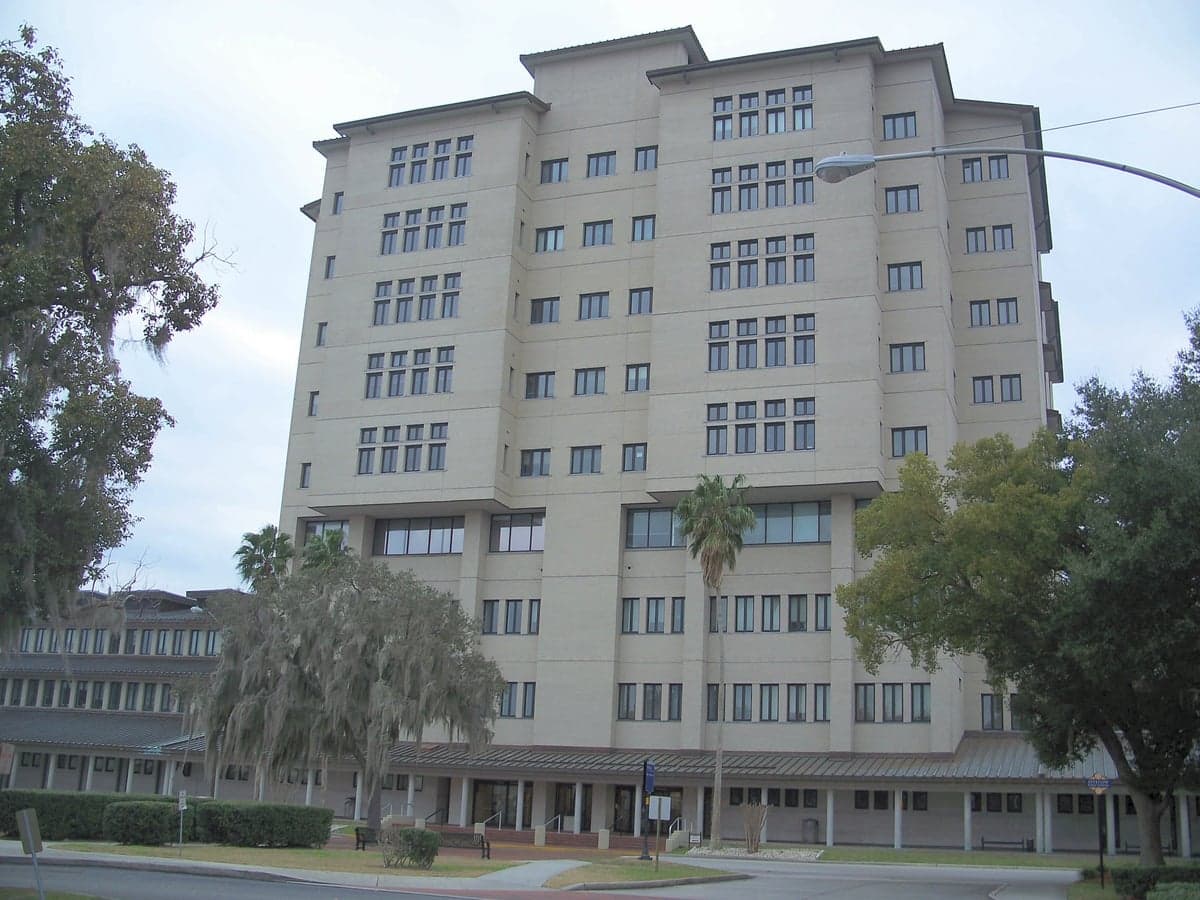
Photo: Wikipedia
Political ClimatePolitical Climate in Polk County
Showing district-level results — no local-only data available.
Local Political AnalysisPolitical Analysis of Polk County
Polk County, Florida, is a reliably Republican stronghold with a Cook Partisan Voting Index (PVI) of R+14, making it significantly more conservative than the state of Florida as a whole, which sits at R+5. This isn't a new development; the county has been trending red for decades, but the shift has accelerated in recent years as new residents from more liberal parts of the country have largely settled in the already-conservative suburban and exurban fringes. The result is a political landscape that feels both deeply entrenched and subtly evolving, especially when you zoom in on specific towns.
How it compares
The R+14 rating puts Polk County in a different political universe than the statewide average. While Florida as a whole is a competitive, lean-Republican state that can swing in close elections, Polk County is a safe bet for GOP candidates in nearly every race. This isn't just a matter of margins; it's about the texture of daily political life. In the state at large, you'll find a mix of deep-blue urban cores (Miami, Orlando, Tampa) and deep-red rural areas. Polk County is more uniformly conservative, but with notable internal variation. The city of Lakeland, the county's largest, is the most politically diverse area. Its historic downtown and neighborhoods near Florida Southern College tend to lean blue, with precincts around the city center often voting Democratic in local and national elections. In contrast, the rapidly growing suburbs of Winter Haven and Haines City are solidly red, driven by a wave of retirees and families from the Midwest and Northeast who moved specifically for a more conservative environment. Further east, Lake Wales and Frostproof are deeply conservative, with a strong agricultural and ranching base. The swing precincts, if you can call them that, are in the unincorporated areas between Lakeland and Tampa, where new housing developments are attracting a younger, more moderate demographic that can sometimes tip a local race.
What this means for residents
For conservative residents, Polk County feels like home. Local government, school board decisions, and county commission meetings generally reflect a pro-business, limited-government, and culturally conservative outlook. You'll find strong support for Second Amendment rights, lower property taxes, and a general skepticism of state-level mandates from Tallahassee. For liberal residents, the reality is more nuanced. While you won't face outright hostility, you will be in a clear minority. Local Democratic clubs and progressive groups are active, especially in Lakeland, but their influence on county-wide policy is limited. The practical effect is that liberal residents often find their political energy channeled into state-level races or national issues, rather than local governance. The county's conservative lean also shapes policy priorities: there is a strong emphasis on law enforcement funding, limited public transit expansion, and a cautious approach to growth management that often favors developers over environmental regulations.
Cultural and policy distinctions
One of the most telling cultural distinctions is the county's relationship with the state government. Polk County often positions itself as a bulwark against what it perceives as overreach from Tallahassee, particularly on issues like growth management and environmental regulation. The county's agricultural heritage—citrus, cattle, and phosphate mining—gives it a distinct identity that is more "Old Florida" than the coastal, tourist-driven economies of the state. This translates into a political culture that values self-reliance and local control, even when it conflicts with state-level Republican priorities. For example, the county has been a vocal opponent of state efforts to preempt local zoning and land-use decisions, a stance that unites both conservative property-rights advocates and liberal environmentalists in a rare moment of agreement. The trajectory is clear: Polk County will remain a Republican stronghold for the foreseeable future, but the internal dynamics of its growing cities and suburbs will continue to create pockets of political diversity that make it a fascinating place to watch.

State Political ClimatePolitical Climate in Florida
State Political AnalysisPolitical Environment in the State
Florida is a solidly Republican state with a Cook PVI of R+5, but calling it a simple red state misses the real story. Over the past 20 years, Florida has shifted from a classic swing state—where elections were decided by a few thousand votes—to a reliably right-leaning powerhouse, driven by a massive influx of conservative-leaning transplants from the Northeast and Midwest, plus a growing Hispanic electorate in places like Miami-Dade that has moved rightward. The dominant coalition is a mix of suburban families, rural voters, and a significant bloc of Cuban-American and Venezuelan-American voters in South Florida who prioritize anti-socialist and pro-business policies. Democrats still hold sway in dense urban cores and among younger voters, but the statewide trajectory has been unmistakably Republican since about 2010.
Urban vs. rural divide
The political map of Florida is a textbook study in geographic polarization. The major Democratic strongholds are the urban cores of Miami-Dade County (though it's trending redder), Orlando (Orange County), Tampa (Hillsborough County), and Jacksonville (Duval County), plus college towns like Gainesville (Alachua County) and Tallahassee (Leon County). These areas are dense, diverse, and younger, and they reliably deliver Democratic margins. But the real action is in the suburbs and exurbs. Places like Pasco County (north of Tampa), St. Johns County (south of Jacksonville), and Collier County (Naples) have become deep red, fueled by retirees and families seeking lower taxes and conservative governance. The I-4 corridor from Tampa to Daytona Beach remains the key battleground, but even there, once-purple counties like Volusia and Polk have shifted right. Rural North Florida—places like Liberty County and Suwannee County—vote 80%+ Republican, while the Panhandle is as conservative as any part of the Deep South.
Policy environment
Florida’s policy environment is defined by a low-tax, low-regulation posture that appeals strongly to conservative relocators. There is no state income tax, which is a huge draw. Property taxes are moderate, and the state has a homestead exemption that caps annual assessment increases at 3% for primary residences. The regulatory climate is business-friendly, with minimal red tape for new construction and professional licensing. Education policy has been a flashpoint: Governor Ron DeSantis pushed through the Parental Rights in Education Act (the "Don't Say Gay" law), expanded school choice via vouchers and charter schools, and banned Critical Race Theory and DEI programs in public universities. Healthcare policy is mixed—Florida did not expand Medicaid under the ACA, and the state has a competitive private insurance market, but rural hospital closures are a concern. Election laws have been tightened: there are strict voter ID requirements, limits on drop boxes, and a ban on ballot harvesting. The state also has a "stand your ground" self-defense law and constitutional carry (permitless carry) for firearms, which took effect in 2023.
Recent policy direction
Over the past five years, Florida has moved aggressively to the right on a broad set of issues. On gun and self-defense law, the state passed permitless carry in 2023, allowing any adult who can legally own a firearm to carry it concealed without a license. On parental and education rights, the 2022 Parental Rights in Education Act restricts classroom instruction on sexual orientation and gender identity through third grade, and subsequent laws have banned transgender girls from female sports and restricted gender-affirming care for minors. On speech and privacy, the state passed the "Stop WOKE Act" in 2022, which limits workplace and classroom discussions about race and gender, though parts have been blocked by courts. On medical and bodily autonomy, Florida enacted a 6-week abortion ban in 2023 (with exceptions for rape, incest, and life of the mother), replacing a previous 15-week ban. On property rights, the state has strong protections against eminent domain abuse and no statewide rent control. On taxation, the state has no income tax and has periodically cut corporate taxes and the communications services tax. On voting and ballot access, the 2021 SB 90 law added restrictions on mail-in voting, drop boxes, and third-party registration drives, which were upheld by courts. The overall direction is toward maximum individual liberty in economic and self-defense matters, combined with significant government intervention in social and educational issues.
Civil unrest & political movements
Florida has seen its share of political activism, but large-scale civil unrest has been relatively contained compared to some states. The Black Lives Matter protests in 2020 were significant in Miami, Orlando, and Tampa, but did not reach the intensity of Portland or Minneapolis. Immigration politics are a constant flashpoint, especially in South Florida. Governor DeSantis made national headlines by flying migrants to Martha's Vineyard in 2022, and the state passed the SB 1718 law in 2023, which requires hospitals to ask about immigration status, bans local governments from providing ID to undocumented immigrants, and expands penalties for human smuggling. There are no sanctuary cities in Florida; state law prohibits them. Election integrity controversies have been a major theme since 2020, with the state creating an Office of Election Crimes and Security and prosecuting a handful of cases of alleged voter fraud. The Florida Democratic Party has struggled to maintain relevance, with internal divisions and declining registration numbers. On the right, the Florida Republican Party is unified and dominant, but there are occasional tensions between the establishment and the more populist, DeSantis-aligned wing. A new resident would notice the prevalence of political signage, especially in suburban and rural areas, and the active presence of conservative media and talk radio.
Projection
Over the next 5-10 years, Florida is likely to become even more Republican, though the margin may narrow slightly as the state becomes more diverse and younger. The key demographic driver is continued in-migration from high-tax, high-regulation states like New York, California, and Illinois. These newcomers tend to be older, wealthier, and more conservative-leaning, though a subset of younger remote workers could tilt some urban areas leftward. The Hispanic vote, particularly among Cuban-Americans and Venezuelan-Americans in Miami-Dade, is expected to remain Republican-leaning, though Puerto Rican and Mexican-American communities in Central Florida are more Democratic. The state's political geography will likely see the I-4 corridor become more red, while the urban cores of Miami, Orlando, and Tampa remain blue but shrink in relative influence. Climate change and insurance costs could become a political issue, potentially moderating some anti-regulation fervor, but for now, the trajectory is clear: Florida will remain a conservative-led state with a strong Republican trifecta in the governor's office and legislature. A relocator moving in now should expect a decade of continued conservative policy on taxes, education, and social issues, with occasional court battles over the most controversial laws.
For a new resident, the bottom line is that Florida offers a distinctly conservative policy environment with low taxes, strong gun rights, and a focus on parental control in education. Liberal residents will find themselves in the minority on most state-level issues, though they can find like-minded communities in the urban cores and college towns. The state is politically engaged and polarized, but generally stable and safe. The practical takeaway: if you align with the state's direction, you'll feel at home; if not, you'll need to be comfortable being in the political minority, but you'll still enjoy the low taxes and warm weather.
* Values derived from national, state, county, city and local statistics and may differ in a specific area. Last updated: 2026-06-24T21:35:25.000Z
Narrative content on this page is AI-generated and may contain mistakes. Verify any details that matter before acting on them.
ReloMaps may earn a commission from affiliate links at no extra cost to you.

