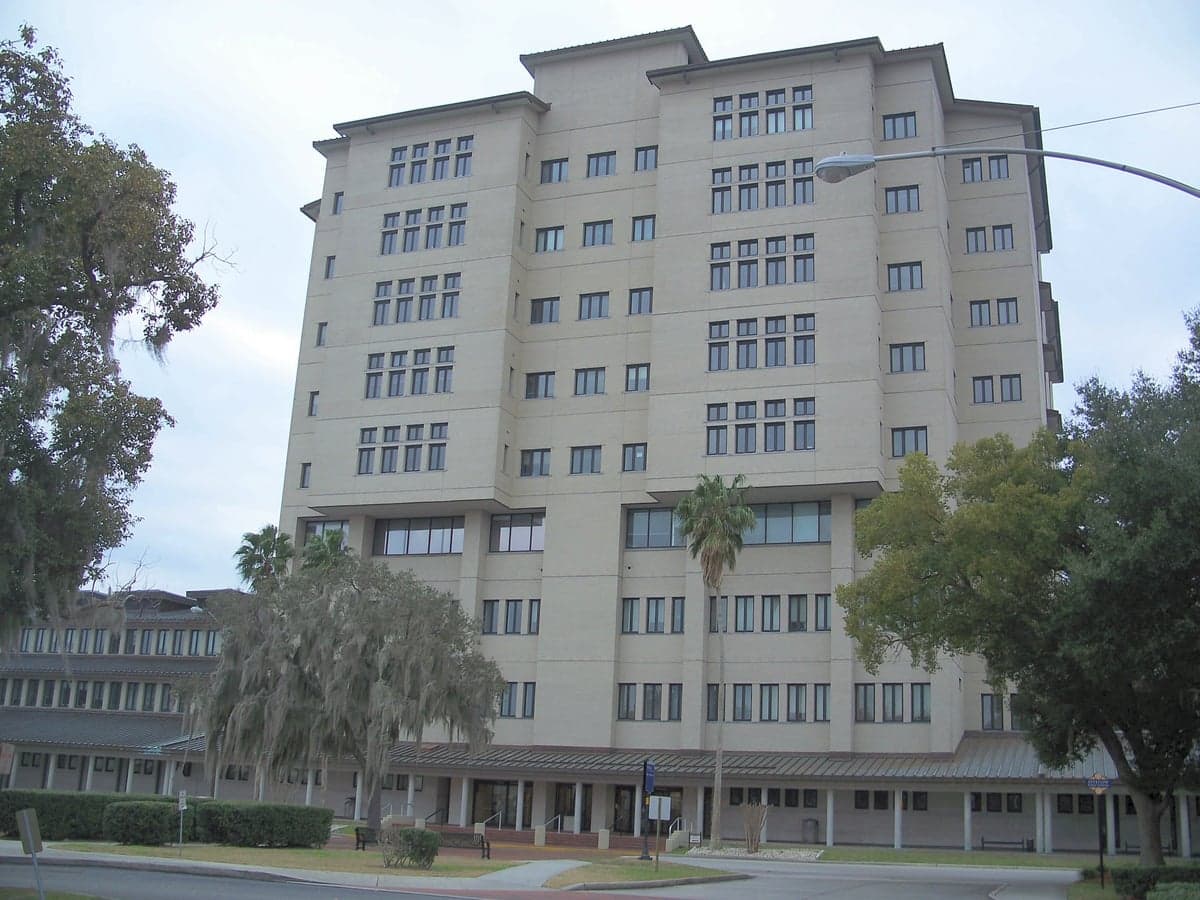
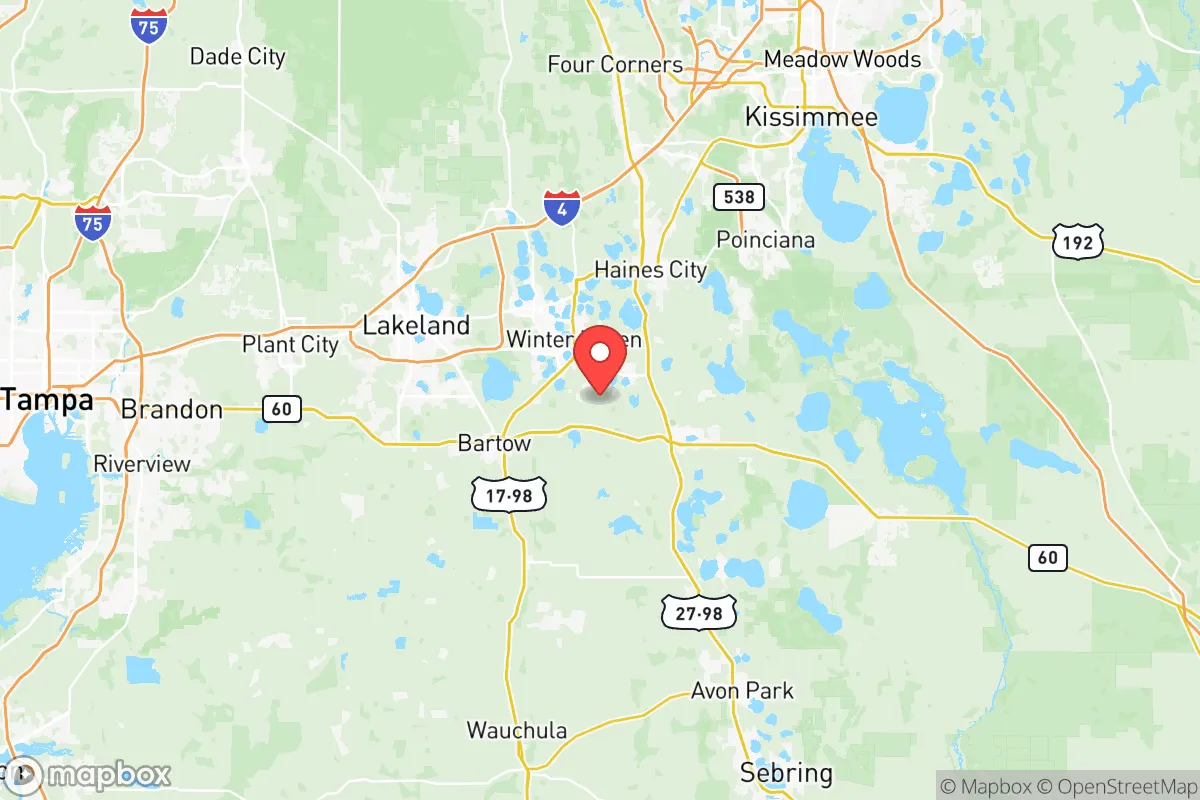
Photo: Wikipedia
Demographics of Polk County
Affluence Level in Polk County
A middle-class area roughly in line with national averages across income, home values, education, and employment.
People of Polk County
Polk County, Florida, is a region of 760,961 residents defined by a predominantly White (52.6%) and increasingly Hispanic (27.7%) population, with a significant Black community (14.2%) and small but growing East/Southeast Asian (1.1%) and Indian (0.6%) populations. The county’s identity is rooted in its phosphate mining and agricultural past, but its modern character is being reshaped by rapid suburban expansion from the Tampa and Orlando metros. With a relatively low foreign-born share (6.1%) and a college-educated rate (22.6%) below the national average, Polk County remains a working-to-middle-class destination for domestic migrants seeking affordable housing and a slower pace of life.
Settlement & growth (pre-1960)
Before American settlement, the area now known as Polk County was inhabited by the Tocobaga and Calusa peoples, with the Seminole tribe later establishing a presence after being pushed south during the Seminole Wars of the 1830s and 1840s. The U.S. government forcibly removed most Native Americans from the region by the 1850s, opening the land for white settlement. The county was officially created in 1861 from parts of Hillsborough and Brevard counties, named after President James K. Polk, but development remained sparse until after the Civil War.
The first major wave of settlers were Anglo-American farmers from Georgia, Alabama, and the Carolinas, arriving in the 1870s and 1880s. They were drawn by the promise of cheap land and a warm climate for citrus and cotton cultivation. These early families established the county’s oldest towns, including Bartow (the county seat, founded 1851), Fort Meade (founded 1849 as a military outpost), and Lakeland (incorporated 1885). The arrival of the South Florida Railroad in the 1880s connected these settlements to northern markets, spurring growth in Auburndale and Winter Haven as agricultural shipping hubs.
A second, smaller wave came with the phosphate mining boom that began in the 1880s. The discovery of hard-rock phosphate in the Peace River Valley attracted miners and laborers from across the South, many of them poor white farmers seeking wage work. Towns like Mulberry (the "Phosphate Capital of the World") and Bone Valley (a historic mining district) grew rapidly as company towns. By the early 1900s, Polk County was the world’s leading phosphate producer, a status it still holds today. This industry also brought a small number of African American workers, who settled in segregated neighborhoods in Lakeland, Bartow, and Haines City, working as miners, railroad laborers, and domestic servants.
The Great Migration (1910–1970) saw a significant influx of Black families from the Deep South, particularly Alabama and Georgia, who moved to Polk County for phosphate and agricultural jobs. By 1950, Black residents made up roughly 18% of the county’s population, concentrated in Lakeland’s historic Moorehead and Washington Park neighborhoods, as well as in the rural communities of Frostproof and Lake Wales. However, Jim Crow laws and segregation kept these communities economically and socially isolated until the Civil Rights era.
Post-World War II, Polk County experienced a third wave of domestic migration as returning veterans and their families moved to the Sun Belt. The construction of Interstate 4 in the 1960s connected Lakeland to Tampa and Orlando, turning the county into a bedroom community for both metros. Suburban developments sprang up around Lakeland, Winter Haven, and Davenport, attracting white middle-class families from the Rust Belt, particularly Ohio, Michigan, and Indiana. This wave was overwhelmingly White and native-born, reinforcing the county’s Anglo-Protestant cultural character.
Modern era (post-1965)
The 1965 Hart-Cellar Act had a modest direct impact on Polk County compared to coastal Florida, but its indirect effects reshaped the region. The act opened immigration from Latin America and Asia, and while Polk County’s foreign-born share remains low (6.1%), the Hispanic population has grown dramatically from under 5% in 1980 to 27.7% today. This growth is driven by two streams: Puerto Ricans moving from the island and the Northeast, and Mexican and Central American immigrants working in agriculture and construction. The largest Hispanic enclaves are in Lakeland (particularly the south side), Winter Haven, and the rural farming communities of Dundee and Haines City, where many work in citrus groves and packing houses.
The Black population has grown more slowly, from 14.5% in 2000 to 14.2% today, as younger Black residents have left for larger metros like Atlanta and Orlando. However, Lakeland’s historic Black neighborhoods remain culturally significant, and new Black domestic migrants from the Northeast and Midwest are beginning to arrive, drawn by lower housing costs. The East/Southeast Asian community (1.1%) is small but concentrated in Lakeland and Winter Haven, with Vietnamese and Filipino families often working in healthcare and hospitality. The Indian population (0.6%) is even smaller, with most employed in tech and medical fields in Lakeland’s growing corporate sector.
The most transformative demographic force since 2000 has been domestic migration from the Rust Belt and coastal California. Polk County’s population grew by 28% between 2010 and 2020, making it one of Florida’s fastest-growing counties. New subdivisions in Davenport, ChampionsGate, and Poinciana (the latter straddling Polk and Osceola counties) have attracted families from New York, New Jersey, and Illinois, seeking lower taxes and affordable homes. This wave is predominantly White and Hispanic, with a growing number of mixed-race families. The county’s political character has shifted accordingly: once a Democratic stronghold in the Jim Crow era, Polk County now leans Republican, reflecting the conservative values of its native-born and migrant populations.
The future
Polk County is projected to become more diverse and more suburban over the next 20 years. The Hispanic share is expected to rise to 35–40% by 2040, driven by both natural increase and continued migration from Puerto Rico and Central America. The White share will likely fall below 50% as the county’s older Anglo population ages and younger, more diverse families move in. The Black population is expected to hold steady or grow slightly, as Lakeland’s affordable housing attracts Black professionals priced out of Tampa and Orlando. The East/Southeast Asian and Indian communities will remain small but may double in size as tech and healthcare jobs expand in Lakeland’s downtown redevelopment zone.
New growth is concentrating in the I-4 corridor, particularly around Lakeland, Davenport, and ChampionsGate, where master-planned communities are absorbing tens of thousands of new residents. The rural towns of Frostproof, Lake Wales, and Mulberry are growing more slowly, preserving their agricultural character but facing pressure from suburban sprawl. The county’s cultural identity is evolving from a phosphate-and-citrus economy to a logistics and distribution hub, with Amazon, Publix, and GEICO opening major facilities in Lakeland. This shift is attracting a more educated workforce, though the college attainment rate (22.6%) remains below the state average.
Politically, Polk County is likely to remain conservative-leaning, but the growing Hispanic population may introduce more moderate or Democratic-leaning voters in future elections. The county’s cultural identity is becoming less "Old Florida" and more "New Sun Belt," with a mix of Southern traditions, Latino influences, and suburban homogeneity. For a new resident, Polk County offers affordable housing, a low cost of living, and proximity to two major metros, but the trade-off is a less cosmopolitan atmosphere and a slower pace of change.
Polk County is becoming a diverse, fast-growing, suburban region where the old agricultural and mining economy is giving way to logistics and distribution. For someone moving in now, the county offers a middle-class lifestyle with a conservative tilt, affordable homes, and a growing mix of cultures, but the infrastructure and schools are still catching up to the population boom. The people of Polk County are increasingly a blend of native Floridians, Rust Belt transplants, and Latino families, creating a community that is more diverse than its past but still distinct from the coastal metros to its east and west.

* Values derived from national, state, county, city and local statistics and may differ in a specific area. Last updated: 2026-06-24T21:35:25.000Z
Narrative content on this page is AI-generated and may contain mistakes. Verify any details that matter before acting on them.
ReloMaps may earn a commission from affiliate links at no extra cost to you.

