Photo: Wikipedia
Strategic Assessment of Polk County
Meaningful friction. Expect exposure to either population pressure, blast zones, or natural disaster risk. Consider buying a retreat property.
What does the Strategic Assessment tell us?
Our Strategic Assessment grades tactical survivability of an area. Major population centers, military targets, fallout zones, natural disasters, and border exposure all drive risk — lower exposure means a more defensible position in a crisis.
This is heavily inspired by Joel Skousen's Strategic Relocation book. Highly recommended you checkout the book ($)What does this tell us?
Our Strategic Assessment grades tactical survivability of an area. Major population centers, military targets, fallout zones, natural disasters, and border exposure all drive risk — lower exposure means a more defensible position in a crisis.
This is heavily inspired by Joel Skousen's Strategic Relocation book. Highly recommended you checkout the book ($)Strategic Pillars

Key Distances
Strategic Assessment Analysis
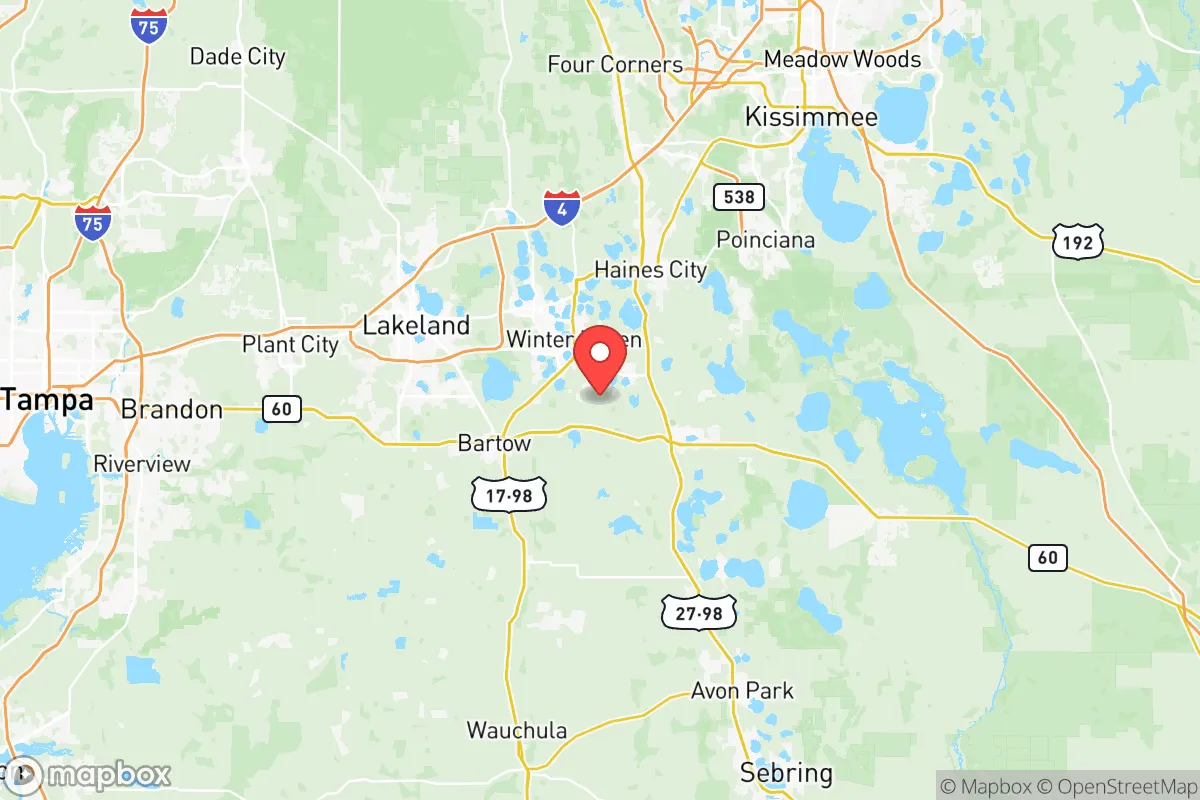
Polk County, Florida, occupies a strategic middle ground in the state’s resilience landscape—far enough from the coast to avoid the worst of hurricane storm surge, yet close enough to major infrastructure and population centers to present both opportunities and risks for a relocator focused on disaster readiness and self-sufficiency. The county’s geography, anchored by the city of Lakeland and stretching through communities like Winter Haven, Bartow, and Haines City, offers a mix of inland security and access to critical resources. For a conservative-leaning individual or family weighing long-term stability, Polk County presents a nuanced picture: genuine natural advantages tempered by real exposure to man-made and environmental hazards.
Geographic position and natural advantages for long-term stability
Polk County sits in the central Florida peninsula, roughly equidistant from the Gulf of Mexico and the Atlantic Ocean, placing it in a relative “hurricane shadow” compared to coastal counties. The area’s elevation, while modest by national standards, is among the highest in Florida—the Lakeland Ridge and the Winter Haven Ridge provide natural drainage and reduce flood risk relative to the state’s low-lying coastal plains. The county is dotted with hundreds of natural and man-made lakes, including the Chain of Lakes system around Winter Haven and Lake Parker in Lakeland, which serve as both aesthetic assets and potential water sources in a disruption scenario. The region’s phosphate mining history has left a network of elevated, well-drained land that, while environmentally complicated, offers defensible building sites away from floodplains. For a relocator, the practical takeaway is that Polk County avoids the most acute hurricane risks—storm surge is a non-issue here—and its inland position means it often serves as a staging area for recovery operations after coastal storms, giving residents earlier access to supply chains and emergency services.
Risks, exposures, and proximity to fallout-relevant landmarks
The same geography that buffers Polk County from coastal storms also places it near several man-made risk factors that a disaster-conscious relocator must weigh. The county is bisected by Interstate 4, a major evacuation corridor connecting Tampa and Orlando, which in a crisis could become a chokepoint or a target. More significantly, Polk County lies within roughly 50 miles of the MacDill Air Force Base in Tampa, a strategic military installation that could be a primary or secondary target in a conflict scenario. The county also hosts its own critical infrastructure: the Bartow Municipal Airport and the Lakeland Linder International Airport are both used for military and civilian logistics, and the Polk County phosphate processing facilities near Mulberry and Bartow represent industrial hazards—phosphogypsum stacks, chemical storage, and rail transport of hazardous materials. The Haines City area sits near the CSX rail line that moves freight between the ports of Tampa and Jacksonville, making it a potential chokepoint. For a relocator, the risk profile is moderate: no nuclear power plants or major refineries within the county, but proximity to military targets and industrial chemical sites means that a worst-case scenario involving fallout or hazardous material release is not out of the question. The county’s emergency management infrastructure is well-regarded, but residents should have their own plans for sheltering in place or evacuating east toward the Atlantic coast if necessary.
Practical resilience for a relocator: food, water, energy, and defensibility
Polk County’s agricultural base is a genuine asset for self-sufficiency. The county is a major producer of citrus, strawberries, and cattle, with working farms and ranches concentrated around Fort Meade, Frostproof, and the rural areas south of Bartow. For a relocator looking to grow food or source locally, the soil and climate are favorable for year-round gardening, and the county’s farmers’ markets and agricultural co-ops provide a buffer against supply chain disruptions. Water availability is generally good—the Floridan Aquifer underlies the entire county, and private wells are common in rural areas, though new well permits are increasingly regulated. The county’s energy grid is served by Tampa Electric (TECO) and Duke Energy Florida, with the Polk County Power Plant near Mulberry providing a local generation source. However, the grid is vulnerable to hurricane-related outages, and residents should plan for extended power loss—solar with battery backup is a practical investment here, given the region’s high solar insolation. Defensibility varies widely: suburban subdivisions around Lakeland and Winter Haven offer community security but limited retreat options, while rural properties in the southern and eastern parts of the county provide more space, privacy, and the ability to establish a perimeter. The county’s gun culture is strong, with a high rate of concealed carry permits and a network of shooting ranges and gun clubs, which aligns with the self-defense priorities of many conservative relocators. The main practical limitation is that Polk County is not remote—it is within an hour’s drive of Tampa and Orlando, meaning that in a widespread crisis, population movement from those cities could strain local resources.
The overall strategic picture for Polk County is one of balanced risk and opportunity. It offers genuine geographic advantages—inland position, high ground, abundant water, and agricultural capacity—that make it a credible choice for a family or individual prioritizing disaster readiness. The risks are real but manageable: proximity to military targets and industrial hazards requires awareness and planning, not avoidance. For a relocator who values self-sufficiency, community resilience, and a conservative cultural environment, Polk County represents a solid middle-ground option—not as remote as the Florida Panhandle’s rural counties, but far more defensible and resource-rich than coastal or urban alternatives. The key is to choose a specific location within the county carefully, favoring the rural southern and eastern fringes over the more densely populated I-4 corridor, and to invest in the infrastructure—well, solar, food storage—that turns the county’s natural advantages into real preparedness.

* Values derived from national, state, county, city and local statistics and may differ in a specific area. Last updated: 2026-06-24T21:35:25.000Z
Narrative content on this page is AI-generated and may contain mistakes. Verify any details that matter before acting on them.
ReloMaps may earn a commission from affiliate links at no extra cost to you.

