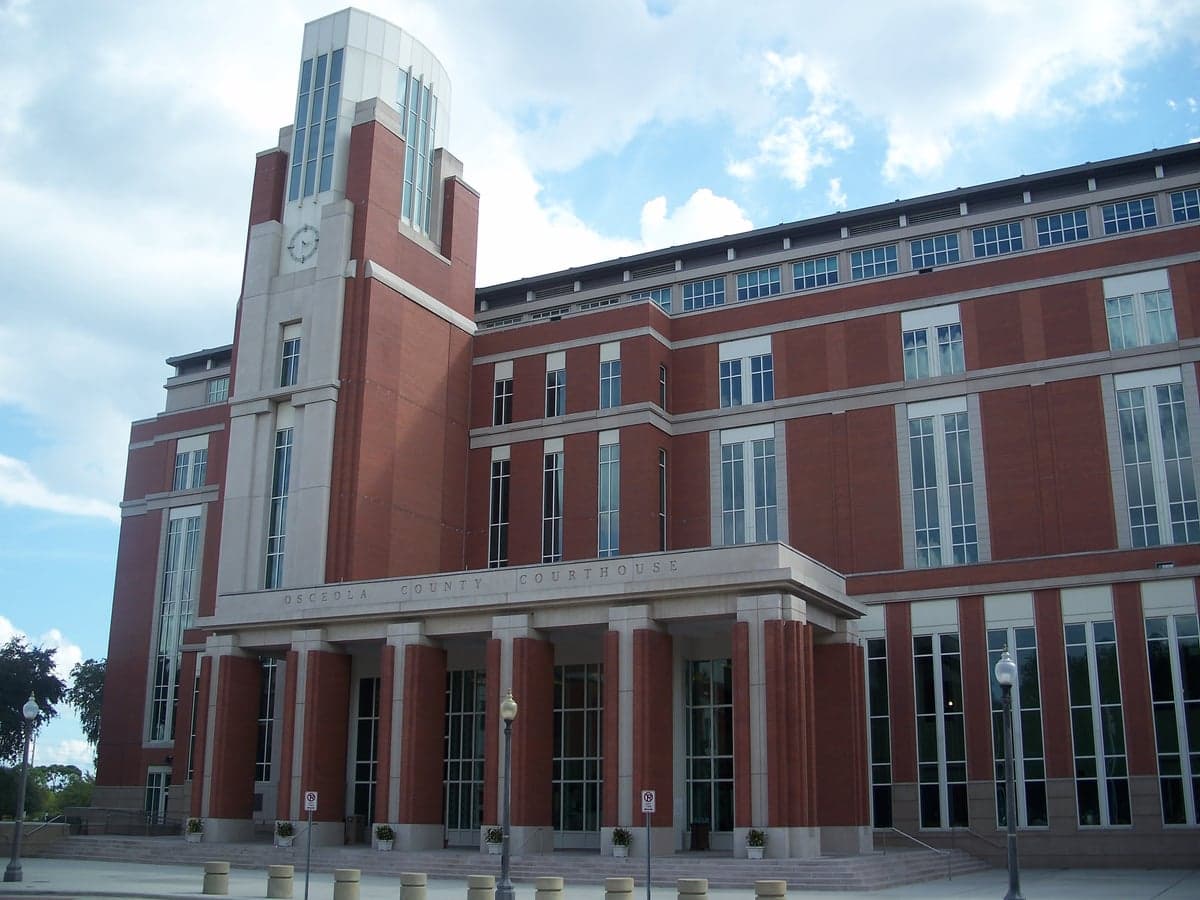
Photo: Wikipedia
Political ClimatePolitical Climate in Osceola County
Showing district-level results — no local-only data available.
Local Political AnalysisPolitical Analysis of Osceola County
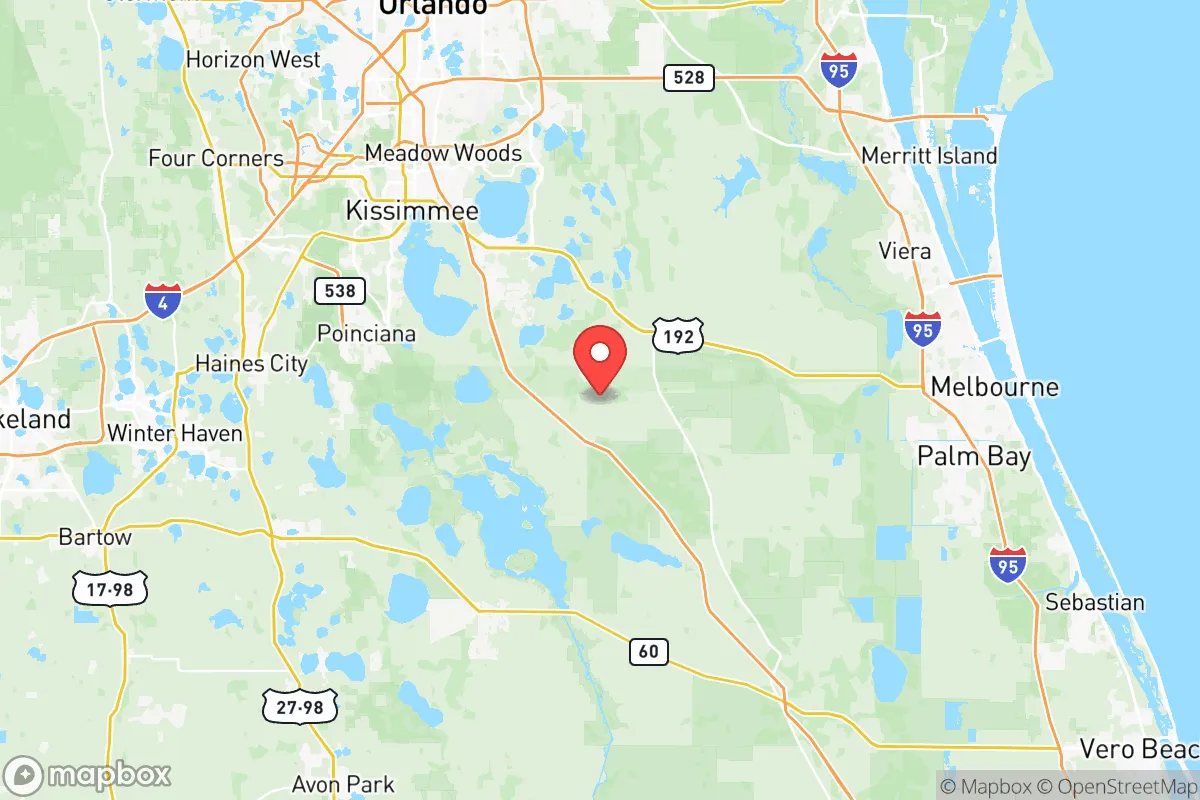
Osceola County has shifted from a reliably red stronghold to a genuine battleground, now carrying a Cook PVI of D+4 — a dramatic swing of nearly 10 points to the left compared to Florida’s statewide R+5 rating. This isn’t a fluke; it’s the result of a decade of explosive growth, particularly in the Kissimmee and St. Cloud corridors, where a wave of Puerto Rican and other Latino voters, plus younger families priced out of Orange County, have reshaped the electorate. The old joke was that Osceola was the most conservative county in Central Florida outside of The Villages; now, it’s the only county in the region that voted for Biden in 2020 and is trending bluer with each cycle.
How it compares
Statewide, Florida leans R+5, a solid red tilt driven by the I-4 corridor’s swing counties and the deep-red Panhandle and Southwest Florida. Osceola’s D+4 rating puts it in a different universe — more like Broward County’s lean than neighboring Polk County’s R+15. The contrast is stark: while Florida as a whole has moved rightward since 2016, Osceola has moved left. The key driver is the Hispanic vote, which here is overwhelmingly Puerto Rican and Cuban-American, but with a much higher share of Puerto Ricans who tend to vote Democratic. In Kissimmee, precincts around the 192 corridor and near the Florida Turnpike often go 60-40 Democratic, while St. Cloud’s older, whiter neighborhoods — especially around the lakefront and the historic downtown — still lean Republican by similar margins. The swing precincts are in the newer subdivisions between Kissimmee and St. Cloud, like the areas around Narcoossee Road and the new developments near Poinciana, where transplants from the Northeast and Midwest are splitting tickets more evenly.
What this means for residents
For conservative residents, the political reality is that Osceola is no longer a safe bet for Republican candidates. Local school board races and county commission seats are now competitive, and the days of a GOP lock on county government are over. That said, the county’s conservative base remains strong in St. Cloud and the rural areas around Holopaw and Kenansville, so it’s not a blue wave — it’s a purple shift. For liberal residents, the trend is encouraging but not yet dominant. You’ll find progressive pockets in Kissimmee’s downtown and near the universities, but the county still leans moderate on fiscal issues and is more culturally conservative than Orange County next door. The practical effect is that both sides have to work harder: door-knocking and Spanish-language outreach are now essential for any candidate, and the days of relying on party registration alone are over.
Culturally, Osceola’s political shift has brought a few notable policy distinctions from the rest of Florida. The county has been more aggressive in expanding Medicaid access through local health programs, and its school board has resisted some of the state’s more controversial education mandates, like the “Don’t Say Gay” law, by adopting more inclusive policies at the local level. On the other hand, the county’s tax rates remain among the lowest in Central Florida, and development regulations are still business-friendly — a nod to the lingering influence of the old guard. If you’re moving here, expect a place where the politics are as mixed as the population: a little bit of everything, and no one gets everything they want.

State Political ClimatePolitical Climate in Florida
State Political AnalysisPolitical Environment in the State
Florida is a solidly Republican state with a Cook PVI of R+5, but it’s far from a monolith. The state’s political lean has shifted dramatically over the past 20 years—from a classic swing state that decided the 2000 election by 537 votes to a reliably red stronghold where Republicans now hold a supermajority in the legislature and control every statewide office. This transformation is driven by a combination of conservative-leaning transplants from the Northeast and Midwest, a growing Hispanic population in places like Miami-Dade that has moved rightward, and a rural and exurban base that turns out reliably. The result is a state where Republican policies are enacted aggressively, but where the major metro areas—Miami, Orlando, Tampa, and Jacksonville—still vote blue, creating a sharp urban-rural divide that defines every election.
Urban vs. rural divide
The political map of Florida is a textbook case of the urban-rural split. The major metros—Miami-Dade, Broward (Fort Lauderdale), Palm Beach, Orange (Orlando), and Hillsborough (Tampa)—are Democratic strongholds, with Miami-Dade being the most fascinating case. Once a reliably blue county driven by Cuban-American voters who leaned Republican on foreign policy but Democratic on domestic issues, Miami-Dade has been trending right since 2016. In 2020, Donald Trump improved his margin there by 8 points compared to 2016, and in 2024, he actually won the county outright—a seismic shift for a place that went for Hillary Clinton by 30 points in 2016. Meanwhile, the rural Panhandle—places like Panama City, Pensacola, and Tallahassee’s surrounding counties—vote 70-80% Republican. The I-4 corridor, stretching from Tampa through Lakeland to Orlando, is the traditional battleground, but even there, the exurbs like Polk County (Lakeland) have shifted hard red. Naples and Sarasota on the Gulf Coast are deep red retirement havens, while Gainesville (home to UF) and Tallahassee (state capital and FSU) are blue islands in a red sea. The takeaway: if you live in a dense urban core, you’ll be in a blue bubble; if you’re in a suburb or rural area, you’ll be surrounded by red.
Policy environment
Florida’s policy environment is aggressively conservative, with a focus on low taxes, limited regulation, and cultural conservatism. There is no state income tax, which is a major draw for relocators. Property taxes are moderate, and the state’s homestead exemption caps annual assessment increases at 3% for primary residences, keeping costs predictable. The regulatory posture is business-friendly—permitting is streamlined, and there’s no state-level rent control (though some cities like Miami Beach have tried local measures). Education policy is a flashpoint: the state has a robust school choice program, including vouchers for private and religious schools, and has banned “critical race theory” and “social emotional learning” in public schools. Healthcare is mixed—Florida did not expand Medicaid under the ACA, leaving roughly 800,000 residents in the coverage gap, but it has a competitive private insurance market. Election laws have been tightened since 2020: drop boxes are restricted, voter ID is required, and mail-in ballot requests expire after each election cycle. The state also has a “stand your ground” self-defense law and a permitless carry law (effective July 2023), making it one of the most gun-friendly states in the country.
Recent policy direction
The last five years have seen a cascade of legislation that has cemented Florida as a national leader in conservative governance. On gun rights, the 2023 permitless carry law (HB 543) allows anyone 21 or older to carry a concealed firearm without a permit or training, though open carry remains illegal. On education, the “Parental Rights in Education” law (HB 1557, dubbed “Don’t Say Gay” by critics) bans classroom instruction on sexual orientation and gender identity through third grade, and was expanded to all grades in 2023. The “Stop WOKE Act” (HB 7) restricts workplace and school training on race and gender. On immigration, Governor DeSantis signed SB 1718 in 2023, which requires businesses with 25+ employees to use E-Verify, invalidates out-of-state driver’s licenses for undocumented immigrants, and bans local governments from providing ID cards to undocumented residents. On abortion, the state passed a 15-week ban in 2022, then a 6-week ban in 2023 (effective May 2024), with no exceptions for rape or incest. On property rights, the state preempted local short-term rental regulations, limiting cities’ ability to restrict Airbnb and Vrbo. On voting, SB 90 (2021) restricted drop boxes and mail-in voting, while a 2023 law banned ranked-choice voting and made it harder for third-party candidates to get on the ballot. The overall direction is clear: the state is moving to maximize individual liberty on guns and property, while restricting it on abortion, LGBTQ+ expression, and immigration enforcement.
Civil unrest & political movements
Florida has seen its share of political flashpoints, but large-scale civil unrest is rare. The most visible recent protests were the 2020 Black Lives Matter demonstrations in Miami, Orlando, and Jacksonville, which were met with a heavy law enforcement presence but no sustained violence. The state has become a magnet for right-wing activism: the “Free Florida” movement, led by groups like Moms for Liberty, has been highly effective at school board takeovers and book challenges. Immigration politics are hot—Governor DeSantis made national headlines for flying migrants from Texas to Martha’s Vineyard in 2022, and the state has a “sanctuary city” ban that forces local law enforcement to cooperate with ICE. There is no serious secession or nullification rhetoric, but the state has aggressively challenged federal authority on immigration and COVID-19 mandates. Election integrity remains a live issue: the state’s 2020 election was widely seen as smooth, but the 2022 and 2024 cycles saw increased scrutiny of mail-in ballots and drop boxes, with Republican-led investigations into alleged fraud that yielded few results. A new resident would notice the political polarization in everyday life—yard signs, bumper stickers, and local news coverage are heavily partisan, but the state’s culture of “live and let live” means most people keep their politics to themselves in social settings.
Projection
Over the next 5-10 years, Florida is likely to remain solidly Republican, but the margin may narrow as the state’s demographic base continues to evolve. The influx of conservative-leaning retirees from the Northeast and Midwest will continue to boost the GOP, but the growing population of younger, more diverse residents in the metros—especially in Orlando and Tampa—could shift the I-4 corridor back toward purple. The Hispanic vote, particularly in Miami-Dade, is the wild card: if the trend toward Republicans continues, the state could become R+8 or deeper; if it reverses, the state could become competitive again. Climate change and insurance costs are the biggest wildcards—rising homeowners’ insurance premiums and flood risks could drive out some retirees and depress growth in coastal areas like Fort Myers and Naples. Policy-wise, expect further restrictions on abortion (possibly a total ban), continued expansion of school choice, and more preemption of local ordinances on everything from rent control to short-term rentals. A new resident moving in now should expect a state that is politically stable but intensely polarized, where their experience will depend heavily on where they live—blue city, red suburb, or purple exurb.
For a new resident, the bottom line is that Florida offers a low-tax, business-friendly environment with a strong conservative cultural tilt, but it’s not a place where you can escape politics. Your daily life will be shaped by state-level policies on guns, education, and healthcare that are among the most conservative in the country. If you’re a conservative, you’ll find a welcoming environment where your values are reflected in law. If you’re a liberal, you’ll find strong communities in the cities and a state government that is actively hostile to many of your priorities. Either way, the key is choosing your location wisely—the difference between Miami and Panama City is the difference between two different Americas.
* Values derived from national, state, county, city and local statistics and may differ in a specific area. Last updated: 2026-06-17T02:16:29.000Z
Narrative content on this page is AI-generated and may contain mistakes. Verify any details that matter before acting on them.
ReloMaps may earn a commission from affiliate links at no extra cost to you.

