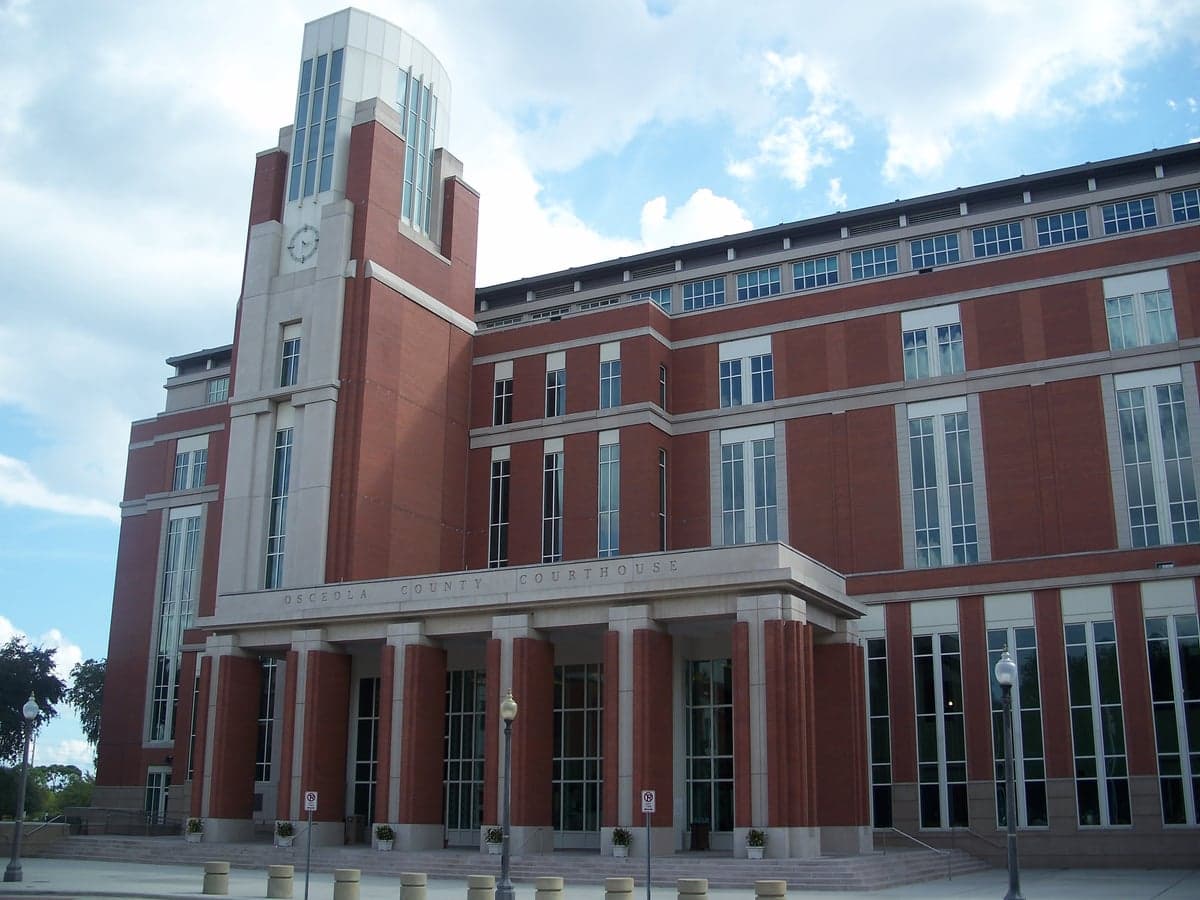
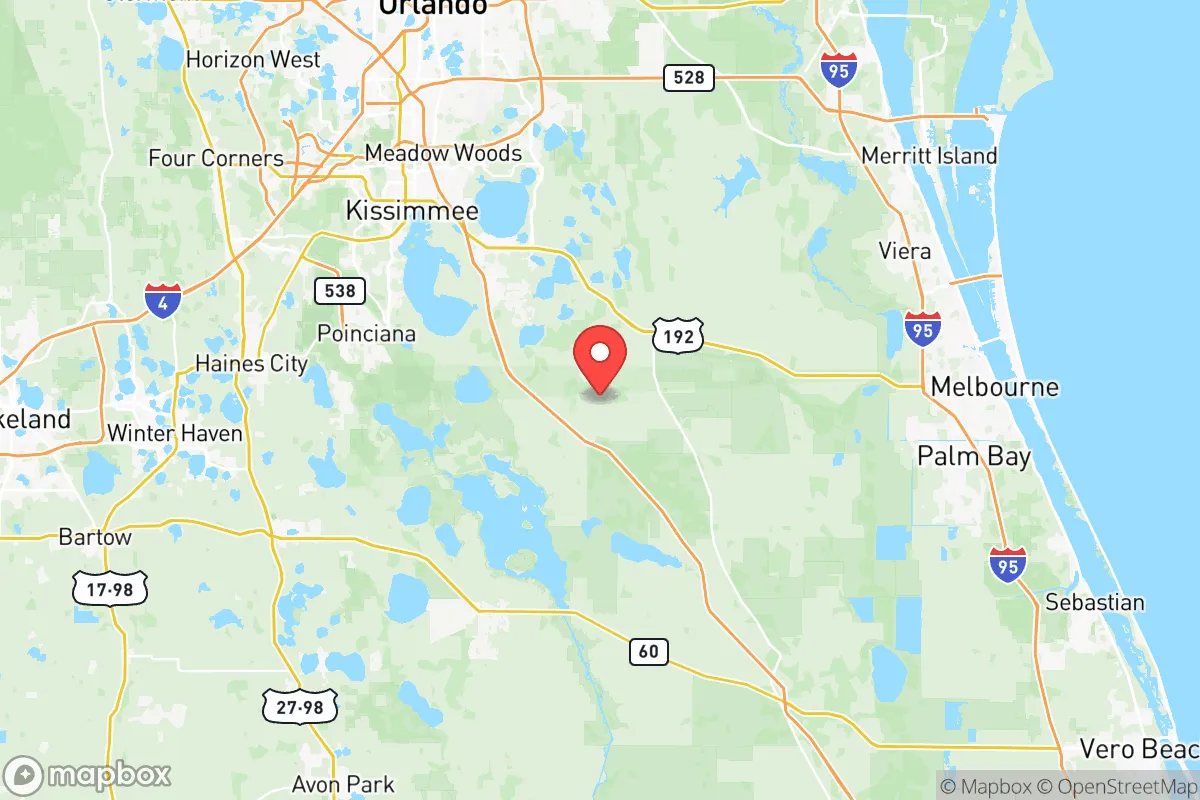
Photo: Wikipedia
Demographics of Osceola County
Affluence Level in Osceola County
A middle-class area roughly in line with national averages across income, home values, education, and employment.
People of Osceola County
Osceola County’s 406,943 residents today form a predominantly Hispanic, family-oriented community centered on Kissimmee and St. Cloud, with a distinctly younger median age and higher household size than the Florida average. The county is defined by its dual identity as both a tourism-driven gateway to Walt Disney World and a rapidly suburbanizing bedroom community for Orlando’s workforce. With 55% of the population identifying as Hispanic, Osceola has one of the highest Hispanic shares of any Florida county outside South Florida, while its White non-Hispanic population has fallen to just 28.5%.
Settlement & growth (pre-1960)
Before American settlement, the area now called Osceola County was part of the vast hunting and fishing grounds of the Seminole people, who had coalesced in Florida from earlier Creek and other Native groups during the 18th century. The Second Seminole War (1835–1842) forcibly removed most of the Seminole population, and the U.S. Army established Forts Gatlin and Mellon in what would become Osceola County to patrol the region. The county itself was created in 1887 from portions of Orange and Brevard Counties, named after the Seminole leader Osceola — a rare instance of a Florida county bearing a Native American name.
The first permanent American settlers arrived in the 1870s and 1880s, drawn by the promise of cheap land and the emerging cattle industry. These early pioneers were predominantly White Anglo-Saxon Protestants from Georgia, the Carolinas, and other Deep South states, who established cattle ranches and small farms across the county’s flat, pine-scrub landscape. The town of Kissimmee, founded in 1883 on the shores of Lake Tohopekaliga, became the county seat and commercial hub, serving as a shipping point for cattle and citrus via the South Florida Railroad. St. Cloud, founded in 1909, was originally a planned community for Union veterans of the Civil War, attracting Northern-born retirees and giving the town a distinctively different character from the rest of the county for decades.
Smaller settlements like Narcoossee (founded by English immigrants in the 1880s) and Kenansville (a cattle-ranching outpost) dotted the rural landscape. The county’s economy remained overwhelmingly agricultural — cattle, citrus, and some truck farming — through the first half of the 20th century. The population grew slowly: from about 3,000 in 1900 to just 19,000 by 1950. Osceola County was almost entirely White and native-born during this period, with a small Black population concentrated in a few rural settlements and in Kissimmee’s segregated Westside neighborhood.
Modern era (post-1965)
The opening of Walt Disney World in 1971 near the county’s northern border transformed Osceola County’s population more dramatically than any other single event. The tourism industry created hundreds of thousands of service-sector jobs — hotel housekeeping, restaurant work, theme park operations, and construction — that drew a massive wave of domestic and international migrants. The county’s population exploded from 25,000 in 1960 to 107,000 by 1980, and then to 172,000 by 2000.
The most significant demographic shift was the arrival of Puerto Rican and other Hispanic migrants, who began moving to Osceola County in large numbers during the 1980s and 1990s. Puerto Ricans, who are U.S. citizens, were drawn by the combination of tourism jobs, affordable housing, and the growing network of Spanish-language services and cultural institutions. By 2000, Hispanics made up about 30% of the county’s population; by 2020, that share had risen to 55%. The Hispanic community is heavily concentrated in Kissimmee and the unincorporated areas along U.S. Highway 192, where Puerto Rican bakeries, bodegas, and cultural centers line the commercial strips. Poinciana, a massive planned community straddling the Osceola-Polk county line, has become a particularly dense hub of Puerto Rican and Dominican families, with a population that is over 70% Hispanic.
The post-1965 period also saw the arrival of smaller but notable immigrant communities. East and Southeast Asian residents (1.6% of the population), including Vietnamese and Filipino families, settled primarily in Kissimmee and the Celebration area, many working in hospitality and healthcare. The Indian-subcontinent population (1.1%) is a more recent arrival, concentrated in professional and tech roles in the northern part of the county near the Orlando metro area. The Black population (9.6%) grew modestly, with new arrivals from the Caribbean (particularly Haiti and Jamaica) joining the historic African American community in Kissimmee’s Westside and in St. Cloud.
Domestic migration has also reshaped the county. The 2000s and 2010s saw an influx of White retirees and remote workers from the Northeast and Midwest, drawn by lower taxes and the Orlando-area amenities. However, these new arrivals have been outnumbered by Hispanic growth, accelerating the county’s diversification. The foreign-born share now stands at 12.6%, with the majority of immigrants coming from Puerto Rico (technically domestic), Mexico, and Central America.
The future
Osceola County is projected to continue its rapid growth, with the population expected to exceed 500,000 by 2030. The county is becoming more Hispanic, more diverse internally, and more suburban. The Hispanic share is likely to rise toward 60-65% as younger Hispanic families have children at higher rates than the aging White population. New residential developments are pushing south and east, with NeoCity — a planned high-tech manufacturing and research district near Kissimmee — aiming to attract a more educated, higher-income workforce. The county’s college-educated share (28.3%) remains below the state average, but this is expected to rise as the Orlando metro’s tech and healthcare sectors expand into Osceola.
Culturally, the county is evolving from a tourism-dependent service economy into a more diversified suburban region. The growing Puerto Rican and Dominican communities are creating a distinct Latino identity that blends Caribbean and Central Florida influences, while the older White cattle-ranching and veteran communities in St. Cloud and Kenansville retain a more traditional Southern character. The county is likely to remain politically competitive — it voted for Joe Biden in 2020 but has a significant conservative-leaning population, particularly among White and older residents.
For someone moving to Osceola County today, the area offers a young, family-oriented, and increasingly diverse community where Spanish is commonly heard in public life and the economy remains tied to tourism but is slowly broadening. The county’s identity is no longer that of a rural cattle frontier or a simple Orlando suburb — it is becoming a majority-Hispanic, working-to-middle-class hub with its own cultural gravity, anchored by Kissimmee and stretching south toward Poinciana and east toward St. Cloud.

* Values derived from national, state, county, city and local statistics and may differ in a specific area. Last updated: 2026-06-17T02:16:29.000Z
Narrative content on this page is AI-generated and may contain mistakes. Verify any details that matter before acting on them.
ReloMaps may earn a commission from affiliate links at no extra cost to you.

