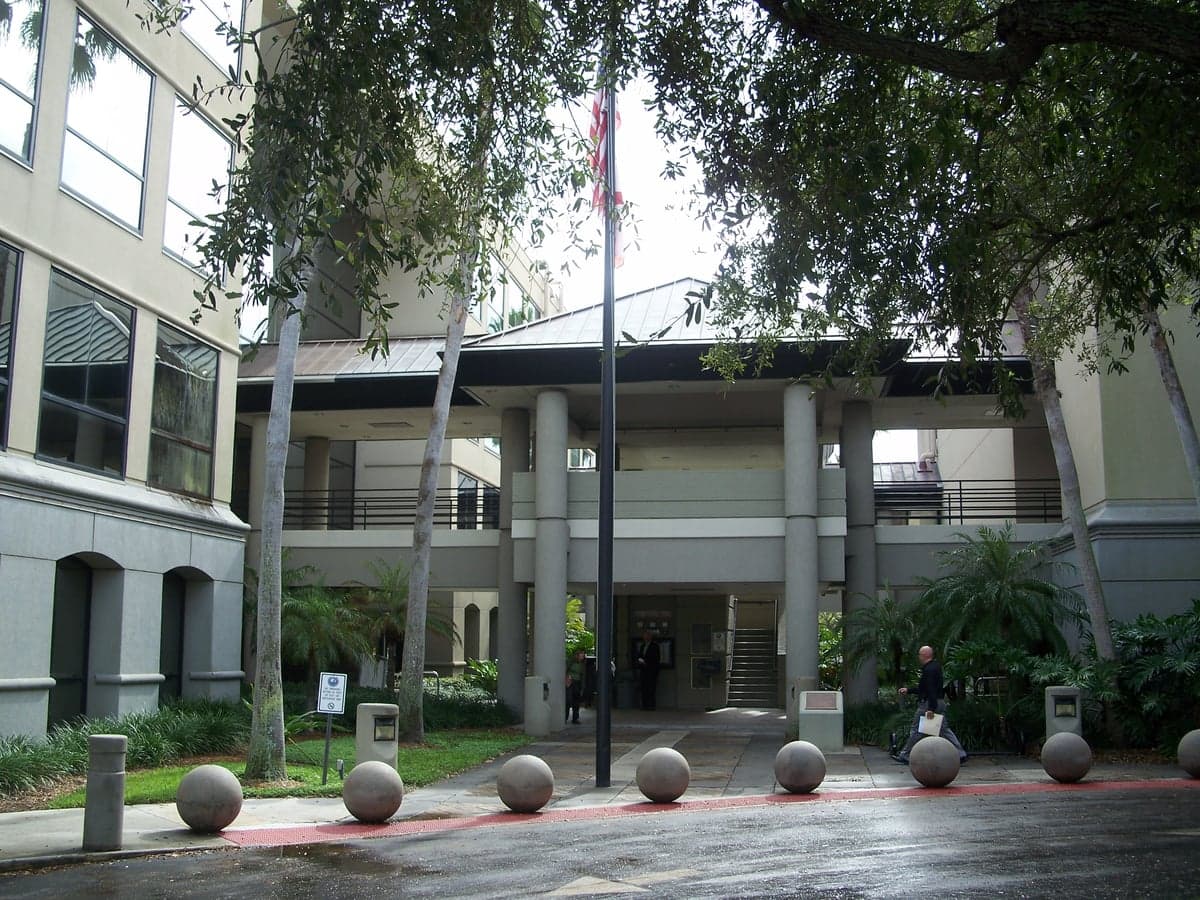
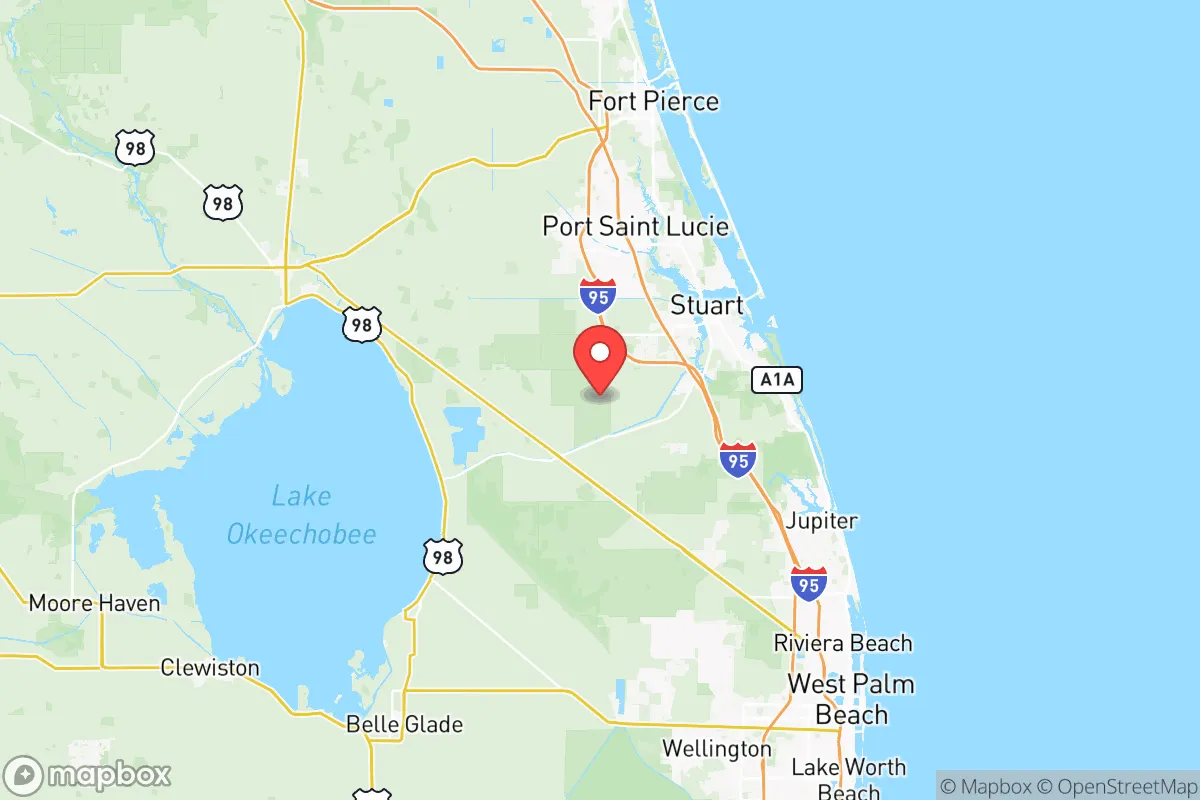
Photo: Wikipedia
Quality of Life in Martin County
A livable area that tracks near national norms for affordability, walkability, and neighborhood health.
What does Quality of Life tell us?
Quality of Life measures an area by evaluating factors like cost of living, nearby amenities, country club access, airport proximity, socioeconomic signals and neighborhood character. For large states, this is a general average — quality of life can vary dramatically between metro areas, suburbs, and rural communities within the same state.
What does this tell us?
Quality of Life measures an area by evaluating factors like cost of living, nearby amenities, country club access, airport proximity, socioeconomic signals and neighborhood character. For large states, this is a general average — quality of life can vary dramatically between metro areas, suburbs, and rural communities within the same state.
Cost of Living
32% above national average
73%
The Real Cost of Living in Martin County for 2026
| Tier | Individual | Family (4) |
|---|---|---|
| Survival | $24k | $45k |
| Comfortable | $75k | $110k |
| Luxury | $146k+ | $226k+ |
| Elite (Top 5%) | $214k+ | $331k+ |
Quality-of-Life Analysis
Martin County, Florida, offers a quality-of-life spectrum that ranges from the walkable, historic riverfront of Stuart to the equestrian estates of Indiantown and the protected natural buffers of rural Hobe Sound, attracting everyone from boating retirees and young professionals to agricultural families and conservation-minded residents. The county’s character is defined by its St. Lucie River shoreline, its strict growth-management laws that limit high-density development, and a palpable tension between preserving a small-town feel and accommodating new residents. With a cost-of-living index of 132 (32% above the national average) and a median home value of $386,500, the county commands a premium for its coastal lifestyle, yet offers markedly different price points and daily experiences depending on whether one chooses a bustling riverfront town, a quiet beachside community, or a rural interior homestead.
Largest town(s) & population centers
Stuart is the county seat and undisputed hub, with a population of roughly 17,000 that swells with daytime workers and visitors. Daily life here centers on the historic downtown along the St. Lucie River, where residents walk to restaurants, the Lyric Theatre, and the weekly Green Market. The city’s median rent of $1,499 aligns closely with the county average, but home values in Stuart’s core neighborhoods—like the Old Colorado District or East Stuart—range from $350,000 for a fixer-upper to over $700,000 for a renovated riverfront cottage. Palm City, immediately west of Stuart, is a larger unincorporated suburb of about 25,000 residents, known for its top-rated schools (including Martin County High School) and family-oriented subdivisions with median home values around $450,000. The average commute across the county is 28 minutes, and for Palm City residents, that drive often heads east to Stuart or south to Palm Beach County jobs. Sewall’s Point, a tiny incorporated town on a peninsula between the St. Lucie Inlet and the Atlantic, is the county’s most exclusive enclave, with waterfront estates routinely exceeding $1.5 million and a lifestyle defined by private docks and direct ocean access.
Smaller towns & rural pockets
Indiantown, in the county’s rural western interior, is the most distinct smaller community, with a population of about 6,000 and a character shaped by its large agricultural workforce and the Seminole tribe’s nearby Brighton Reservation. Life here is slower and more affordable: median home values hover near $250,000, and the cost of living is noticeably below the county average, though amenities are sparse—residents drive 20 minutes east to Stuart for groceries or medical care. Hobe Sound, straddling the county line with Palm Beach County, is a coastal unincorporated area of roughly 13,000 that feels like a separate small town, with Jonathan Dickinson State Park providing a vast natural buffer. Its housing stock includes modest 1950s beach cottages starting around $300,000 and luxury golf-course homes in communities like The Fox Club exceeding $800,000. Jensen Beach, technically an unincorporated area east of Stuart, is a laid-back fishing village with a population of about 12,000, where the median home value is $375,000 and the lifestyle revolves around the beach, the Jensen Beach Causeway, and the annual Pineapple Festival. Further north, Port Salerno retains a working waterfront character with commercial fishing docks and marine repair yards, offering home values 10-15% below Stuart’s median.
Cost & lifestyle range
The cost spread across Martin County is substantial. At the high end, Sewall’s Point and the oceanfront sections of Hobe Sound (e.g., Jupiter Island, though technically in Palm Beach County, influences the local market) command median home values above $800,000, with property taxes and HOA fees adding significant monthly costs. At the lower end, Indiantown and parts of western Palm City near the county line offer homes in the $250,000–$300,000 range, though these areas lack sidewalks, streetlights, and immediate access to retail. The lifestyle range is equally wide: a Stuart downtown resident can walk to the riverfront boardwalk and a dozen restaurants, while a rural Indiantown homeowner may live on a five-acre lot with horses and a 30-minute drive to the nearest supermarket. The county’s strict growth-management ordinance (the “Martin County Comprehensive Growth Management Plan”) limits new construction to one unit per acre in most rural areas, preserving open space but also keeping housing supply tight and prices elevated relative to neighboring Okeechobee or St. Lucie counties.
Martin County is best suited for residents who prioritize environmental preservation, a slower pace, and water access over nightlife or urban density. Families drawn to Palm City’s schools, retirees seeking Stuart’s walkable downtown, and agricultural workers or equestrian enthusiasts in Indiantown can all find a niche, provided they accept the trade-offs: higher housing costs than the national average, limited public transit, and a 28-minute average commute that often stretches longer for those commuting to Palm Beach County jobs. The county’s identity as a “protected” enclave means it rewards those who value space, nature, and community over convenience and affordability.

Crime in Martin County
Generally safer than 69% of comparable U.S. locations.
Violent CrimeViolent Crime Analysis
Property CrimeProperty Crime Analysis
Crime Analysis
Martin County, Florida, posts a violent crime rate of 207 incidents per 100,000 residents and a property crime rate of 896.7 per 100,000, placing it in a middle tier for safety within the Treasure Coast region. While these figures are lower than the national average for violent crime, they are elevated compared to Florida’s safest small cities, and property crime remains a persistent concern for residents in unincorporated areas and towns like Stuart, Hobe Sound, and Palm City. The county’s overall safety picture is shaped by a mix of affluent waterfront communities and more densely populated corridors along U.S. 1, where crime tends to concentrate.
Crime in context
Martin County’s violent crime rate of 207 per 100,000 is roughly 30% below the national average of 380 per 100,000, but it sits slightly above the Florida state average of approximately 195 per 100,000. Property crime at 896.7 per 100,000 is notably lower than the national rate of 1,954 per 100,000, yet it exceeds the Florida average of around 850 per 100,000. Compared to neighboring counties, Martin County is safer than St. Lucie County to the north, which reports higher violent and property crime rates, but it is less safe than Indian River County to the south, where rates are consistently lower. The county’s crime index is driven largely by larceny-theft and motor vehicle theft, with aggravated assault making up the majority of violent offenses. Homicide rates remain low, typically averaging 1–3 per year countywide.
What residents experience
Residents in Martin County report that property crime — particularly vehicle break-ins and package theft — is the most common safety concern, especially in areas near commercial corridors. The city of Stuart, the county seat, sees a higher concentration of reported incidents, particularly around downtown and the U.S. 1 corridor, while Hobe Sound and Palm City experience lower crime volumes but are not immune to opportunistic theft. Jensen Beach and Sewall’s Point are consistently cited as the safest areas, with very low violent crime and property crime rates. The Martin County Sheriff’s Office and Stuart Police Department maintain proactive community policing programs, and response times are generally fast in incorporated areas. However, residents in unincorporated zones should be aware that sheriff’s patrol coverage is thinner, and some rural subdivisions report longer wait times for non-emergency calls.
Neighborhood-level variation and judicial climate
Neighborhood-level safety in Martin County varies significantly between the coastal barrier islands and mainland communities. Hutchinson Island, which includes parts of Jensen Beach and Stuart, is among the safest areas in the county, with crime rates comparable to the lowest in the state. In contrast, pockets of Stuart near the Martin County Courthouse and along Kanner Highway see elevated property crime and occasional drug-related offenses. The 19th Judicial Circuit, which covers Martin County, has historically taken a moderate-to-conservative approach to prosecution, with judges who are generally perceived as tough on repeat offenders. This stands in contrast to more progressive judicial districts in larger Florida counties, where lenient sentencing and diversion programs have been linked to higher recidivism and public safety concerns. For readers considering a move, the judicial philosophy in Martin County is a relative positive, as it prioritizes accountability and victim rights over offender-focused reforms. Prospective residents should still exercise standard precautions — locking vehicles, securing packages, and choosing neighborhoods with active homeowners’ associations — but the overall risk of violent victimization remains low across most of the county.
* Values derived from national, state, county, city and local statistics and may differ in a specific area. Last updated: 2026-06-27T18:04:38.000Z
Narrative content on this page is AI-generated and may contain mistakes. Verify any details that matter before acting on them.
ReloMaps may earn a commission from affiliate links at no extra cost to you.

