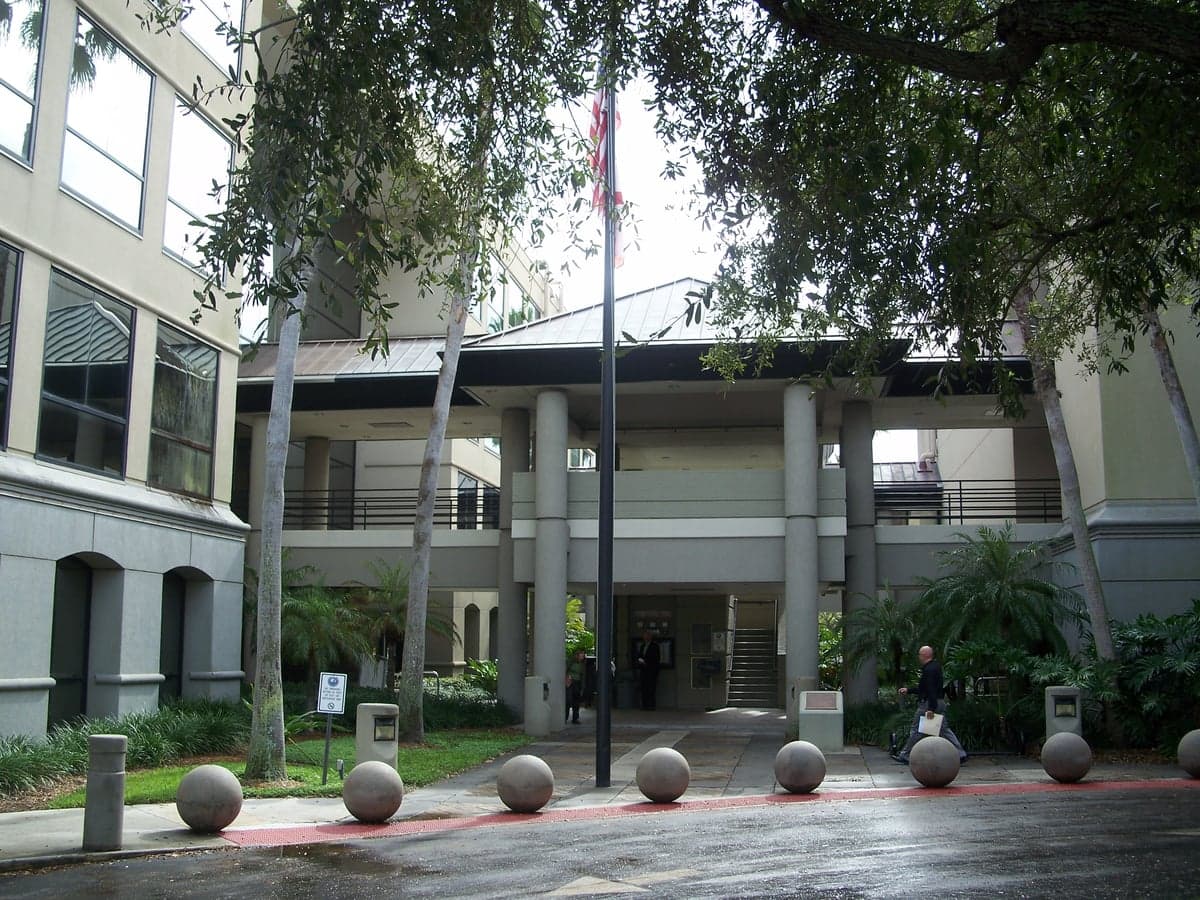
Photo: Wikipedia
Demographics of Martin County
Affluence Level in Martin County
A middle-class area roughly in line with national averages across income, home values, education, and employment.
People of Martin County
Martin County, Florida, is home to 160,464 residents who form a predominantly white (75.5%), older-skewing population with a growing Hispanic minority (15.4%) and small but stable Black (4.9%) and East/Southeast Asian (1.1%) communities. The county’s identity is shaped by its Atlantic coastline, the St. Lucie River, and a legacy of slow-growth, conservation-minded development that has preserved a distinctly suburban, family-oriented character. Residents often describe Martin County as “the Treasure Coast’s quiet side,” a place where retirees, second-home owners, and younger families seeking lower density coexist in a landscape of mangroves, citrus groves, and ranchland.
Settlement & growth (pre-1960)
Long before European contact, the region now known as Martin County was inhabited by the Ais people, a hunter-gatherer tribe who lived along the Indian River Lagoon for thousands of years. Spanish explorers, including Juan Ponce de León in 1513, encountered the Ais, but sustained colonization did not occur. By the 18th century, disease and slave raids had largely depopulated the native Ais, and the area became a sparsely inhabited frontier within Spanish Florida.
After Florida became a U.S. territory in 1821, the land that would become Martin County remained remote. The first permanent American settlers arrived in the 1840s and 1850s, primarily from Georgia and the Carolinas, drawn by the promise of cheap land and the opportunity to establish small farms and cattle ranches. These early pioneers clustered along the St. Lucie River, founding the settlements that would later become Stuart (the county seat), Jensen Beach, and Hobe Sound. The 1890s saw the arrival of the Florida East Coast Railway, which connected the area to northern markets and spurred a modest agricultural boom in citrus and pineapple cultivation. By 1900, the population was still under 5,000, composed overwhelmingly of native-born white Southerners and a small number of Black families who worked as farm laborers and domestic servants.
The 1920s land boom brought a wave of speculators and winter residents from the Northeast and Midwest, particularly to coastal areas like Sewall’s Point and Hutchinson Island. Many built vacation homes along the ocean, establishing Martin County’s early reputation as a seasonal retreat. The Great Depression and World War II slowed growth, but the post-war period saw a steady influx of returning veterans and their families, attracted by the mild climate and the availability of affordable land. By 1960, the county’s population had reached roughly 16,000, still predominantly white and native-born, with a small Black community concentrated in the Stuart area and a handful of Hispanic families, mostly of Cuban origin, who had arrived after the 1959 revolution.
Modern era (post-1965)
The 1965 Hart-Cellar Act, which ended national-origin quotas, had a limited direct impact on Martin County compared to major urban centers. The foreign-born population today stands at just 4.9%, well below the national average. However, domestic migration reshaped the county dramatically. Beginning in the 1970s and accelerating through the 1990s, a steady stream of retirees and families from the Rust Belt—particularly New York, New Jersey, Ohio, and Michigan—relocated to Martin County, drawn by the same climate and lower cost of living that had attracted earlier waves. This “snowbird” and permanent retiree influx fueled suburban development in Palm City, Port Salerno, and Indiantown, transforming former agricultural land into subdivisions, golf courses, and shopping centers.
The Hispanic population grew from a negligible share in 1970 to 15.4% today, driven primarily by Puerto Rican migration (U.S. citizens, not foreign-born) and immigration from Mexico and Central America. Many of these families settled in Indiantown, a historically agricultural community that became a hub for farmworkers in the citrus and nursery industries. A smaller but growing number of Hispanic residents have moved into Stuart and Palm City, working in construction, landscaping, and service industries. The Black population, at 4.9%, has remained relatively stable, with historic communities in Stuart’s East Stuart neighborhood and a newer, smaller presence in Hobe Sound. The East/Southeast Asian community (1.1%) is small but visible, with families of Chinese, Filipino, and Vietnamese descent concentrated in Stuart and Palm City, many working in healthcare, engineering, and hospitality. The Indian-subcontinent population (0.3%) is tiny, with most families residing in Stuart and working in professional services or medicine.
Suburbanization has been the dominant geographic trend since 1980. Palm City grew from a rural crossroads to a master-planned bedroom community of over 25,000, while Jensen Beach and Hutchinson Island saw dense condominium and townhome development aimed at retirees and second-home buyers. The county’s strict growth-management policies, enacted in the 1990s, have limited sprawl compared to neighboring St. Lucie and Palm Beach counties, preserving large tracts of agricultural land and natural areas. This has reinforced Martin County’s reputation as a slower-paced, more exclusive alternative to the booming metro areas to the north and south.
The future
Martin County is projected to grow modestly over the next decade, reaching roughly 175,000–180,000 by 2035. The population is likely to become slightly more diverse, driven by continued Hispanic in-migration, particularly to Indiantown and Port Salerno, and a small but steady increase in East/Southeast Asian residents in professional fields. The white share will decline gradually from its current 75.5%, but the county will remain majority white and older than the state average, as the retiree demographic continues to be a primary driver of growth. The Black and Indian-subcontinent populations are expected to remain small and stable, with no major enclaves forming.
Culturally, Martin County is becoming more politically and socially diverse, though it retains a conservative-leaning character. The influx of younger families from the Northeast and Midwest has introduced more moderate political views, particularly in Palm City and Stuart, while Indiantown and Hobe Sound remain more traditional and Republican-leaning. The county’s identity as a “slow-growth, high-amenity” community is likely to persist, with new development concentrated in infill projects and along the I-95 corridor rather than in sprawling subdivisions.
For someone moving in now, Martin County offers a stable, family-oriented environment with a strong sense of place, but one that is gradually becoming more diverse and less insular. The key trade-off is between the county’s preserved natural beauty and slower pace versus limited job growth and a higher cost of living than inland Florida counties. New arrivals will find a community that values its history, its coastline, and its quiet, but one that is slowly opening to the demographic currents reshaping the rest of the state.

* Values derived from national, state, county, city and local statistics and may differ in a specific area. Last updated: 2026-06-27T18:04:38.000Z
Narrative content on this page is AI-generated and may contain mistakes. Verify any details that matter before acting on them.
ReloMaps may earn a commission from affiliate links at no extra cost to you.

