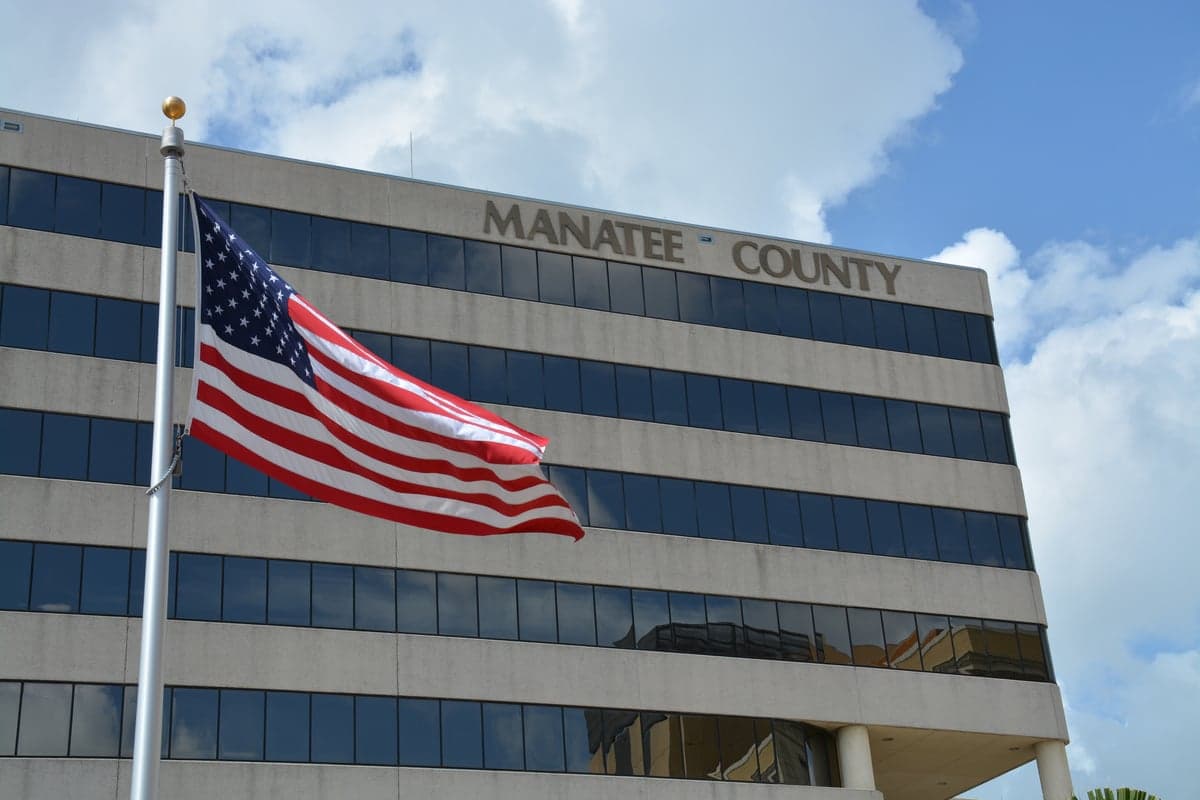
Photo: Wikipedia
Demographics of Manatee County
Affluence Level in Manatee County
A middle-class area roughly in line with national averages across income, home values, education, and employment.
People of Manatee County
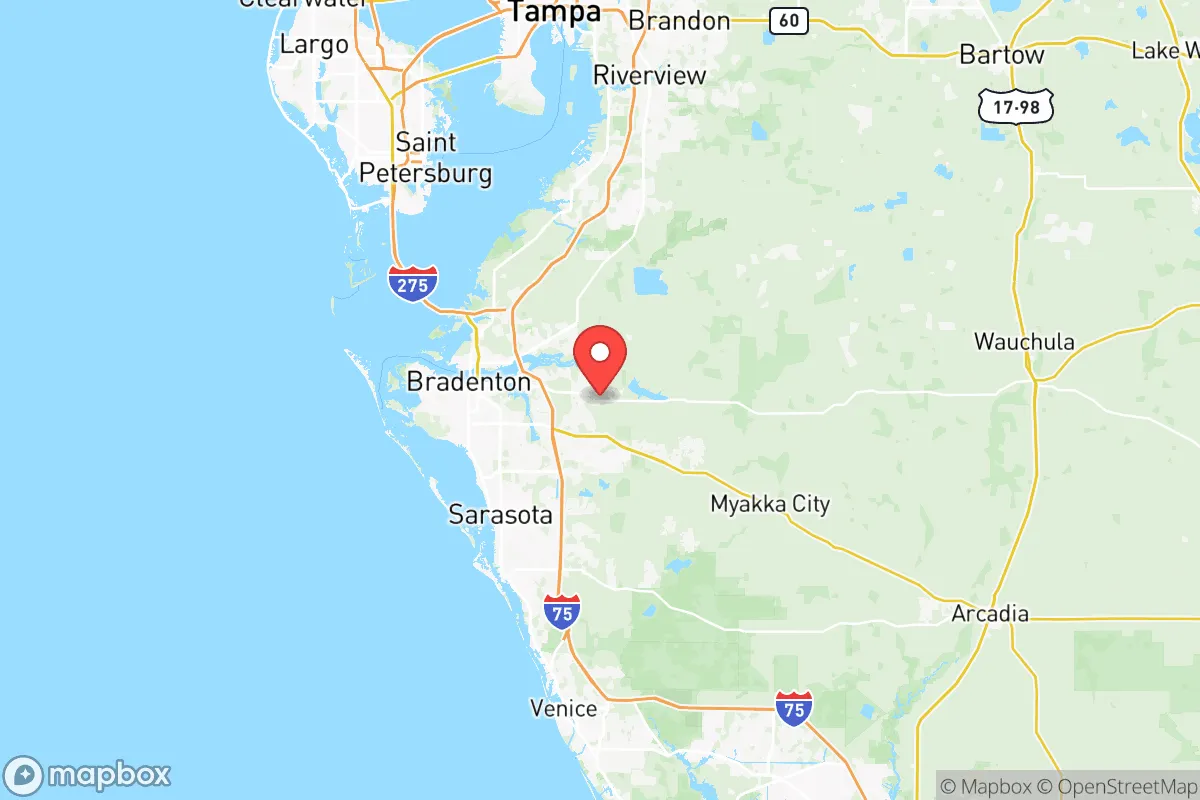
Manatee County’s 416,020 residents form a predominantly white (68.4%) population with a substantial Hispanic minority (17.9%) and a smaller Black community (7.8%), a profile that reflects its slow, layered growth from frontier outpost to Sun Belt retirement and migration hub. The county’s identity is rooted in its Gulf Coast geography, with a population that skews older than the national average yet has seen a recent influx of younger families from Florida’s pricier east coast and out-of-state metros. Distinctive markers include a strong Midwestern transplant presence, a growing Spanish-speaking workforce, and a cultural divide between the historic agricultural interior and the coastal resort and retirement corridor.
Settlement & growth (pre-1960)
Long before American settlement, the area now called Manatee County was home to the Tocobaga and Calusa peoples, whose shell mounds still dot the coastline near present-day Bradenton and Palmetto. Spanish explorers, including Hernando de Soto’s 1539 expedition, made brief contact, but no permanent European colony took root. The region remained a sparsely populated frontier through Florida’s territorial period, with the U.S. government forcibly removing most remaining Native peoples during the Seminole Wars of the 1830s and 1840s.
Permanent American settlement began in earnest in the 1840s, when pioneers from Georgia and the Carolinas — many of Scots-Irish and English descent — arrived by sea and wagon to establish small farming and cattle-ranching communities along the Manatee River. The 1850s saw the founding of Bradenton (originally named Bradentown) and the nearby port of Palmetto, which became the county’s twin anchors. These early settlers were subsistence farmers and cattlemen, raising hogs and scrub cattle in the pine flatwoods and shipping cotton and lumber from the river’s natural harbor.
The late 19th century brought a modest but significant wave of newcomers. A handful of Scottish and English families established plantations along the river, while freed slaves after the Civil War formed small communities, most notably in the Memphis neighborhood of Palmetto and the Blackburn area near Bradenton, where descendants still live today. The arrival of the Florida Southern Railway in the 1880s opened the interior, spurring the founding of Parrish, Duette, and Myakka City as agricultural hamlets for citrus, tomato, and cattle production.
The 1920s Florida land boom brought the first significant wave of out-of-state migrants, largely from the Midwest and Northeast, drawn by cheap coastal land and the promise of a subtropical climate. This period saw the development of Anna Maria Island and Longboat Key as winter retreats, though the boom collapsed in 1926 and growth stalled through the Depression. The 1940s and 1950s brought a steadier influx of retirees and veterans, many from Ohio, Illinois, and Michigan, settling in the new subdivisions of West Bradenton and Whitfield. By 1960, the county’s population stood at roughly 70,000, still overwhelmingly white and native-born, with a strong agricultural base in citrus, cattle, and winter vegetables.
Modern era (post-1965)
The 1965 Hart-Cellar Act reshaped American immigration, but Manatee County’s transformation came more from domestic migration than from overseas arrivals. Today, only 6.4% of the county’s residents are foreign-born, well below the national average of roughly 14%. The most visible immigrant presence is Hispanic, concentrated in the agricultural corridor between Palmetto and Parrish, where Mexican and Central American workers arrived from the 1980s onward to labor in the tomato, strawberry, and citrus fields. This workforce has since expanded into construction, landscaping, and service industries, and the Hispanic share of the population now stands at 17.9%, with growing communities in Bradenton’s east side and the unincorporated areas around Ellenton and Rubonia.
The post-1965 era’s defining trend, however, was the acceleration of Sun Belt migration. The completion of Interstate 75 through the county in the 1980s opened Manatee to commuters and retirees from Tampa and St. Petersburg, while the development of Lakewood Ranch beginning in the 1990s created a master-planned community that has become the county’s fastest-growing area. This new development drew a wave of professionals and families from the Northeast and Midwest, as well as an increasing number of relocators from California and other high-cost states seeking lower taxes and housing prices. The county’s Black population, at 7.8%, remains concentrated in the historic communities of Memphis, Blackburn, and Bradenton’s 13th Avenue corridor, with a smaller but growing presence in Lakewood Ranch.
East and Southeast Asian residents, comprising 1.7% of the population, are a relatively recent addition, largely arriving since 2000 as medical professionals, engineers, and entrepreneurs. They are dispersed rather than concentrated, with small clusters in Lakewood Ranch and Bradenton’s hospital district. The Indian-subcontinent community, at 0.5%, is even smaller and similarly dispersed, working primarily in healthcare, IT, and hospitality. The 2020s have brought a new wave of domestic migrants from Florida’s own east coast — particularly Broward and Palm Beach counties — seeking lower insurance costs and less congestion, a trend that has accelerated since 2022.
The future
Manatee County is becoming slightly more diverse, but the pace is slow. The Hispanic share is projected to grow toward 22-25% by 2040, driven by both immigration and higher birth rates, while the white share will decline gradually. The Black, Asian, and Indian communities are expected to grow modestly, largely through domestic migration rather than overseas arrivals. The county’s foreign-born share is likely to remain below 10%, as the primary driver of growth continues to be domestic relocation from other U.S. states.
Geographically, the population is dispersing eastward. Lakewood Ranch and the Parrish area are absorbing most new residential development, while the coastal communities of Anna Maria Island and Longboat Key are built out and increasingly expensive. The agricultural interior around Myakka City and Duette is beginning to see rural-residential development, though it remains the county’s least populated region. Culturally, the county is becoming less distinctively Midwestern as new arrivals come from a broader range of origins, and the growing Hispanic population is reshaping the social fabric of the eastern corridor.
For someone moving to Manatee County now, the bottom line is this: it is a growing, moderately diverse, and increasingly suburban county where the old agricultural identity is giving way to a commuter-and-retirement economy. The coastal areas offer established, affluent communities; the eastern corridor offers newer, more affordable housing; and the interior remains rural and traditional. The county’s character is being shaped less by immigration than by domestic relocation, and its future is one of steady, managed growth rather than dramatic transformation.

* Values derived from national, state, county, city and local statistics and may differ in a specific area. Last updated: 2026-10-19T10:11:26.000Z
Narrative content on this page is AI-generated and may contain mistakes. Verify any details that matter before acting on them.
ReloMaps may earn a commission from affiliate links at no extra cost to you.

