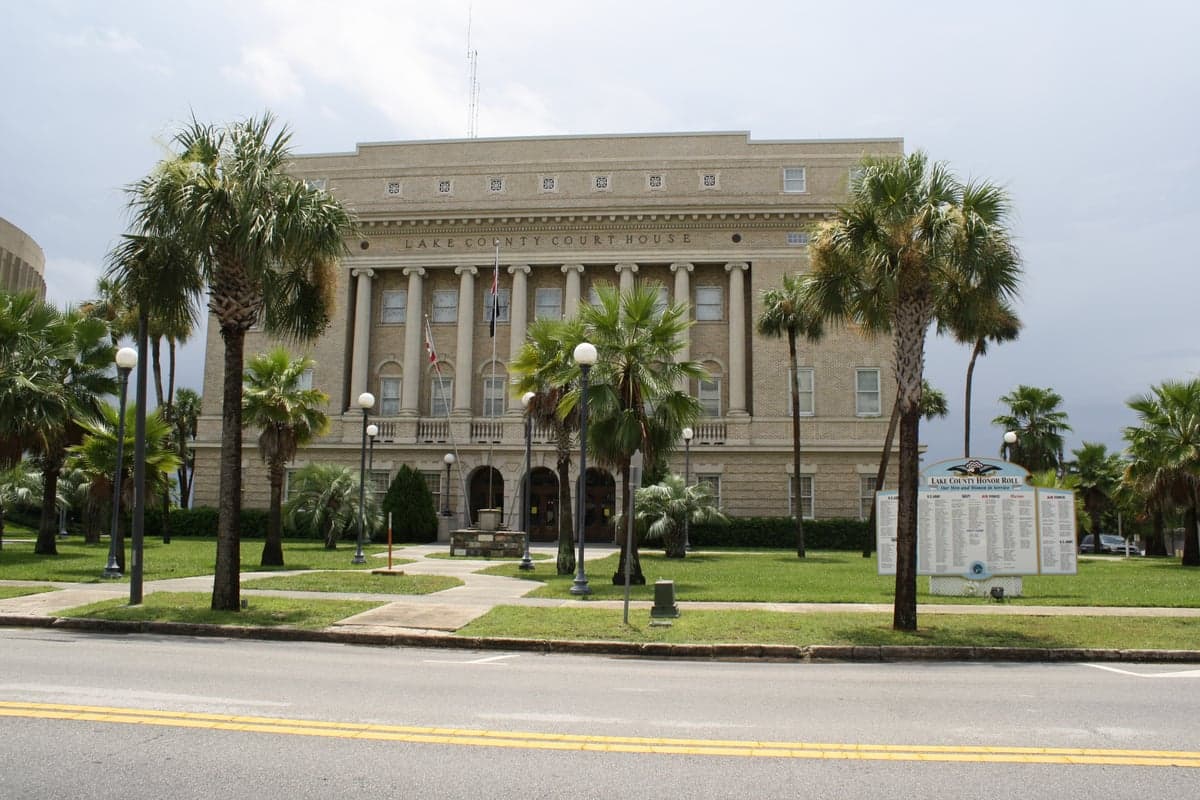
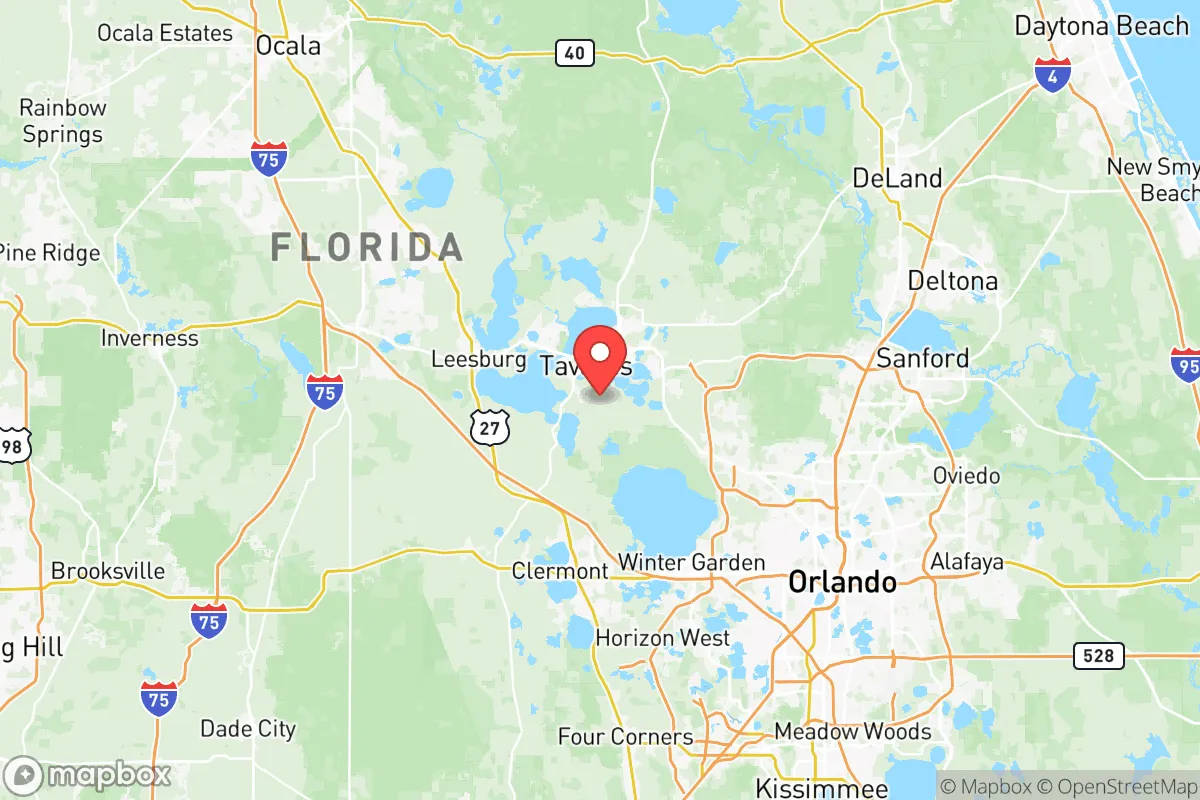
Photo: Wikipedia
Personal Sovereignty in Lake County
Viable for self-reliance. Generally workable, though some barriers may limit total independence.
What does Personal Sovereignty tell us?
Personal Sovereignty measures your capacity for self-reliance and independence with minimal government friction. Higher scores mean fewer barriers between you and the way you want to live... but it assumes you have the space you need and good neighbors.
What does this tell us?
Personal Sovereignty measures your capacity for self-reliance and independence with minimal government friction. Higher scores mean fewer barriers between you and the way you want to live... but it assumes you have the space you need and good neighbors.
State Policy
Energy independence: Importer (12% of energy produced in-state)
Personal Liberty
Homesteading

Personal Liberty Analysis
Lake County, Florida, offers a notably high degree of personal sovereignty compared to many parts of the state, particularly the densely populated coastal metros. The county’s regulatory environment leans toward individual discretion, with a tax burden that is among the lightest in the region and a legal framework that strongly supports self-defense, property rights, and parental authority. For single individuals and families who prioritize autonomy over government oversight, Lake County presents a compelling balance of rural freedom and suburban convenience, though the degree of independence varies significantly between the more developed southern corridor and the rural northern and western reaches.
Tax burden and regulatory posture: How Lake County compares to surrounding areas
Lake County’s tax and regulatory environment is a major draw for those seeking to keep more of their earnings and operate with fewer bureaucratic hurdles. The county’s combined state and local sales tax rate is 7.5%, which is the standard for most of Central Florida, but the real advantage lies in property taxes. The average effective property tax rate in Lake County is approximately 0.83% of assessed home value, notably lower than Orange County’s 1.02% and Seminole County’s 1.12%. Florida has no state income tax, which directly benefits all residents. The regulatory posture is generally light-touch, particularly in unincorporated areas like Astor, Altoona, and the rural stretches around Umatilla, where zoning is less restrictive and business licensing is straightforward. In contrast, the more populated southern cities like Clermont and Groveland have adopted more structured development codes and impact fees, reflecting their rapid suburban growth. For a family or individual looking to minimize tax exposure and avoid heavy-handed permitting, the northern and western parts of the county offer the most breathing room.
Self-defense and gun law specifics: What the Second Amendment looks like in Lake County
Lake County is a strong Second Amendment jurisdiction, operating fully within Florida’s permissive state framework. Florida is a “shall issue” state for concealed carry, meaning the sheriff’s office must issue a permit if the applicant meets statutory requirements, and Lake County’s Clerk of Court processes these efficiently. As of 2023, Florida also enacted constitutional carry (permitless carry), allowing law-abiding adults to carry a concealed firearm without a permit. The Lake County Sheriff’s Office, led by Sheriff Peyton Grinnell, has publicly emphasized support for gun rights and has not imposed any additional local restrictions beyond state law. This means no county-level waiting periods, no local assault weapon bans, and no extra registration requirements. For those living in rural areas like Paisley or the Lake County portion of The Villages, firearm ownership is a routine part of daily life, and shooting ranges are accessible. The legal environment is unequivocally pro-self-defense, with Florida’s “Stand Your Ground” law applying fully within the county.
Self-reliance and homesteading viability: Lot sizes, zoning, and off-grid feasibility
The viability of a self-reliant, homesteading lifestyle in Lake County depends heavily on location. In the unincorporated areas north of State Road 40, particularly around Astor and Altoona, zoning allows for agricultural use on parcels as small as one acre, and larger tracts of 5 to 20 acres are common and affordable. These areas have fewer building code restrictions, and residents often keep livestock, maintain gardens, and install solar panels without significant permitting hurdles. The county does not have a blanket ban on rainwater collection, and well and septic systems are standard for rural properties. However, in the southern growth corridor—Clermont, Minneola, and Groveland—lot sizes shrink to quarter-acre or smaller in subdivisions, and homeowners’ associations (HOAs) frequently restrict livestock, front-yard gardens, and visible solar installations. Off-grid living is legally feasible in unincorporated Lake County, but residents must still comply with state health department requirements for septic systems and wells. For those serious about homesteading, the northern and western rural zones offer the most freedom, while the southern suburbs are more suited to a conventional suburban lifestyle with limited self-reliance options.
Personal liberties: Parental rights, medical autonomy, speech, and property
Lake County’s culture and local governance reflect a strong emphasis on personal liberties, particularly in areas of parental rights and property use. The Lake County School Board has consistently supported parental involvement in curriculum decisions and has resisted state-level mandates that conflict with local values. Medical autonomy is generally respected, with no county-level vaccine mandates or business closures imposed during the 2020-2021 period, and local officials publicly opposed such measures. Freedom of speech is robust, with no local ordinances restricting public expression beyond standard state trespass and disorderly conduct laws. Property rights are well-protected; the county’s comprehensive plan allows for a wide range of uses on agricultural and rural residential land, and the eminent domain process is rarely used aggressively. In towns like Mount Dora and Tavares, historic preservation ordinances do impose some design review, which can be a minor constraint for homeowners wanting to modify exteriors. Overall, the county’s legal and cultural environment supports a high degree of individual discretion in family, health, and property matters.
Compared to the more regulated environments of coastal Florida or the urban core of Orlando, Lake County offers a notably higher degree of personal sovereignty. The combination of no state income tax, low property taxes, strong self-defense laws, and permissive rural zoning creates a landscape where self-reliance is not only possible but encouraged. For the reader who values autonomy and independence, Lake County—especially its northern and western reaches—ranks among the more freedom-oriented areas in Central Florida, while still providing access to the economic and healthcare infrastructure of the larger region.

* Values derived from national, state, county, city and local statistics and may differ in a specific area. Last updated: 2026-11-14T03:18:18.000Z
Narrative content on this page is AI-generated and may contain mistakes. Verify any details that matter before acting on them.
ReloMaps may earn a commission from affiliate links at no extra cost to you.

