Photo: Wikipedia
Demographics of Lake County
Affluence Level in Lake County
A middle-class area roughly in line with national averages across income, home values, education, and employment.
People of Lake County
The people of Lake County, Florida today number 398,696, forming a predominantly white (65.3%) population with a significant and growing Hispanic minority (17.9%) and a stable Black community (9.8%). The county’s identity is shaped by its inland location between Orlando and Ocala, its historic citrus and lake-country roots, and a more recent wave of domestic migration from the Midwest and Northeast that has made it one of the faster-growing counties in Central Florida. With a foreign-born share of just 4.1% — well below the national average — Lake County remains a predominantly native-born, English-speaking community, though its Hispanic and East/Southeast Asian populations are gradually diversifying the region’s cultural fabric.
Settlement & growth (pre-1960)
Before American settlement, the area now known as Lake County was inhabited by the Timucua people, whose presence in the region dates back thousands of years. By the 1700s, European contact, disease, and conflict had largely depopulated the Timucua, and the area became a sparsely inhabited frontier under Spanish and later British control. The Seminole people, a coalition of Creek-descended groups and escaped African slaves, moved into the region in the 18th and early 19th centuries, establishing villages around the many lakes. The Second Seminole War (1835–1842) resulted in the forced removal of most Seminoles from the area, opening the land for American settlement.
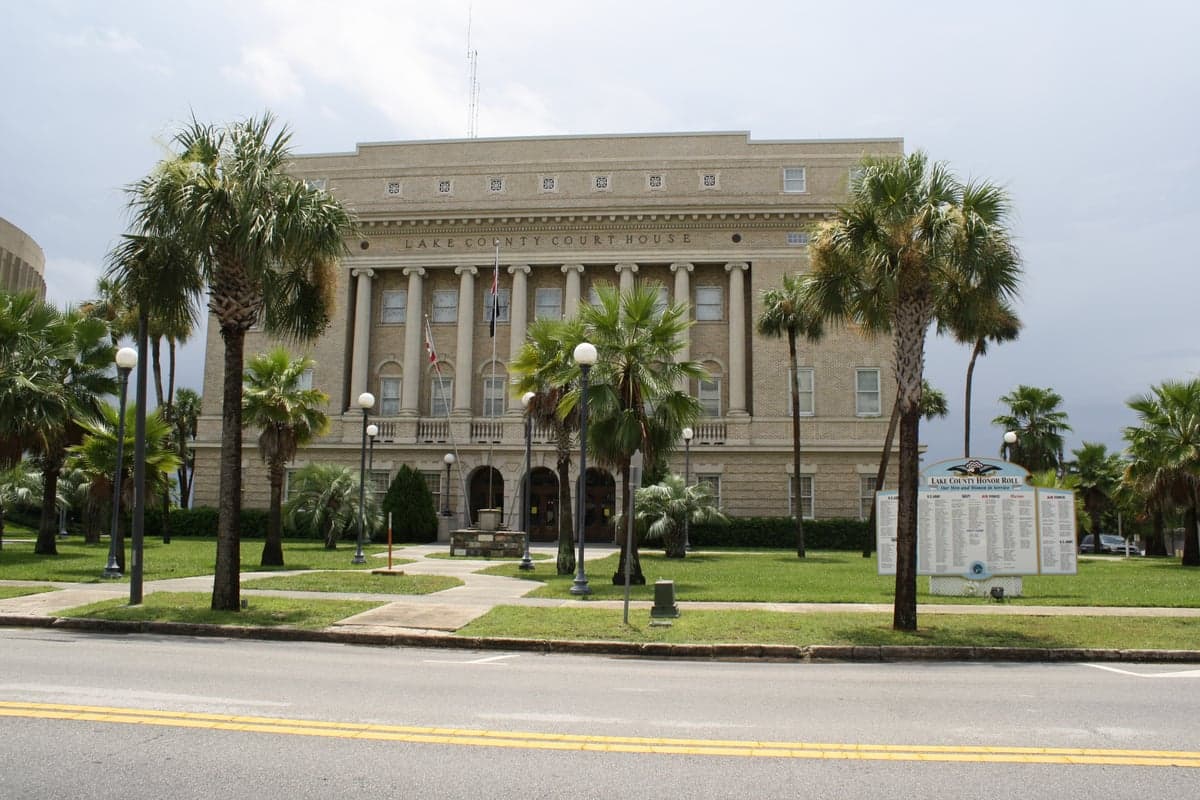
American pioneers began arriving in earnest after the 1845 statehood of Florida. The first permanent settlers were primarily Anglo-American farmers from Georgia, South Carolina, and other Deep South states, drawn by the fertile sandy soils and the network of lakes that provided transportation and irrigation. They established small agricultural communities around the county’s many lakes, with early settlements at Eustis (founded 1875), Mount Dora (1880), and Tavares (1880), the latter becoming the county seat. These early settlers grew cotton, corn, and later citrus, which became the region’s economic backbone by the 1890s.
The arrival of the railroad in the 1880s transformed Lake County. The South Florida Railroad and later the Atlantic Coast Line connected the county’s lake towns to northern markets, enabling the large-scale shipment of citrus fruit. This period saw an influx of Midwestern farmers and entrepreneurs, particularly from Ohio, Indiana, and Illinois, who purchased land for citrus groves and winter vegetable farming. Towns like Leesburg (founded 1857, but boomed after the railroad) and Clermont (1884) grew rapidly as citrus packing houses and shipping depots. By 1900, Lake County was one of Florida’s leading citrus producers, and its population was overwhelmingly white, native-born, and rural.
The early 20th century brought additional waves of settlement. African American communities formed in the post-Reconstruction era, primarily as agricultural laborers and domestic workers on white-owned citrus farms and ranches. Small Black settlements emerged in areas like Groveland (originally a railroad stop called Taylorville) and the Okahumpka area near Leesburg, where freedmen and their descendants established churches, schools, and mutual-aid societies. However, Jim Crow segregation and limited economic opportunities kept the Black population relatively small and concentrated in rural enclaves.
The 1920s Florida land boom brought a speculative wave of Northern investors and retirees, particularly to the lakefront towns of Mount Dora and Eustis, which marketed themselves as winter resorts. The boom collapsed in 1926, but the pattern of seasonal and retirement migration from the Midwest and Northeast had been established. The Great Depression and World War II slowed growth, but the post-war period saw a resurgence. The completion of the Florida Turnpike in the 1950s and the expansion of U.S. Highway 27 made Lake County more accessible from Orlando and the growing Atlantic coast. By 1960, the population had reached 57,383, still predominantly rural and agricultural, but with a growing number of retirees and commuters working in Orlando’s expanding economy.
Modern era (post-1965)
The 1965 Hart-Cellar Act, which abolished national-origin quotas, had a relatively modest direct impact on Lake County compared to coastal Florida. The county’s foreign-born population remains low at 4.1%, and the immigrant communities that did form are small and dispersed. The most notable post-1965 immigrant group has been Hispanic migrants, primarily of Mexican and Puerto Rican origin, who began arriving in the 1980s and 1990s to work in agriculture — particularly citrus harvesting and nursery operations — and later in construction and service industries tied to Central Florida’s tourism boom. Hispanic residents today make up 17.9% of the population, with concentrations in Groveland and Clermont, where affordable housing and proximity to Orlando’s job market have attracted younger families. A smaller but growing East/Southeast Asian community (1.2% of the population) has formed in the Mount Dora and Tavares areas, largely consisting of Vietnamese and Filipino families drawn to the region’s healthcare and hospitality sectors. The Indian-subcontinent population (0.9%) is concentrated in the southern part of the county near Clermont, where tech and healthcare professionals commute to Orlando’s growing employment hubs.
The most transformative demographic force in Lake County since 1965 has been domestic migration from the Rust Belt and Northeast. Beginning in the 1970s and accelerating through the 2000s, retirees and working-age families from New York, New Jersey, Ohio, Michigan, and Illinois have relocated to Lake County, drawn by lower housing costs, warmer winters, and the absence of state income tax. This wave has reshaped the county’s cultural identity, giving it a distinctly Northern-inflected character in many of its newer subdivisions. The Villages, a massive age-restricted retirement community that straddles the Lake-Sumter county line, has been a major driver of population growth since the 1990s, attracting tens of thousands of retirees from the Midwest and Northeast. The county’s population more than doubled between 1990 and 2020, from 104,870 to 383,956, with the fastest growth occurring in the southern and western parts of the county — Clermont, Groveland, and Mascotte — where new subdivisions have replaced former citrus groves.
Suburbanization from Orlando has been the dominant trend since 2000. The construction of the Wekiva Parkway (State Road 429) and the expansion of the Florida Turnpike have made southern Lake County a bedroom community for Orlando’s metro area, which has a population of over 2.6 million. Commuters now make up a significant share of Lake County’s workforce, particularly in Clermont and Groveland, where the median commute time is around 30 minutes. This has shifted the county’s economic base from agriculture to services, retail, and healthcare, and has brought a more diverse, younger population than the traditional retiree demographic. The Black population has remained relatively stable at 9.8%, with historic communities in Leesburg and Eustis persisting, while newer Black residents have moved into suburban developments in Clermont and Groveland.
The future
Lake County’s population is projected to continue growing at a rapid pace, with estimates suggesting it could exceed 500,000 by 2035. The county is becoming more diverse, but slowly. The Hispanic share is expected to rise from 17.9% to perhaps 25-30% by 2040, driven by both domestic migration and natural increase, while the white share will decline from 65.3% toward 55-60%. The East/Southeast Asian and Indian-subcontinent populations will likely grow from their current small bases as Orlando’s tech and healthcare sectors expand, but they are unlikely to reach the shares seen in coastal Florida counties. The Black population is projected to remain stable or grow modestly, as suburbanization from Orlando brings more Black families into southern Lake County.
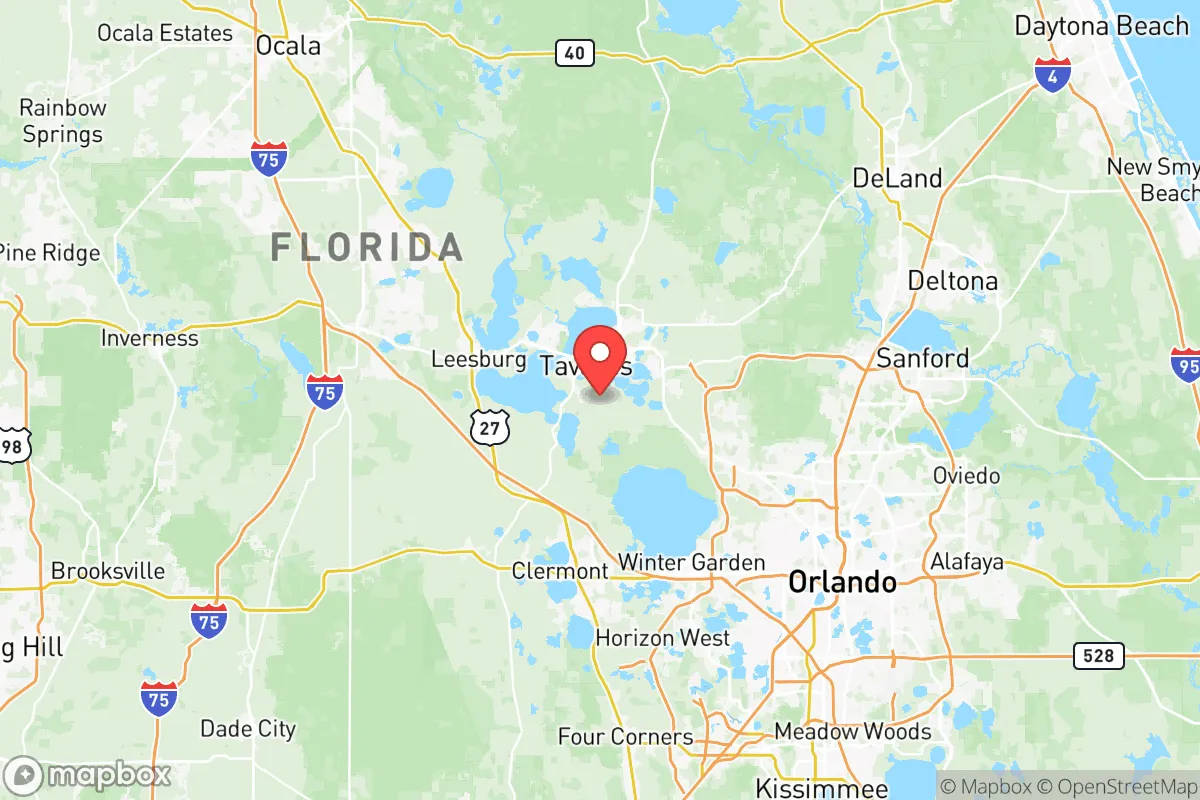
New residential development is concentrating in the southern corridor — Clermont, Groveland, and the Four Corners area where Lake, Orange, Osceola, and Polk counties meet — as well as along the U.S. 27 corridor between Leesburg and Clermont. These areas are attracting a mix of young families, commuters, and retirees, creating a more age-diverse population than the traditional retirement-heavy profile. The northern part of the county, including Eustis, Mount Dora, and Tavares, is growing more slowly and retaining a higher share of older, white residents. The county’s cultural identity is evolving from a quiet, rural, citrus-growing region to a suburban extension of the Orlando metro area, with all the diversity, congestion, and economic opportunity that entails.
For someone moving to Lake County now, the region offers a lower-cost, less crowded alternative to Orlando proper, with good schools in the southern suburbs and a strong sense of community in the historic lake towns. The population is still predominantly native-born and English-speaking, but the Hispanic and Asian communities are growing, and the county’s political and cultural character — historically conservative — is gradually moderating as new residents arrive from diverse backgrounds. The next decade will likely see continued suburbanization, increased diversity, and a gradual shift from a retiree haven to a more balanced, family-oriented community.

* Values derived from national, state, county, city and local statistics and may differ in a specific area. Last updated: 2026-11-14T03:18:18.000Z
Narrative content on this page is AI-generated and may contain mistakes. Verify any details that matter before acting on them.
ReloMaps may earn a commission from affiliate links at no extra cost to you.

