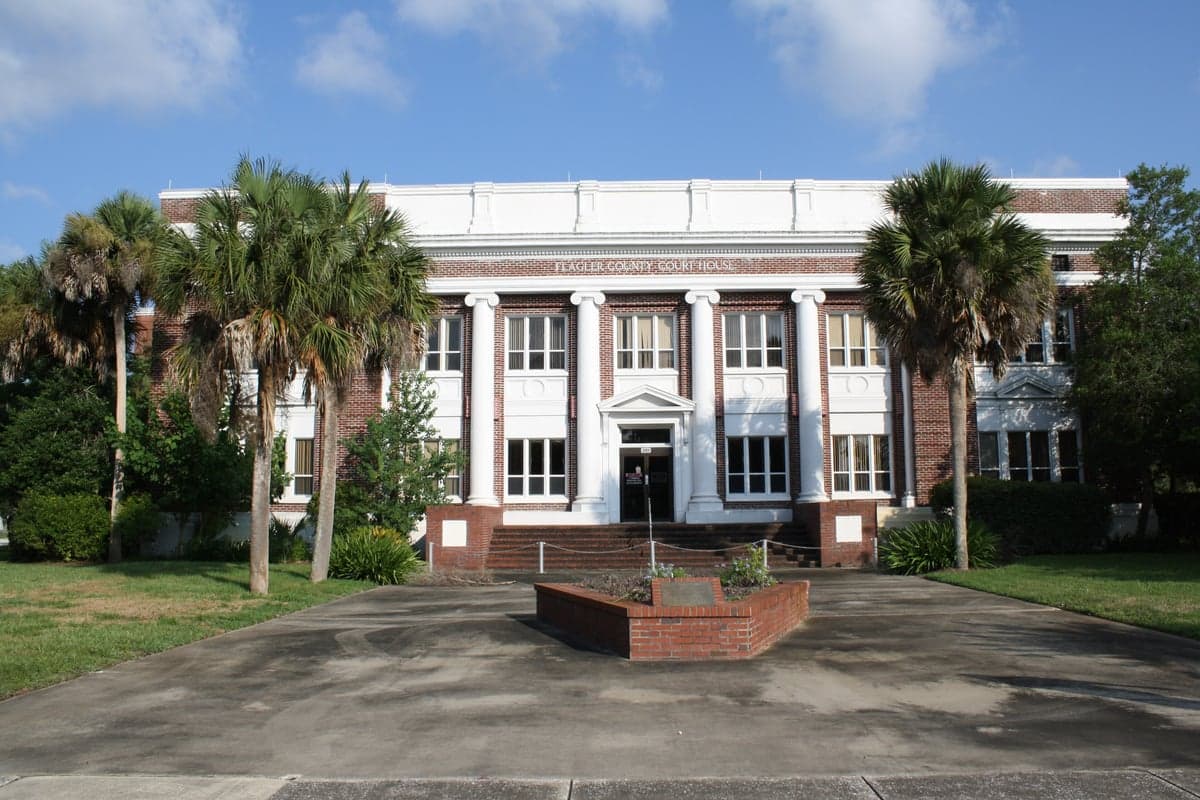
Photo: Wikipedia
Strategic Assessment of Flagler County
Meaningful friction. Expect exposure to either population pressure, blast zones, or natural disaster risk. Consider buying a retreat property.
What does the Strategic Assessment tell us?
Our Strategic Assessment grades tactical survivability of an area. Major population centers, military targets, fallout zones, natural disasters, and border exposure all drive risk — lower exposure means a more defensible position in a crisis.
This is heavily inspired by Joel Skousen's Strategic Relocation book. Highly recommended you checkout the book ($)What does this tell us?
Our Strategic Assessment grades tactical survivability of an area. Major population centers, military targets, fallout zones, natural disasters, and border exposure all drive risk — lower exposure means a more defensible position in a crisis.
This is heavily inspired by Joel Skousen's Strategic Relocation book. Highly recommended you checkout the book ($)Strategic Pillars

Key Distances
Strategic Assessment Analysis
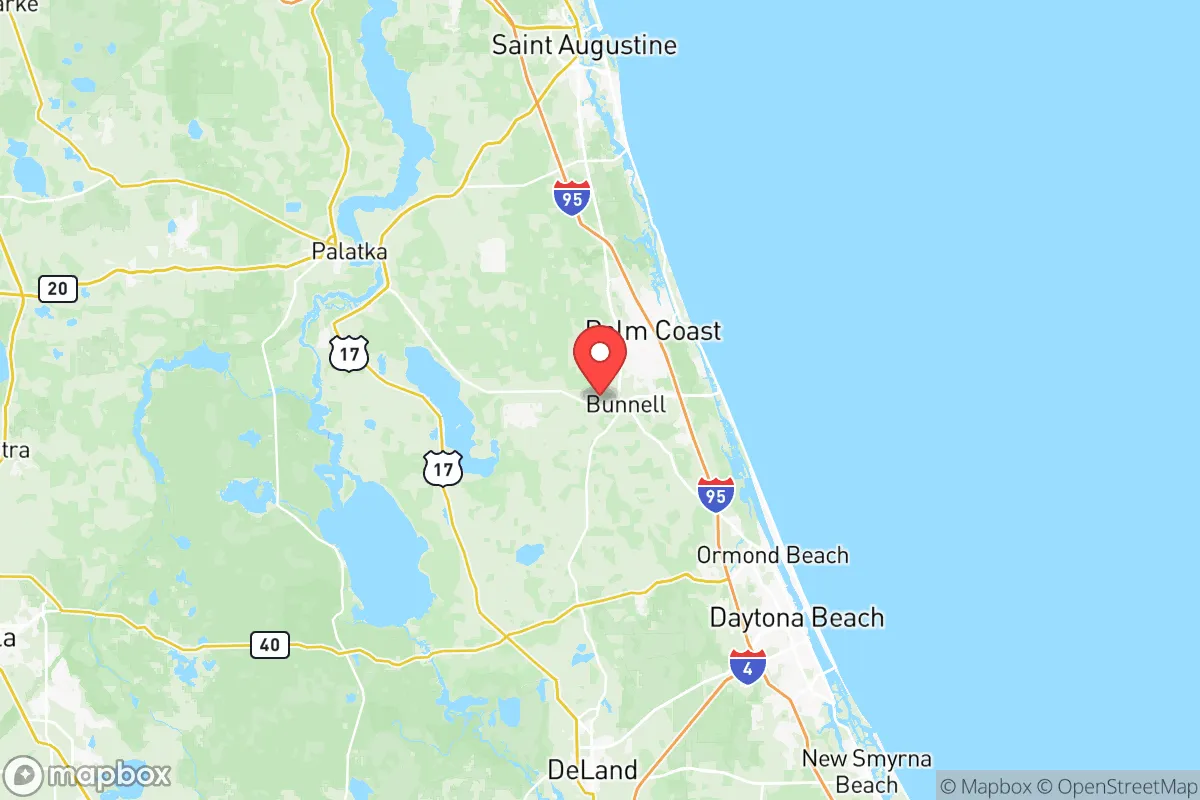
Flagler County, Florida, occupies a strategic position along the Atlantic coast that balances accessibility with a degree of separation from the densest population centers and critical infrastructure targets. Located roughly 25 miles north of Daytona Beach and 60 miles south of Jacksonville, the county offers a buffer from the immediate fallout zones of major military installations, ports, and industrial complexes while still providing practical access to supply chains and medical facilities. The county seat, Bunnell, and the coastal hub of Palm Coast form the core of a community that has grown steadily but remains far less dense than the Orlando or Jacksonville metros, giving relocators a meaningful head start on self-sufficiency planning.
Geographic position and natural advantages for disaster preparedness
Flagler County’s geography provides several inherent resilience advantages. The county sits on a relatively high coastal ridge compared to much of Florida, with elevations reaching 30–40 feet above sea level in parts of Bunnell and western Palm Coast. This reduces—though does not eliminate—storm surge risk during hurricanes. The Intracoastal Waterway runs through the county, offering both a transportation corridor and a natural barrier that slows inland storm surge. The county’s extensive state forests and conservation lands, including the Graham Swamp Conservation Area and parts of the Ocala National Forest to the west, create a green buffer that can serve as a resource for foraging, hunting, and water collection in a prolonged disruption. The Matanzas River and numerous freshwater springs provide decentralized water sources, though treatment would be required. For a relocator, the key advantage is that Flagler County is not adjacent to any major military base, nuclear power plant, or petrochemical refinery—the closest significant target is Naval Station Mayport near Jacksonville, roughly 50 miles north, and the St. Johns River Power Park coal/natural gas facility near Jacksonville, about 45 miles north. This distance places Flagler County outside the most severe immediate blast and fallout zones for those targets, though prevailing winds from the north during winter storms could carry fallout southward.
Risks, exposures, and proximity to fallout-relevant landmarks
While Flagler County avoids the highest-risk zones, it is not immune to secondary effects. The county lies within 100 miles of King Bay Naval Submarine Base (near St. Marys, Georgia, about 70 miles north), a primary strategic target. Fallout from a strike on King Bay could reach Flagler County within hours under northerly winds, though the county is outside the lethal radiation zone for a single warhead. The Port of Jacksonville (JAXPORT), a major container and military logistics hub, is roughly 55 miles north—close enough that a conventional or nuclear attack could disrupt fuel, food, and medical supply chains for weeks. Flagler County’s own critical infrastructure is limited: the Flagler County Airport (KFIN) in Bunnell is a general aviation field that could serve as a secondary evacuation or supply hub, but it lacks the hardened facilities of a major airport. The county’s power grid is served by Florida Power & Light, with transmission lines running along the I-95 corridor—a vulnerable chokepoint. Natural disaster risks are more immediate: hurricanes (most recently Hurricane Matthew in 2016 and Hurricane Ian in 2022 caused flooding and power outages), and the county’s low-lying coastal areas in Palm Coast and Flagler Beach are vulnerable to storm surge. Wildfire risk is moderate, particularly in the western forested areas during dry spring months. For a relocator, the practical takeaway is that Flagler County offers a reasonable balance of distance from primary targets while still being within the secondary fallout and disruption zone for Jacksonville-area assets.
Practical resilience for a relocator: food, water, energy, and defensibility
For someone serious about self-sufficiency, Flagler County presents both opportunities and limitations. Water access is the strongest asset: the Floridan Aquifer lies at relatively shallow depths (100–200 feet) across most of the county, making private well drilling feasible and affordable. Many rural properties in Bunnell and western Flagler County already rely on wells. Surface water from the Matanzas River, Crescent Lake, and numerous creeks is available but requires filtration and boiling due to agricultural runoff and brackish intrusion near the coast. Food production is viable: the county has a growing number of small farms, farmers markets, and community gardens, particularly around Bunnell and the Haw Creek area. The growing season is year-round, with warm winters allowing for continuous vegetable production. However, the sandy, acidic soil requires amendment for serious agriculture. Hunting is permitted in state forests and wildlife management areas, with deer, wild hog, and turkey available. Fishing in the Intracoastal and Atlantic is productive year-round. Energy resilience is a mixed picture: solar potential is excellent (Florida averages 5.5 peak sun hours per day), but the county’s building codes do not mandate solar-ready construction. Backup generators are common in rural areas due to frequent hurricane-related outages. The county’s defensibility is moderate—the I-95 corridor and US-1 provide evacuation routes but also serve as ingress for displaced populations from Jacksonville and Daytona Beach. The western part of the county, near Bunnell and the Ocala National Forest, offers more seclusion and natural barriers (swamps, forests) that slow movement. The coastal areas, particularly Flagler Beach and Palm Coast, are more exposed and would be difficult to defend in a widespread breakdown scenario. For a relocator, the best strategy is to secure a property west of I-95, with a well, solar panels, and a defensible perimeter, while maintaining a low profile in the community.
Overall, Flagler County offers a solid strategic option for a relocator prioritizing resilience without complete isolation. Its distance from primary military and industrial targets is a genuine advantage over areas closer to Jacksonville, Orlando, or Tampa. The county’s natural resources—abundant groundwater, year-round growing conditions, and forested buffers—support a self-sufficient lifestyle, but the risks of hurricane disruption, supply chain fragility, and secondary fallout from northern targets cannot be ignored. The key is to choose a location west of I-95, invest in well and solar infrastructure, and build relationships with the local farming and preparedness community. Flagler County is not a bunker, but it is a defensible base camp with room to breathe.

* Values derived from national, state, county, city and local statistics and may differ in a specific area. Last updated: 2026-07-02T04:43:39.000Z
Narrative content on this page is AI-generated and may contain mistakes. Verify any details that matter before acting on them.
ReloMaps may earn a commission from affiliate links at no extra cost to you.

