Photo: Wikipedia
Political ClimatePolitical Climate in Flagler County
Showing district-level results — no local-only data available.
Local Political AnalysisPolitical Analysis of Flagler County
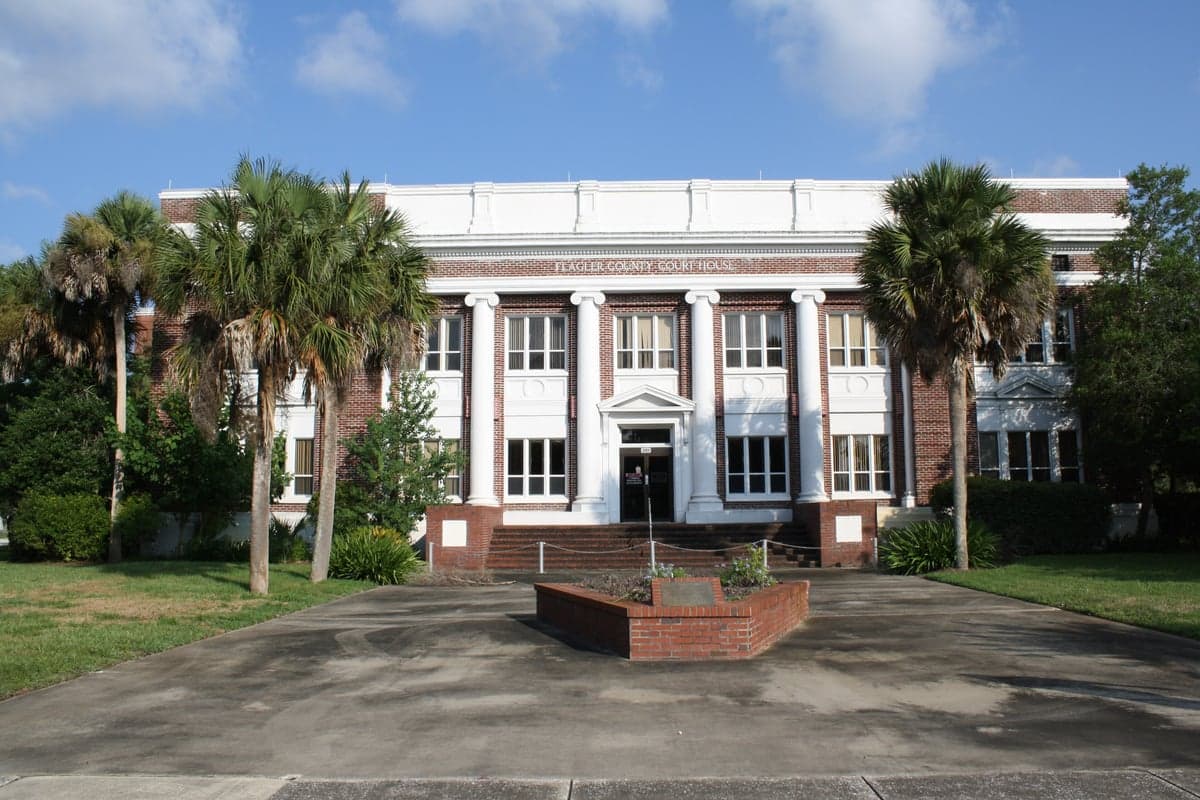
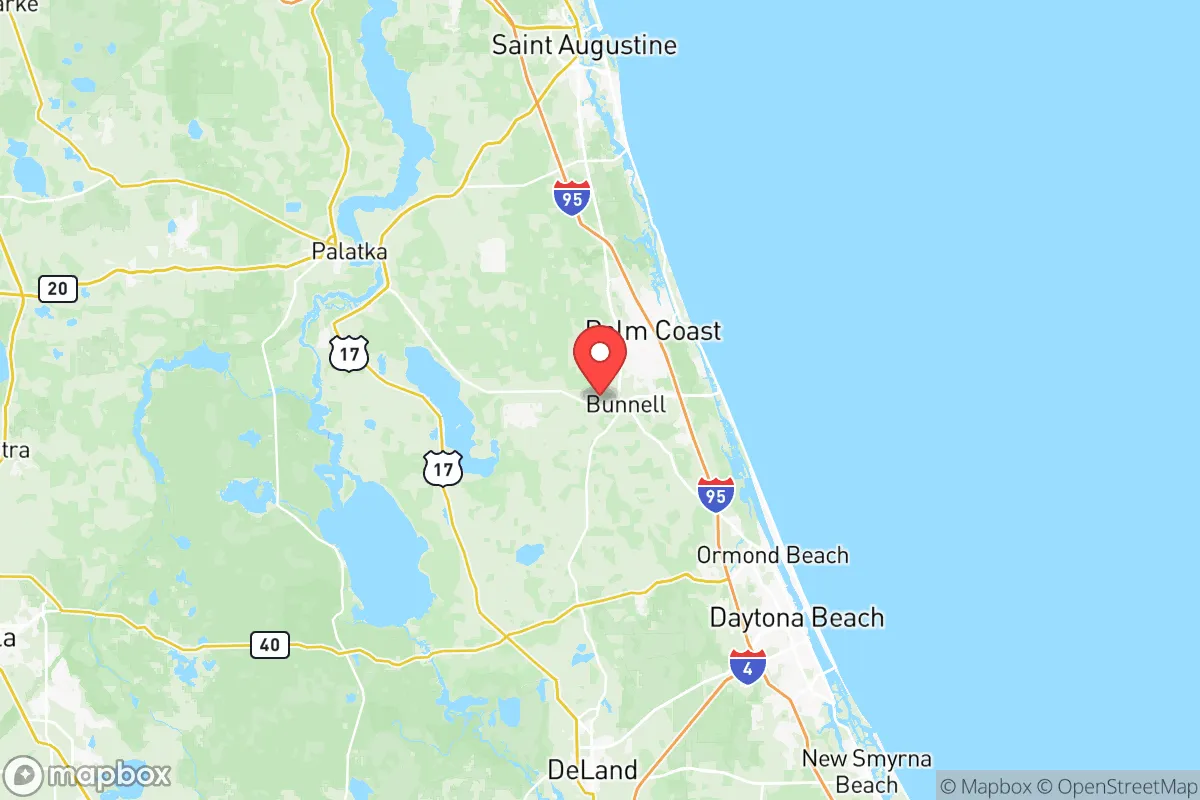
Flagler County has shifted from a swing county to a solidly Republican stronghold, with a Cook PVI of R+14 that makes it one of the most conservative areas on Florida's Atlantic coast. That R+14 rating means the county votes about 14 points more Republican than the national average, a significant jump from its purple status just a decade ago. The shift is driven largely by an influx of retirees from the Northeast and Midwest who, while often fiscally conservative, have also brought a more moderate social streak to places like Palm Coast, the county's largest city. Meanwhile, the rural western parts of the county, around Bunnell and the farming communities near the St. Johns River, have long been deeply red, creating a subtle but real political gradient from east to west.
How it compares
Flagler County's R+14 rating is nearly three times more Republican than Florida's statewide PVI of R+5, placing it in the same league as neighboring Volusia County's more conservative precincts. To put it in local terms: while Florida as a whole is a competitive state that can flip in a wave election, Flagler County is reliably red in all but the most extreme Democratic surges. The most notable internal divide is between the coastal, newer developments in Palm Coast's "C" and "F" sections, where you'll find a higher concentration of registered Democrats and independent voters, and the older, inland towns like Flagler Beach and Beverly Beach, which lean more conservative. The swing precincts are almost entirely in central Palm Coast, particularly around the Town Center and along the Palm Coast Parkway corridor, where transplants from blue states have created a more balanced electorate. In contrast, precincts in Bunnell and the rural western part of the county regularly deliver 65-70% of the vote for Republican candidates.
What this means for residents
For conservative residents, the political climate means their values are reflected in local governance: the Flagler County Commission has a solid Republican majority, school board races are often decided in the GOP primary, and tax policy tends to favor limited government. For liberal residents, the reality is more nuanced. While they are a clear minority, they are not without influence, especially in Palm Coast's more moderate precincts where local races can be competitive. The county's rapid growth—Flagler was one of the fastest-growing counties in the U.S. in the early 2020s—has brought a steady stream of new voters, which has kept the political landscape from becoming static. You'll find active Democratic clubs in Palm Coast and Flagler Beach, and the county's environmental issues, like coastal erosion and development pressure, often create bipartisan coalitions. That said, a liberal resident should expect to be in the minority in most civic settings, from city council meetings to neighborhood associations.
One cultural distinction that sets Flagler apart from deeper-red inland counties is its relationship with growth and development. The county's Republican leadership has generally been pro-development, but there's a strong, cross-party "slow growth" movement, particularly in Palm Coast and Flagler Beach, that pushes back against unchecked sprawl. This creates a unique dynamic where you'll see conservative retirees and liberal environmentalists standing side by side at planning board meetings, arguing for stricter zoning and better infrastructure. It's not a blue island in a red sea, but it's a place where the political conversation is shaped as much by local geography and lifestyle as by national party labels. For anyone moving here, the key takeaway is that Flagler County is a reliably Republican area with a moderate, growth-focused center in Palm Coast, and that your experience will depend heavily on which part of the county you call home.

State Political ClimatePolitical Climate in Florida
State Political AnalysisPolitical Environment in the State
Florida is a solidly Republican-leaning state with a Cook PVI of R+5, but calling it a simple red state misses the real story. The state’s political identity has shifted dramatically over the past two decades, evolving from a quintessential swing state that decided the 2000 presidential election into a reliably right-of-center powerhouse. The dominant coalition today is a blend of conservative retirees, suburban families, and a growing number of Latino voters, particularly Cuban-Americans and Venezuelans in South Florida, who have moved toward the GOP. This transformation wasn’t gradual; it accelerated after 2018, driven by a combination of in-migration from blue states, a strong economy, and a state government that has aggressively pursued a conservative policy agenda.
Urban vs. rural divide
The political map of Florida is a textbook study in urban-rural polarization, but with a unique twist. The major metros—Miami-Dade, Broward (Fort Lauderdale), and Orange County (Orlando)—are the Democratic strongholds, with Miami-Dade being the most notable because it has been trending rightward. In 2020, Donald Trump improved his margin in Miami-Dade by over 20 points compared to 2016, a shift driven by Cuban-American and Nicaraguan voters in suburbs like Hialeah and Doral. Meanwhile, the state’s vast rural and exurban areas—the Panhandle counties like Santa Rosa and Okaloosa, the interior ranchlands of Polk and Hendry counties, and the northern tier around Gainesville and Lake City—are deeply Republican. The real battlegrounds are the fast-growing suburban counties in the I-4 corridor, such as Hillsborough (Tampa), Pinellas (St. Petersburg), and Seminole (north of Orlando). These areas have historically been swing zones, but recent cycles have seen them lean red, with Hillsborough County, once a Democratic bellwether, now voting Republican in statewide races.
Policy environment
Florida’s policy environment is defined by a low-tax, low-regulation posture that appeals to conservatives and businesses alike. There is no state income tax, which is a major draw for relocators. The regulatory framework is business-friendly, with a right-to-work law and a tort reform system that caps noneconomic damages in medical malpractice cases. Education policy has been a flashpoint: the state has a robust school choice program, including the Family Empowerment Scholarship and the Florida Tax Credit Scholarship, which allow public funds to follow students to private and charter schools. Higher education has seen a conservative shift, with Governor Ron DeSantis appointing trustees to the New College of Florida and Florida State University who emphasize classical liberal arts and free speech. Healthcare policy is mixed: Florida did not expand Medicaid under the Affordable Care Act, and the state has a competitive private insurance market. Election laws have been tightened since 2020, with stricter voter ID requirements, limits on drop boxes, and a ban on ballot harvesting. The state also has a “Stand Your Ground” self-defense law and a permitless carry law (HB 543, effective July 2023) that allows most adults to carry concealed firearms without a permit.
Recent policy direction
The last five years have seen Florida enact a slate of legislation that has solidified its reputation as a laboratory for conservative governance. On gun rights, the permitless carry law was a major win for the NRA and local gun rights groups. On parental rights, the Parental Rights in Education Act (HB 1557, often called the “Don’t Say Gay” law) restricts classroom instruction on sexual orientation and gender identity in grades K-3, with expansions to all grades in 2023. On speech and education, the Stop WOKE Act (HB 7) limits how race-related concepts can be taught in schools and workplaces, though parts of it have been blocked by federal courts. On medical and bodily autonomy, Florida banned abortions after six weeks (HB 5, signed in 2023), with exceptions for rape, incest, and the life of the mother. On property rights, the state has preempted local rent control ordinances and strengthened eminent domain protections. On voting, SB 90 (2021) added new ID requirements for mail ballots and limited drop box availability. On privacy and surveillance, the state passed a biometric data privacy law but has resisted broad data privacy regulations. The overall direction is toward maximizing individual liberty in economic and self-defense matters while restricting it in social and educational contexts.
Civil unrest & political movements
Florida has seen its share of political flashpoints, but large-scale civil unrest has been less common than in states like Oregon or Minnesota. The most visible protests in recent years were the 2020 Black Lives Matter demonstrations in Miami, Tampa, and Orlando, which were largely peaceful but did see some property damage and curfews. The state has become a magnet for conservative activism: groups like Moms for Liberty, which advocates for parental rights in schools, have a strong presence in suburban counties like Pasco and St. Johns. Immigration politics are a constant undercurrent, particularly in South Florida, where the state has taken a hard line against sanctuary cities—SB 168 (2019) bans local governments from adopting sanctuary policies and requires cooperation with federal immigration authorities. The state has also bused migrants to Democratic-led states as a political statement. Election integrity remains a hot-button issue, with the state creating a new Office of Election Crimes and Security in 2022, which has investigated and prosecuted a small number of cases of double voting. A new resident would notice that political bumper stickers, yard signs, and flags are common, especially in suburban and rural areas, but open political confrontation in daily life is rare outside of social media.
Projection
Over the next five to ten years, Florida’s political trajectory points toward a continued rightward shift, but with potential for a modest rebalancing. The state is growing by roughly 300,000 to 400,000 new residents per year, many from high-tax, high-regulation states like New York, California, and Illinois. These newcomers tend to be more affluent and moderate, and while they often vote Republican on economic issues, they may be less enthusiastic on social issues like abortion and book bans. The Latino vote, particularly in Miami-Dade, is likely to remain Republican-leaning, but younger Puerto Rican and Dominican voters in Central Florida could push Orange and Osceola counties further left. The biggest wildcard is climate change: as sea-level rise and hurricane risks become more acute, the cost of property insurance is skyrocketing, which could eventually erode the state’s economic appeal and shift political priorities. For now, expect the state to remain R+3 to R+6, with the GOP controlling the governorship and both legislative chambers for the foreseeable future. A relocator moving in today should expect a state where conservative policies are the default, but where local elections in suburban counties can still be competitive.
For a new resident, the bottom line is that Florida offers a political environment that is clearly conservative but not monolithic. You’ll find deep-blue pockets in Miami Beach, downtown Orlando, and Tallahassee’s college neighborhoods, but the state government and most county commissions will lean right. If you value low taxes, school choice, and a business-friendly climate, you’ll feel at home. If you’re concerned about abortion access, LGBTQ+ rights, or public education funding, you’ll need to be strategic about where you settle—St. Petersburg and Gainesville are more liberal enclaves, while Naples and Pensacola are deeply conservative. The key is to match your personal priorities with the specific culture of your chosen city, because in Florida, the state may be red, but the neighborhoods are a mosaic.
* Values derived from national, state, county, city and local statistics and may differ in a specific area. Last updated: 2026-07-02T04:43:39.000Z
Narrative content on this page is AI-generated and may contain mistakes. Verify any details that matter before acting on them.
ReloMaps may earn a commission from affiliate links at no extra cost to you.

