Photo: Wikipedia
Demographics of Flagler County
Affluence Level in Flagler County
A middle-class area roughly in line with national averages across income, home values, education, and employment.
People of Flagler County
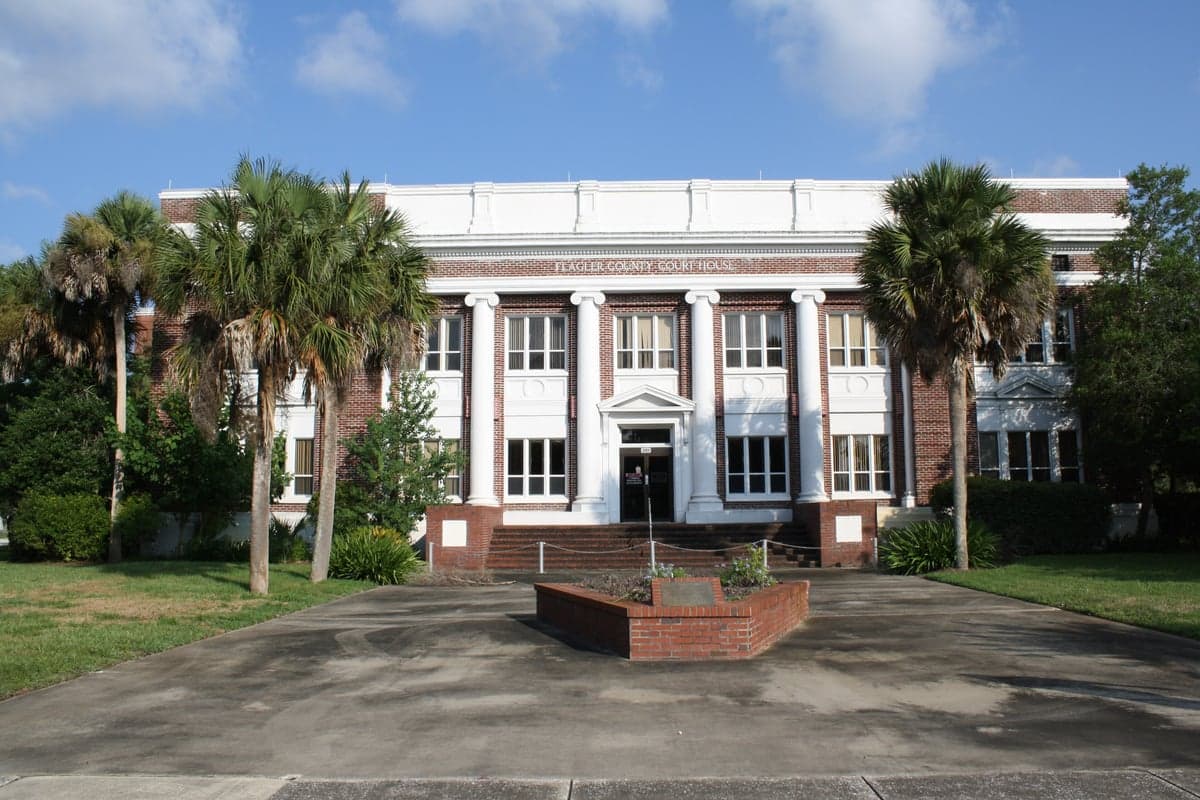
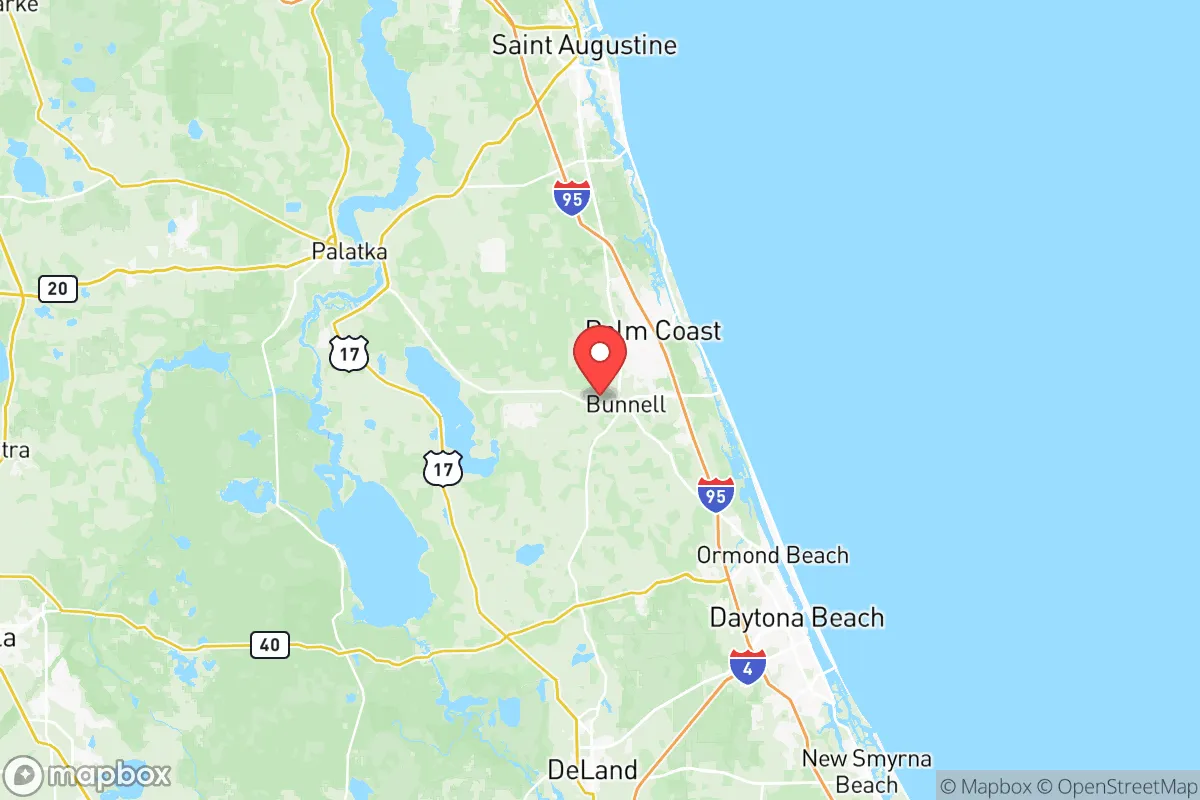
Flagler County’s 121,710 residents are a predominantly white, older, and politically conservative population, shaped by late-20th-century Sun Belt migration rather than deep historic settlement. With a foreign-born share of just 3.6%—well below the national average—and a population that is 73.3% white, 11.2% Hispanic, 9.2% Black, and 1.6% East/Southeast Asian, the county’s identity is rooted in domestic transplants seeking lower taxes, coastal access, and a quieter pace of life. The county’s two main population centers—Palm Coast, a master-planned retirement and family suburb, and the historic agricultural town of Bunnell—anchor a community where newcomers from the Northeast and Midwest have steadily replaced the area’s original ranching and farming families.
Settlement & growth (pre-1960)
Flagler County was created in 1917 from portions of St. Johns and Volusia counties, but its human history begins much earlier with the Timucua people, who lived along the Matanzas River and the Atlantic coast for thousands of years. Spanish explorers and missionaries arrived in the 1500s, establishing a presence at the Mission San Antonio de Padua near present-day Bunnell, though disease and conflict decimated the native population by the early 1700s. The area remained sparsely populated through the Spanish and British colonial periods, with no permanent European settlement taking hold until after Florida became a U.S. territory in 1821.
The first sustained American settlement came in the 1830s and 1840s, when a handful of pioneer families—primarily of Scots-Irish and English descent—received land grants under the Armed Occupation Act of 1842, which offered 160 acres to settlers willing to defend the frontier. These families established small farms and cattle ranches in what is now Bunnell and along the Haw Creek corridor. The arrival of the Florida East Coast Railway in the 1880s, pushed by Henry Flagler (the county’s namesake), opened the region to timber and turpentine industries, drawing a small number of Black laborers from Georgia and the Carolinas to work in the pine forests. These workers formed the nucleus of the county’s Black community, which concentrated in the southern part of Bunnell and in the unincorporated settlement of Korona.
For the next 70 years, Flagler County remained one of Florida’s least populated counties. The 1950 census recorded just 3,757 residents. The economy was dominated by small-scale agriculture—potatoes, cabbage, and citrus—and commercial fishing in the coastal hamlet of Marineland, which opened as the world’s first oceanarium in 1938. There was no suburban development, no retirement boom, and no significant immigration from outside the United States. The population was nearly entirely native-born white and Black, with the Black share hovering around 20% through the mid-20th century, concentrated in Bunnell and the rural Flagler Beach area.
Modern era (post-1965)
The 1965 Hart-Cellar Act had little direct effect on Flagler County, as the area attracted almost no post-1965 immigrant groups. Instead, the county’s modern demographic transformation was driven entirely by domestic migration. The turning point came in the 1970s, when ITT Community Development Corporation purchased 42,000 acres of former timberland and began building Palm Coast, a master-planned community designed to attract retirees and second-home buyers from the Northeast. The first homes were sold in 1971, and by 1980 the county’s population had more than tripled to 10,887. Palm Coast’s growth accelerated through the 1990s and 2000s, fueled by I-95 access, relatively low property taxes, and the appeal of coastal living at a fraction of the cost of nearby St. Augustine or Daytona Beach.
The domestic migration that reshaped Flagler County came overwhelmingly from New York, New Jersey, Connecticut, and Massachusetts. These newcomers were predominantly white, middle-class, and over 45, drawn by the promise of a warmer climate and a lower cost of living. The county’s Black population, which had been 18% in 1970, fell to 9.2% by 2020 as the white in-migration swamped the older Black communities. The Hispanic share grew modestly from near-zero in 1980 to 11.2% today, driven by Puerto Rican families moving from Orlando and by Mexican-origin workers in construction and landscaping. These Hispanic residents are dispersed throughout Palm Coast and Bunnell, with no single ethnic enclave. The East/Southeast Asian population (1.6%) and Indian-subcontinent population (0.6%) are small and scattered, concentrated in newer subdivisions in western Palm Coast near the Matanzas Woods Parkway corridor.
Suburbanization has been the dominant force. Palm Coast now holds roughly 80% of the county’s population, while Bunnell has grown more slowly and retains a working-class, older-stock character. Flagler Beach, a small beach town, has seen an influx of remote workers and early retirees from the Northeast since 2020. The county’s college-educated share stands at 30.4%, reflecting the professional and managerial backgrounds of many Palm Coast arrivals, though this is below the Florida state average of 32.5%.
The future
Flagler County is projected to continue growing at a steady pace, with the University of Florida’s Bureau of Economic and Business Research estimating a population of roughly 150,000 by 2035. The growth will remain overwhelmingly domestic, driven by continued migration from the Northeast and Midwest, as well as some spillover from the Orlando metro area as housing prices push workers farther out. The county’s foreign-born share is unlikely to rise significantly above 5%, given the lack of established immigrant communities or industries that attract international labor.
The population is becoming slightly more diverse, but slowly. The Hispanic share is expected to rise to around 15% by 2035, primarily through natural increase and continued Puerto Rican migration. The Black share is likely to remain stable or decline slightly, as the county does not attract significant Black domestic migration from other parts of Florida or the South. The East/Southeast Asian and Indian populations will remain small, concentrated in the newer, higher-priced subdivisions of Palm Coast’s western edge. The county’s median age, already 51.3, will stay high as the retiree stream continues, though the post-2020 influx of remote workers has brought a modest number of younger families to Flagler Beach and the Hammock Dunes area.
Culturally, Flagler County is solidifying as a conservative, car-dependent, low-density exurb. The Republican voter registration advantage has grown with each new wave of migration, and local politics reflect a strong preference for limited government and low taxes. The county’s identity is unlikely to shift dramatically—it will remain a place where newcomers from the North come to retire or raise families in a quiet, safe, and affordable setting, with little of the ethnic diversity or urban energy found in Florida’s larger metros.
For someone moving in now, Flagler County offers a stable, predictable community where the population is older, politically conservative, and largely white. The county is not becoming a multicultural hub or a youthful boomtown. It is becoming more of what it already is: a comfortable, low-key destination for domestic migrants seeking a slower pace of life on Florida’s Atlantic coast.

* Values derived from national, state, county, city and local statistics and may differ in a specific area. Last updated: 2026-07-02T04:43:39.000Z
Narrative content on this page is AI-generated and may contain mistakes. Verify any details that matter before acting on them.
ReloMaps may earn a commission from affiliate links at no extra cost to you.

