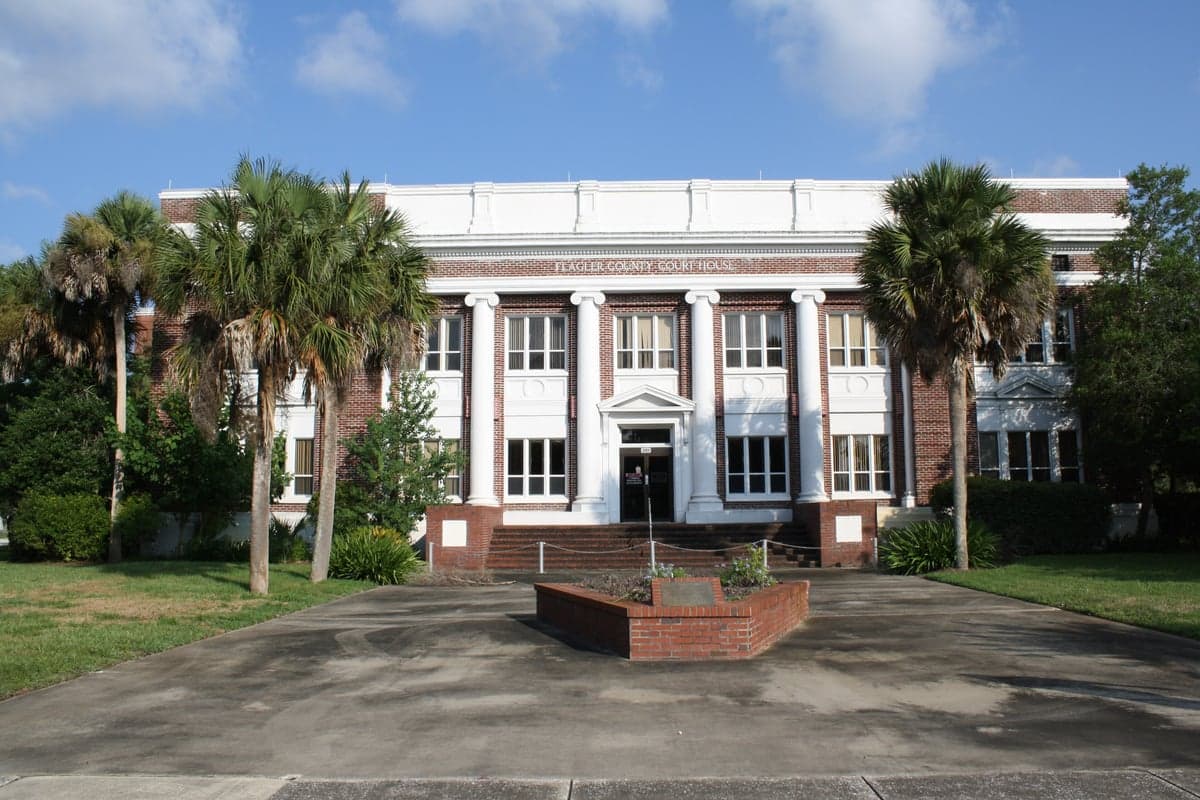
Photo: Wikipedia
Personal Sovereignty in Flagler County
Viable for self-reliance. Generally workable, though some barriers may limit total independence.
What does Personal Sovereignty tell us?
Personal Sovereignty measures your capacity for self-reliance and independence with minimal government friction. Higher scores mean fewer barriers between you and the way you want to live... but it assumes you have the space you need and good neighbors.
What does this tell us?
Personal Sovereignty measures your capacity for self-reliance and independence with minimal government friction. Higher scores mean fewer barriers between you and the way you want to live... but it assumes you have the space you need and good neighbors.
State Policy
Energy independence: Importer (10% of energy produced in-state)
Personal Liberty
Homesteading

Personal Liberty Analysis
Flagler County, Florida, offers a notably strong environment for personal sovereignty, blending Florida’s famously light-touch state governance with a local culture that prizes self-reliance and minimal interference. Unlike the more heavily regulated urban corridors of South Florida or the Orlando metro, Flagler County’s regulatory posture leans toward permissiveness, particularly in its unincorporated areas and smaller towns like Bunnell and Flagler Beach. For individuals and families who prioritize autonomy over convenience, the county provides a workable balance of low taxes, robust self-defense laws, and tangible opportunities for self-sufficient living, though the degree of freedom varies significantly between the coastal strip and the inland rural tracts.
Tax burden and regulatory posture: How Flagler County compares to surrounding areas
Flagler County benefits from Florida’s absence of a state income tax, which immediately boosts disposable income for residents. The county’s combined sales tax rate is 7.5% (6% state plus 1.5% local surtax), which is standard for the region and funds infrastructure without imposing a heavy annual property tax burden. The effective property tax rate in Flagler County hovers around 0.85% of assessed value, slightly below the state average, making it competitive with neighboring Volusia and St. Johns counties. Regulatory oversight is generally light: building permits in unincorporated areas like Bunnell and Palm Coast are processed with reasonable speed, and there are no county-level rent control ordinances or burdensome business licensing requirements. However, the coastal town of Flagler Beach imposes stricter short-term rental regulations and coastal construction setbacks, so those seeking maximum property freedom should prioritize inland parcels. The county’s comprehensive plan allows for agricultural and rural residential uses in designated areas, with minimal zoning friction for small-scale farming or home-based businesses.
Self-defense and gun law specifics: What residents can expect in Flagler County
Florida is a “shall-issue” state for concealed carry permits, and Flagler County’s sheriff’s office processes applications efficiently, typically within 30-60 days. The county has no local ordinances restricting firearm ownership beyond state law, meaning no additional waiting periods, magazine capacity limits, or ammunition restrictions. Open carry is generally prohibited in Florida, but concealed carry is lawful in most public spaces, including restaurants that serve alcohol (unless posted). Stand-your-ground laws apply statewide, and Flagler County courts have historically upheld self-defense claims in home invasion and vehicle defense cases. The sheriff’s department in Palm Coast and Bunnell maintains a pro-Second Amendment stance, with no local “red flag” enforcement beyond state mandates. For those seeking firearm-friendly environments, the rural areas around Korona and Favoretta offer private shooting ranges and minimal noise complaints, while Flagler Beach’s denser residential zones require more discretion. The county’s gun culture is practical rather than performative, with a focus on personal protection and hunting.
Self-reliance and homesteading viability: Lot sizes, zoning, and off-grid feasibility
Flagler County presents genuine opportunities for homesteading and off-grid living, particularly in its eastern and northern rural tracts. Minimum lot sizes in agricultural zones (A-1) are 5 acres, with many parcels in Bunnell and Korona available at 10-20 acres, allowing for substantial gardens, livestock, and even small orchards. Zoning permits chickens, goats, and up to two horses per acre without special permits, though pigs and cattle require additional approvals. Off-grid feasibility is high: Florida law allows rainwater collection for non-potable uses, and many rural properties already have wells and septic systems. Solar panel installation is unregulated at the county level, and net metering is available through Florida Power & Light, though the utility’s interconnection process can be slow. The town of Flagler Beach restricts off-grid systems due to coastal building codes, so serious homesteaders should focus on inland areas like Favoretta or the unincorporated tracts near Bunnell. The county’s right-to-farm ordinance protects agricultural operations from nuisance lawsuits, a critical safeguard for those raising animals or running farm stands. However, homeowners associations (HOAs) in Palm Coast’s planned subdivisions often prohibit livestock and solar panels, so buyers should verify deed restrictions before purchasing.
Personal liberties: Parental rights, medical autonomy, speech, and property
Florida’s state-level laws provide a strong baseline for personal liberties in Flagler County. Parental rights in education are protected under the Parental Bill of Rights (2021), which gives parents explicit authority over their children’s medical decisions, curriculum access, and school records. Flagler County School District has implemented these provisions without local controversy, and school board meetings in Bunnell and Palm Coast are generally civil. Medical autonomy is robust: Florida law prohibits vaccine mandates for employment and school attendance, and the county has no local health orders that override individual choice. Speech protections are standard under the First Amendment, with no local ordinances restricting public assembly or expression beyond state trespass laws. Property rights are well-defended: Flagler County’s comprehensive plan includes strong protections against eminent domain abuse, and the county has not pursued aggressive code enforcement against minor property modifications (e.g., sheds, fences, or driveway expansions) in unincorporated areas. The coastal town of Flagler Beach is more interventionist on short-term rentals and vacation home use, but inland areas like Korona and Favoretta see minimal government intrusion into daily life.
Overall, Flagler County ranks as one of the more sovereignty-friendly areas in Northeast Florida, especially when compared to the stricter regulatory environments of Volusia County to the south or Duval County to the north. The combination of no state income tax, permissive gun laws, viable homesteading land, and strong parental rights creates a cohesive environment for those seeking personal independence. The key differentiator is location: coastal Flagler Beach trades some autonomy for beach access and tourism revenue, while inland Bunnell, Korona, and Favoretta offer the fullest expression of self-reliant living. For families and individuals who value low taxes, minimal bureaucracy, and the freedom to live as they see fit, Flagler County delivers a practical, grounded alternative to more restrictive parts of the state.

* Values derived from national, state, county, city and local statistics and may differ in a specific area. Last updated: 2026-07-02T04:43:39.000Z
Narrative content on this page is AI-generated and may contain mistakes. Verify any details that matter before acting on them.
ReloMaps may earn a commission from affiliate links at no extra cost to you.

