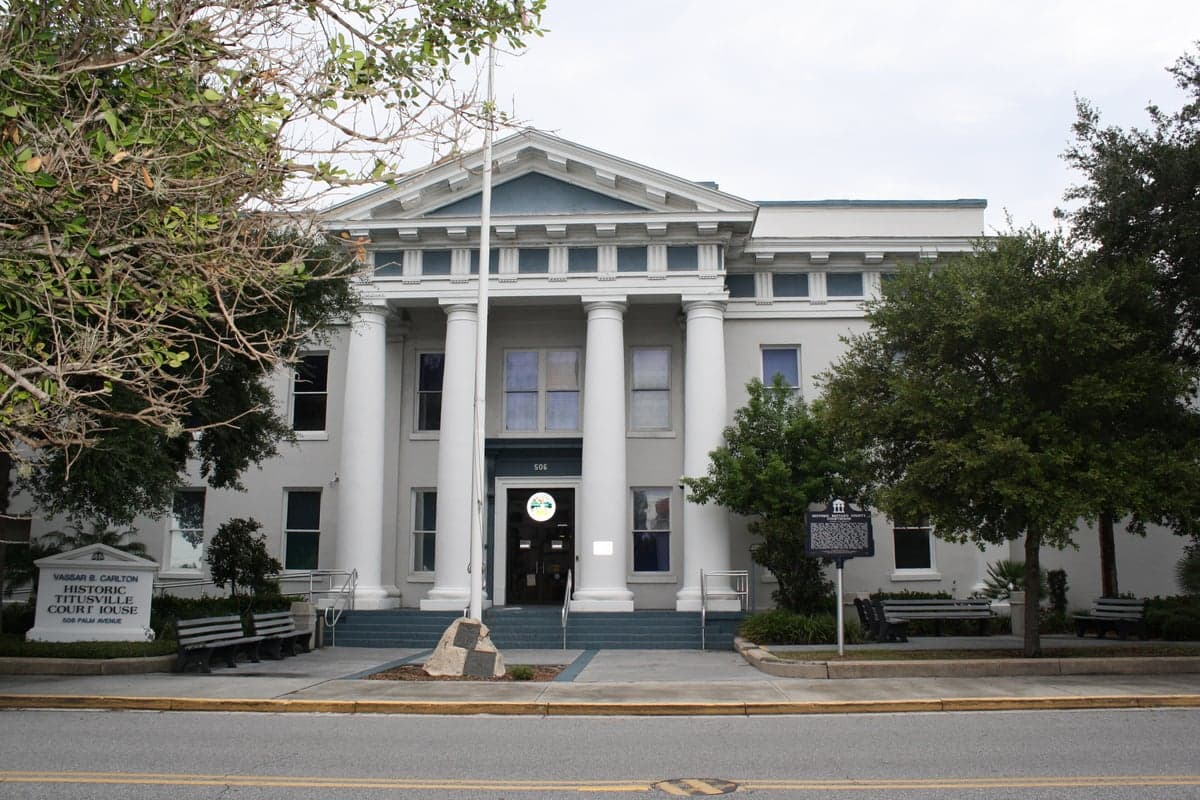
Photo: Wikipedia
Strategic Assessment of Brevard County
Meaningful friction. Expect exposure to either population pressure, blast zones, or natural disaster risk. Consider buying a retreat property.
What does the Strategic Assessment tell us?
Our Strategic Assessment grades tactical survivability of an area. Major population centers, military targets, fallout zones, natural disasters, and border exposure all drive risk — lower exposure means a more defensible position in a crisis.
This is heavily inspired by Joel Skousen's Strategic Relocation book. Highly recommended you checkout the book ($)What does this tell us?
Our Strategic Assessment grades tactical survivability of an area. Major population centers, military targets, fallout zones, natural disasters, and border exposure all drive risk — lower exposure means a more defensible position in a crisis.
This is heavily inspired by Joel Skousen's Strategic Relocation book. Highly recommended you checkout the book ($)Strategic Pillars

Key Distances
Strategic Assessment Analysis
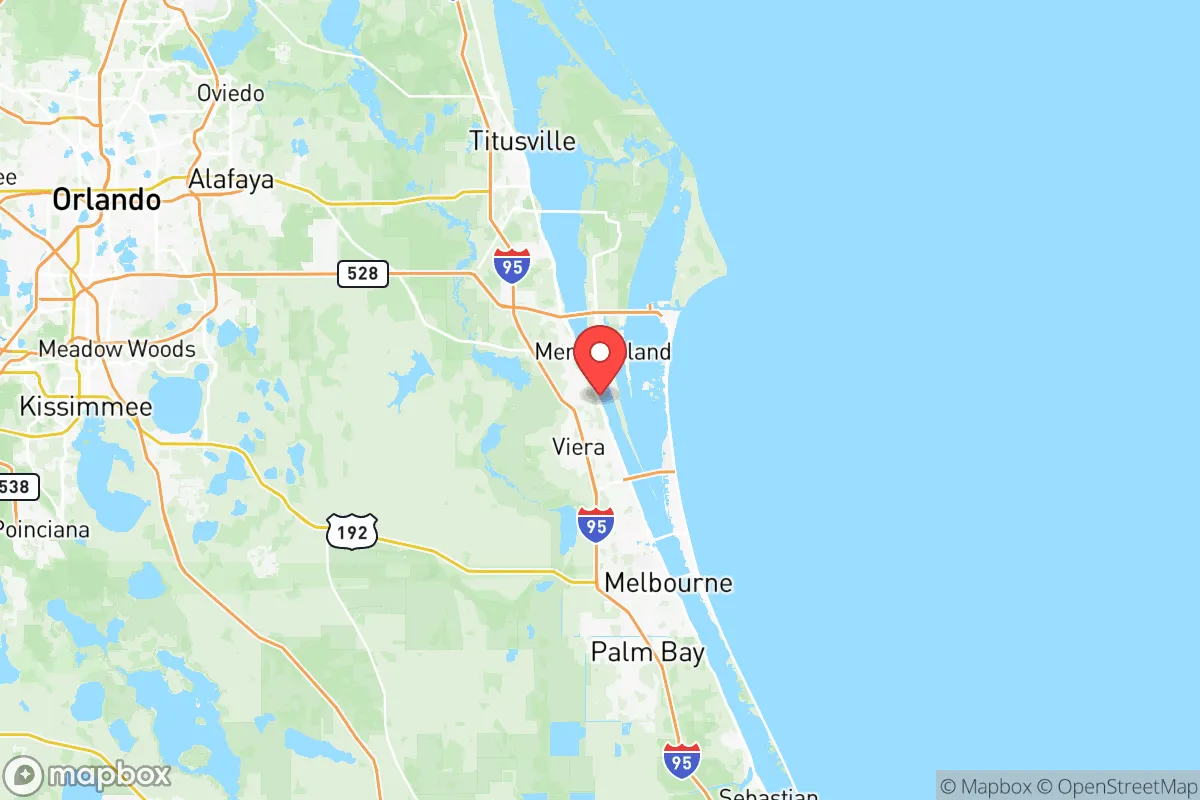
Brevard County, Florida, occupies a unique strategic position along the Space Coast, offering a blend of geographic isolation from major metropolitan chaos and direct access to critical infrastructure that appeals to relocation-minded individuals and families prioritizing resilience. Stretching from the northern boundary at the Canaveral National Seashore down to the southern reaches near Sebastian Inlet, the county is bounded by the Atlantic Ocean to the east and the Indian River Lagoon to the west, creating a natural buffer zone that limits easy overland approach from multiple directions. This peninsula-within-a-peninsula layout, combined with the presence of Patrick Space Force Base and Cape Canaveral Space Force Station, means the area benefits from federal security presence and hardened infrastructure that can serve as a stabilizing force during regional disruptions. For a relocator thinking seriously about disaster readiness, Brevard County presents a mixed picture: strong natural defenses and institutional resilience, but real exposure to hurricane threats and the potential downsides of hosting high-value aerospace assets.
Geographic position and natural advantages for long-term stability
Brevard County's geography is defined by its barrier island system, with the mainland separated from the Atlantic by the Indian River Lagoon, a 156-mile-long estuary that provides a natural moat effect for communities like Cocoa Beach, Melbourne Beach, and Indialantic. This configuration means that the most desirable coastal properties are on a narrow strip of land with limited egress points—primarily the Pineda Causeway, the Eau Gallie Causeway, and the Melbourne Causeway—which can be a double-edged sword for evacuation but a genuine advantage for those seeking defensibility and reduced through-traffic. The mainland side, including cities like Palm Bay, Rockledge, and Titusville, sits on higher ground relative to the coast, with elevations reaching 20-30 feet above sea level in some inland areas, offering a buffer against storm surge that the barrier islands lack. The county's position between the St. Johns River to the west and the Atlantic to the east provides abundant freshwater resources, with the St. Johns River Basin offering a reliable source of surface water for those who understand how to access and treat it. Additionally, Brevard's location roughly 45 miles east of Orlando places it far enough from the urban core to avoid the sprawl and congestion, yet close enough that major medical centers and supply chains in Orange County remain accessible for resupply if roads are passable.
Natural disaster exposure and proximity to high-value infrastructure
The primary natural risk in Brevard County is the Atlantic hurricane season, with the area experiencing a direct hurricane landfall roughly once every 6-8 years based on historical data, and tropical storm impacts more frequently. The barrier islands are particularly vulnerable to storm surge, with the National Hurricane Center's SLOSH models showing that a Category 3 storm could inundate most of the coastal communities east of the Indian River Lagoon, making evacuation planning essential for anyone living in Cocoa Beach or Satellite Beach. Inland areas like Viera, Suntree, and parts of Palm Bay offer significantly lower flood risk, though heavy rainfall from stalled systems can still cause localized flooding in low-lying neighborhoods. Beyond weather, Brevard County hosts some of the most sensitive infrastructure in the United States: Cape Canaveral Space Force Station and Kennedy Space Center are active launch facilities handling both government and commercial payloads, including SpaceX, United Launch Alliance, and NASA operations. While these sites are hardened and well-guarded, their presence means the county is a potential target for any adversary seeking to disrupt U.S. space capabilities, and a catastrophic launch failure—though rare—could theoretically affect nearby populated areas. The county also contains the Port Canaveral, a major cruise and cargo port that handles petroleum products and aggregates, making it a secondary infrastructure node that could attract attention during a conflict scenario. For the resilience-minded relocator, the trade-off is clear: you gain the security of a military-heavy region with federal resources, but you accept the elevated risk profile that comes with living near high-value strategic assets.
Practical resilience: food, water, energy, and community defensibility
Brevard County's practical resilience for a relocator depends heavily on location within the county and the degree of self-sufficiency one brings. The Indian River Lagoon and the Atlantic offer year-round fishing opportunities, with species like redfish, trout, flounder, and mullet available to those with basic fishing gear, and the St. Johns River provides access to freshwater species like bass and catfish. The county has a strong agricultural presence in its western and southern reaches, particularly around the communities of Micco, Barefoot Bay, and the agricultural corridor along State Road 60, where small farms, citrus groves, and livestock operations are common—though newcomers should note that Florida's sandy soil requires amendment for serious vegetable gardening. For water, the Floridan Aquifer underlies the entire county and provides generally good-quality groundwater, though well drilling is regulated and saltwater intrusion is a concern in coastal areas; residents in Melbourne and Palm Bay on municipal water should have at least a two-week supply stored. Electricity reliability is a known weak point: Florida Power & Light serves the county, and while the grid is hardened relative to other parts of the state, hurricane-related outages lasting 7-14 days are not uncommon, making solar panels with battery storage or a backup generator a near-necessity for anyone serious about resilience. Community defensibility varies widely: the barrier island towns are difficult to access but also difficult to supply, while mainland suburbs like Viera and Rockledge offer good road networks and proximity to multiple grocery distribution centers along the I-95 corridor. The presence of Patrick Space Force Base and the local sheriff's office provides a law enforcement presence that would likely remain functional during most scenarios, though residents should not rely on external assistance for the first 72 hours of any major event.
Overall, Brevard County offers a compelling strategic picture for the relocator who values geographic isolation, institutional stability from military and aerospace assets, and access to both marine and freshwater resources. The trade-offs are real: hurricane risk is unavoidable, the county's role as a space launch hub introduces a unique threat profile, and the barrier islands are not suitable for long-term self-sufficiency due to evacuation constraints and storm surge exposure. For a family or individual willing to locate on the mainland side—particularly in the higher-elevation areas of Palm Bay, Rockledge, or the Viera-Suntree corridor—and invest in backup power, water storage, and basic food production capability, Brevard County provides a defensible, resource-rich environment with institutional backup that few other Florida counties can match. The key is to treat the Space Coast not as a paradise, but as a strategic asset with known vulnerabilities that can be managed through smart location choices and honest preparation.

* Values derived from national, state, county, city and local statistics and may differ in a specific area. Last updated: 2026-06-17T15:02:13.000Z
Narrative content on this page is AI-generated and may contain mistakes. Verify any details that matter before acting on them.
ReloMaps may earn a commission from affiliate links at no extra cost to you.

