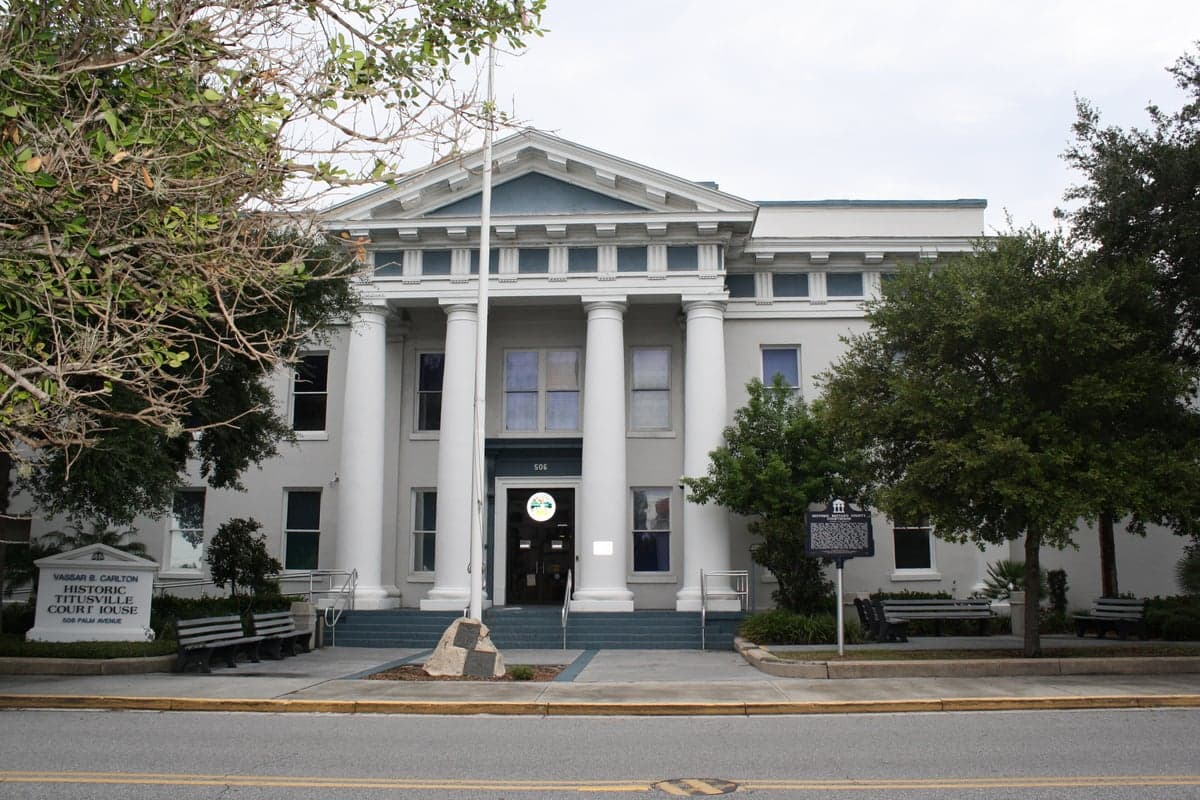
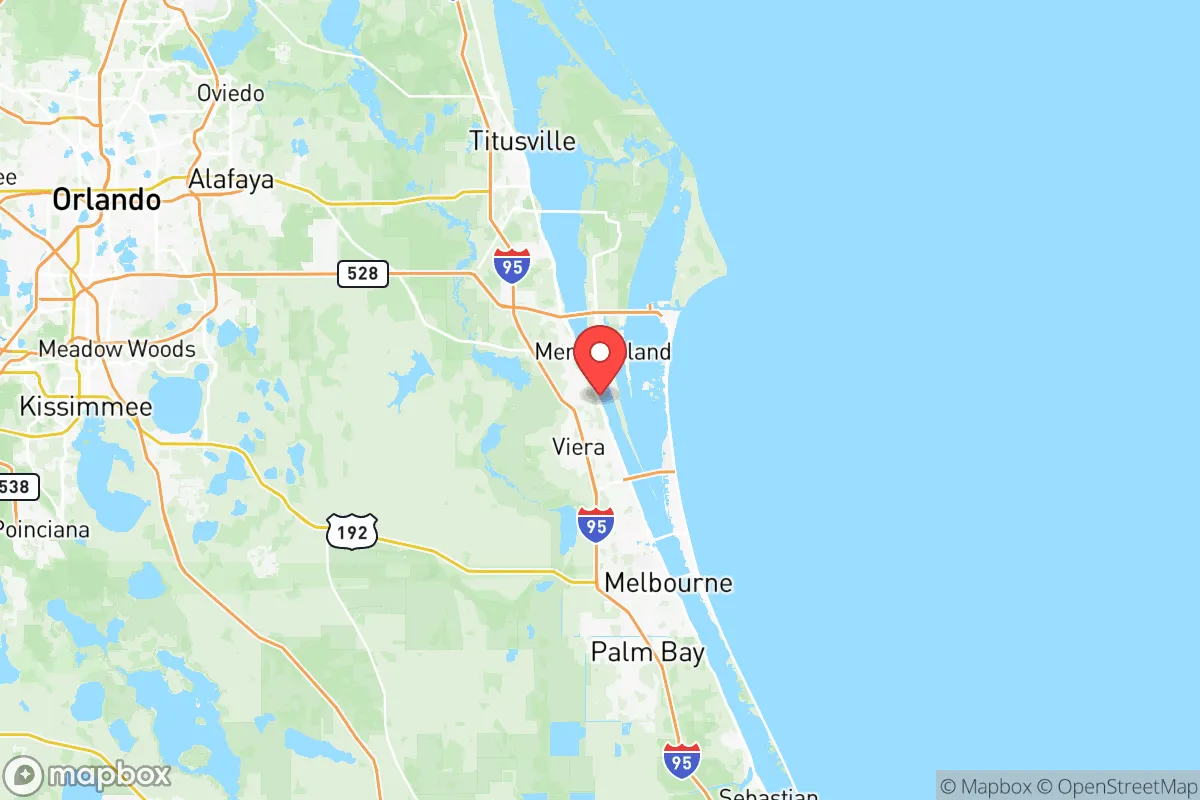
Photo: Wikipedia
Demographics of Brevard County
Affluence Level in Brevard County
A middle-class area roughly in line with national averages across income, home values, education, and employment.
People of Brevard County
Brevard County’s 620,533 residents form a community shaped by the Space Coast’s high-tech economy, a strong military and aerospace presence, and a population that is notably less diverse than Florida as a whole. With a foreign-born share of just 3.0%—far below the state average of 21%—the county’s identity is rooted in domestic migration, particularly from the Midwest and Northeast, and a culture that blends suburban family life with a deep connection to the Atlantic coast and the Kennedy Space Center. The population is 71.3% white, 11.7% Hispanic, 9.2% Black, 1.8% East and Southeast Asian, and 0.6% Indian, reflecting a community that is predominantly native-born and English-speaking, with a slightly older median age driven by retirees and a growing professional class.
Settlement & growth (pre-1960)
Long before European contact, the region was home to the Ais people, a hunter-gatherer tribe who lived along the Indian River Lagoon for thousands of years. Spanish explorers encountered the Ais in the 16th century, but the tribe was largely decimated by disease and conflict by the 1700s, leaving the area sparsely populated until the 19th century. Florida became a U.S. territory in 1821, and the first permanent American settlers arrived slowly, drawn by the promise of frontier homesteads along the Indian River.
The county’s real settlement began after the Civil War, when freed slaves and white homesteaders from Georgia and the Carolinas moved into the region. Small farming and fishing communities like Titusville (founded 1867) and Melbourne (founded 1867) emerged as agricultural outposts, growing citrus, sugarcane, and cotton. The arrival of the Florida East Coast Railway in the 1890s opened the area to more settlers, including a wave of Midwestern farmers and Northern retirees who built winter homes in Cocoa and Rockledge. By 1900, the population was still tiny—fewer than 5,000—and remained overwhelmingly white and native-born, with a small Black community concentrated in the Georgetown neighborhood of Cocoa.
The single most transformative event in Brevard’s history was the 1949 decision to establish the Long Range Proving Ground at Cape Canaveral, later renamed the Kennedy Space Center. This brought a massive influx of engineers, technicians, and military personnel from across the country, particularly from the Midwest and Northeast. Towns like Cocoa Beach and Satellite Beach were built almost overnight to house the new workforce, and the county’s population exploded from 23,000 in 1950 to 111,000 in 1960. This wave was almost entirely white, college-educated, and politically moderate, creating a culture that valued science, education, and civic engagement.
Modern era (post-1965)
The 1965 Hart-Cellar Act, which ended national-origin quotas, had a relatively muted effect on Brevard County compared to major urban centers. The county’s foreign-born population remains low at 3.0%, and immigration has been driven less by family reunification than by employer-sponsored visas for the aerospace and defense sectors. The most visible immigrant groups are East and Southeast Asian communities—particularly engineers from China, Taiwan, and Vietnam—who have settled in Palm Bay and Merritt Island, drawn by jobs at Harris Corporation (now L3Harris), Northrop Grumman, and NASA contractors. The Indian subcontinent community, at 0.6%, is smaller but growing, with professionals concentrated in the same high-tech corridors.
Domestic migration has been the far larger force shaping modern Brevard. The post-1965 era saw a steady stream of Rust Belt retirees and families from Ohio, Michigan, and New York moving to the Space Coast, drawn by the climate, lower cost of living, and the space program’s prestige. This wave accelerated after the 1970s, as the county’s economy diversified beyond aerospace into healthcare, tourism, and logistics. Suburbanization spread rapidly: Viera, a master-planned community founded in 1989, became a magnet for families seeking good schools and new housing, while West Melbourne and Palm Bay absorbed much of the population growth from the 1990s onward.
The Hispanic population, now 11.7%, grew primarily through domestic migration from Puerto Rico and other parts of Florida, rather than direct immigration. Puerto Rican families, in particular, have settled in Palm Bay and Melbourne, where they work in construction, hospitality, and service industries. The Black population, at 9.2%, is concentrated in historic neighborhoods like Cocoa’s Georgetown and parts of Palm Bay, and has grown slowly through natural increase and domestic migration from the Southeast. The county remains less diverse than Florida as a whole, but the trend is toward gradual diversification, driven by younger families moving in from more diverse parts of the country.
The future
Brevard County is projected to grow to roughly 700,000 residents by 2035, with the pace of growth slowing as available land for new subdivisions diminishes. The population is becoming slightly more diverse, but the change is incremental: the white share is declining slowly (from 75% in 2010 to 71.3% today), while the Hispanic and Asian shares are rising modestly. The Indian subcontinent community, though small, is expected to grow as the tech sector expands, particularly around the new Space Coast Regional Airport and the Florida Institute of Technology in Melbourne.
The biggest demographic shift is generational: the county’s large Baby Boomer cohort is aging in place, while younger families are moving into newer developments in Viera, West Melbourne, and Barefoot Bay. This is creating a cultural divide between the retiree-heavy beachside communities (Cocoa Beach, Satellite Beach) and the more family-oriented mainland suburbs. The county’s political identity, historically moderate and pro-business, is shifting slightly rightward as new arrivals from the Midwest and Northeast bring conservative values, though the Space Coast’s reliance on federal funding for NASA and defense keeps the electorate pragmatic.
New immigrant communities are dispersing rather than forming dense ethnic enclaves, reflecting the county’s suburban character and the professional nature of its workforce. The foreign-born share is unlikely to rise above 5-6% in the next decade, as the county lacks the low-wage service economy that attracts large immigrant populations in Miami or Orlando. Instead, growth will come from domestic migration, particularly from the Northeast and California, as remote workers and retirees seek a lower cost of living and a coastal lifestyle.
For someone moving to Brevard County today, the area offers a stable, family-oriented community with a strong sense of place rooted in the space program and the Atlantic coast. The population is predominantly white and native-born, but slowly diversifying, with a culture that values education, outdoor recreation, and civic engagement. The county is becoming more suburban and more politically conservative, but retains a pragmatic, science-minded identity that sets it apart from much of inland Florida. It is a place where the past—the frontier homesteads, the space race, the Midwestern migration—still shapes the present, and where the future will be defined by the balance between growth and preservation.

* Values derived from national, state, county, city and local statistics and may differ in a specific area. Last updated: 2026-06-17T15:02:13.000Z
Narrative content on this page is AI-generated and may contain mistakes. Verify any details that matter before acting on them.
ReloMaps may earn a commission from affiliate links at no extra cost to you.

