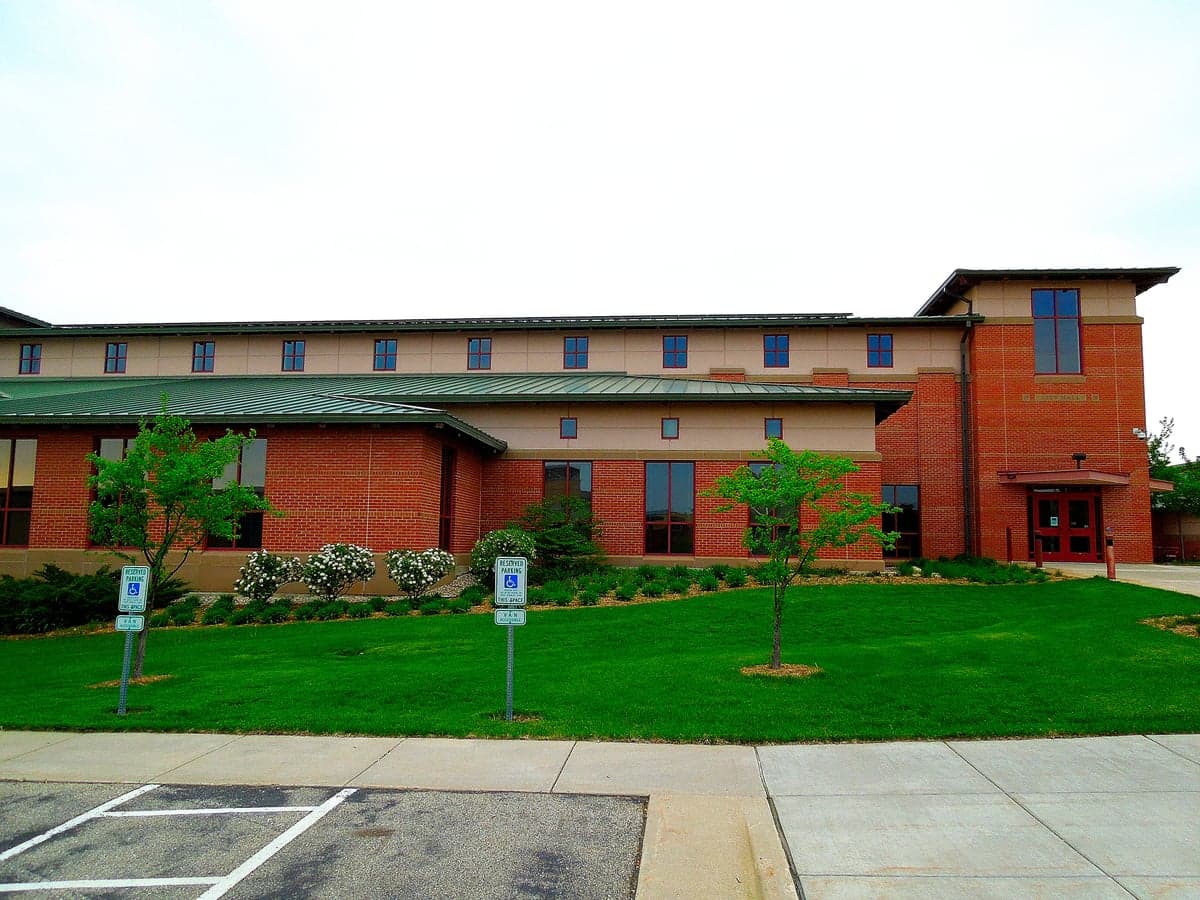
Photo: Wikipedia
Political ClimatePolitical Climate in Fitchburg, WI
District shown is the primary district for this city’s centroid. Cities may span multiple districts.
Local Political AnalysisPolitical Analysis of Fitchburg, WI
Fitchburg, Wisconsin, leans heavily Democratic, with a Cook PVI of D+21, making it one of the most progressive enclaves in Dane County. This wasn't always the case—I remember when this town was more of a quiet, rural crossroads where folks kept to themselves and the county board didn't meddle much. But over the last decade, especially since the 2020 cycle, the political shift has been dramatic. The city council and school board are now dominated by activists pushing a progressive agenda, and the old-school, live-and-let-live vibe has given way to a more top-down, government-knows-best approach. If you're looking for a place where personal freedoms are still respected, this isn't the Fitchburg I grew up in.
How it compares
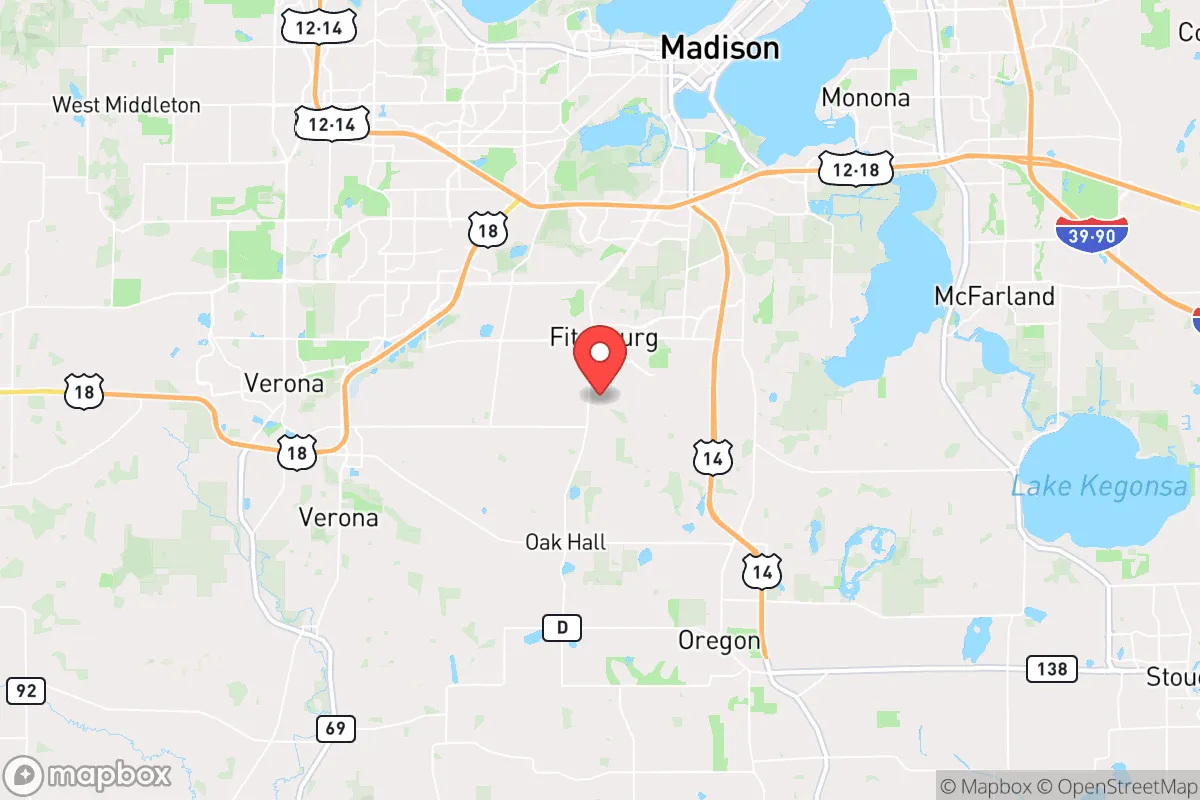
To understand Fitchburg's politics, you have to look at its neighbors. Just a few miles north, Madison is the epicenter of Wisconsin's progressive movement—think of it as the engine room for policies like universal basic income experiments and sanctuary city ordinances. Fitchburg is essentially Madison's southern suburb, and it's been absorbing that same energy. Drive 20 minutes west to Verona, and you'll find a more balanced mix—still blue-leaning, but with a stronger libertarian streak and less appetite for heavy-handed regulations. Head east to Cottage Grove or south to Oregon, and you'll hit communities that vote more purple, where people are skeptical of the tax hikes and zoning overhauls that Fitchburg's leaders love. The contrast is stark: Fitchburg's council has pushed for things like mandatory affordable housing quotas and strict environmental mandates on new construction, while neighboring towns are still debating whether to allow backyard chickens. It's a tale of two Dane Counties, and Fitchburg is firmly in the progressive camp.
What this means for residents
For the average person living here, the political climate translates into a lot of new rules and fees. The city has aggressively pursued "climate action" plans that include bans on natural gas in new homes and mandates for electric vehicle charging stations in every new development. That sounds green, but it also means higher construction costs and less choice for homeowners. Property taxes have climbed steadily to fund expanded city services and social programs, and there's a growing sense that the government is inserting itself into decisions that used to be left to families and small businesses. The school board has also shifted left, pushing curriculum changes and diversity initiatives that some parents feel go too far. If you value personal autonomy—whether it's choosing your own energy source, deciding how to use your land, or opting out of certain political messaging in schools—you'll find yourself butting heads with local officials more often than not.
One cultural distinction that stands out is Fitchburg's embrace of "inclusionary zoning" and its push to become a "Welcoming City" for immigrants, which sounds noble but has led to tensions over resource allocation and public safety priorities. The city also hosts a growing number of community gardens and bike lanes, which are nice, but they're often funded by special assessments that hit property owners hard. Looking ahead, I see the trend continuing: more regulations, higher taxes, and a government that sees itself as a social engineer rather than a service provider. If you're considering a move here, just know that the political climate isn't just background noise—it shapes everything from your utility bills to your kids' homework. It's a place where the progressive experiment is in full swing, and you'll either be on board or constantly pushing back.

State Political ClimatePolitical Climate in Wisconsin
State Political AnalysisPolitical Environment in the State
Wisconsin has long been a classic swing state, but over the past decade it has hardened into a deeply polarized battleground where the blue urban crescent of Milwaukee and Madison clashes with a red rural and exurban heartland. The state’s overall partisan lean is essentially a 50-50 coin flip in statewide races, but the trajectory since 2010 has been a slow, grinding shift to the right in legislative maps and cultural policy, even as the population centers grow more progressive. For a conservative considering relocation, Wisconsin offers a mixed bag: low property taxes relative to the coasts, a strong Second Amendment tradition, and a Republican-controlled legislature that has pushed back on some overreach, but also a powerful Democratic governor in Tony Evers who has used veto power to block conservative priorities and a court system that has become a flashpoint for progressive activism.
Urban vs. rural divide
The political map of Wisconsin is a tale of two worlds. The Democratic stronghold is the Milwaukee-Madison corridor, anchored by Milwaukee County (which voted +40 for Biden in 2020) and Dane County (home to Madison, which voted +75 for Biden). These two counties alone produce a massive Democratic margin that Republicans must overcome by running up the score in the rest of the state. The rural northwoods, the Driftless Area in the southwest, and the Fox Valley have all swung hard red since 2010. Waukesha County, a wealthy Milwaukee suburb, is the GOP’s most reliable vote factory, delivering margins of +30 or more. Meanwhile, the once-purple Green Bay area has trended right, with Brown County flipping from Obama to Trump and staying there. The key battleground is the "WOW" counties (Waukesha, Ozaukee, Washington) — these three suburban counties are the GOP’s firewall, and any erosion there would doom Republican chances statewide. The rural-urban divide is so stark that a conservative moving to Wisconsin should understand that your vote and your daily life will be dramatically different depending on whether you settle in a small town like Tomahawk or a Madison suburb like Middleton.
Policy environment
Wisconsin’s policy environment is a tug-of-war between a Republican legislature that has passed conservative reforms and a Democratic governor who has vetoed many of them. On taxes, the state has a flat income tax of 4.4% (down from 6.27% in 2011 under Scott Walker), and property taxes are among the lowest in the Midwest — the median effective rate is about 1.6%, but that varies wildly by county. The legislature passed a major income tax cut in 2023, but Evers vetoed a move to a flat 3.5% rate. On education, Wisconsin has a robust school choice program — the Milwaukee Parental Choice Program is the oldest in the nation, and the state has expanded vouchers to other cities like Racine and Appleton. However, Evers has blocked further expansion and has pushed for more funding for public schools. On healthcare, Wisconsin did not expand Medicaid under the Affordable Care Act until 2014, and the state still has a relatively high uninsured rate. Election laws are a flashpoint: the legislature passed voter ID requirements and tightened absentee ballot rules in 2021, but Evers vetoed a bill that would have banned private funding for election administration. The state also has a conservative-leaning Supreme Court, but that flipped to a 4-3 liberal majority in 2023 after the election of Janet Protasiewicz, who campaigned on abortion rights and redistricting reform. This court has already struck down the state’s heavily gerrymandered legislative maps, ordering new ones for 2024 — a seismic shift that could reshape the policy environment for a generation.
Trajectory & freedom
Wisconsin’s trajectory on personal freedom is a mixed picture. On the positive side for conservatives, the state has a strong Second Amendment tradition — it is a "shall issue" state for concealed carry, and there is no permit required for open carry. The legislature passed a "stand your ground" law in 2011, and there are no "red flag" laws or universal background checks. On parental rights, Wisconsin has a strong school choice system and a law requiring parental consent for minors to get an abortion (though that law is currently blocked by court order). However, the state has seen significant erosion of freedom in other areas. In 2023, the liberal Supreme Court ruled that the state’s 1849 abortion ban (which was triggered by the Dobbs decision) does not apply to consensual abortions, effectively legalizing abortion up to 20 weeks. The same court is now considering a challenge to the state’s legislative maps, which could lead to a Democratic takeover of the legislature. On medical freedom, Wisconsin did not have a mask mandate during COVID beyond the initial 2020 order, and the legislature passed a bill in 2021 banning vaccine passports, which Evers signed. But the state also has a relatively high vaccination rate and a public health apparatus that is seen as overbearing by some conservatives. The biggest concern for freedom-minded residents is the growing power of the state Supreme Court, which has shown a willingness to legislate from the bench on issues like abortion and redistricting.
Civil unrest & political movements
Wisconsin has been a flashpoint for political unrest in recent years. The 2020 Kenosha riots, sparked by the shooting of Jacob Blake, saw two nights of arson and looting, and the subsequent trial of Kyle Rittenhouse became a national symbol of the Second Amendment and self-defense. The state has also seen large-scale protests at the state capitol in Madison, including the 2011 Act 10 protests against collective bargaining reform and the 2020 Black Lives Matter protests. On the right, the Wisconsin Republican Party has been a disciplined machine, but there is a growing populist wing that has challenged establishment figures like former Speaker Robin Vos. The state has also been a battleground for election integrity, with the 2020 election seeing a massive increase in absentee voting and a subsequent partisan audit that found no widespread fraud but did highlight administrative issues. The city of Milwaukee has been a particular focus of election integrity concerns, with its heavily Democratic vote-by-mail operation drawing scrutiny. Immigration politics are less of a flashpoint in Wisconsin than in border states, but there is a growing debate over sanctuary policies in Dane County and Milwaukee, which have declared themselves "welcoming cities." A conservative moving to Wisconsin should be aware that the state’s political temperature runs hot, and that the divide between blue cities and red countryside is not just a voting pattern but a lived reality.
Projection
Looking ahead five to ten years, Wisconsin is likely to become more competitive and more polarized. The biggest wildcard is the new legislative maps, which will almost certainly be more favorable to Democrats than the current gerrymandered ones. This could lead to a Democratic takeover of the state Assembly and Senate by 2026 or 2028, which would allow Evers (or a successor) to pass a progressive agenda on taxes, education, and voting rights. Demographic trends are also working against conservatives: the rural counties that vote red are losing population, while the urban and suburban counties that vote blue are growing. The Milwaukee metro area is seeing an influx of younger, more diverse residents, while the Fox Valley and the northwoods are aging and shrinking. However, the state’s in-migration from Illinois has been a net positive for conservatives — many of the people moving to Kenosha and Racine are fleeing high taxes and crime in Chicago, and they tend to vote Republican. The wildcard is the state Supreme Court, which will be a battleground for the next decade. If conservatives can flip the court back in 2025 or 2026, they could slow the progressive agenda. But if the liberal majority holds, expect to see court-ordered changes to abortion laws, election laws, and possibly even school choice. For a conservative moving to Wisconsin, the next decade will be a fight to hold the line.
For a conservative considering a move to Wisconsin, the bottom line is this: you will find a state with a strong conservative infrastructure in the legislature and a deep tradition of local control, but you will also face a powerful progressive governor and a court system that is increasingly hostile to conservative values. The best places to settle are the WOW counties (Waukesha, Ozaukee, Washington) or the Fox Valley cities like Appleton and Green Bay, where you will be surrounded by like-minded neighbors and have access to good schools and low taxes. Avoid Dane County and the city of Milwaukee unless you are prepared to be a political minority. The state’s trajectory is uncertain, but for now, Wisconsin remains a place where a conservative can live freely, own guns, choose their child’s school, and pay reasonable taxes — provided you are willing to fight for it.
* Values derived from national, state, county, city and local statistics and may differ in a specific area. Last updated: 2026-04-21T10:26:35.000Z
Narrative content on this page is AI-generated and may contain mistakes. Verify any details that matter before acting on them.
ReloMaps may earn a commission from affiliate links at no extra cost to you.

